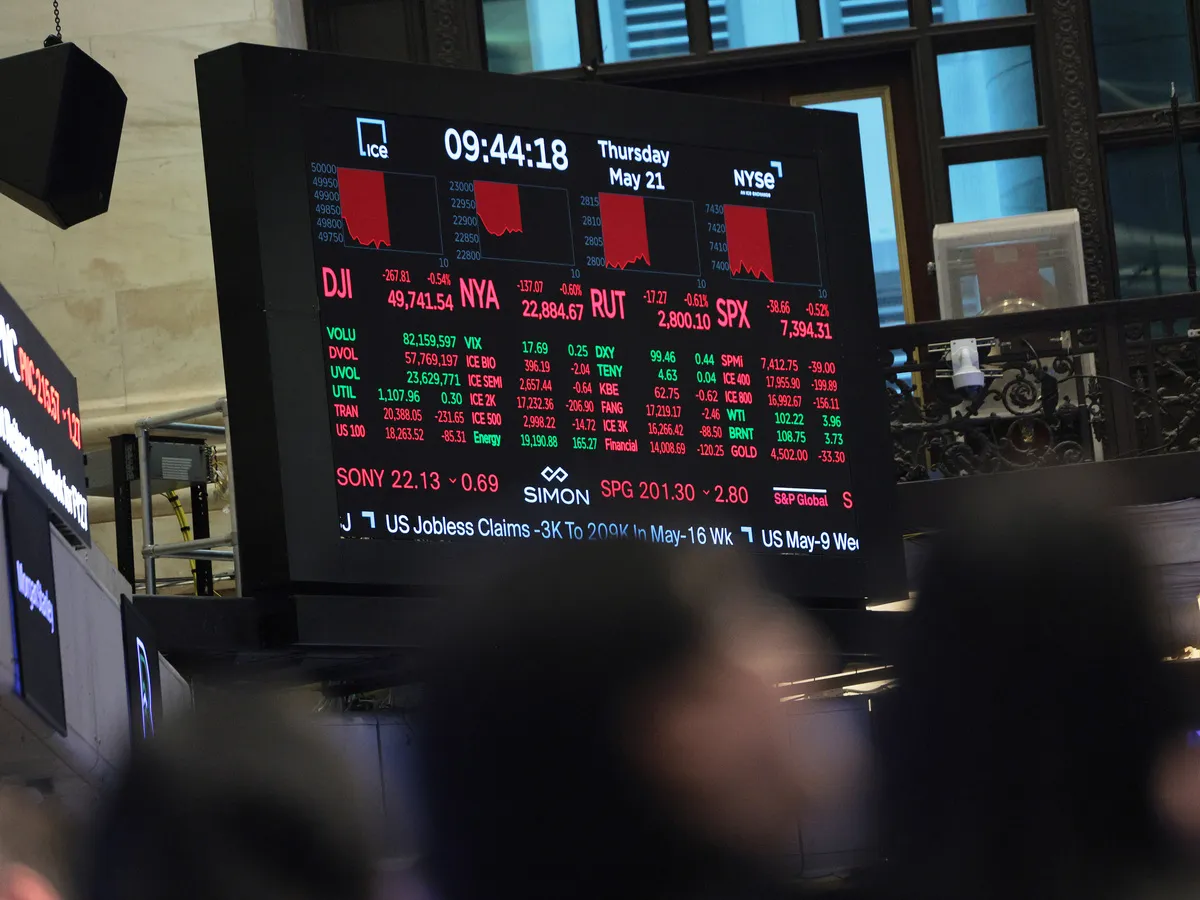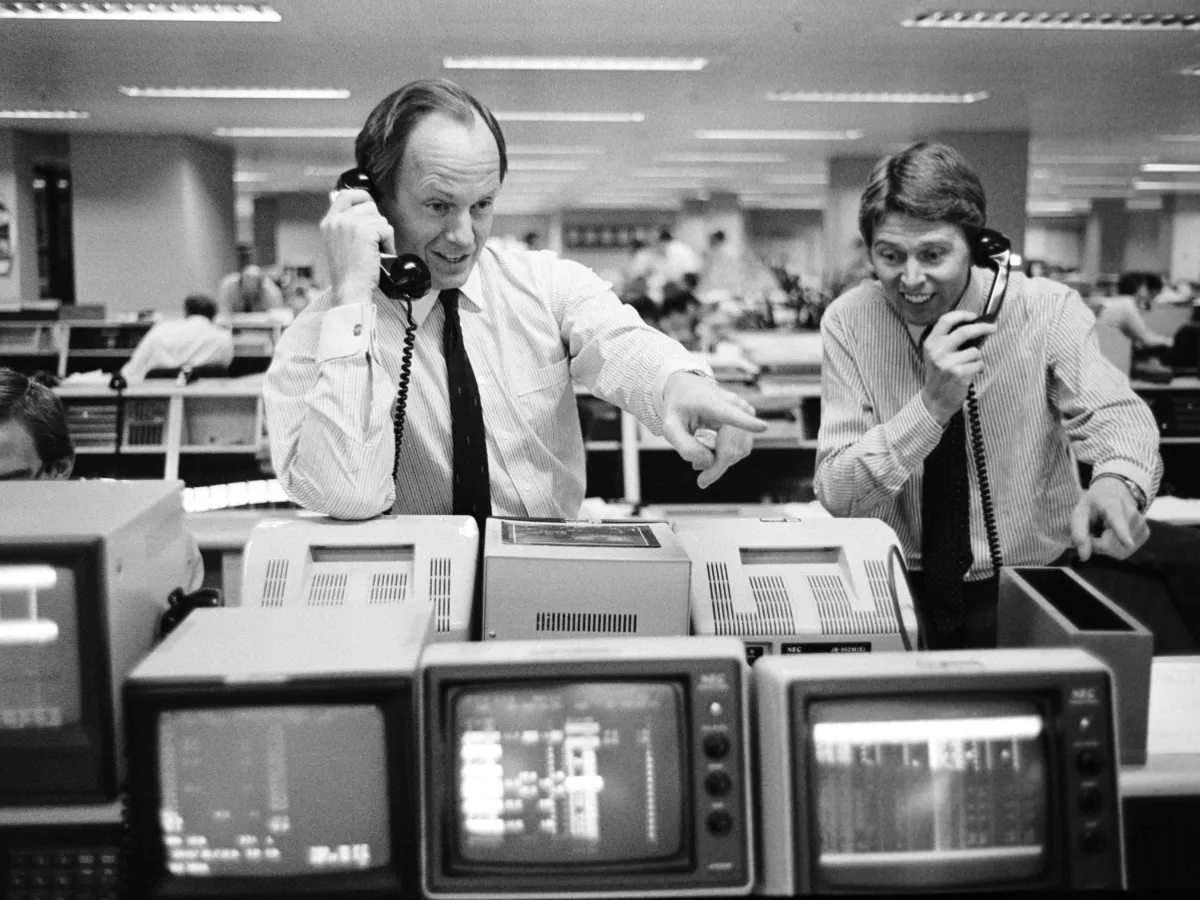
Skip to Content News Archives Economy Energy Oil & Gas Renewables Electric Vehicles Mining Commodities Agriculture Real Estate Mortgages Mortgage Rates Finance Banking Insurance Fintech Cryptocurrency Work Wealth Smart Money Wealth Management Investor Personal Finance Family Finance Retirement Taxes High Net Worth FP Comment Executive Women Puzzmo Newsletters Financial Times Business Essentials More Innovation Information Technology FP500 Podcasts Small Business Lives Told Tails Told Shopping Financial Post Store Obituaries Place a Notice Advertising Advertising With Us Advertising Solutions Postmedia Ad Manager Sponsorship Requests Classifieds Place a Classifieds ad Working Profile Settings My Subscriptions Saved Articles My Offers Newsletters Customer Service FAQ News Economy Energy Mining Real Estate Finance Work Wealth Investor FP Comment Executive Women Puzzmo Newsletters Financial Times Business Essentials HomeInvestorHow regulations tamed the ‘wild west’ of the investing industryPeter Hodson: Since the 1980s investors can trade cheaper and more knowledgeably but can get into trouble more easily tooLast updated 26 minutes ago You can save this article by registering for free here. Or sign-in if you have an account.Regulatory changes may not be so noticeable for individual investors, but for those working in the investment industry for any period of time, especially since the 1980's, it is obvious. Photo by Bryn Colton/Getty ImagesI bought my first stock (through my older cousin, a broker at the time) in 1974. Hard-earned paper-route money doubled in a short period of time, then vanished with the next purchase. Curse you, Vulcan Industrial Packaging (no longer in business today). Only 11 years old at the time, I had no idea that 52 years later I would still be looking at stocks, pretty much 24/7. My first job in the investment sector was in 1985.Subscribe now to read the latest news in your city and across Canada.Exclusive articles from Barbara Shecter, Joe O'Connor, Gabriel Friedman, and others.Daily content from Financial Times, the world's leading global business publication.Unlimited online access to read articles from Financial Post, National Post and 15 news sites across Canada with one account.National Post ePaper, an electronic replica of the print edition to view on any device, share and comment on.Daily puzzles, including the New York Times Crossword.Subscribe now to read the latest news in your city and across Canada.Exclusive articles from Barbara Shecter, Joe O'Connor, Gabriel Friedman and others.Daily content from Financial Times, the world's leading global business publication.Unlimited online access to read articles from Financial Post, National Post and 15 news sites across Canada with one account.National Post ePaper, an electronic replica of the print edition to view on any device, share and comment on.Daily puzzles, including the New York Times Crossword.Create an account or sign in to continue with your reading experience.Access articles from across Canada with one account.Share your thoughts and join the conversation in the comments.Enjoy additional articles per month.Get email updates from your favourite authors.Create an account or sign in to continue with your reading experience.Access articles from across Canada with one accountShare your thoughts and join the conversation in the commentsEnjoy additional articles per monthGet email updates from your favourite authorsSign In or Create an AccountorBut enough about me. This column is going to discuss the investment industry in general, and how massively it has changed in the past five-plus decades. Looking back, the industry today seems entirely different than it was in the 1980s. Let’s look at five big changes that have occurred in the investment industry since then.Canada's best source for investing news, analysis and insight.By signing up you consent to receive the above newsletter from Postmedia Network Inc.A welcome email is on its way. If you don't see it, please check your junk folder.The next issue of Investor will soon be in your inbox.We encountered an issue signing you up. Please try againBack in the days before deregulation, it would be common to pay, say, $200 to trade just 100 shares of one stock. Investors today — especially my kids — simply can’t believe this. But it’s true. Investments were highly regulated and thus so were commissions. The giant fees were great, of course, for banks and brokerages but certainly impaired returns for investors. Now, commissions are about 95 per cent lower and multiple brokers offer totally free trades to clients. This sounds great, and it is, but it can also encourage excessive trading. After all, if there are no costs, an investor can make money if a stock swings by even just five cents. Investors need to be careful that they don’t miss out on long-term gains by trying to make a dime or two.Regulatory changes may not be so noticeable for individual investors but for those working in the investment industry for any period of time it is obvious. Two main factors, the Bernie Madoff scam that came crashing down in 2008 and also the great financial crisis of the same timeframe, resulted in many changes to the industry, and to banking and financial regulations, in order to prevent such events from ever occurring again. Throw in money laundering regulations, Know Your Client, Know Your Product, wash-trading and other regulatory rules, these days brokers and advisers spend a lot more time just making sure they are following all the rules correctly. Investor protection has indeed improved since the “wild west” days of the 1980s.I think the biggest and most important change in the industry is the availability of instant information for all investors. Back in the old days, if I wanted to research a company I literally had to phone them up and ask them to send me their annual report. Now, anyone with a computer can get billions of data points on any company, stock, industry or market instantly. It boggles the mind how much information is available to investors now, retail and professional alike. This can also create problems, such as making it difficult for investors to see the forest for the trees, but it has certainly helped level the playing field. The do-it-yourself crowd has flourished, with investors trying to make more money and save investment management fees by managing their own accounts. On a net basis, the access to information is a big positive for investors. But, caution is needed. Not all information is accurate and scammers and promoters can often release information designed to move stock prices to their own benefit.The huge influence of retail investors on the market would not be possible without deregulation, lower fees and good information. Overall, retail investors have more power than they did 30 years ago. Online forums such as Reddit’s WallStreetBets have shown they can move individual stocks dramatically, using the collective power of millions of traders. Companies such as WealthSimple Inc. have prospered as investors take their investments into their own hands. Research outfits such as Seeking Alpha Ltd. and our own 5i Research Inc. offer services to help the DIY crowd. Institutional investors are still important, but individual investors have more clout and power now than they did before, by far.With the advancement of instant information and a massive wave of individual investors hitting the market over the past few decades, there has been a shift in stock market volatility. Millions of traders now instantly assess quarterly earnings reports, and buy or sell accordingly. It is common now for stocks to see swings — up or down — of 20 per cent or more in a few hours on any news at all. These types of moves were extremely rare in the 1980s. But has volatility really increased? According to a 2016 McKinsey study, the answer, at least in 2016, was no. Day-to-day volatility did increase, but over a longer term there was not a significant difference.An update in 2026 did show that U.S. market volatility has increased versus other global markets. Tying in volatility with regulations, another difference is that there are now “circuit breakers” designed to stem the panic when stocks move dramatically. First introduced in 1988, with points-based trading halts, these were moved to percentage-based halts in 1998. Today, rather than letting the market drop 22 per cent, as it did in the crash of 1987, markets are halted for periods of time on seven per cent, 13 per cent and 20 per cent declines. Individual stocks also have halt triggers (up or down) at various levels, depending on the size and price of the stock, at five per cent, 10 per cent and 20 per cent. Such halts really do help when there is panic in a stock or the market in general.Peter Hodson, CFA, is founder of 5i Research Inc., an independent investment research network helping do-it-yourself investors reach their investment goals. He is also portfolio manager for the i2i Long/Short U.S. Equity Fund. (5i Research staff do not own Canadian stocks. i2i Long/Short Fund may own non-Canadian stocks mentioned.) If you like this story, sign up for the FP Investor Newsletter. Join the Conversation This website uses cookies to personalize your content (including ads), and allows us to analyze our traffic. Read more about cookies here. By continuing to use our site, you agree to our Terms of Use and Privacy Policy.
How regulations tamed the ‘wild west’ of the investing industry
Peter Hodson: Since the 1980s investors can trade cheaper and more knowledgeably but can get into trouble more easily too. Read on
1,513 words~7 min read