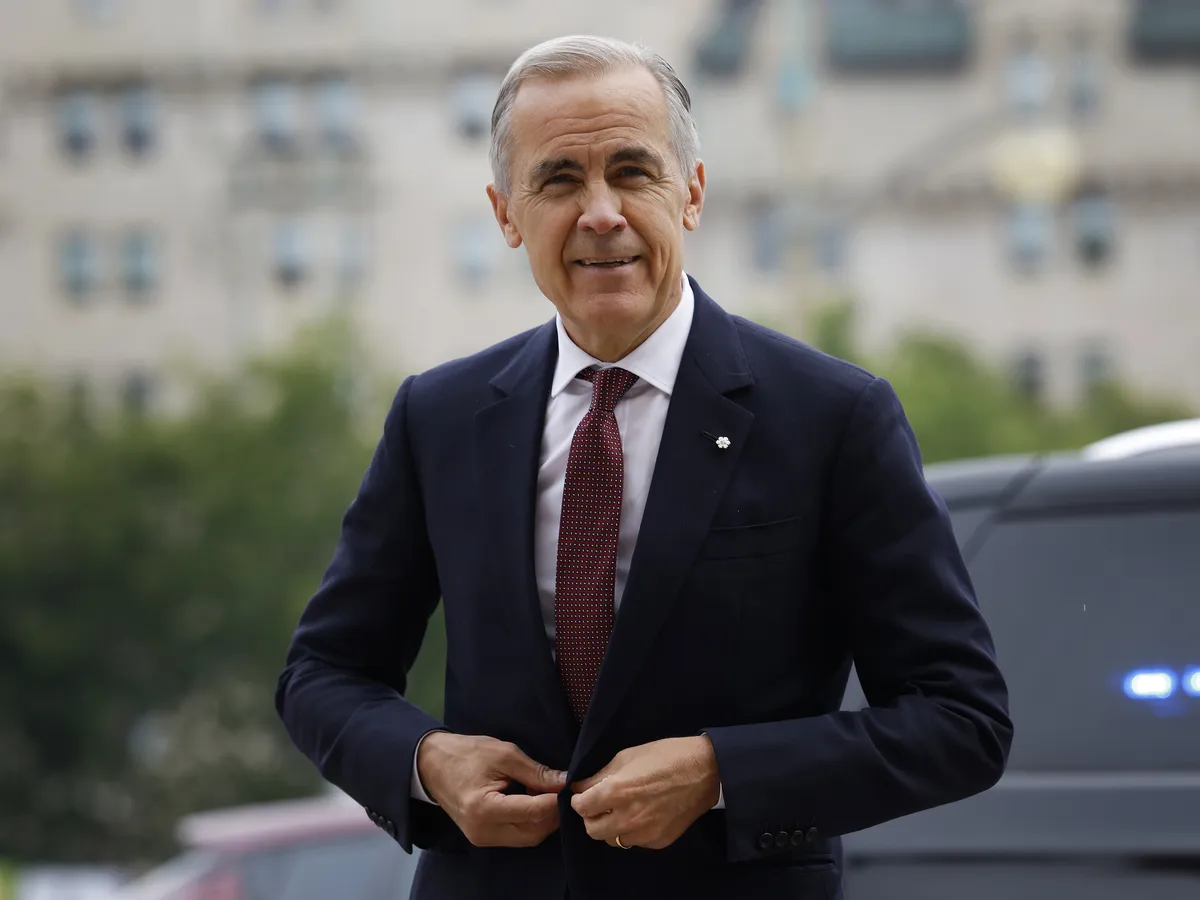
Skip to Content News Archives Economy Energy Oil & Gas Renewables Electric Vehicles Mining Commodities Agriculture Real Estate Mortgages Mortgage Rates Finance Banking Insurance Fintech Cryptocurrency Work Wealth Smart Money Wealth Management Investor Personal Finance Family Finance Retirement Taxes High Net Worth FP Comment Executive Women Puzzmo Newsletters Financial Times Business Essentials More Innovation Information Technology FP500 Podcasts Small Business Lives Told Tails Told Shopping Financial Post Store Obituaries Place a Notice Advertising Advertising With Us Advertising Solutions Postmedia Ad Manager Sponsorship Requests Classifieds Place a Classifieds ad Working Profile Settings My Subscriptions Saved Articles My Offers Newsletters Customer Service FAQ News Economy Energy Mining Real Estate Finance Work Wealth Investor FP Comment Executive Women Puzzmo Newsletters Financial Times Business Essentials HomeFP CommentPhilip Cross: After Trudeau, investors' 'animal spirits' are lowBusiness provides the investment that brings productivity growth and higher incomes. But the past decade curbed its profit enthusiasmLast updated 1 hour ago You can save this article by registering for free here. Or sign-in if you have an account.Prime Minister Mark Carney arrives to speak to journalists in the Parliamentary Precinct in Ottawa on July 21, 2026. Photo by Blair Gable/Postmedia filesMost economists agree productivity drives income growth over time. Canada’s annual productivity growth has slowed in recent years to less than 1.0 per cent, its lowest on record back to 1961 and a major reason why the growth of real GDP per capita has also plumbed historic lows. Reviving Canada’s economic growth necessarily means boosting productivity.Subscribe now to read the latest news in your city and across Canada.Exclusive articles from Barbara Shecter, Joe O'Connor, Gabriel Friedman, and others.Daily content from Financial Times, the world's leading global business publication.Unlimited online access to read articles from Financial Post, National Post and 15 news sites across Canada with one account.National Post ePaper, an electronic replica of the print edition to view on any device, share and comment on.Daily puzzles, including the New York Times Crossword.Subscribe now to read the latest news in your city and across Canada.Exclusive articles from Barbara Shecter, Joe O'Connor, Gabriel Friedman and others.Daily content from Financial Times, the world's leading global business publication.Unlimited online access to read articles from Financial Post, National Post and 15 news sites across Canada with one account.National Post ePaper, an electronic replica of the print edition to view on any device, share and comment on.Daily puzzles, including the New York Times Crossword.Create an account or sign in to continue with your reading experience.Access articles from across Canada with one account.Share your thoughts and join the conversation in the comments.Enjoy additional articles per month.Get email updates from your favourite authors.Create an account or sign in to continue with your reading experience.Access articles from across Canada with one accountShare your thoughts and join the conversation in the commentsEnjoy additional articles per monthGet email updates from your favourite authorsSign In or Create an AccountorThe major reason productivity has slowed over the past decade is lower business investment. As former Bank of Canada deputy governor Carolyn Rogers observed in her famous “Time to break the glass” speech two years ago, “when you compare Canada’s recent productivity record with that of other countries, what really stands out is how much we lag on investment.”Business investment has been the weakest sector in Canada’s economy, falling 6.4 per cent since the end of 2014. This decline contrasts starkly with a 43.2 per cent surge in the U.S. over the same period. American investment growth was led by technology companies establishing their global dominance in areas such as smartphones, cloud computing and AI. But technology has not been the only source of U.S. investment growth. It also capitalized on rising demand for oil and gas, especially from Europe after Russia’s invasion of Ukraine in 2022. Diverging business investment between Canada and the U.S. has played a major role in the faster growth of American incomes and productivity over the past decade.Get the latest headlines, breaking news and columns.By signing up you consent to receive the above newsletter from Postmedia Network Inc.A welcome email is on its way. If you don't see it, please check your junk folder.The next issue of Top Stories will soon be in your inbox.We encountered an issue signing you up. Please try againEconomists do not completely understand what determines business investment. Interest rates, tax and regulatory policy clearly play a role, but it’s also driven by what John Maynard Keynes termed “animal spirits” — “the spontaneous urge to action rather than inaction” that depends on psychological factors such as the confidence and trust of the business community.Policy-makers obviously have been aware of Canada’s lagging business investment and understand what it implies for our long-term growth. During his term as Bank of Canada governor, Stephen Poloz repeatedly called for shifting the sources of economic growth from government and household spending to exports and business investment. But this transition never materialized.The Bank of Canada’s frustration with businesses’ reluctance to invest in Canada occasionally boiled over into chastising companies for not spending enough. In 2012, then-governor Mark Carney criticized firms for sitting on too much cash, which, infamously, he called “dead money.” For his part, Poloz criticized firms for setting their “hurdle rate” too high. That’s the rate of return needed for them to justify investing. That essentially echoed Carney’s critique of blaming firms for being overly-cautious.A better explanation is that Canada’s increasingly unfriendly investment climate drove companies to invest much less here than south of the border. Direct investment flows show Canadians have been more than willing to spend record amounts abroad, especially in the U.S. The total of Canadians’ direct investment abroad increased three-fold between 2012 and 2025, from $704.3 billion to $2.428 trillion, with over half the increase going to the U.S.Governments must accept much of the blame for Canada’s chronically weak business investment. Excessive, expensive and time-consuming regulations have blunted the “animal spirits” of our business community, especially in the energy sector, where Canada could have matched a U.S. investment boom. Permit approvals and contract completion take years or even decades — 18 years in mining, for example. Our tax system provides little competitive advantage to invest in Canada, while increasing reliance on high personal income taxes discourages venture capital and skill acquisition.The Carney government is counting on a revival of business investment to reinvigorate the economy. Rather than criticizing firms for sitting on “dead money,” Carney now acknowledges government actions were part of the problem, and he proposes to remedy this with expedited reviews of investment projects by the Major Projects Office. So far, however, there is little evidence of a turnaround — though that’s not surprising: it will take time for Carney to prove to business he sincerely wants them to let their animal spirits run free.Philip Cross is a senior fellow at the Macdonald-Laurier Institute. Join the Conversation This website uses cookies to personalize your content (including ads), and allows us to analyze our traffic. Read more about cookies here. By continuing to use our site, you agree to our Terms of Use and Privacy Policy.
Philip Cross: After Trudeau, investors' 'animal spirits' are low
Business provides the investment that brings productivity growth and higher incomes. The past decade curbed its profit enthusiasm. Read more
1,174 words~5 min read