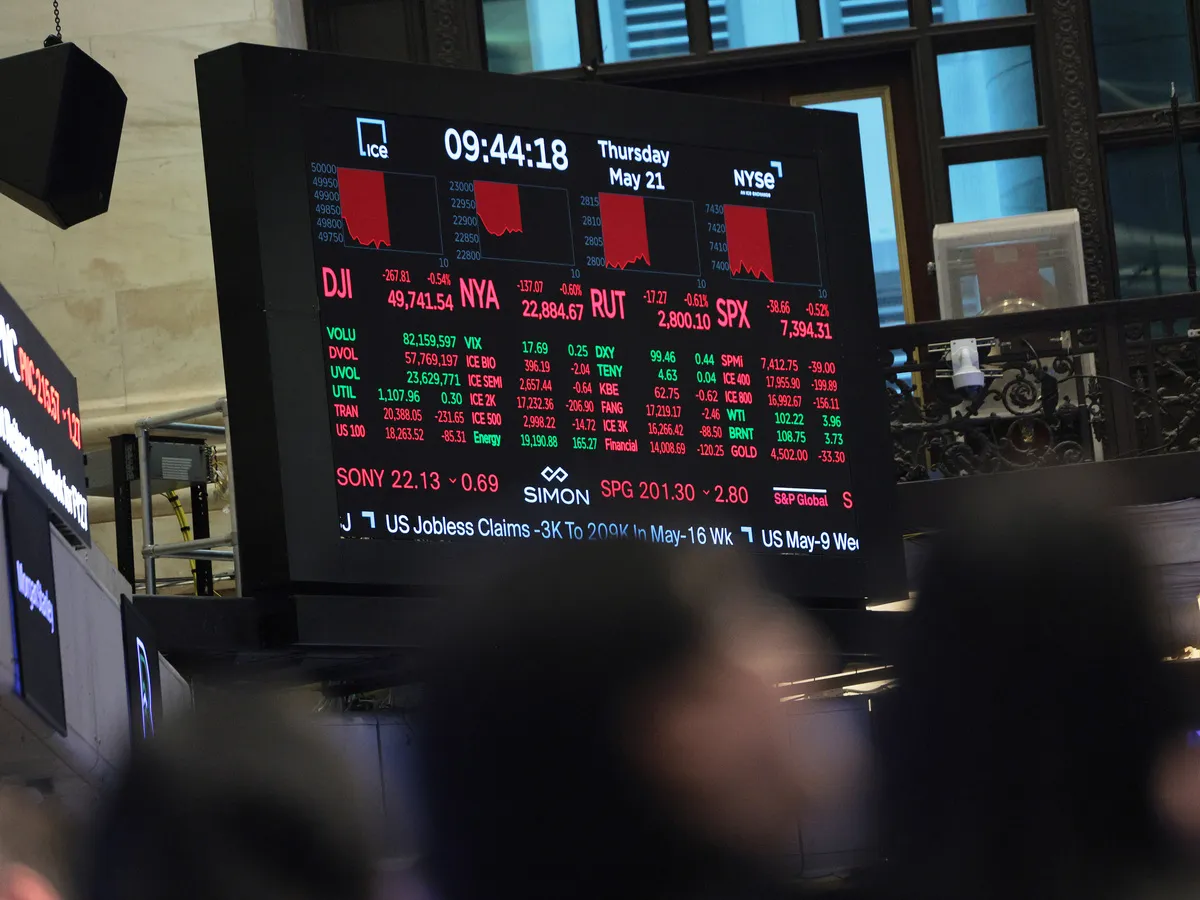
Skip to Content News Archives Economy Energy Oil & Gas Renewables Electric Vehicles Mining Commodities Agriculture Real Estate Mortgages Mortgage Rates Finance Banking Insurance Fintech Cryptocurrency Work Wealth Smart Money Wealth Management Investor Personal Finance Family Finance Retirement Taxes High Net Worth FP Comment Executive Women Puzzmo Newsletters Financial Times Business Essentials More Innovation Information Technology FP500 Podcasts Small Business Lives Told Tails Told Shopping Financial Post Store Obituaries Place a Notice Advertising Advertising With Us Advertising Solutions Postmedia Ad Manager Sponsorship Requests Classifieds Place a Classifieds ad Working Profile Settings My Subscriptions Saved Articles My Offers Newsletters Customer Service FAQ News Economy Energy Mining Real Estate Finance Work Wealth Investor FP Comment Executive Women Puzzmo Newsletters Financial Times Business Essentials HomeInvestorRoll with the market: How valuations can help investors avoid costly mistakesNoah Solomon: Why smart investors are taking some chips off the U.S. stock market tableLast updated 27 minutes ago You can save this article by registering for free here. Or sign-in if you have an account.Stock market numbers are displayed on the floor of the New York Stock Exchange during morning trading on May 21. Photo by Michael M. Santiago/Getty Images filesLuck’ll come and then slip awayYou’ve gotta move, bring it back to stayYou just roll with it, baby —Roll with It, by Steve WinwoodSubscribe now to read the latest news in your city and across Canada.Exclusive articles from Barbara Shecter, Joe O'Connor, Gabriel Friedman, and others.Daily content from Financial Times, the world's leading global business publication.Unlimited online access to read articles from Financial Post, National Post and 15 news sites across Canada with one account.National Post ePaper, an electronic replica of the print edition to view on any device, share and comment on.Daily puzzles, including the New York Times Crossword.Subscribe now to read the latest news in your city and across Canada.Exclusive articles from Barbara Shecter, Joe O'Connor, Gabriel Friedman and others.Daily content from Financial Times, the world's leading global business publication.Unlimited online access to read articles from Financial Post, National Post and 15 news sites across Canada with one account.National Post ePaper, an electronic replica of the print edition to view on any device, share and comment on.Daily puzzles, including the New York Times Crossword.Create an account or sign in to continue with your reading experience.Access articles from across Canada with one account.Share your thoughts and join the conversation in the comments.Enjoy additional articles per month.Get email updates from your favourite authors.Create an account or sign in to continue with your reading experience.Access articles from across Canada with one accountShare your thoughts and join the conversation in the commentsEnjoy additional articles per monthGet email updates from your favourite authorsSign In or Create an AccountorOne simple truth about markets is that they have, and always will, continue to periodically present investors with dynamically evolving combinations of risk and reward.To never suffer losses is an unrealistic objective for those who wish to reap satisfactory returns. It is far more efficient (and financially rewarding) to roll with it. This entails adapting to changes to 1. maximize gains when markets offer above-average returns with relatively low risk and 2. to minimize losses when markets offer below-average returns with above-average risk.Canada's best source for investing news, analysis and insight.By signing up you consent to receive the above newsletter from Postmedia Network Inc.A welcome email is on its way. If you don't see it, please check your junk folder.The next issue of Investor will soon be in your inbox.We encountered an issue signing you up. Please try againThe Latin phrase sine qua non means “without which not,” which refers to something that is a necessary or indispensable requirement. The sine qua non of successful long-term investing entails constantly assessing and reassessing the magnitude of potential losses relative to potential gains and adjusting your portfolio accordingly.Baseball legend Yogi Berra stated, “In theory, there is no difference between theory and practice. In practice, there is.” If you dial up your risk profile when the odds favour doing so and take some chips off the table when the probabilities dictate as such, your long-term performance will inevitably be well above average. So far so good.Unfortunately, accurately assessing and reassessing these probabilities as they ebb and flow over time is no easy feat.I don’t believe that there is any accurate way to gauge the relative magnitude of upside versus downside risk over the short-term, which I define as a period of at least one to two years.People can persist in irrational behaviour for longer periods and with greater voraciousness than might seem possible. In hindsight, most investors should have exercised prudence long before tech stocks reached their peak in early 2000 or real estate sung its swan song in 2008 — but they didn’t.Similarly, they should have been scooping up bargains en masse either before, during or not long after markets bottomed in early 2003 and March 2009 — but they didn’t. Greed and fear, which are arguably the greatest determinants of prices over the short-term, are impossible to precisely measure or time. As such, attempting to assess the relative risk of loss versus opportunity cost over shorter horizons is an exercise in futility.Valuations serve as a proxy for the margin of safety that is embedded in asset prices, and by extension for how vulnerable prices are to delivering subpar or negative average annualized returns over the next five to seven years.Looking at valuations in relation to the state of the economy and profit growth, in a five- to seven-year time frame, valuations on the low end of the historical range in a strong economy with strong profit growth result in well-above average returns. In contrast, valuations on the high end of the historical range in a weak economy with weak profit growth result in well-below average returns.Some other things to note:When valuations are elevated, even strong earnings growth may fail to produce higher-than-average returns, while anything short of this is likely to result in anemic performance or even losses.When valuations are neither depressed nor elevated, prices are most likely to track profits.When valuations are depressed, average or even above-average returns can persist even in the face of subpar earnings growth, while more favourable or even average conditions are likely to produce strong gains.As valuations increase, gains become less likely while the likelihood of losses rises. Similarly, as valuations decline, prospective gains increasingly eclipse potential losses. At extremes, markets are priced to perfection, there is almost no amount of good news that can prevent subpar returns, and when they are priced for Armageddon, strong returns are likely to ensue in all but the most cataclysmic circumstances.U.S. stock valuations are concerningly high relative to their non-U.S. peers. Without exception, equities in other geographies are anywhere from inexpensive to screamingly so, relative to those in the United StatesFor instance, Canadian stocks’ valuations relative to U.S. equities are in the 24th percentile, the Eurozone’s in the 17th percentile and emerging markets’ in the 7th percentile.Investor enthusiasm for such stocks has been central in affording the U.S. market a premium multiple. However, what is relatively new is the mind-bogglingly large amounts of capital that megacap tech companies are spending on AI-related endeavours, the return on which cannot be known. In addition, the profit potential of AI faces significant legal and regulatory risks, as recently demonstrated when a California jury found Meta Platforms Inc. and Alphabet Inc. liable in a case concerning social media addiction. Although these financial, legal and regulatory risks have not yet led investors to demand lower multiples, the fact remains that this is a very real possibility going forward.Putting relative values across regions aside, a scenario where stocks in other regions are inexpensive relative to their U.S. peers but are nonetheless expensive relative to their own historical valuations would hardly be inspiring – a less dirty shirt is still dirty.Looking at valuation in a 20-year historical comparison, U.S. stocks are in the 83rd percentile, Canadian stocks in the 67th percentile, Eurozone stocks in the 69th percentile and emerging market stocks in the 47th percentile.Broadly speaking, there are no sparklingly clean shirts in the closet – regardless of region, there are no screaming bargains. U.S. equities lie near the top end of their historical valuation range, Canadian and Eurozone stocks exhibit above-average valuations and emerging market shares stand at average multiples. Only Japanese equities present somewhat of a bargain from a historical perspective, with valuations in the 35th percentile in a 20-year historical comparison.As such, investors should roll with it, weigh their equity exposure in favour of stocks outside of the U.S., and consider increasing their exposure to bonds.Noah Solomon is chief investment officer at Outcome Metric Asset Management LP._____________________________________________________________If you like this story,sign up for the FP Investor Newsletter. Join the Conversation This website uses cookies to personalize your content (including ads), and allows us to analyze our traffic. Read more about cookies here. By continuing to use our site, you agree to our Terms of Use and Privacy Policy.
Roll with the market: How valuations can help investors avoid costly mistakes
Here's why smart investors are taking some chips off the U.S. stock market table. Find out more.
1,493 words~7 min read