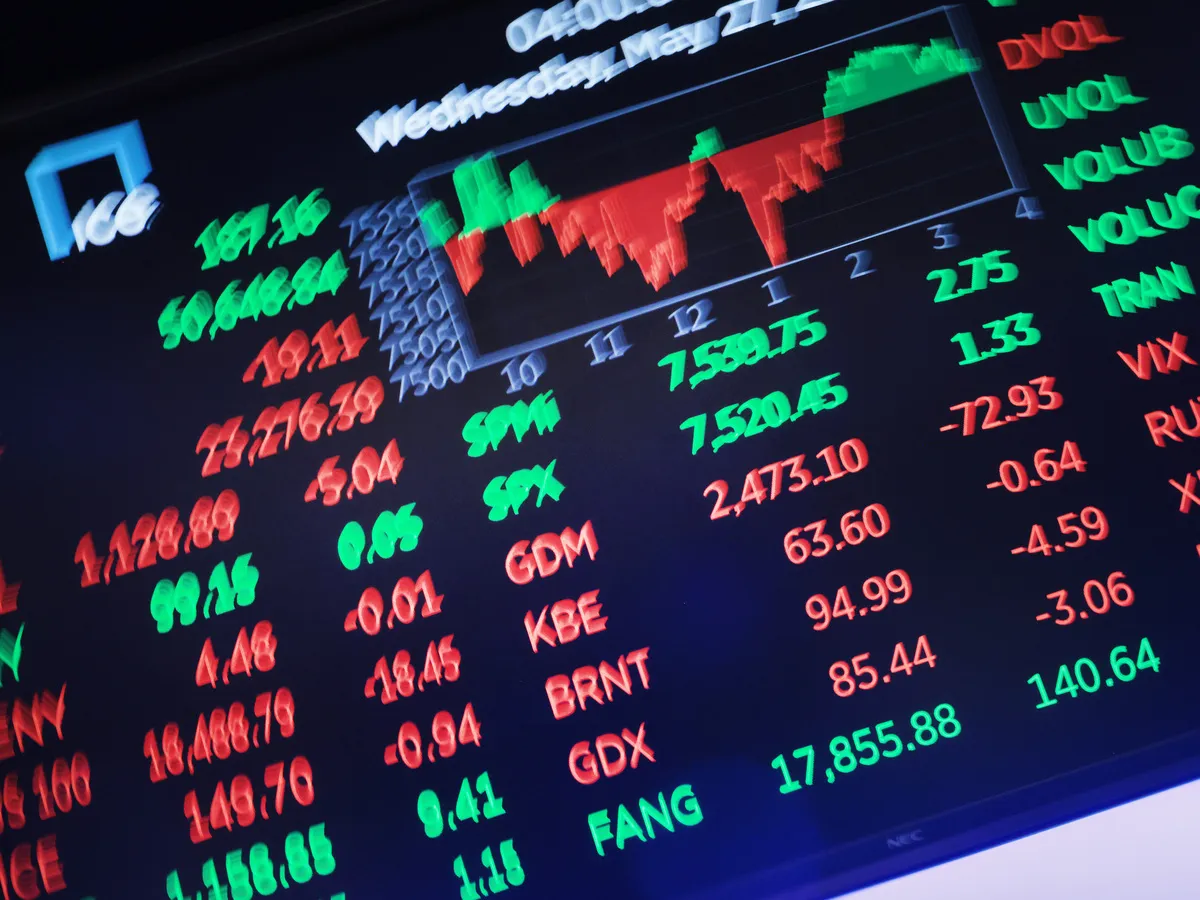
Skip to Content News Archives Economy Energy Oil & Gas Renewables Electric Vehicles Mining Commodities Agriculture Real Estate Mortgages Mortgage Rates Finance Banking Insurance Fintech Cryptocurrency Work Wealth Smart Money Wealth Management Investor Personal Finance Family Finance Retirement Taxes High Net Worth FP Comment Executive Women Puzzmo Newsletters Financial Times Business Essentials More Innovation Information Technology FP500 Podcasts Small Business Lives Told Tails Told Shopping Financial Post Store Obituaries Place a Notice Advertising Advertising With Us Advertising Solutions Postmedia Ad Manager Sponsorship Requests Classifieds Place a Classifieds ad Working Profile Settings My Subscriptions Saved Articles My Offers Newsletters Customer Service FAQ News Economy Energy Mining Real Estate Finance Work Wealth Investor FP Comment Executive Women Puzzmo Newsletters Financial Times Business Essentials HomeInvestorMarkets don't care what you paid: The dangers of getting too attached to a stockMartin Pelletier: Instead of evaluating an investment based on its current risk and return profile, we begin to defend itLast updated 14 minutes ago You can save this article by registering for free here. Or sign-in if you have an account.A board on the floor of the New York Stock Exchange shows the closing numbers for the day in New York City. Photo by Spencer Platt/Getty Images filesTwo weekends ago, after what felt like an endless stretch of grey skies, snow and a stubbornly wet Calgary spring, I decided I’d had enough. I packed up the car with my wife and made the 6 1/2-hour drive to Vernon and Kelowna, B.C., in search of a bit of sunshine. It had been more than a few years since my last visit for non-business purposes, largely because the combination of speculation taxes and tighter short-term rental rules had pushed the cost of staying there so high that it was cheaper for my family and me to travel to places such as the Italian Amalfi coast. However, this time felt different, very different.Subscribe now to read the latest news in your city and across Canada.Exclusive articles from Barbara Shecter, Joe O'Connor, Gabriel Friedman, and others.Daily content from Financial Times, the world's leading global business publication.Unlimited online access to read articles from Financial Post, National Post and 15 news sites across Canada with one account.National Post ePaper, an electronic replica of the print edition to view on any device, share and comment on.Daily puzzles, including the New York Times Crossword.Subscribe now to read the latest news in your city and across Canada.Exclusive articles from Barbara Shecter, Joe O'Connor, Gabriel Friedman and others.Daily content from Financial Times, the world's leading global business publication.Unlimited online access to read articles from Financial Post, National Post and 15 news sites across Canada with one account.National Post ePaper, an electronic replica of the print edition to view on any device, share and comment on.Daily puzzles, including the New York Times Crossword.Create an account or sign in to continue with your reading experience.Access articles from across Canada with one account.Share your thoughts and join the conversation in the comments.Enjoy additional articles per month.Get email updates from your favourite authors.Create an account or sign in to continue with your reading experience.Access articles from across Canada with one accountShare your thoughts and join the conversation in the commentsEnjoy additional articles per monthGet email updates from your favourite authorsSign In or Create an AccountorIt turns out I wasn’t alone in that thinking, as there appears to be a noticeable shift underway, at least in beautiful British Columbia. A softening in tourism demand, driven in part by tighter short-term rental regulations and speculation taxes, seems to have created openings that simply didn’t exist before. For the first time in years, I found well-priced vacation rentals with genuine availability. The same market that once felt overheated and largely inaccessible is now showing signs of a meaningful adjustment.Canada's best source for investing news, analysis and insight.By signing up you consent to receive the above newsletter from Postmedia Network Inc.A welcome email is on its way. If you don't see it, please check your junk folder.The next issue of Investor will soon be in your inbox.We encountered an issue signing you up. Please try againCurious, I took it a step further and even looked at a few properties while I was there. On the surface, one might expect that weaker rental demand would translate into more motivated sellers and so I threw out a few well-priced offers to test the waters. While we got a nibble with one seller willing to at least negotiate, the vast majority remained firmly anchored to their asking prices, often referencing 2024 highs rather than more recent comparables. Overall, I was quite surprised at the level of confidence that didn’t match the economic reality.That dynamic is not unique to real estate. In fact, it mirrors a common behavioural pattern seen in financial markets as well.Investors, like property owners, often become anchored to a specific price, usually the highest price observed. Once that anchor is set, it becomes difficult to adjust expectations, even when new information points to a very different reality. As a result, investors will hold out for prices well above the current bid, waiting for the market to rescue them, even as conditions deteriorate. In doing so, they risk letting opportunity pass by in favour of a price that may no longer be relevant.But markets don’t negotiate in that way. The bid is the bid and if you really want to sell, you need to meet it. Holding out for a price that no longer reflects current conditions simply delays a decision and can prove costly if you get the timing wrong.There is another, deeper lesson here, and it speaks to attachment.Over time, we tend to develop a personal connection to the things we own, whether it’s a home, a stock, or a broader portfolio. That attachment can cloud our judgment. Instead of evaluating an investment based on its current risk and return profile, we begin to defend it.I’ve seen this play out repeatedly in markets, sometimes to an extreme. Certain assets take on an almost tribal following. Assets like Tesla Inc. or bitcoin, for example, often attract highly devoted investors, where criticism — even when grounded in valuation or fundamentals — is met with immediate and emotional resistance. The reaction itself transforms from being about the underlying investment into more about protecting a deeply held belief.At its core, the issue is identity. When people conflate what they own with who they are, any perceived critique becomes personal. That’s a very dangerous place to operate from as an investor because good decision-making requires distance: having an ability to assess objectively; to adapt when conditions change and to exit when the thesis no longer holds.A useful way to think about it is this: You are not your house, you are not your investment portfolio and you are not your job. Each of these serves a purpose. They provide utility, income or exposure to opportunity. But they are not extensions of your identity.Approaching investments with that mindset changes behaviour in subtle but important ways. It encourages flexibility and it makes it easier to reassess assumptions. And perhaps most importantly, it reduces the emotional friction that often leads to poor decisions at precisely the wrong time.Markets, like the weather, are always changing. The ability to adapt is essential, even if it means driving a few hours in search of sunshine. You rarely know what you’ll find at the end of that journey and sometimes you return home empty-handed. Yet the discipline lies in being willing to make the trip in the first place and using it as a means of self-reflection with a dash of great weather on the side. Now that is a winning trade.Martin Pelletier, CFA, is the author of Investing Through the Storm and a senior portfolio manager at TriVest Wealth, a team that is part of Wellington-Altus Private Counsel Inc. TriVest provides discretionary risk-managed portfolios, investment audit/oversight and advanced tax, estate and wealth planning. The opinions expressed are not necessarily those of Wellington-Altus._____________________________________________________________If you like this story, sign up for the FP Investor Newsletter. Join the Conversation This website uses cookies to personalize your content (including ads), and allows us to analyze our traffic. Read more about cookies here. By continuing to use our site, you agree to our Terms of Use and Privacy Policy.
Markets don't care what you paid: The dangers of getting too attached to a stock
Martin Pelletier: Instead of evaluating an investment based on its current risk and return profile, we begin to defend it. Find out more.
1,381 words~6 min read