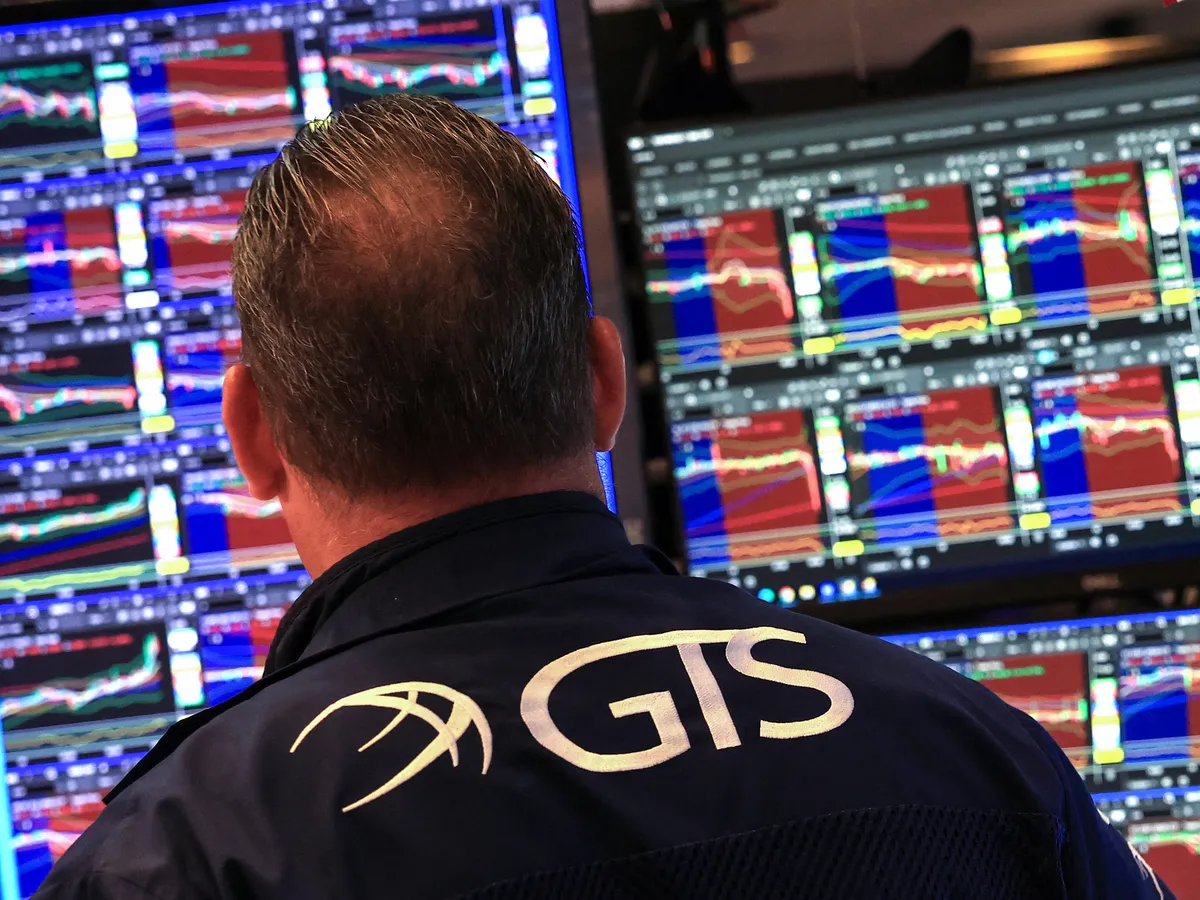
Skip to Content News Archives Economy Energy Oil & Gas Renewables Electric Vehicles Mining Commodities Agriculture Real Estate Mortgages Mortgage Rates Finance Banking Insurance Fintech Cryptocurrency Work Wealth Smart Money Wealth Management Investor Personal Finance Family Finance Retirement Taxes High Net Worth FP Comment Executive Women Puzzmo Newsletters Financial Times Business Essentials More Innovation Information Technology FP500 Podcasts Small Business Lives Told Tails Told Shopping Financial Post Store Obituaries Place a Notice Advertising Advertising With Us Advertising Solutions Postmedia Ad Manager Sponsorship Requests Classifieds Place a Classifieds ad Working Profile Settings My Subscriptions Saved Articles My Offers Newsletters Customer Service FAQ News Economy Energy Mining Real Estate Finance Work Wealth Investor FP Comment Executive Women Puzzmo Newsletters Financial Times Business Essentials HomeInvestorWarning signs in markets are emerging that should not be ignoredMartin Pelletier: When bond markets start reminding us of the Global Financial Crisis, investors need to protect themselvesLast updated 16 minutes ago You can save this article by registering for free here. Or sign-in if you have an account.This type of market requires thoughtful positioning, a focus on capital protection first and having the ability to act when dislocations create opportunity. Photo by TIMOTHY A. CLARY/AFP via Getty ImagesI’ve learned from my many years of being in the market that there are moments when warning signs begin to emerge that should not be ignored.Subscribe now to read the latest news in your city and across Canada.Exclusive articles from Barbara Shecter, Joe O'Connor, Gabriel Friedman, and others.Daily content from Financial Times, the world's leading global business publication.Unlimited online access to read articles from Financial Post, National Post and 15 news sites across Canada with one account.National Post ePaper, an electronic replica of the print edition to view on any device, share and comment on.Daily puzzles, including the New York Times Crossword.Subscribe now to read the latest news in your city and across Canada.Exclusive articles from Barbara Shecter, Joe O'Connor, Gabriel Friedman and others.Daily content from Financial Times, the world's leading global business publication.Unlimited online access to read articles from Financial Post, National Post and 15 news sites across Canada with one account.National Post ePaper, an electronic replica of the print edition to view on any device, share and comment on.Daily puzzles, including the New York Times Crossword.Create an account or sign in to continue with your reading experience.Access articles from across Canada with one account.Share your thoughts and join the conversation in the comments.Enjoy additional articles per month.Get email updates from your favourite authors.Create an account or sign in to continue with your reading experience.Access articles from across Canada with one accountShare your thoughts and join the conversation in the commentsEnjoy additional articles per monthGet email updates from your favourite authorsSign In or Create an AccountorAcross both developed and emerging economies, long-term government bond yields have risen to levels not seen in more than two decades, in many cases exceeding the peaks reached during the Global Financial Crisis. United States 10-year and 30-year Treasury yields are now back at levels last seen before the 2008 crisis. Japan’s long-end bond has surged to multi-decade highs, while sovereign yields across Europe and the United Kingdom continue to grind higher. Even in Canada, where energy exposure offers some offset, long-term rates have moved meaningfully higher, with 10-year Government of Canada bond yields approaching the upper end of their range in recent years.It doesn’t take a rocket scientist to see that bond markets are starting to push back against what is unfolding in Iran and the Strait of Hormuz. While equity markets have largely shrugged it off, the situation is deteriorating and reintroducing inflationary pressure at a time when central banks were just beginning to make serious progress and were leaning toward rate cuts prior to this latest escalation.Canada's best source for investing news, analysis and insight.By signing up you consent to receive the above newsletter from Postmedia Network Inc.A welcome email is on its way. If you don't see it, please check your junk folder.The next issue of Investor will soon be in your inbox.We encountered an issue signing you up. Please try againThe result is we now have a bond market demanding greater compensation for long-term lending. In simple terms, the cost of money has structurally increased, and it is difficult to see how this does not eventually weigh on growth over time, with consequences extending beyond bond markets.In particular, governments are now facing rising interest expenses on already very stretched fiscal positions, corporations must refinance debt at less attractive levels and households continue to absorb pressure through higher borrowing costs and elevated living expenses. For many on Main Street, this comes on top of a meaningful erosion in purchasing power following years of aggressive fiscal and monetary stimulus that ran well past its useful life.What is becoming harder to ignore is what is happening in the stronger parts of the equity market. The technology sector, which had been a primary engine of growth, has seen a meaningful pullback in its workforce. Job cuts have mounted into the tens of thousands across the industry. Oracle Corp. has reduced roughly an estimated 20,000 to 30,000 roles, Amazon.com Inc. more than 16,000, and Meta Platforms, Inc. more than 8,000, with further reductions across a wide range of companies in software, e-commerce and digital platforms. As the cost of capital rises, management teams are refocusing on efficiency and cost discipline, particularly as they continue to fund significant investments in artificial intelligence.Not surprisingly, this isn’t being well received, especially by our young people. University commencements, once celebratory platforms for technology leaders, have in some instances turned confrontational, with graduates openly challenging executives over the implications of artificial intelligence on future employment. And we can’t blame them, as reduced job prospects paired with currency debasement and unaffordability can seem like capitalism is failing an entire generation.Such environments tend to reward a different set of exposures than what worked over the past decade. For example, real assets, businesses with pricing power and companies that generate steady and durable cash flows tend to hold up better in this type of backdrop.By contrast, areas of the market that were built on low discount rates face a more challenging adjustment. High-growth equities, long-duration assets and highly leveraged business models become more sensitive when capital is no longer cheap.This is why having some exposure to commodities makes a lot of sense because it can act as both a source of return and a form of insurance. Periods of geopolitical stress and supply disruption often lead to sharp price movements, creating opportunities while also helping to offset inflationary pressures elsewhere in a portfolio.Gold remains relevant in this context. Despite recent weakness tied to higher rates and a stronger U.S. dollar, the broader backdrop of fiscal expansion and currency debasement continues to support its long-term role as a store of value. Periods of pullback have historically provided good entry points for investors who are underweight.Energy markets are a much more difficult segment of the market to evaluate, and I’m saying this with years of experience in the oil patch. Supply constraints and geopolitical risks continue to create large swings in pricing being weighed against demand destruction by high prices. Rather than attempting to predict short-term moves, a more effective approach is to actively manage exposure, trimming into strength and adding selectively during periods of weakness.This type of market requires thoughtful positioning, a focus on capital protection first and having the ability to act when dislocations create opportunity. Because when bond markets start raising their voice, it is usually worth listening.Martin Pelletier, CFA, is author of Investing Through the Storm and a senior portfolio manager at Wellington-Altus Private Counsel Inc., operating as TriVest Wealth Counsel, a private client and institutional investment firm specializing in discretionary risk-managed portfolios, investment audit/oversight and advanced tax, estate and wealth planning. The opinions expressed are not necessarily those of Wellington-Altus._____________________________________________________________If you like this story, sign up for the FP Investor Newsletter. Join the Conversation This website uses cookies to personalize your content (including ads), and allows us to analyze our traffic. Read more about cookies here. By continuing to use our site, you agree to our Terms of Use and Privacy Policy.
Warning signs in markets are emerging that should not be ignored
Martin Pelletier: When bond markets start reminding us of the Global Financial Crisis, investors need to protect themselves. Read on
1,362 words~6 min read