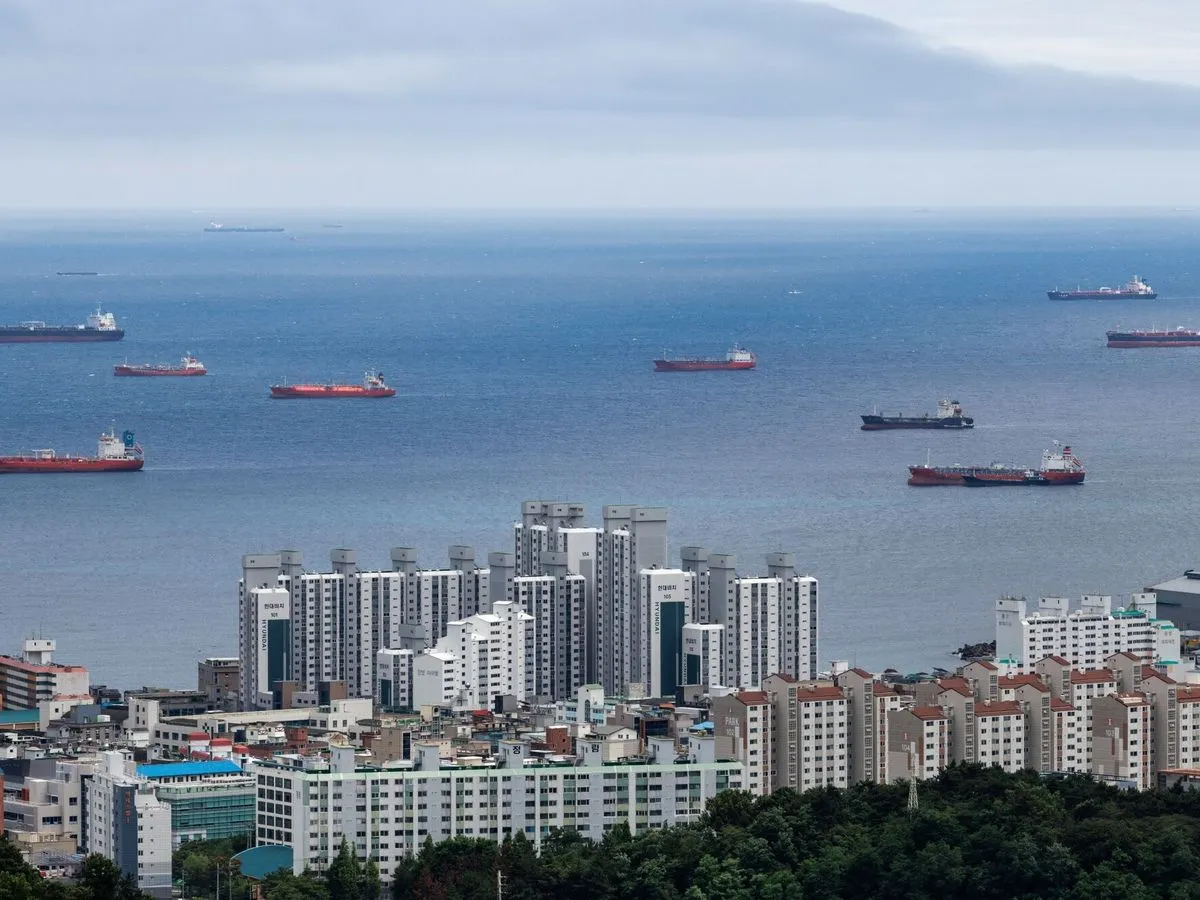
Skip to Content News Archives Economy Energy Oil & Gas Renewables Electric Vehicles Mining Commodities Agriculture Real Estate Mortgages Mortgage Rates Finance Banking Insurance Fintech Cryptocurrency Work Wealth Smart Money Wealth Management Investor Personal Finance Family Finance Retirement Taxes High Net Worth FP Comment Executive Women Puzzmo Newsletters Financial Times Business Essentials More Innovation Information Technology FP500 Podcasts Small Business Lives Told Tails Told Shopping Financial Post Store Obituaries Place a Notice Advertising Advertising With Us Advertising Solutions Postmedia Ad Manager Sponsorship Requests Classifieds Place a Classifieds ad Working Profile Settings My Subscriptions Saved Articles My Offers Newsletters Customer Service FAQ News Economy Energy Mining Real Estate Finance Work Wealth Investor FP Comment Executive Women Puzzmo Newsletters Financial Times Business Essentials HomeInvestorThe oil shock isn't over, it has just changed shape and stock market investors need to take noticeMartin Pelletier: Investors focused on crude prices may be missing stresses that could end up weighing on equity valuationsLast updated 1 hour ago You can save this article by registering for free here. Or sign-in if you have an account.A ship sails off the coast of Ajman on July 10. Traffic through the Strait of Hormuz has fallen sharply since July 8, especially through the UN-backed Omani route, analysts said, after vessels were attacked earlier this week and as the United States and Iran traded renewed strikes. Photo by AFP via Getty ImagesBroader equity markets such as the S&P 500 have recently been behaving as though the oil shock has passed. Although cracks in the Iran-United States ceasefire pushed oil prices up again, at one point they pulled back toward levels seen before the war disrupted shipping through the Strait of Hormuz. Regardless of fluctuations in oil prices, we at TriVest Wealth think investors may be watching the wrong indicator.Subscribe now to read the latest news in your city and across Canada.Exclusive articles from Barbara Shecter, Joe O'Connor, Gabriel Friedman, and others.Daily content from Financial Times, the world's leading global business publication.Unlimited online access to read articles from Financial Post, National Post and 15 news sites across Canada with one account.National Post ePaper, an electronic replica of the print edition to view on any device, share and comment on.Daily puzzles, including the New York Times Crossword.Subscribe now to read the latest news in your city and across Canada.Exclusive articles from Barbara Shecter, Joe O'Connor, Gabriel Friedman and others.Daily content from Financial Times, the world's leading global business publication.Unlimited online access to read articles from Financial Post, National Post and 15 news sites across Canada with one account.National Post ePaper, an electronic replica of the print edition to view on any device, share and comment on.Daily puzzles, including the New York Times Crossword.Create an account or sign in to continue with your reading experience.Access articles from across Canada with one account.Share your thoughts and join the conversation in the comments.Enjoy additional articles per month.Get email updates from your favourite authors.Create an account or sign in to continue with your reading experience.Access articles from across Canada with one accountShare your thoughts and join the conversation in the commentsEnjoy additional articles per monthGet email updates from your favourite authorsSign In or Create an AccountorThe more important message is coming from refined product markets. Crack spreads — the margin refiners earn by turning crude oil into gasoline, diesel and jet fuel — remain extraordinarily elevated. RBN Energy’s 3-2-1 crack spread has climbed above US$60 a barrel in the past week, marking one of the highest levels on record and is clearly showing lingering stress in the system. This suggests that beyond crude prices, the downstream market is telling a very different story.Canada's best source for investing news, analysis and insight.By signing up you consent to receive the above newsletter from Postmedia Network Inc.A welcome email is on its way. If you don't see it, please check your junk folder.The next issue of Investor will soon be in your inbox.We encountered an issue signing you up. Please try againThat matters because consumers do not buy crude oil. They buy gasoline, diesel, heating oil and airline tickets. A falling crude price does not necessarily translate into relief if the bottleneck has moved downstream into refining capacity, inventories and product availability. Elevated crack spreads suggest demand for refined products remains robust, inventories remain tight and the global energy system has less spare capacity than crude prices alone would imply.Part of the reason crude prices have not moved dramatically higher is China. Beijing appears to be managing demand carefully, drawing on inventories rather than aggressively competing for every available barrel in the spot market. The International Energy Agency has noted significant inventory drawdowns during the Hormuz disruption, while China’s stockpiling policies have become an increasingly important factor in global oil balances. In some respects, China has become a new swing factor in oil markets. It may not be the Organization of the Petroleum Exporting Countries but its inventory decisions increasingly influence the marginal barrel in a way that resembles producer power.This is one of the more underappreciated shifts in the global energy landscape. For decades, investors focused on OPEC spare capacity, Saudi Arabia’s willingness to increase or reduce production and the responsiveness of U.S. shale producers. Those factors still matter, but China’s ability to build, hold and release inventories gives it considerable influence over prices. If China remains cautious, crude prices may stay contained. If it decides to rebuild inventories aggressively, the market could tighten much faster than many investors currently expect.Meanwhile, the producer side is fragmenting. With the United Arab Emirates departing OPEC and OPEC+, it is targeting production capacity of roughly five million barrels per day by 2027, up from approximately three to 3.4 million barrels per day of production in 2025. That represents potential growth of as much as two million barrels per day, a significant increase that couldn’t come at a better time.More important, however, is what this says about the future of OPEC itself. The cartel’s influence has always depended on co-ordinated restraint. When one of its wealthiest and fastest-growing members determines it can achieve better outcomes outside the organization than within it, investors should take notice. Saudi Arabia’s response to this has also been particularly revealing. Saudi Aramco reportedly cut its August official selling price for Arab Light crude into Asia by US$11 per barrel, placing it at a discount to the Oman-Dubai benchmark for the first time since the 2020 oil price war.In summary, this creates a strange and potentially dangerous combination. Crude prices are being restrained by China’s demand management and growing producer competition, while refined product prices remain elevated because the system is still tight where it matters most to consumers. That dynamic can mask inflationary pressures until they begin showing up in transportation costs, household budgets and corporate margins.The bond market may already be sensing this risk. Real yields have been moving higher, particularly in the U.S. Treasury market, even as inflation expectations remain relatively subdued, though sensitive to oil price movements depending on the state of the Iran conflict and its effect on the Strait of Hormuz. That suggests investors are increasingly pricing the possibility that central banks may need to keep policy restrictive for longer, or potentially respond again if energy prices begin feeding into broader inflation measures.Combine higher real yields with a strengthening U.S. dollar and the risks suddenly extend well beyond energy markets. A stronger dollar increases the burden of dollar-denominated debt for emerging economies, tightens global liquidity conditions, pressures commodity-importing nations and can force foreign central banks into difficult policy decisions. Historically, that combination has rarely been supportive of global economic growth.That is why equity investors should be cautious about declaring victory simply because crude prices may pull back. The real danger is not simply oil at US$100 or US$150 per barrel. It is a fractured oil market where crude prices, refined products, inventories, currencies and bond yields are all sending different messages.As long as tensions between the United States and Iran continue to ebb and flow, the risk of this moving well beyond the energy sector continues to grow. In fact, bond markets, currency markets and even the recent weakness in gold and silver suggest this oil shock is far from over. Markets appear to be wrestling with the possibility of higher real interest rates, a stronger U.S. dollar and tighter global liquidity just as the global economy is showing signs of slowing.The next stage of this story may not just be felt at the gas pump, but also in corporate earnings as higher energy and financing costs begin to pressure margins. Ultimately, those pressures find their way into equity valuations. The big question for investors is whether the handful of semiconductor and artificial intelligence companies that have been carrying much of the market’s performance have broad enough shoulders to offset those headwinds until there are clearer signs of stability in global energy markets.Martin Pelletier, CFA, is the author of Investing Through the Storm and a senior portfolio manager at TriVest Wealth, a team that is part of Wellington-Altus Private Counsel Inc. TriVest provides discretionary risk-managed portfolios, investment audit/oversight and advanced tax, estate and wealth planning. The opinions expressed are not necessarily those of Wellington-Altus._____________________________________________________________If you like this story, sign up for the FP Investor Newsletter. Join the Conversation This website uses cookies to personalize your content (including ads), and allows us to analyze our traffic. Read more about cookies here. By continuing to use our site, you agree to our Terms of Use and Privacy Policy.
The oil shock isn't over, it has just changed shape and stock market investors need to take notice
Martin Pelletier: Investors focused on oil prices may be missing stresses that could end up weighing on equity valuations. Find out more.
1,583 words~7 min read