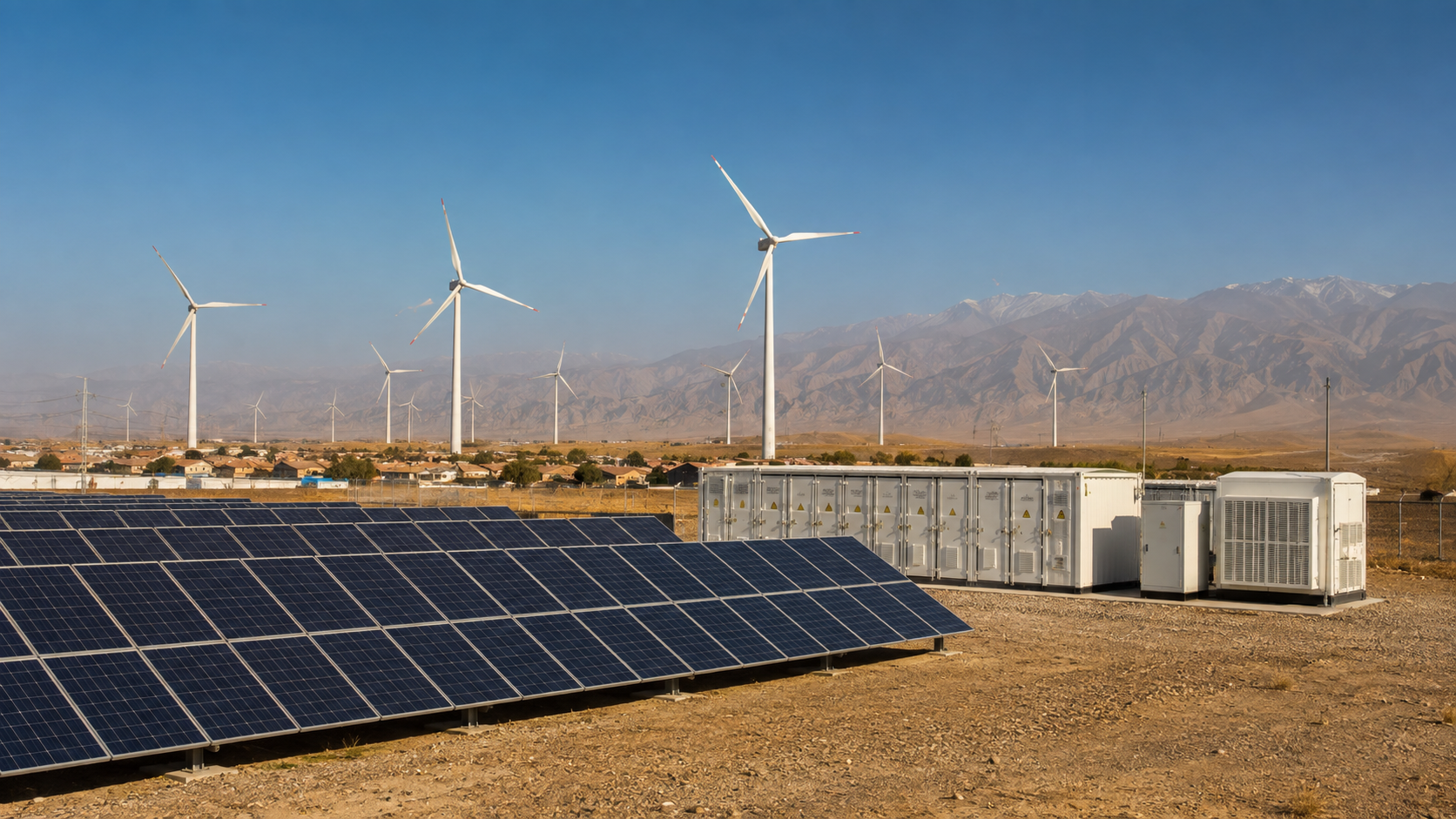
Researchers in China found a hybrid system combining 200 kW of PV, 200 kW of wind and a 100 kWh battery achieved a 70.8% self-sufficiency rate for a community consuming 1,000 kWh per day. While standalone PV delivered a lower levelized cost of energy, the hybrid configuration offered the best overall balance between cost and supply reliability.
A research group in China has conducted an integrated techno-economic-environmental assessment of a grid-connected PV-wind hybrid system for community-scale energy applications. The findings are presented in the paper Designing and evaluating the grid-connected hybrid PV-WT-battery system from techno-economic perspectives, published in Case Studies in Thermal Engineering.
The study compared three grid-connected community energy systems, each with 400 kW of renewable generation capacity and a 100 kWh lithium-ion battery. The three configurations comprised a 400 kW PV system, a 400 kW wind system and a hybrid system combining 200 kW of PV with 200 kW of wind.
Each wind turbine was rated at 20 kW, while the PV system had a module efficiency of 17.3%, a 90% derating factor, a 25-year service life and a converter efficiency of 98%. The battery operated between 20% and 100% state of charge.