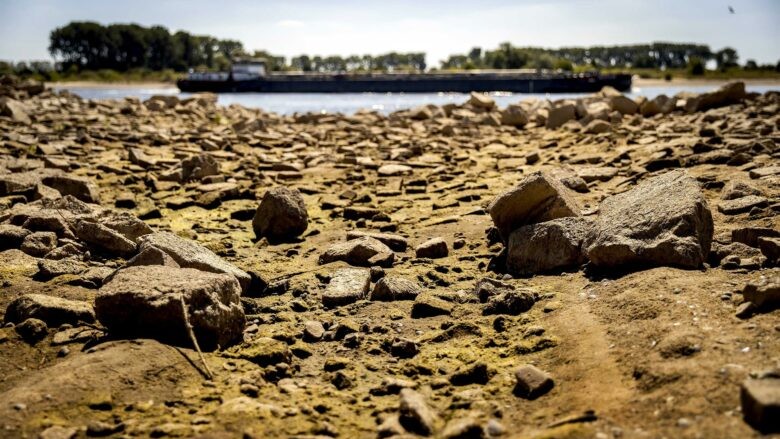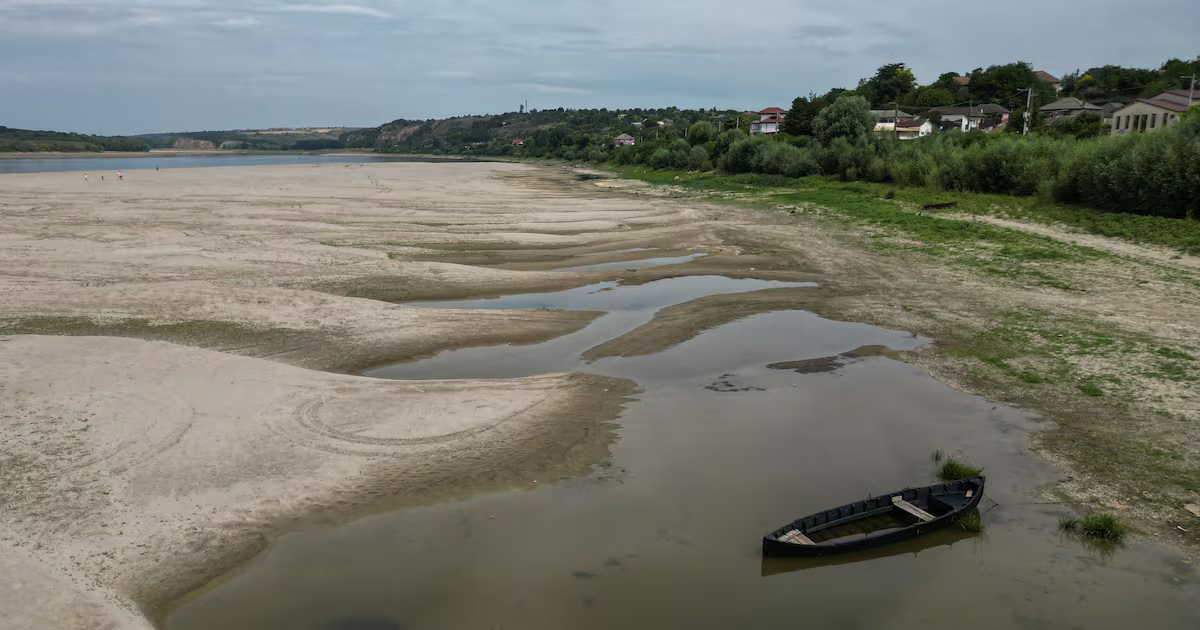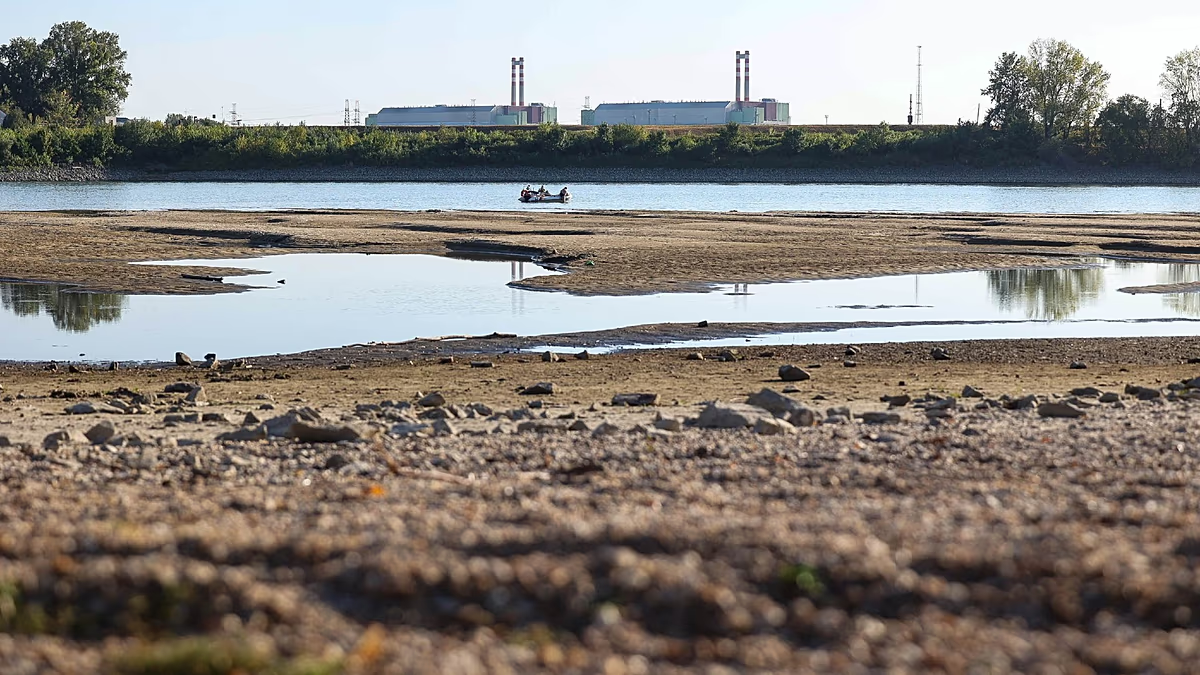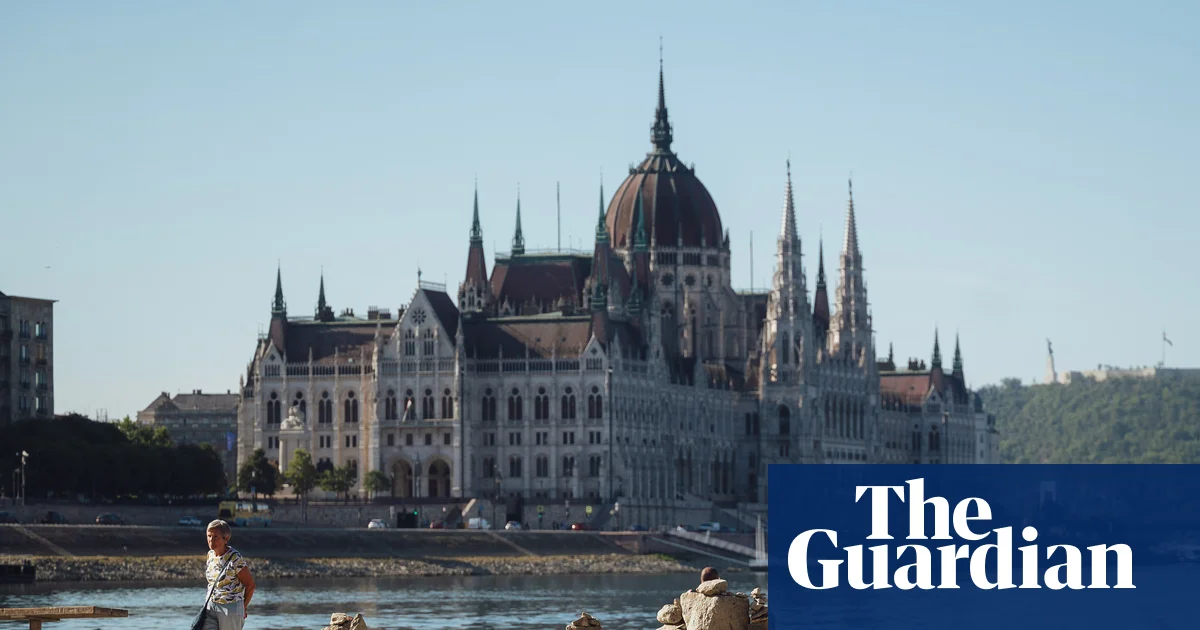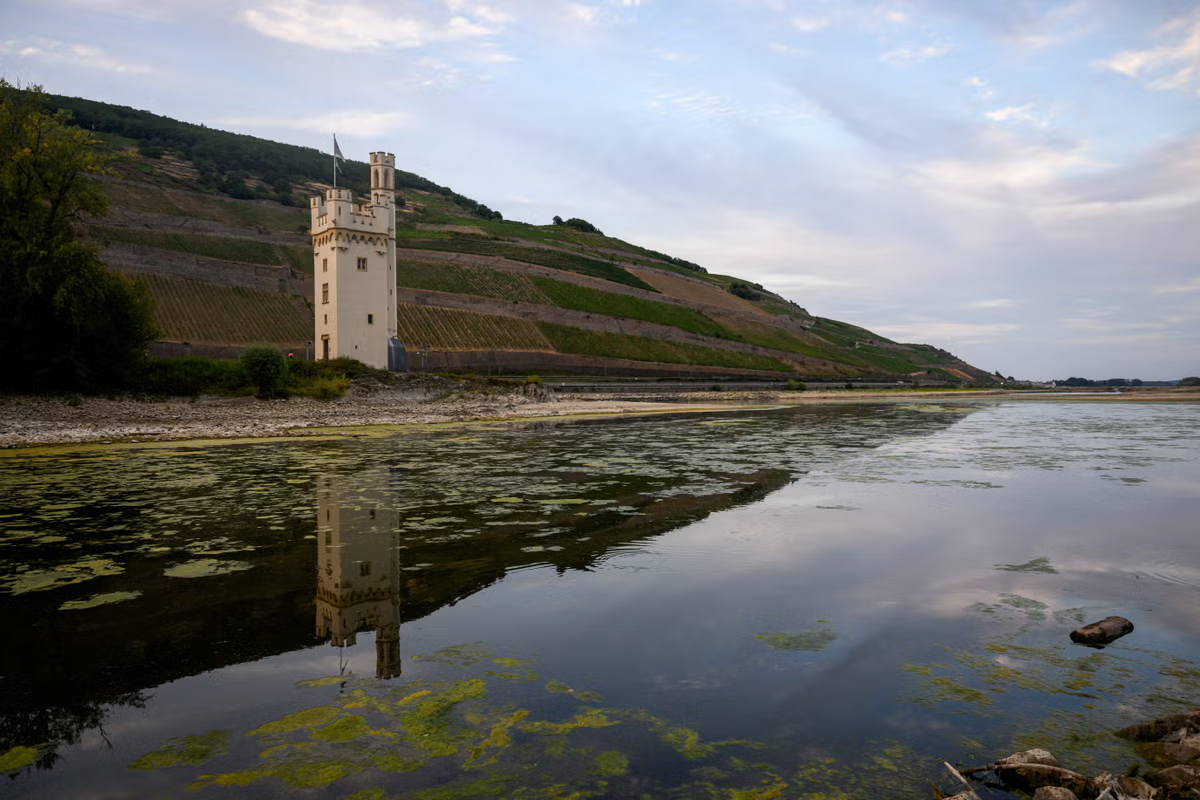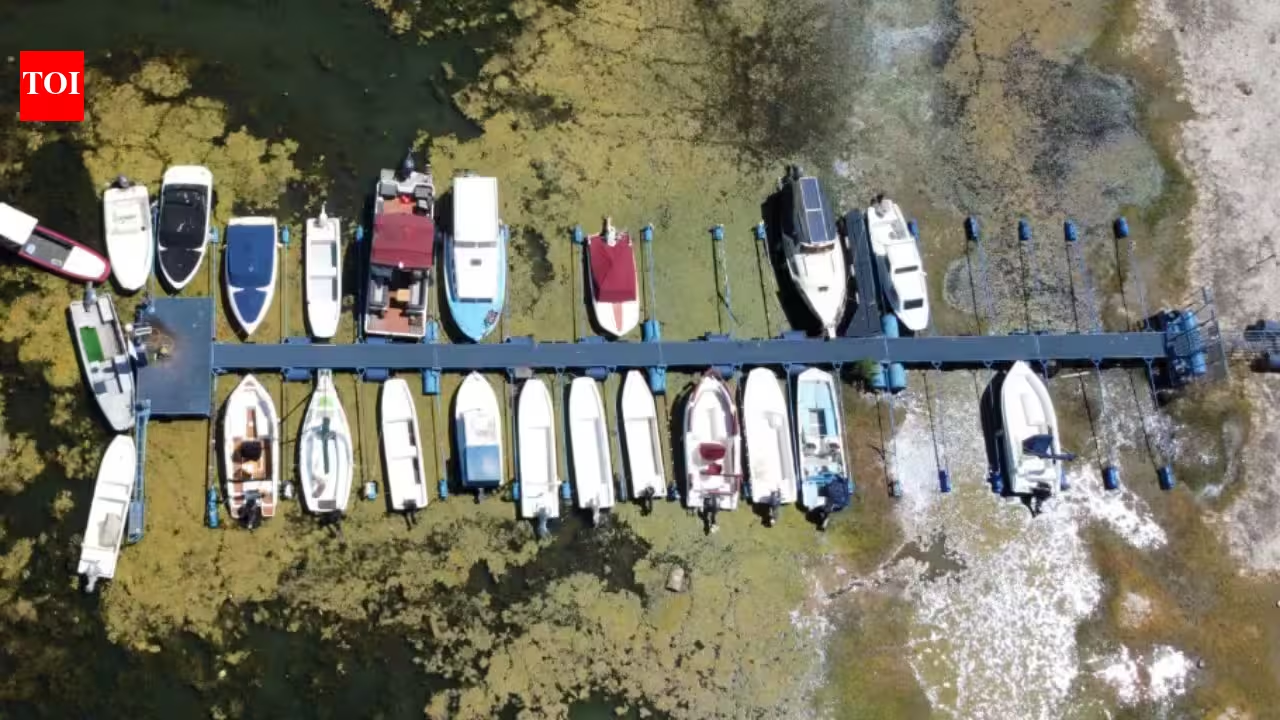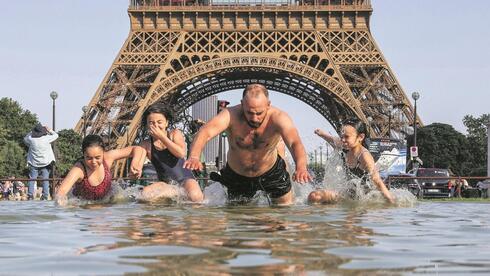
Heat waves, drought and wildfires are crippling shipping, energy, farming and tourism, driving up prices and exposing Europe to losses that could reshape its economy for yearsNorth Rhine-Westphalia Transport Minister Oliver Krischer of the Green Party called earlier this week for the establishment of an emergency committee to address the low water level of the Rhine River, which has nearly brought shipping traffic to a halt and forced cargo vessels to divide their loads among several ships. That is slowing Germany’s economy even further at a time when it needs a boost, not another brake.The Rhine is a major transportation artery for grain, coal, chemicals, minerals and oil. Declining snowfall in Germany, combined with hot, dry weather that began as early as spring, has depleted the country’s rivers. The last time Germany experienced similar heat and drought, which caused river water to evaporate, was in 2018. That episode reduced Germany’s gross domestic product by 0.4% that year.Gallery(Photo: Abdul Saboor/Reuters)Germany is not alone. Economists warn that the heat waves, drought and massive wildfires sweeping Europe will cause enormous financial losses for companies and governments, major delays in logistics and supply chains, demands for public austerity and even power outages, some of them planned.Low water levels on the Danube, which runs from Germany to the Black Sea through Vienna, Budapest and Belgrade, have already forced Hungary to reduce nuclear power production and Serbia to cut hydroelectric output. Residents have been asked to reduce energy consumption.Trying to cool off during the heat wave in Poland (Photo: Omar Marques/Getty Images)Hungary’s Paks nuclear power plant, the country’s only nuclear facility and the source of nearly half its electricity, was shut down Monday and is expected to remain closed for at least several weeks because water levels are too low to provide sufficient cooling.Hungary and Serbia, along with Romania, have already said they will need to purchase additional energy and electricity to make up for reduced output. Energy prices, already high even before the heat wave, are expected to rise further because of increased demand, with the cost ultimately passed on to businesses and consumers.Farmers who ship their produce by cargo vessel and river routes have been left stranded with no way to transport their goods. Potential buyers took advantage of the situation by offering to remove the produce by truck in exchange for paying less. The value of grain in Europe fell by 5% in June alone.Farmers had little choice. But the logistics situation has become so desperate that buyers no longer have enough available trucks to purchase and transport the goods.Falling water levels have also hurt tourism in countries along the Danube. Cruise ships were unable to dock in Budapest and instead remained in the middle of the river, preventing tourists from going ashore, visiting the city and spending money.In Bulgaria, rescue teams had to evacuate 186 passengers from a cruise ship that ran aground in shallow water and was unable to replenish its supplies.Operators of passenger boats that take tourists already in the cities on river cruises told The Associated Press that because such vast areas of water had dried up, their summer was effectively over in July, even though August is normally their busiest month.The climate crisis has also struck Europe on land. Extreme heat has fueled massive wildfires in France, Spain and Greece. Hundreds of thousands of residents have been evacuated from their homes. Rescue efforts have cost large sums, businesses have suffered and economists in those countries say the fires are undermining efforts to generate growth.French President Emmanuel Macron said the fires were the worst France had experienced since World War II. Officials in Madrid said fires west of the city were the worst the region had ever seen.The economic damage cuts across sectors. Health and rescue services are under greater strain, energy consumption has surged, particularly as households and businesses try to cool buildings, transportation has been disrupted, insurance premiums have risen and public budgets have come under pressure because of spending on firefighting, rescue operations and infrastructure repairs.Production has declined, supply chains have been disrupted, food prices have risen and the entire tourism economy has been hit hard during the very season when those who depend on it are supposed to earn enough to support themselves for the rest of the year.Europe has experienced three heat waves so far, and more may be on the way. In the past, such heat waves may have been isolated, once-a-year events. Now, European authorities must treat extreme heat and its consequences as a permanent economic factor to be included in every future calculation.A wildfire rages in southwestern France (Photo: Thibaud Moritz/AFP)A study by the European Central Bank and the University of Mannheim found that heat waves, drought and flooding in 2025 caused a 0.3% loss in output across the continent. The study projects that if such weather persists, the loss will rise to 0.8% by 2029.Wildfires in California last year were estimated to have caused $40 billion to $60 billion in direct damage and costs, as well as $300 billion in indirect losses.The European Environment Agency estimates that between 2021 and 2024, European Union countries sustained €200 billion in losses due to the climate crisis and the natural disasters it generates. According to a University of Mannheim study, total damage last year amounted to €43 billion.Efforts to contain this year’s fires in Spain alone are estimated to have cost €2.5 billion. At the beginning of the year, the European Commission estimated that annual spending on natural disasters would not exceed €2.5 billion.The city’s famous vineyards were not damaged, but the entire wine tourism industry, including chateau accommodations in the region, was hit by mass cancellations. That represents billions of euros more in losses, even before Greece, Portugal, Romania and Scotland are included, before the full extent of damage in those countries is known and before the effects of drought, falling water levels and delays in logistics and energy production are calculated.In addition to homes, businesses, tourism and agriculture, the French region affected by the fires is also home to the country’s defense, aerospace and aviation industries, among its most important sectors. Manufacturers of fighter jet engines, combat aircraft and missiles are based there.All employees in those industries were evacuated and continued to receive their salaries, while production at the factories came to a complete halt. The state will have to help them resume operations and increase output to meet orders and demand that existed before the fires.The regional French Chamber of Commerce said the fires across the area, not only around Bordeaux, affected 40,000 businesses, including 19,500 that were forced to close completely. Between 120,000 and 150,000 employees moved to reduced workweeks, some working from home, all with government subsidies.A wildfire in Greece sparked by the heat wave (Photo: Angelos Tzortzinis/AFP)According to insurance giant Allianz, insurers paid $56.3 billion for losses caused by major wildfires in the previous decade. In the decade before that, they paid just $8.7 billion for similar damage. The current decade is even worse in terms of both fires and the losses they cause.Insurance companies facing such costs raise premiums, including risk premiums for people seeking to rebuild homes or businesses in areas that have already been affected. That contributes to higher prices and inflation.The climate crisis and the natural disasters it produces are forcing insurance policymakers to recalculate their entire approach to risk management in these regions.In effect, this is a new industry. Until a few years ago, no one imagined that the apocalyptic scenes seen in Bordeaux and Madrid were even possible.What is clear is that insurers will have to raise their premiums, leaving homeowners and business owners in affected areas with two options: Either the state intervenes and subsidizes part of the increase to ease the burden on businesses and prevent extreme price rises, while adding pressure to public spending and the national debt, or they continue without insurance.For the insurance industry, storms, floods, heat waves and major wildfires are the most expensive types of disasters. According to Insurance Europe, 75% of the damage caused by such natural disasters is not insured at all.But the issue is not only industrial costs, government budgets or business flow charts. It is also about human life.One in five Europeans is over the age of 65, and the population aged 80 and older is the fastest-growing group on the continent.Nearly 10,000 people in Europe are estimated to have died in this year’s heat waves, including 9,000 aged 65 and older. In France alone, close to 5,700 people died because of the heat, 36% more than the government forecast and the highest death toll from a natural disaster in France since the 2003 heat waves.One way to reduce those terrible numbers, particularly in European homes built to retain heat during winter, is to install air conditioning. But air conditioning contributes to air pollution, and air pollution is one of the main drivers of the natural disasters affecting Europe. It is a vicious cycle that appears almost impossible to break.The human factor is also one of the main drivers of economic losses in countries suffering from heat waves.According to a report by the World Meteorological Organization, every degree above 20 °Celsius causes a 2% to 3% loss in productivity, with greater losses as temperatures rise.The organization uses 20 °C as the threshold at which productivity begins to decline. At that level, physical strain, psychological stress, confusion and poor sleep already begin to affect output.The average temperature in Europe in June 2026 was 20.74°C, while in some countries and on some days temperatures exceeded 40 °C.Trying to cool off during the heat wave in Germany (Photo: Michael Probst/AP)And the problem is not going away. Despite extensive efforts by politicians, environmental groups and the media to promote solar energy, wind turbines and other renewable sources, people continue to rely on fuel for cars and other forms of energy that are not environmentally friendly.Last month, the world record for commercial flights within a 24-hour period was broken. Those forms of energy are far more profitable for companies than investments in renewable energy.The average temperature across Europe has risen by 2.5 degrees over the past five years, twice the global average.Reversing that trend will require courageous European leaders willing to make decisions that are unlikely to be popular with much of the public. But Europe’s leaders are currently busy putting out fires.Global warming and the climate crisis pose a direct economic threat to Israel as well.The Bank of Israel has warned of cumulative long-term damage amounting to several percentage points of GDP. Israel’s geographic location in the Mediterranean Basin makes it particularly vulnerable to climate change, warming and the expansion of desert conditions toward the coastal plain.Among the most significant risks is a sharp decline in crop yields and agricultural output. For Israel, particularly since October 7, this represents an existential challenge.Regional warming could also trigger a crisis in the electricity grid and potentially cause it to collapse. Demand for electricity already breaks records every summer.Beyond the harm to citizens, such a scenario would pose a risk to traditional industries and to the high-tech sector, which consumes large amounts of electricity.Alongside the threats, however, the climate crisis could also become an unprecedented engine of growth for Israel’s high-tech industry.Israel is already regarded as a climate-tech powerhouse and a producer of green energy solutions. It also exports water and agricultural technologies, including advanced drip irrigation systems and drought-resistant crop varieties.Demand for these technologies is expected to surge in the coming years, and the Israeli economy could benefit from acquisitions and exits worth billions.
Europe’s heat crisis is pushing its economy to the brink
Heat waves, drought and wildfires are crippling shipping, energy, farming and tourism, driving up prices and exposing Europe to losses that could reshape its economy for years
1,928 words~9 min read