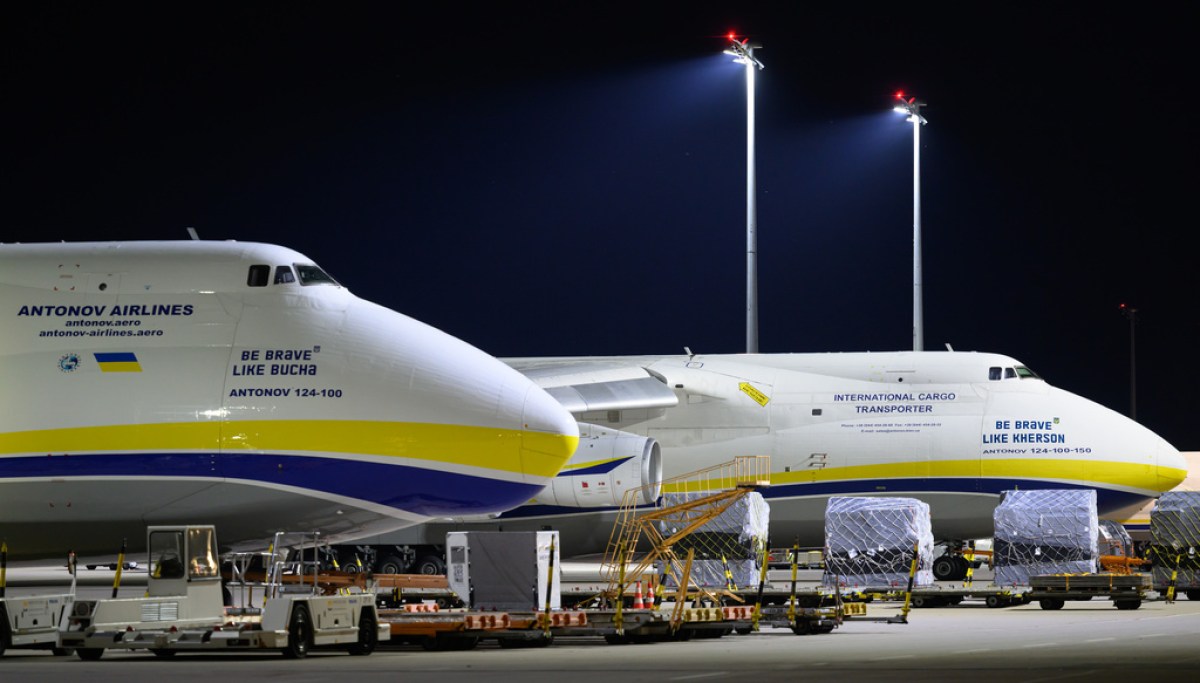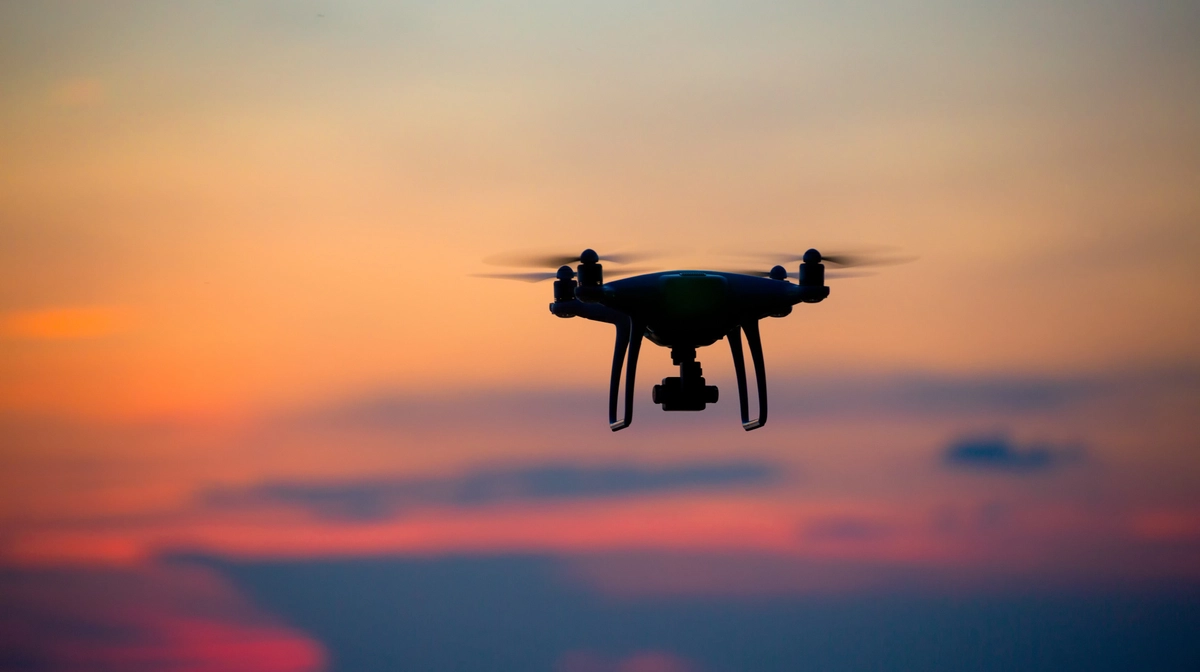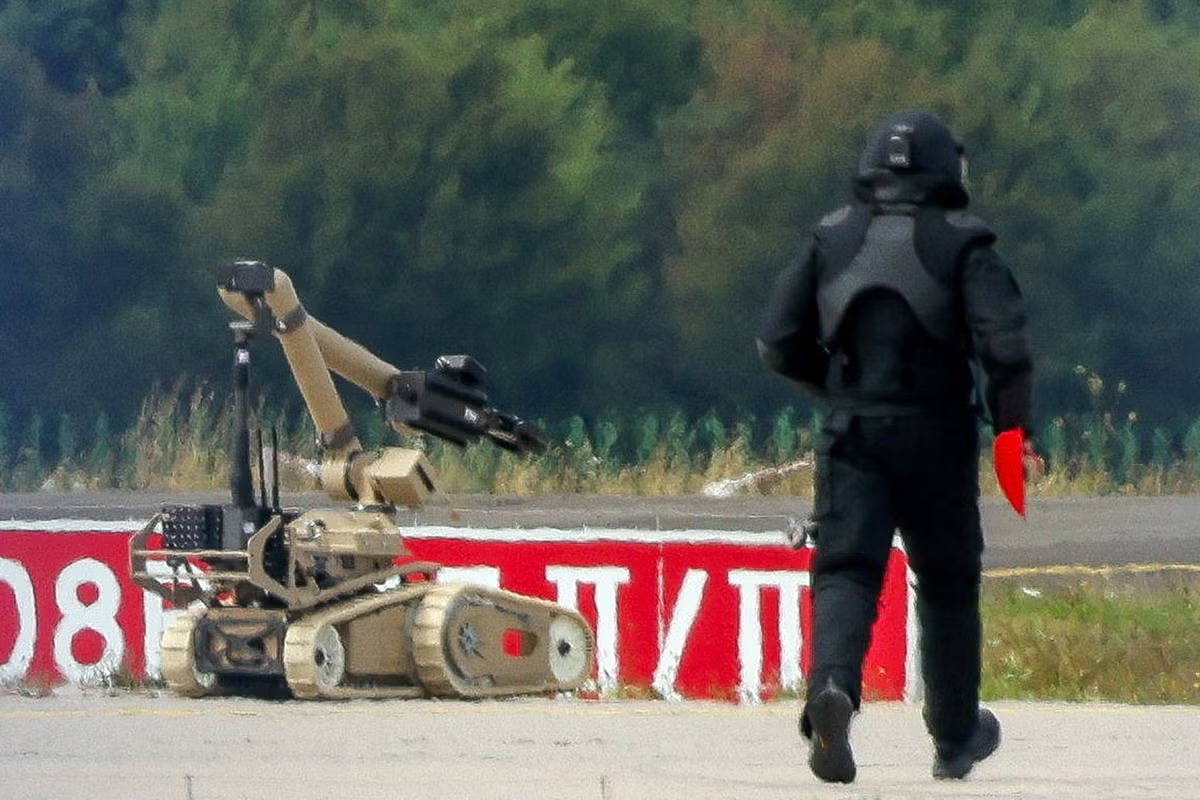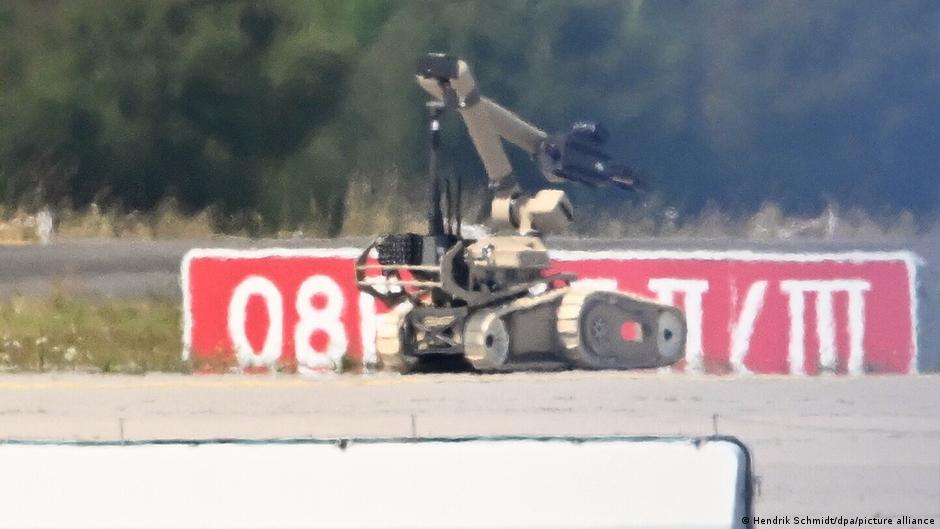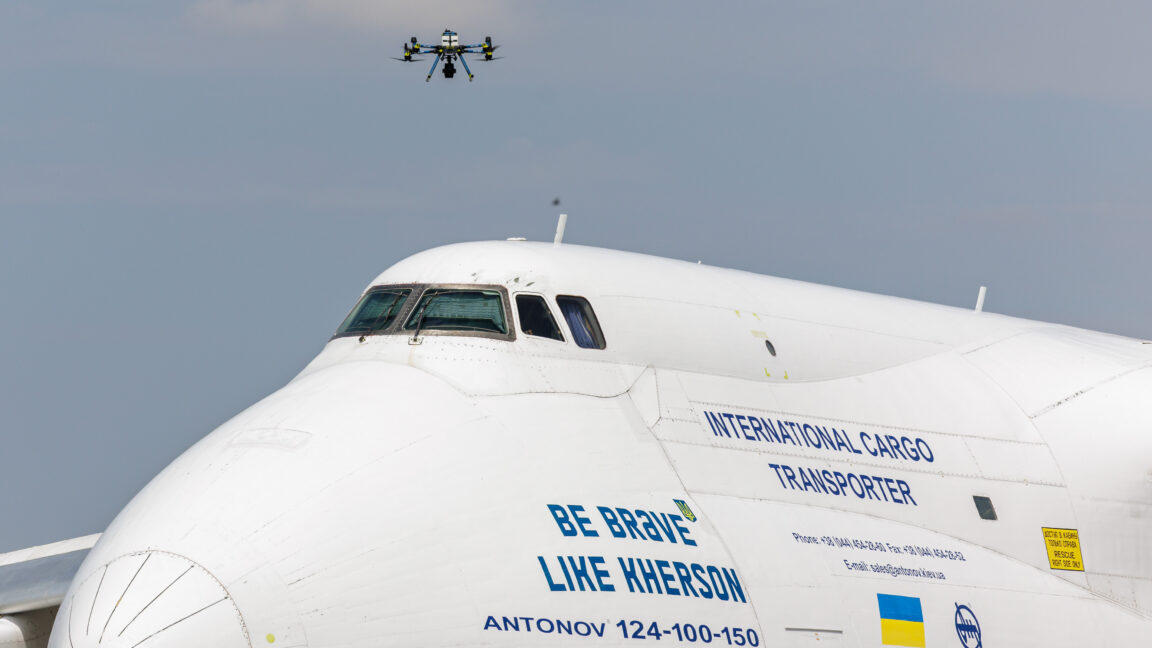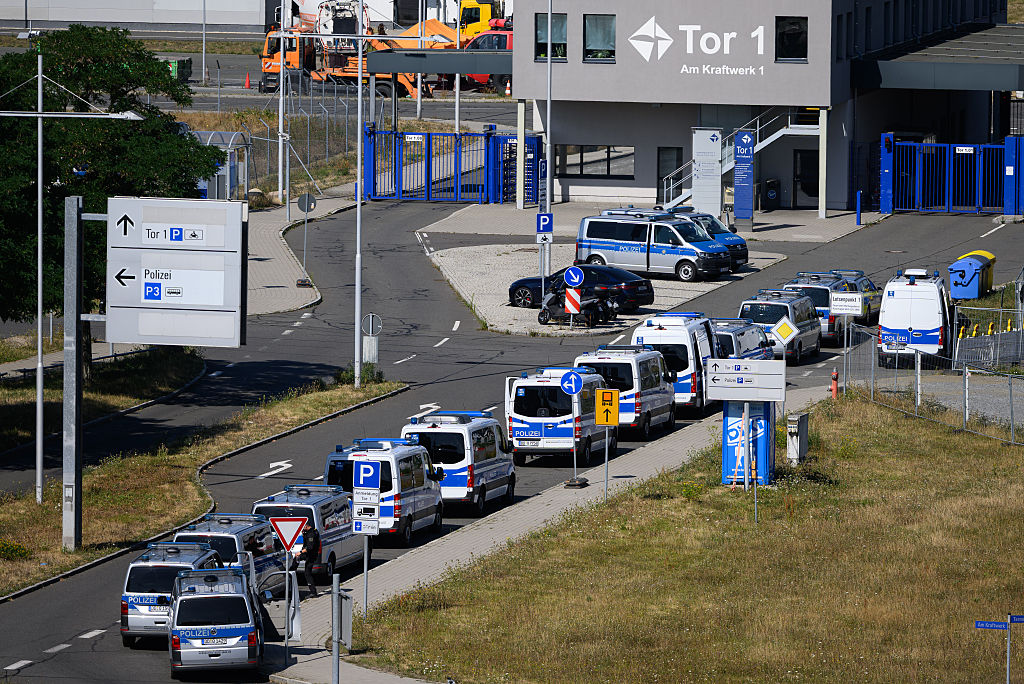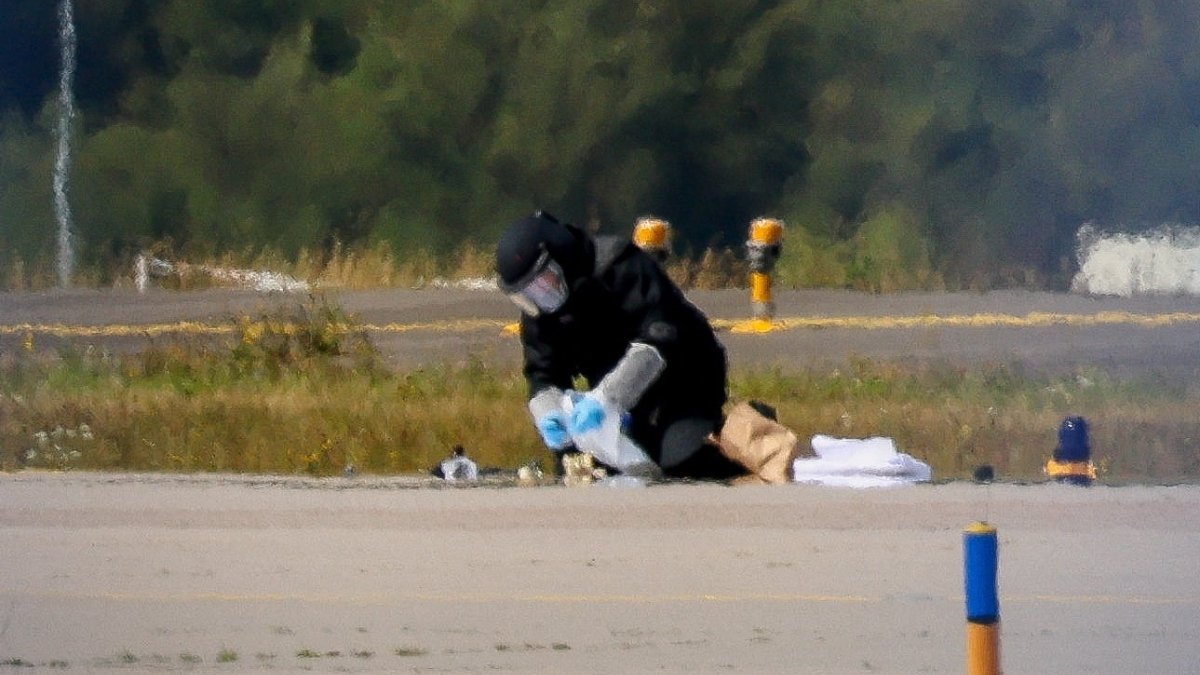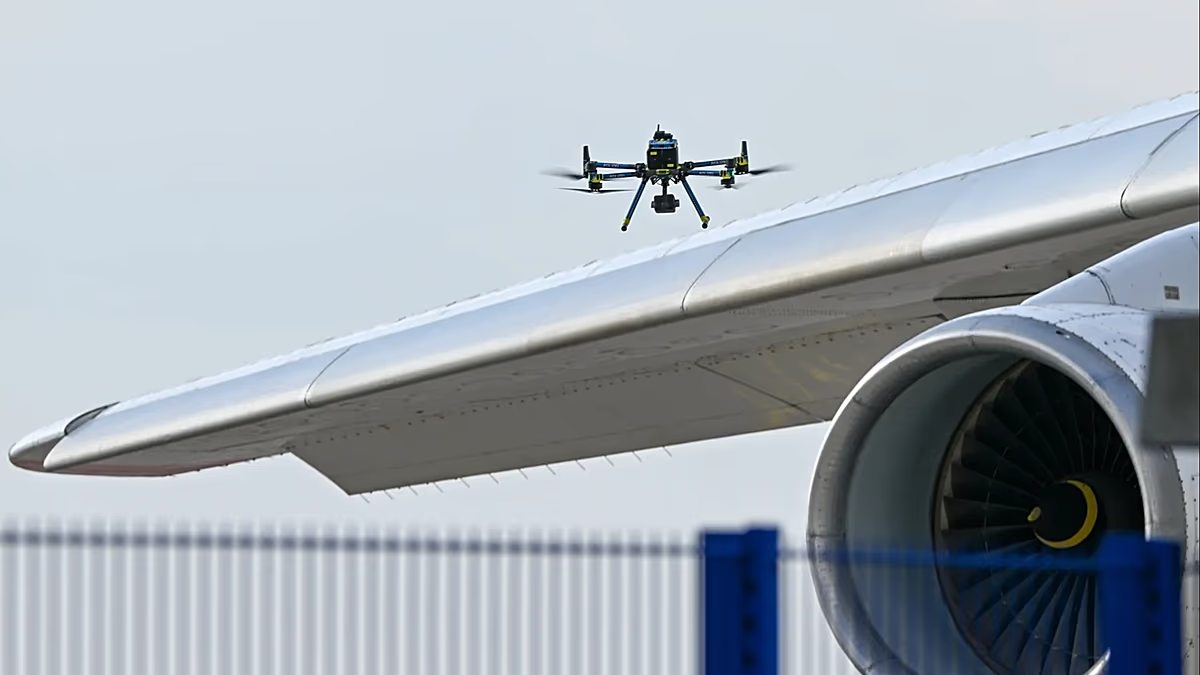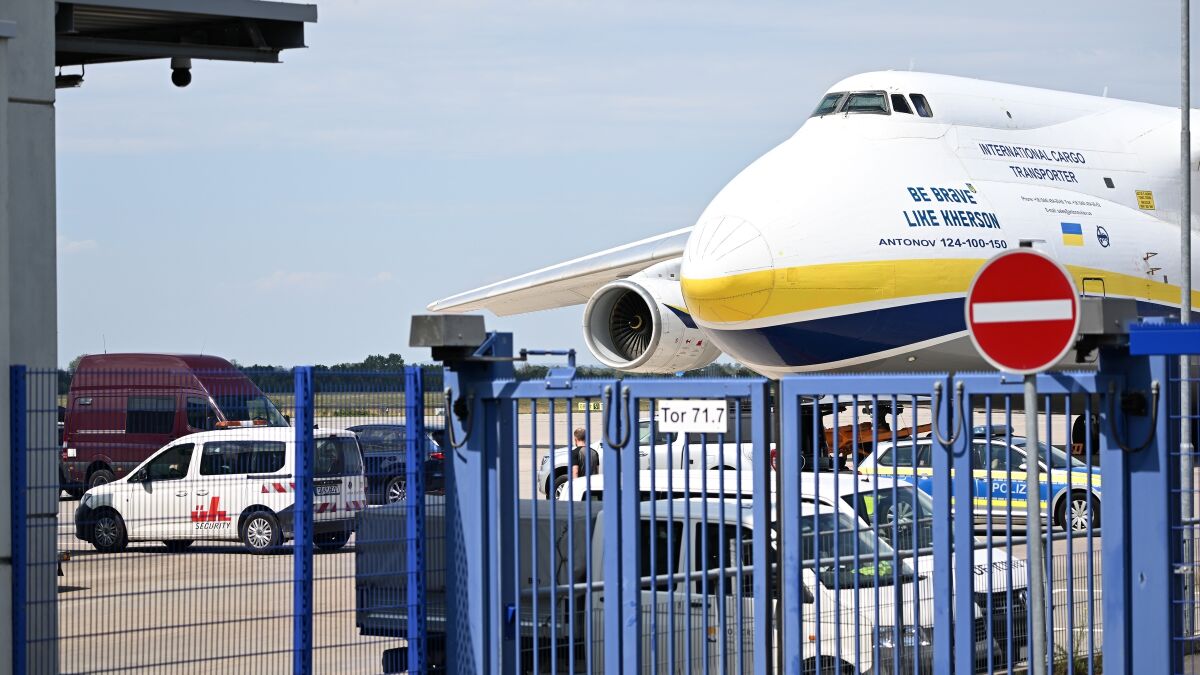
German police raised the alarm yesterday at Leipzig Airport after a drone laden with explosives was found overnight near a Ukrainian cargo aircraft – this airport in eastern Germany is crucial for the transport of military equipment for German and NATO forces and serves as a base for the Ukrainian airline Antonov Airlines – and after a DHL aircraft had collided in mid-air with an unknown object (the aircraft subsequently landed in Hanover with some damage). All flights bound for Leipzig were diverted, and a robot removed the detonator from the drone found next to the runway where the Antonovs were parked. NATO confirmed the presence of the drone on the ground and stated that it was aware of “the incident which the German authorities are continuing to investigate”. The German Interior Minister, Alexander Dobrindt, has returned from Italy, where he was on holiday, Bild reported, to discuss this “incident which has security implications”. The Ukrainian ambassador to Germany, Oleksii Makeiev, said in an interview with Welt TV: “Who else could it be but Russia?” Germany and other European countries have for some time been detecting the presence of drones at sensitive sites, such as airports, military bases and industrial facilities, and studies by European intelligence agencies have shown that Russia is using drones to map our continent – both on land and at sea – to ascertain how and where military resources and any civilian targets are deployed. The missions of these drones are categorised as: surveillance and intimidation. The German government, which is one of Ukraine’s main military supporters, has repeatedly voiced its suspicion that Russia is behind a campaign of sabotage, espionage and disinformation – a claim Moscow denies. Marc Henrichmann, the conservative chairman of the Bundestag’s Intelligence Oversight Committee, stated that the latest incident appears to be “an attempt to target a company of importance to Ukraine”. If the details were confirmed, “it would represent a new level of escalation in this type of attack”, he told the Rheinische Post newspaper. As Ukrainian Ambassador Makeiev recalled again yesterday, at this very same airport, in July 2024, a parcel due to be loaded onto a DHL cargo plane caught fire: even then, the incident was treated as an attempt at arson-related sabotage linked to Moscow. Since such threats do not occur in isolation but are part of a coordinated pattern, last year a Chinese national was convicted of passing on information about flight schedules and cargo movements at Leipzig-Halle Airport to a man spying for Beijing.“Russia has been waging this hybrid war for some time,” said Ambassador Makeiev, “yet the term ‘hybrid’ somehow downplays the fact that Russia is waging a war not only against Ukraine but also against Europe.” Whilst, from a formal point of view, there remains an incomprehensible reluctance to explicitly state Moscow’s responsibilities, in substance, preparations for a possible expansion of Vladimir Putin’s war to the rest of Europe are well under way: it is clear to everyone that if the Ukrainians are not helped to stop the Russians – and Donald Trump has decided to backtrack on granting Kyiv a licence for Patriot interceptors just as Putin is launching ballistic missiles at Ukrainian cities, which are now effectively defenceless against air attacks – the Russians will expand their aggression. Preparations are being made in both the military and intelligence spheres: Sweden, which, along with Finland, rushed to join NATO following Russia’s invasion of Ukraine, has just reformed its secret service, modelling it – as many do – on Britain’s MI6, which, according to a survey of European intelligence agencies conducted by the French newspaper L’Express, is the best: ‘The British know how to play the long game,’ says a former agent; they invest in resources with a ten-year horizon, ‘a bit like the Russians’.
The explosive drone in Leipzig, the closure of the strategic airport and the Russians’ ‘mapping’ operations
The explosive drone found in Leipzig is the latest episode in a campaign that European intelligence agencies attribute to Russia’s hybrid warfare: the front line is drawing closer to Western strategic infrastructure
632 words~3 min read