This story builds off reporting from Drilled, a true-crime podcast and investigative reporting project about climate change.
Dr. Amil Shapka was having a quiet day in the rural Alberta community of St. Paul when a worried neighbour showed up at his doorstep. The man, a senior citizen, had been approached by agents from Canadian National Resources Limited (CNRL), one of Canada’s largest oil and gas companies.
The oil company agents were scouting routes for a new pipeline. But this proposed piece of infrastructure would be carrying a different product from what Shapka’s community was used to—carbon dioxide.
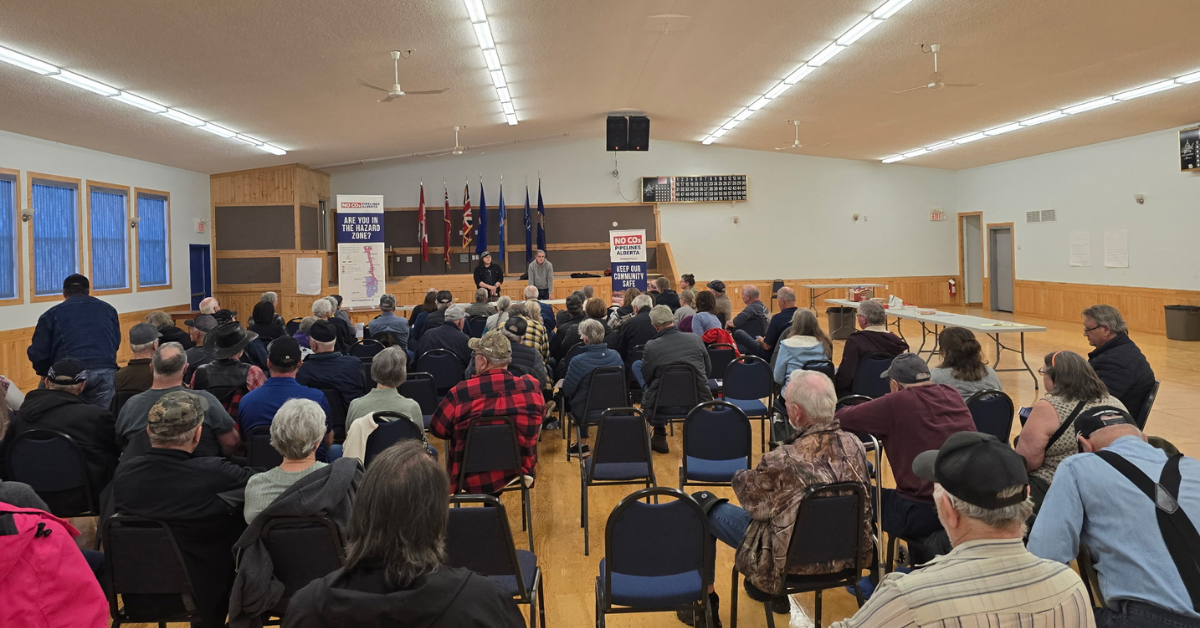
Shapka was alarmed, and soon too were many inhabitants of the County of St. Paul, a rural community roughly 140 kilometres northeast of Edmonton. St. Paul is not far from Cold Lake, Alberta, ground-zero for a $20 billion carbon capture and storage (CCS) project that received the go-ahead from Canada’s federal government in July.
Shapka’s elderly neighbour had “questions about whether he should sign the easement for a [CO2] pipeline,” Shapka told DeSmog in an interview. “There had been no talk of it in the community, nothing in the local papers, nothing in the coffee shops.”