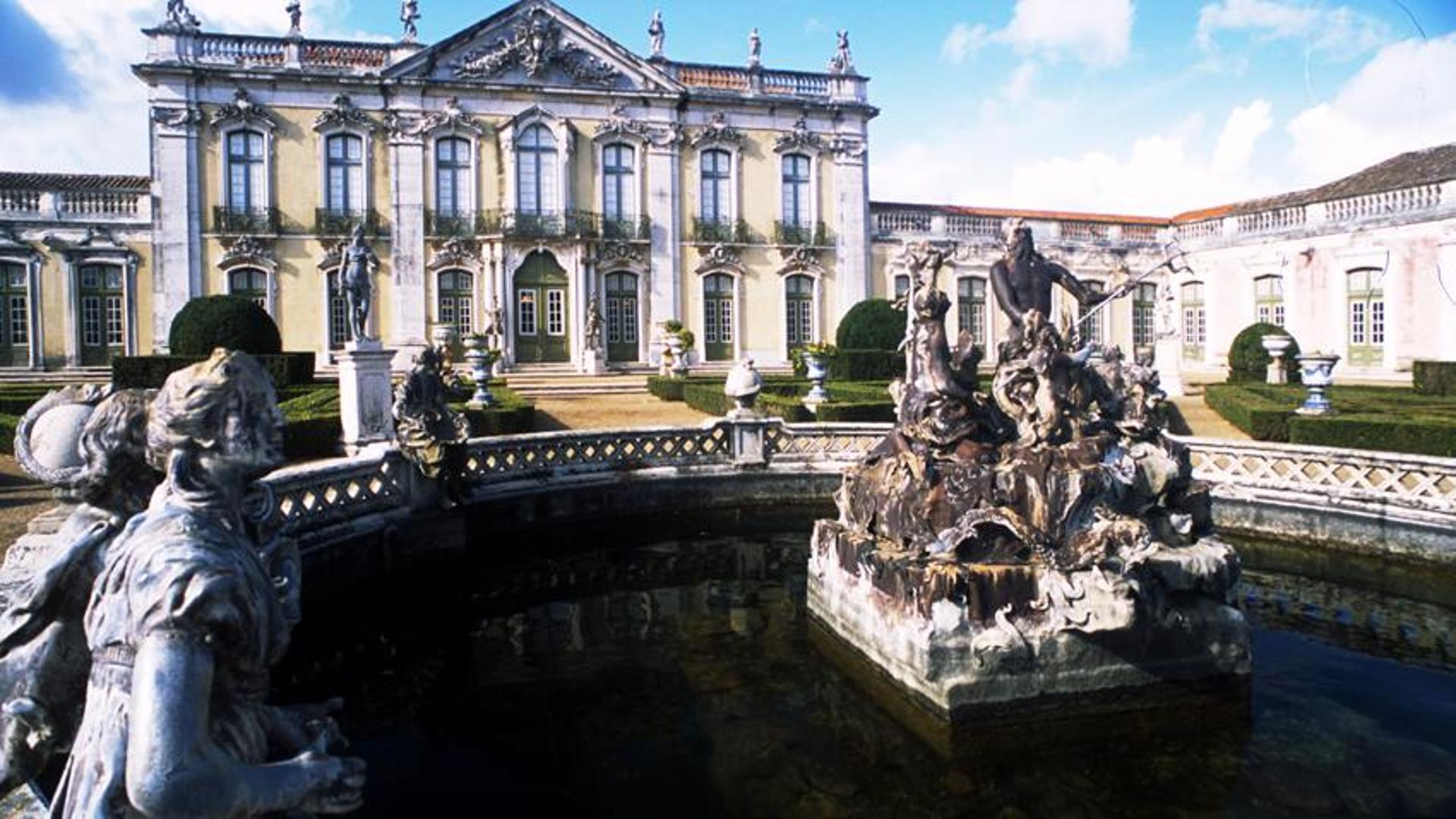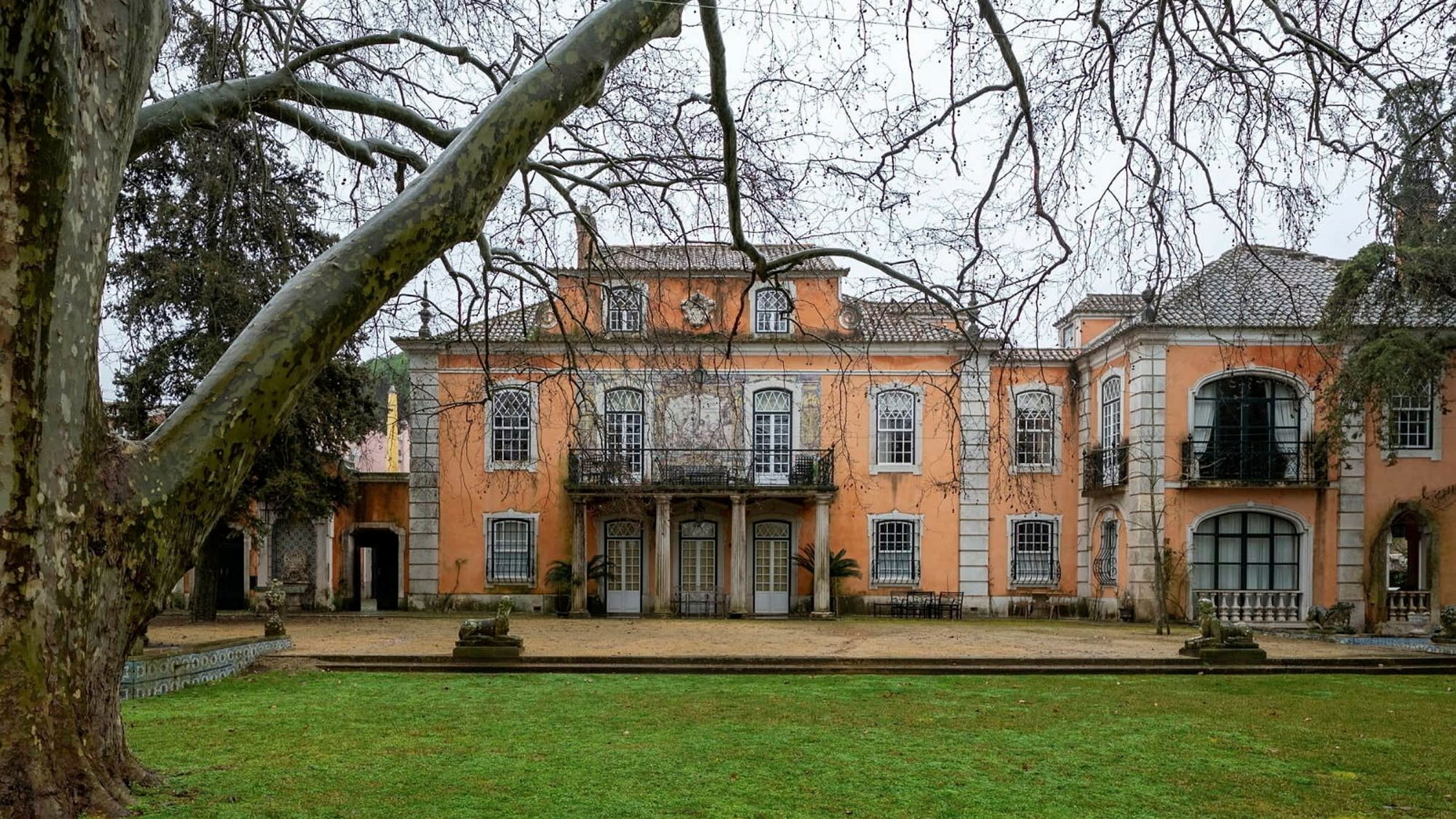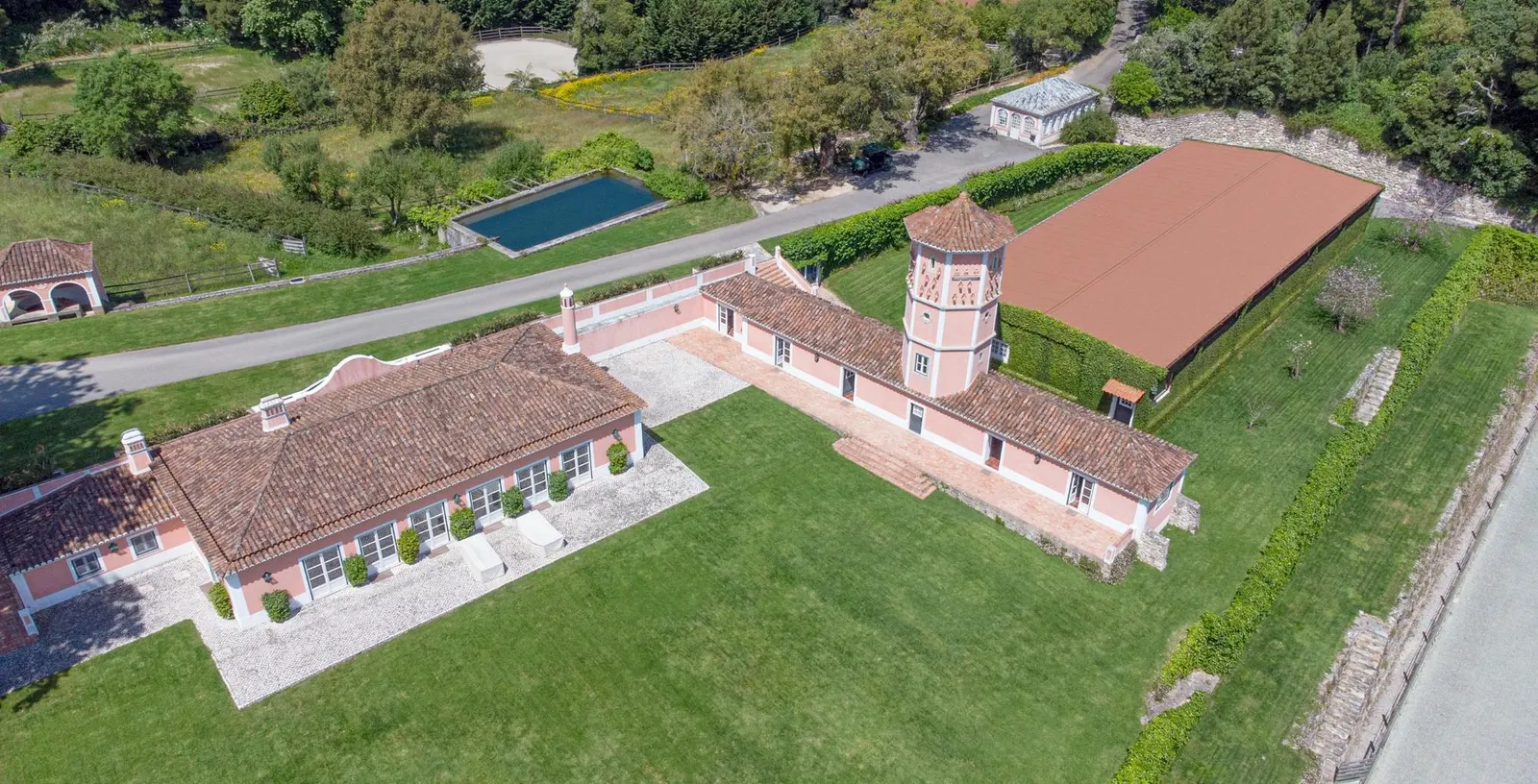
Plenty of estates call themselves timeless. Quinta do Pombal has five centuries of supporting evidence—and still feels ready for its next chapter.Courtesy Portugal Forbes Global PropertiesPortugal’s wealthiest families have always known that in summer, the city is the last place you want to be. Instead, they head for the Serra de Sintra, less than 20 miles north-west of Lisbon. Close enough to wild Atlantic beaches to feel the breeze, but hidden inland among exotically verdant landscapes that Lord Byron lauded as “a glorious Eden.”Adding to the magical, faraway feel are palatial estates whose turrets and towers peek above the treetops. Some, such as the 19th-century Palácio de Monserrate Monserrate Palace and its botanical gardens, are open to the public. But once in a blue moon, an estate that has remained under the radar in private hands makes its way onto the market.Sintra became Europe’s first UNESCO-listed Cultural Landscape, recognizing that its true monument is the collaboration between architecture and nature.Courtesy Portugal Forbes Global PropertiesThat’s precisely the case with Quinta do Pombal, whose dusky pink main house of more than 8,300 square feet, set in 42 hectares of private woodland—a verdant patchwork of tall cork, oak, pine and chestnut trees—can be traced back 500 years.The bread oven that would have been fired up daily to feed its 16th-century occupants remains intact. In the extensive grounds, the Fonte dos Amores (Fountain of Love) that’s mentioned in Os Maias—the novel that is to Portuguese literature what The Great Gatsby is to the American canon—is where, in the late 19th century, Queen Amelia, the last queen consort of Portugal, regularly enjoyed picnics.Pink towers lend vertical drama to an otherwise low-slung collection of historic buildings.Portugal Forbes Global PropertiesSintra has been the summer retreat of Portugal’s monarchy for hundreds of years. And still today it’s where “established Portuguese families, entrepreneurs and international buyers seek privacy, natural beauty, architectural heritage and proximity to Lisbon,” explains Martim Celestino da Costa from Portugal Forbes Global Properties.While many international buyers will head to leading lifestyle destinations such as the Algarve coast or Comporta on the Alentejo coast, this lushly green region offers something different. “It’s a market shaped by history rather than hospitality, where properties are measured not only by their architecture but by the stories they have accumulated over centuries,” says Celestino da Costa.Mature landscapes possess a confidence that no newly planted garden can convincingly imitate.Courtesy Portugal Forbes Global PropertiesEven by Sintra’s gilded standards, Quinta do Pombal has quite some story to tell. “It brings together an unusually rich provenance with exceptional scale and integrity,” Celestino da Costa comments. “In a market where many historic houses have been subdivided or significantly altered over time, its estate remains remarkably intact, with woodland, equestrian facilities and a landscape that has evolved over centuries rather than decades.”The grounds manage to feel cultivated without appearing overmanaged.Courtesy Portugal Forbes Global PropertiesThose centuries have seen some prominent names, notably the Marquês of Pombal—one of the architects of modern Portugal—who was given the property in a settlement of debts in 1780. This was the man whose achievements include rebuilding Lisbon (or at least instructing others how to do it) after the devastating earthquake of 1755.After eight decades in the Pombal family’s hands, the Quinta was acquired by Major Astley Campbell-Smith. His father, William Smith, is thought to be one of King William IV’s many illegitimate children, and Major Astley’s father-in-law was the distinguished naval officer Sir George Rose Sartorius, so Major Astley’s connections made him a shoo-in among Sintra’s social elite. It was he who largely rebuilt Quinta do Pombal, extending it into the long rectangular form that you can see today.Here, history isn’t confined to portraits and paperwork. It remains in the tiles, beams and craftsmanship.Courtesy Portugal Forbes Global PropertiesNext in line with the keys to the Quinta was the British collector and philanthropist Sir Francis Cook, who transformed nearby Monserrate Palace into one of Europe’s great Romantic residences. “Cook gradually assembled an extraordinary group of neighboring estates around Monserrate, including Quinta do Pombal, integrating it into one of the most important private estates in Sintra during the 19th century,” Celestino da Costa explains.The house doesn’t belong to one period. It wears Portuguese history in layers.Courtesy Portugal Forbes Global Properties“Quinta do Pombal reveals successive layers of Portuguese history rather than representing a single architectural period,” he adds, mentioning one of the house’s most significant 20th-century owners, Mário Luís de Sousa, who hailed from a prominent Lisbon banking dynasty. He added features such as the kitchen, whose scale and style befits a high-end restaurant, and the intricate, handmade blue-and-white decorative tiling, by the famous artist José Tiago Basalisa. So bespoke is the tilework that it depicts the landscapes and scenes of daily life at Quinta do Pombal, “making them a visual archive of the property itself,” says Celestino da Costa.Even the horses are accommodated with architectural ambition.Courtesy Portugal Forbes Global PropertiesThis property comes with a long equestrian heritage too, including a covered riding arena and three outdoor riding fields. Even the stables carry architectural flair, with 18 horse stalls contained within a contemporary-looking building that is entirely clad in greenery, making it fade into the landscape.To have country estates of such scale so close to Lisbon is remarkable—and with Quinta do Pombal, which has been owned by its current family for 30 years, now for sale at €24 million (around $27.6 million), a newcomer will have the opportunity to indulge in the lifestyle that Portugal’s elite have enjoyed for centuries.Riding facilities suggest an estate built for occupation, not just admiration.Courtesy Portugal Forbes Global PropertiesThese estates aren’t gated resorts that sit in isolation, though, and although Sintra is a heritage destination, it’s not a place that exists purely as a tourist attraction. The town itself is one of Portugal’s largest, “thriving with schools, local businesses, industry and a year-round community,” says Celestino da Costa.“One of Sintra’s greatest strengths is that it has never become an exclusive enclave detached from everyday life. Historically, estates such as Quinta do Pombal weren’t simply grand residences but working estates that supported agriculture, forestry and equestrian activities and employed generations of local gardeners, craftsmen, stable hands and household staff,” he adds. “Sintra’s remarkable cultural landscape exists alongside everyday life, which gives it an authenticity that is increasingly rare.”Quinta do Pombal is on the market with Portugal Forbes Global Properties, a member of Forbes Global Properties, the invitation-only network of top-tier brokerages worldwide and the exclusive real estate partner of Forbes.
Inside A $27.6 Million Equestrian Estate Near Lisbon With Centuries Of History
For centuries, Sintra has sheltered Portugal’s royals, reformers and rich. Tucked into its UNESCO-protected hills, Quinta do Pombal keeps the tradition handsomely alive.
1,078 words~5 min read