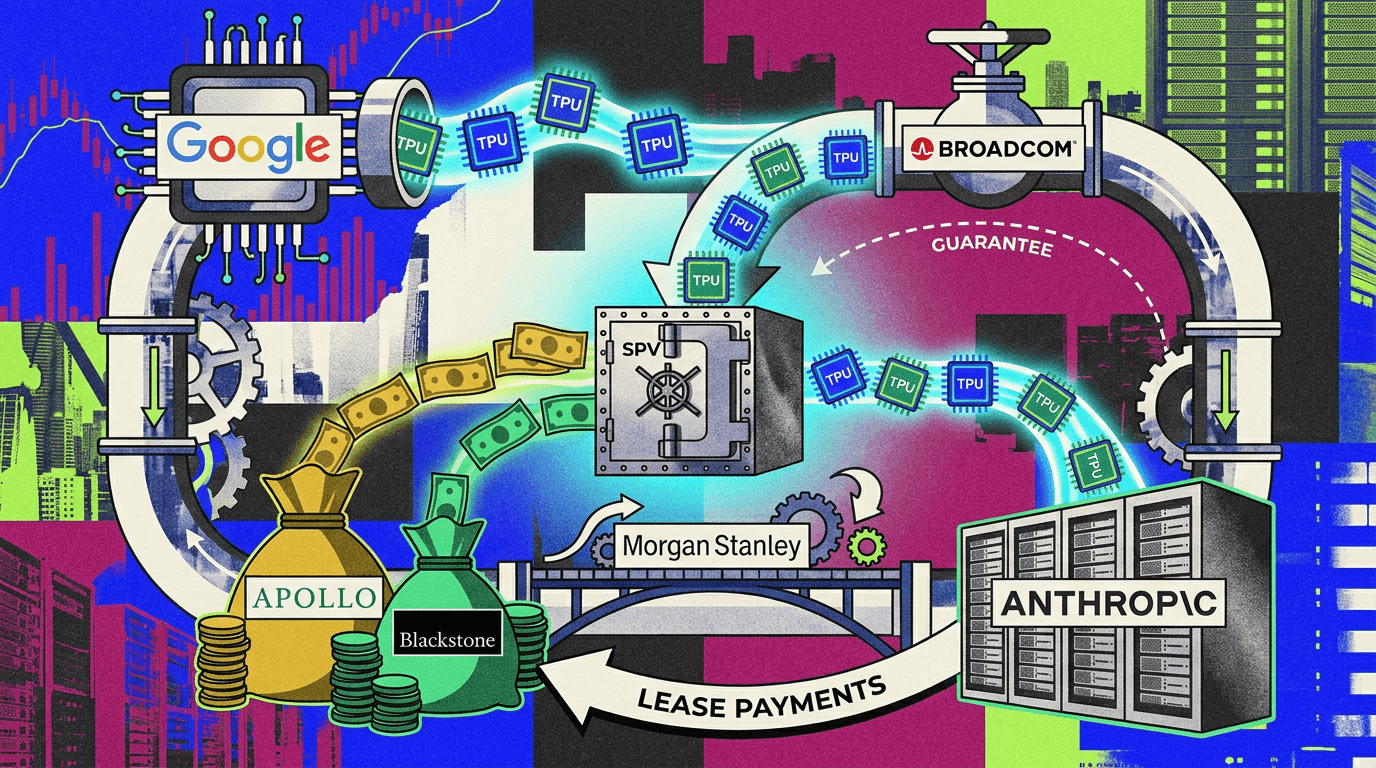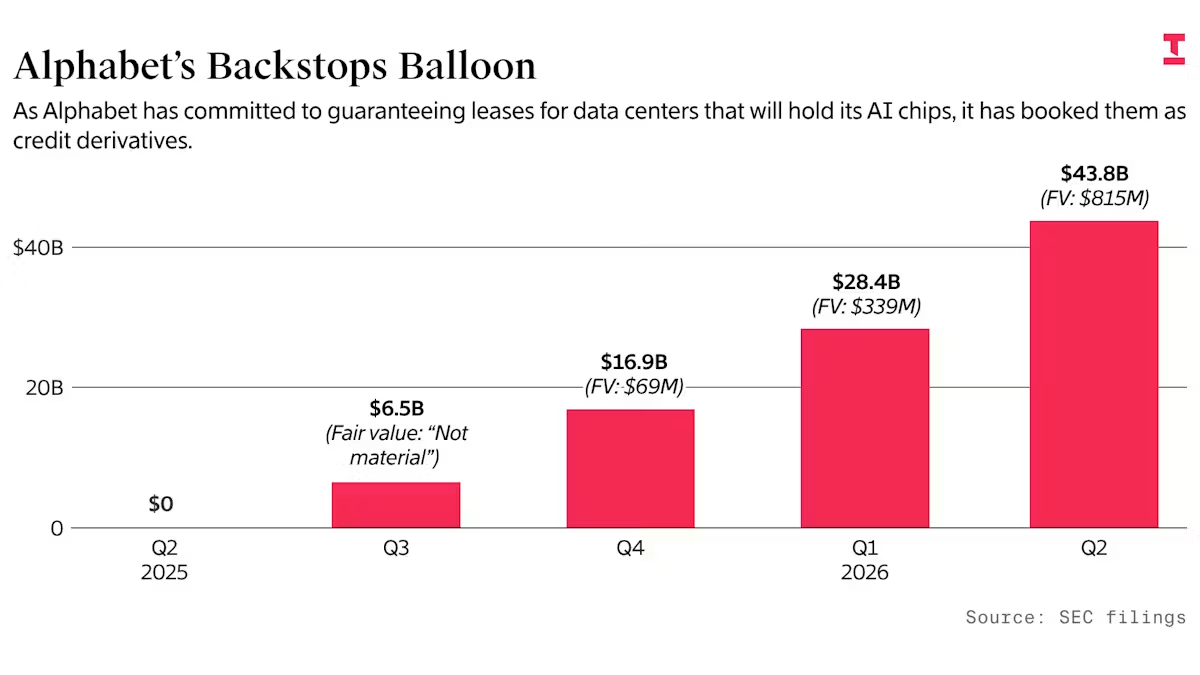
Skip to Content News Archives Economy Energy Oil & Gas Renewables Electric Vehicles Mining Commodities Agriculture Real Estate Mortgages Mortgage Rates Finance Banking Insurance Fintech Cryptocurrency Work Wealth Smart Money Wealth Management Investor Personal Finance Family Finance Retirement Taxes High Net Worth FP Comment Executive Women Puzzmo Newsletters Financial Times Business Essentials More Innovation Information Technology FP500 Podcasts Small Business Lives Told Tails Told Shopping Financial Post Store Obituaries Place a Notice Advertising Advertising With Us Advertising Solutions Postmedia Ad Manager Sponsorship Requests Classifieds Place a Classifieds ad Working Profile Settings My Subscriptions Saved Articles My Offers Newsletters Customer Service FAQ News Economy Energy Mining Real Estate Finance Work Wealth Investor FP Comment Executive Women Puzzmo Newsletters Financial Times Business Essentials HomeFinancial TimesInside Google's US$200 billion Wall Street finance machine for AnthropicPrivate credit, chip leases and data centre guarantees underpin a vast new model for AI spendingAuthor of the article:Last updated 1 hour ago You can save this article by registering for free here. Or sign-in if you have an account.To support the relentless surge in demand for Anthropic and AI chips, Google, Broadcom and Wall Street investors have each taken on different pieces of the financial risk. Photo by Omar Marques/SOPA Images/LightRocket via Getty ImagesGoogle has assembled one of the largest infrastructure financing programs in history to supply more than US$150 billion of artificial intelligence chips to Anthropic.Subscribe now to read the latest news in your city and across Canada.Exclusive articles from Barbara Shecter, Joe O'Connor, Gabriel Friedman, and others.Daily content from Financial Times, the world's leading global business publication.Unlimited online access to read articles from Financial Post, National Post and 15 news sites across Canada with one account.National Post ePaper, an electronic replica of the print edition to view on any device, share and comment on.Daily puzzles, including the New York Times Crossword.Subscribe now to read the latest news in your city and across Canada.Exclusive articles from Barbara Shecter, Joe O'Connor, Gabriel Friedman and others.Daily content from Financial Times, the world's leading global business publication.Unlimited online access to read articles from Financial Post, National Post and 15 news sites across Canada with one account.National Post ePaper, an electronic replica of the print edition to view on any device, share and comment on.Daily puzzles, including the New York Times Crossword.Create an account or sign in to continue with your reading experience.Access articles from across Canada with one account.Share your thoughts and join the conversation in the comments.Enjoy additional articles per month.Get email updates from your favourite authors.Create an account or sign in to continue with your reading experience.Access articles from across Canada with one accountShare your thoughts and join the conversation in the commentsEnjoy additional articles per monthGet email updates from your favourite authorsSign In or Create an AccountorSurging demand from Anthropic, in which Google is an investor, has led the Big Tech company to orchestrate a sprawling operation to supply its chips to the start-up, according to people involved in the project and corporate filings reviewed by the FT.The effort brings together Google, Broadcom, Apollo, Blackstone, Morgan Stanley and a slew of crypto miners in a web of transactions that stretches from chip manufacturing to data centre development.Get the latest headlines, breaking news and columns.By signing up you consent to receive the above newsletter from Postmedia Network Inc.A welcome email is on its way. If you don't see it, please check your junk folder.The next issue of Top Stories will soon be in your inbox.We encountered an issue signing you up. Please try againAt the centre of the project are Google’s tensor processing units, or TPUs — AI chips it has co-developed with Broadcom since 2016. Once used largely inside Google’s own data centres, the chips have begun to be sold externally, challenging Nvidia’s dominance of the AI processor market.Google sells the systems in “pods” — server racks taller than a person that connect thousands of chips into a single computing system.“AI chips are some of the most valuable goods ever produced,” said a senior banker close to the deals. “It’s a scale like we’ve never seen before because it’s a product we’ve never seen before.”The financing arrangements, which tie together contracts worth about US$200 billion, have not previously been reported in full. They reveal how Big Tech is creating funding models for AI that reach far beyond traditional corporate spending and tie more of the financial system to the industry’s growth.To support the relentless surge in demand for the AI chips, Google, Broadcom and Wall Street investors have each taken on different pieces of the financial risk.Google guarantees the data centres. Broadcom commits to buying the chips and helps finance them. Apollo and Blackstone provide much of the private-credit capital that purchases the hardware before leasing it to Anthropic.“This is each of us putting our balance sheet to work,” said a Google executive involved in the effort. “We’re doing it on the data centre side, [Broadcom’s] doing it on the chip side.”The web of contracts underpinning these arrangements adds up to about US$200 billion, with roughly four-fifths tied to the chips themselves, making it one of the largest infrastructure financings ever assembled.A program of such a size posed a problem: none of the companies involved wanted to carry tens of billions of dollars of AI chips on their balance sheets.Google is already funding record capital spending, so Broadcom agreed to buy the AI hardware from it. But Broadcom, too, would rather deploy its capital elsewhere.“Broadcom is the financing provider, but they don’t want to be in the financing business,” said one person familiar with the effort.That challenge produced an unusual solution. Morgan Stanley helped arrange a private-credit vehicle, funded by outside investors, that buys the chips and leases them to Anthropic in an adaptation of the vendor-financing model Boeing and GE built to sell aircraft and engines.In June, the first tranche of TPU hardware passed from Google through Broadcom into this financing blender. A special-purpose vehicle known as Compute SPV paid US$35 billion for roughly 1GW of the AI hardware, representing around 1 million TPUs, according to people familiar with the matter.The SPV’s cash came from three tranches of debt anchored by Apollo and Blackstone. Broadcom, in effect, guaranteed the two senior tranches by agreeing to cover any shortfall if Anthropic stopped paying and the SPV could not sell the hardware for enough to make the senior investors whole.The arrangement, known as residual value support, covers about US$30 billion of the US$35 billion financing, with Broadcom’s exposure declining as Anthropic makes its lease payments.That structure is the template that is expected to finance TPUs worth hundreds of billions more. The largest deal yet came together in April when Google agreed to sell another 3.5GW of TPU hardware to Broadcom for deployment by Anthropic.Broadcom’s filings disclose US$128 billion of purchase commitments, with US$55.2 billion of deliveries scheduled for its 2027 fiscal year and US$72.9 billion for 2028. People familiar with the arrangements said those commitments relate almost entirely to its agreed purchase of 3.5GW of TPU hardware from Google.Financing the chips solved only half of Google’s problem. The company also needed enough powered data centres to house them. “We have a schedule and we’re looking for capacity that will fit the schedule,” the Google executive said. “Crypto miners with excess capacity were helpful.”It has helped transform several crypto miners with secured power into a new breed of AI infrastructure developers, with a small outfit called TeraWulf the first to land a Google backstop to add a 360MW data centre on its campus in upstate New York.Google guaranteed the lease payments on the Anthropic-bound site, which Morgan Stanley packaged into a construction bond that in October raised US$3.2 billion to get it built. In return for the backstop, Google took penny warrants that gave it a stake in TeraWulf.Google’s team rapidly replicated this approach in the following months, helping crypto miners like Cipher Digital and Hut 8 build data centres in Texas and Louisiana. The FT identified five projects with 1.4GW of power, which have raised US$15 billion of debt with the support of Google’s backstop.People familiar with the matter said the Big Tech company had so far backstopped 10 developments with 2.4GW of power for TPUs. Google’s guarantees put it on the hook for as much as US$44 billion if all the leases go bad, though it marks the liability at US$815 million on its balance sheet. It could also step into the leases itself.The Google team is now racing to put together additional data centre projects with enough power to ultimately house all of the 4.5GW of TPU hardware they’ve agreed to sell. “We’re spending a lot of time on [power] right now — all of our time,” said the Google executive.By this spring, Google’s financial heft had already begun to reshape the economics of AI infrastructure. Data centre projects backed by Google borrowed at a median rate of 7.1 per cent, compared with 9.3 per cent for the neocloud operators building around Nvidia’s chips. Jefferies analysts called this gap “a structural cost-of-capital disadvantage” for those in Nvidia’s orbit.For Google’s project, the risk is big if concentrated: US$200 billion of contracts tied to Anthropic’s ability to pay its chip and data centre leases. It is one piece of a larger dilemma, with demand across the industry resting on a handful of large hyperscalers and frontier AI labs.“There’s a whole world that’s been built underneath those companies, and if their appetite to invest decreases, all of it sees a slowdown,” said Jefferies analyst Jonathan Petersen. “That’s the big macro risk.”© 2026 The Financial Times Ltd Join the Conversation This website uses cookies to personalize your content (including ads), and allows us to analyze our traffic. Read more about cookies here. By continuing to use our site, you agree to our Terms of Use and Privacy Policy.
Inside Google's US$200 billion Wall Street finance machine for Anthropic
Google has assembled one of the largest financing programs in history to supply more than US$150 billions of AI chips to Anthropic. Read on
TL;DRAI
Google orchestrated a $200 billion financing program supplying $150+ billion AI chips to Anthropic, with Broadcom, Apollo and Blackstone splitting risk. The structure signals a new Big Tech funding model for AI: integrating private credit and balance-sheet guarantees that tie banking to infrastructure growth.
1,638 words~7 min read