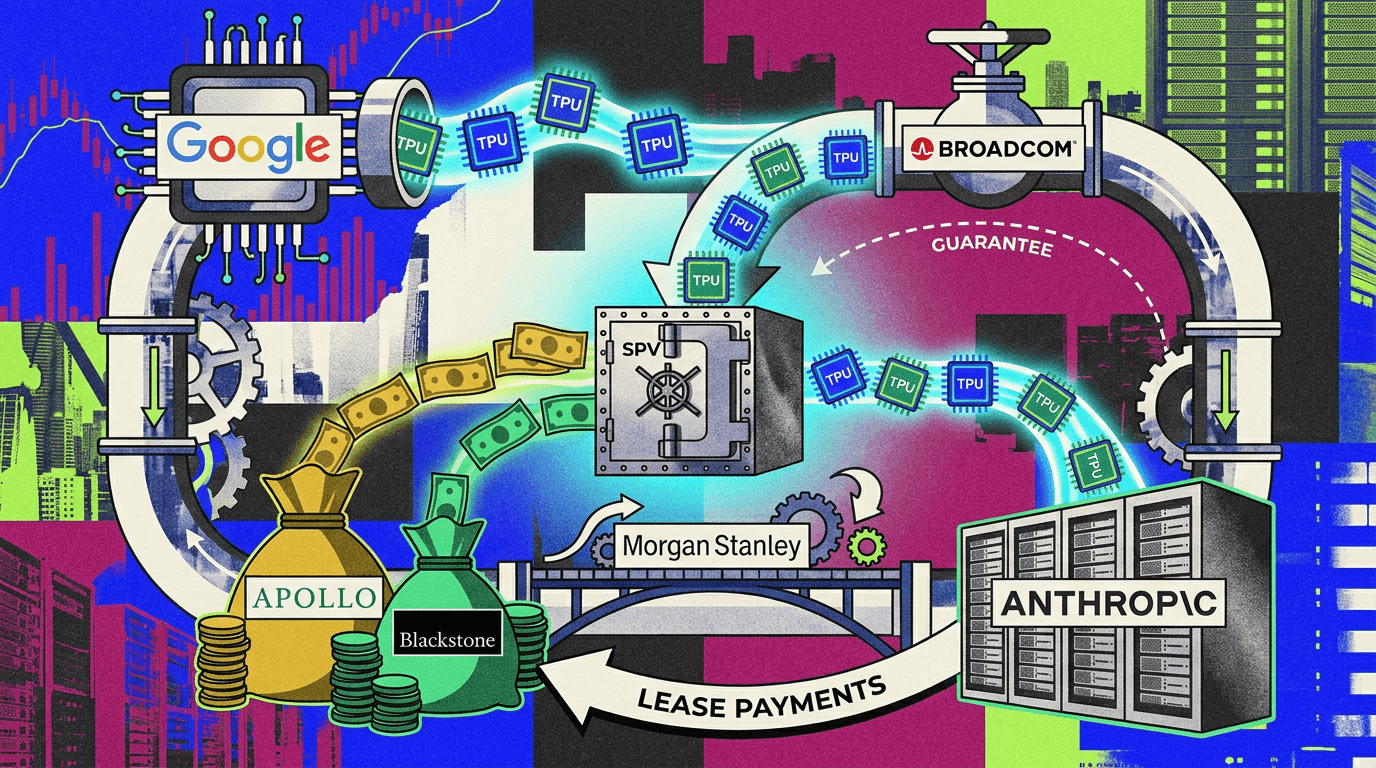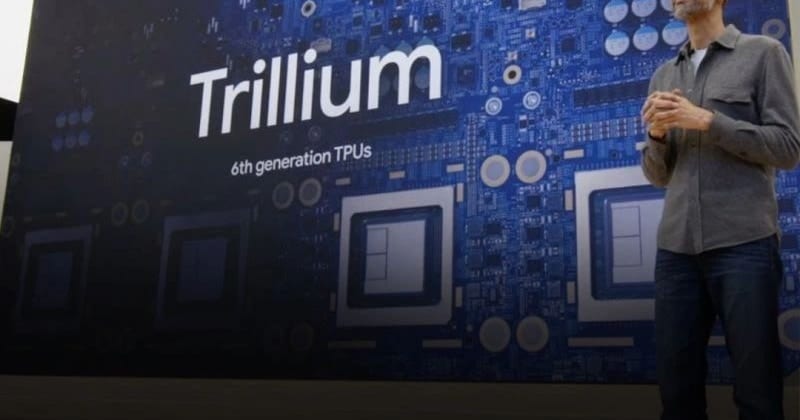
Together with chip designer Broadcom, investment firms Apollo and Blackstone, and several banks, Google has created a complex financing architecture. The goal is to sell as many of its Tensor Processing Units (TPUs) as possible without these financial transactions appearing on its own balance sheet. A large portion of the TPUs will go to Anthropic. The contracts, which rely on this AI company meeting its payment commitments, amount to around $200 billion USD in total.
The Financial Times took a closer look at this financing construct. In this setup, Google sells its TPUs to its partner Broadcom, which in turn sells them to a specially created organization called Compute SPV. This organization borrows the necessary funds for the purchase from Apollo and Blackstone, among others. It also leases the TPUs to Anthropic. If Anthropic's payments to Compute SPV fail and Compute SPV can therefore not service its loans even after reselling the chips, Broadcom guarantees it will step in for $30 billion of the $35 billion USD currently in circulation.
According to information from the Financial Times, this structure serves as a template that could also be used for the additional 3.5 gigawatts of TPU hardware that Google, Anthropic, and Broadcom have already agreed to purchase. The construct is reminiscent of the financing patterns used by Boeing and GE to sell aircraft and engines.