05 August 2026
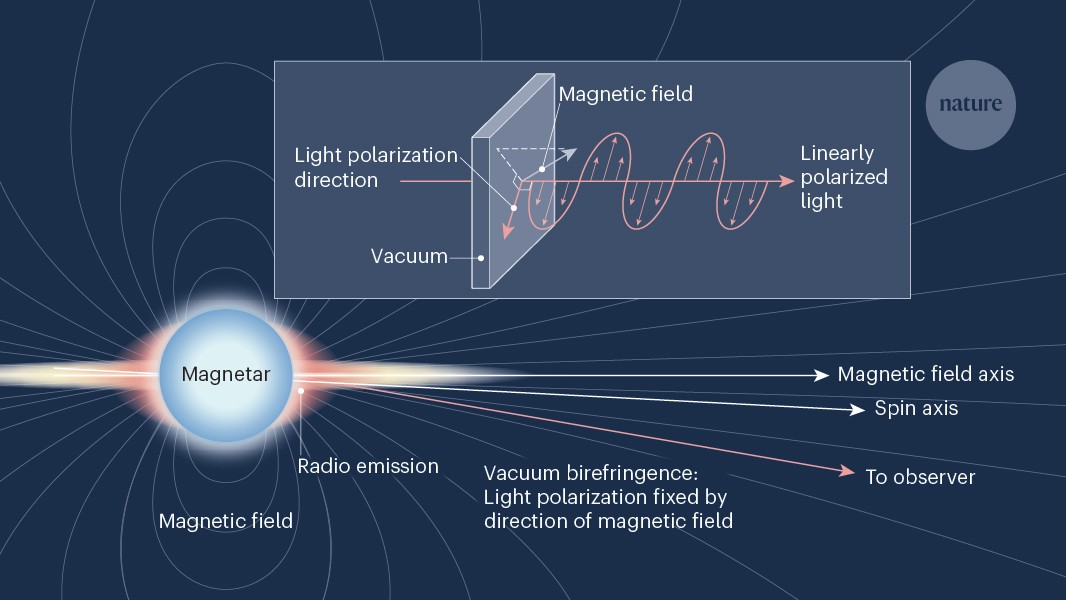
Observations of a magnetized stellar core indicate that in an ultra-strong magnetic field, empty space can polarize light.
By
Ekaterina Sokolova-Lapa0 &
Joern Wilms1
Observations of a magnetized stellar core indicate that in an ultra-strong magnetic field, empty space can polarize light.
05 August 2026
Observations of a magnetized stellar core indicate that in an ultra-strong magnetic field, empty space can polarize light.
By
Ekaterina Sokolova-Lapa0 &
Joern Wilms1
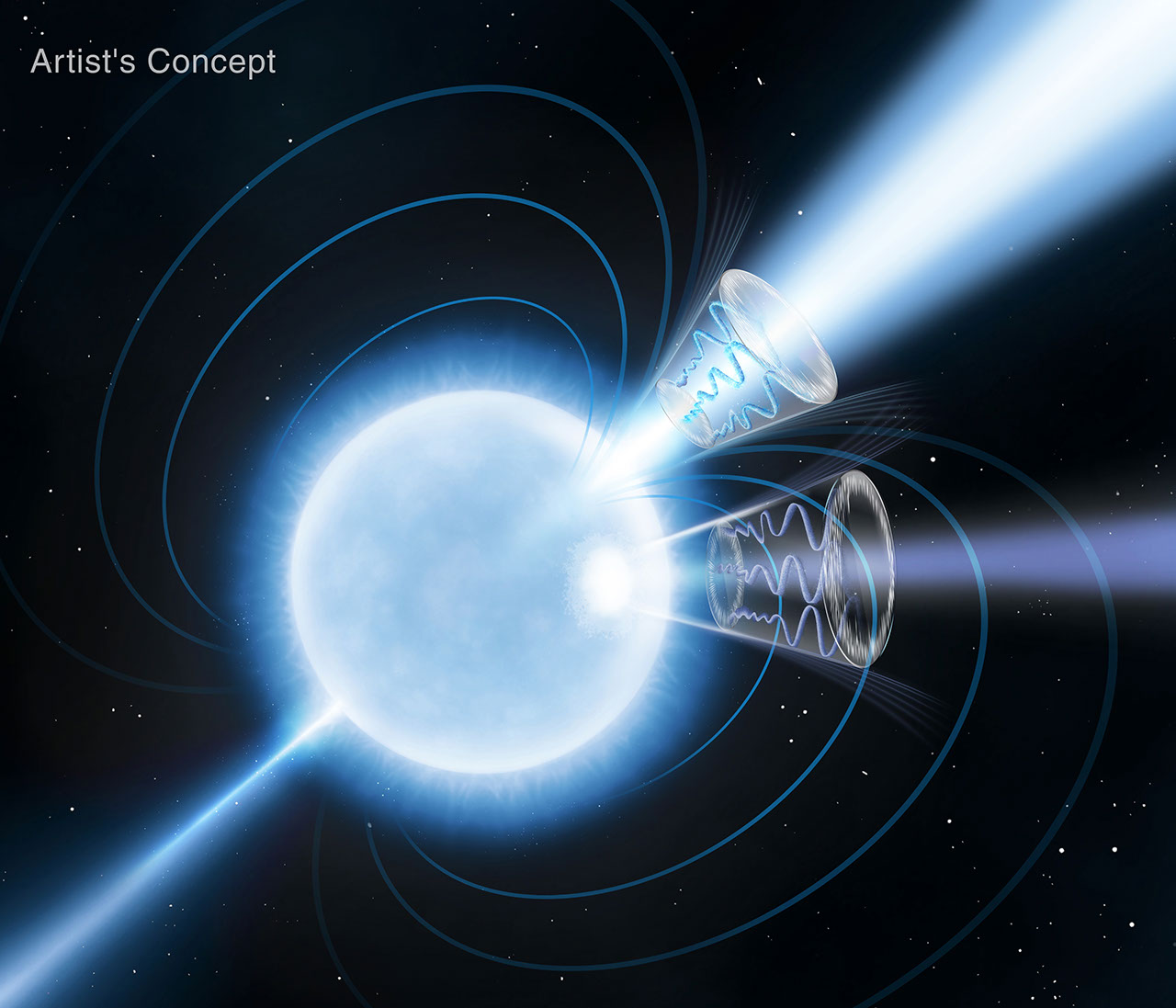
NASA’s IXPE May Have Proven 90-Year-Old Theory - NASA Science
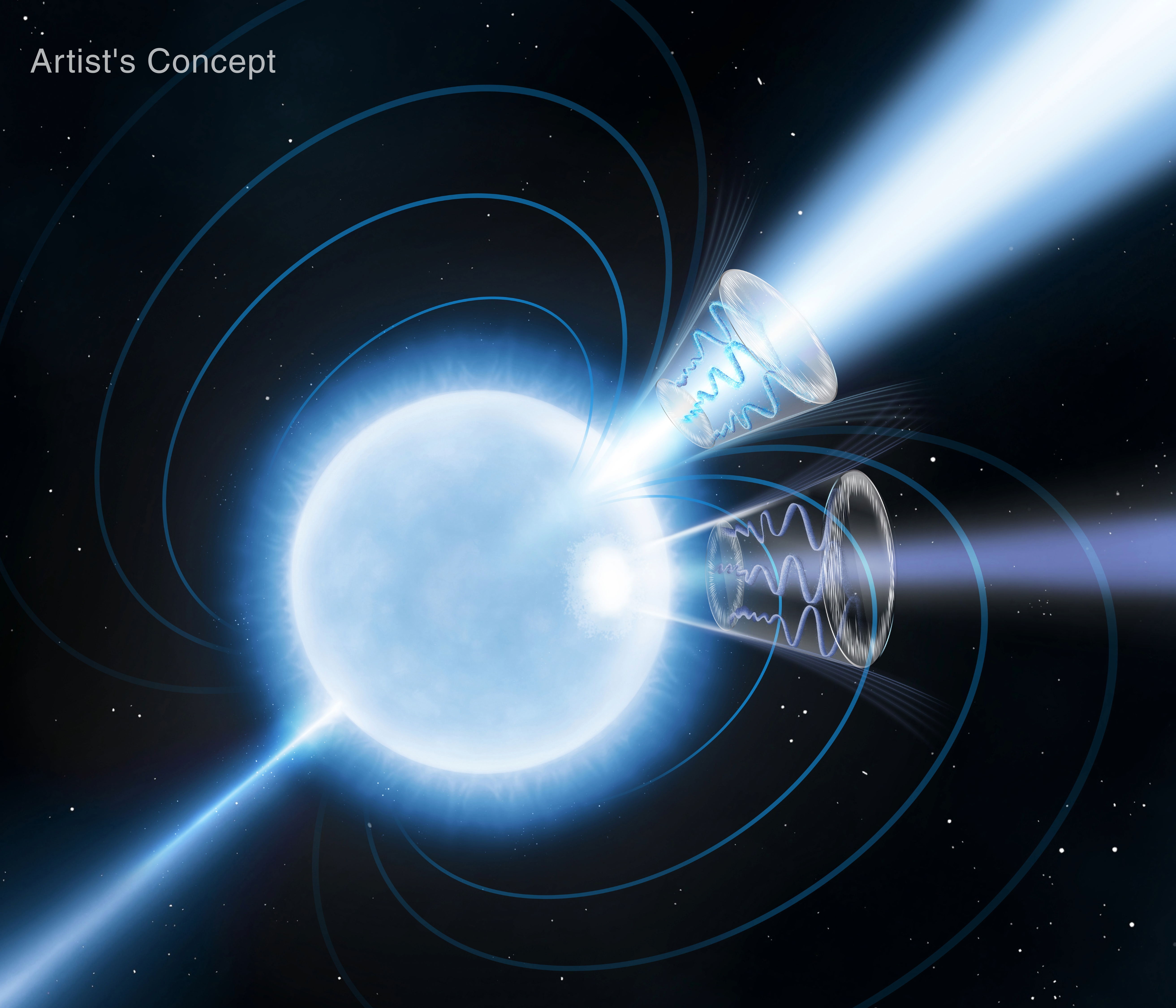
NASA's IXPE Studies Magnetar - NASA
Dark matter’s secret force does the opposite of what scientists expected
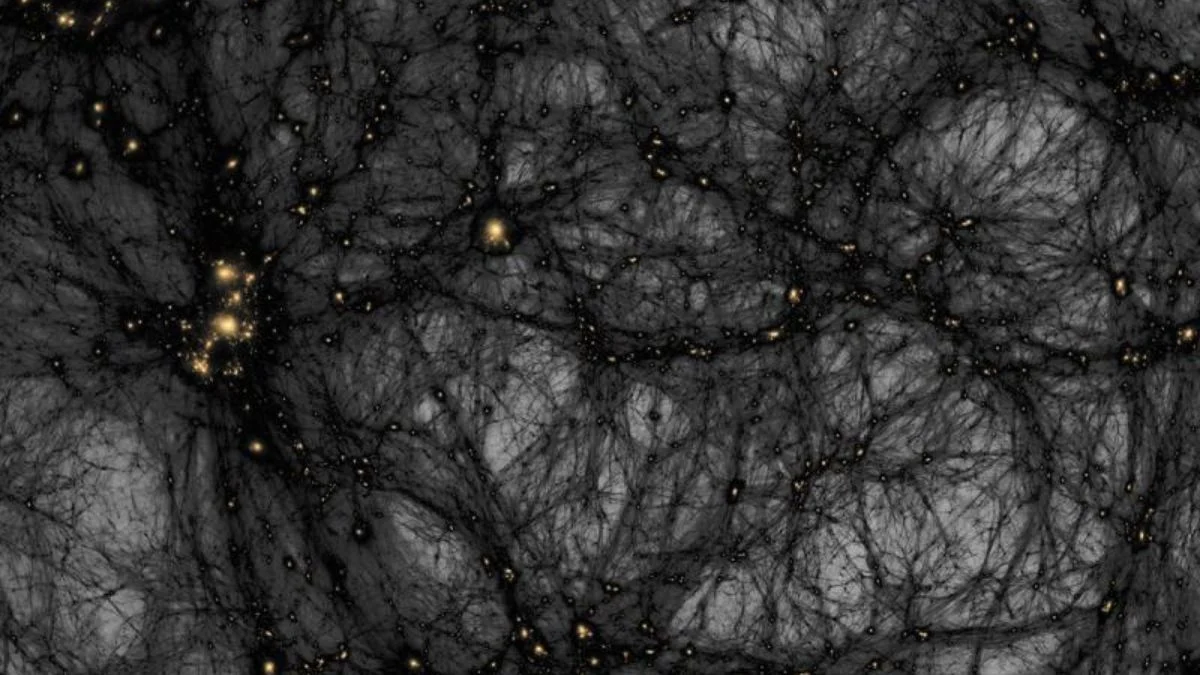
Dark Matter May Be Transforming Into Weird Particles That Fill The Universe With Gravity
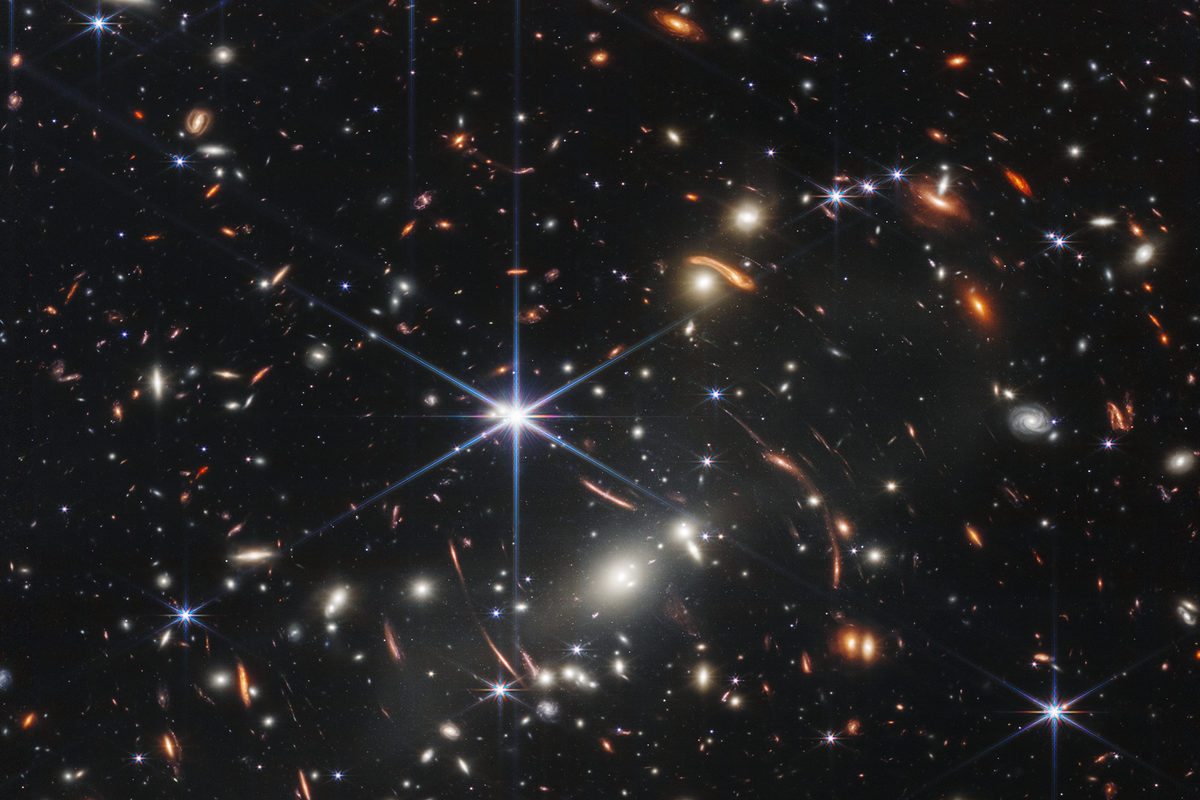
A Hidden 'Dark Dimension' Could Rewrite Our Understanding of the Universe
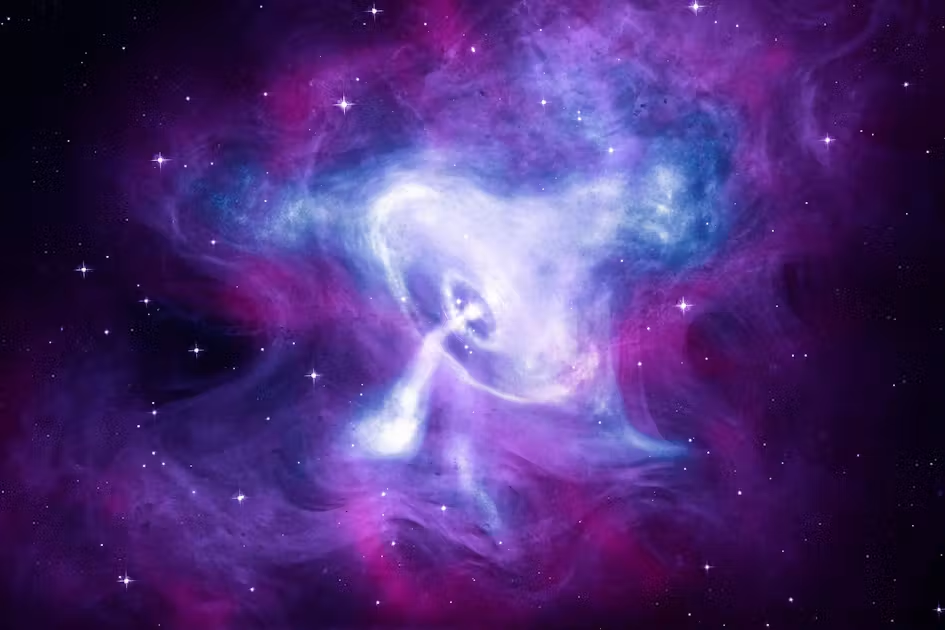
90 Jahre alte Quantentheorie: Wie ein Magnetar womöglich die Vakuumdoppelbrechung sichtbar macht
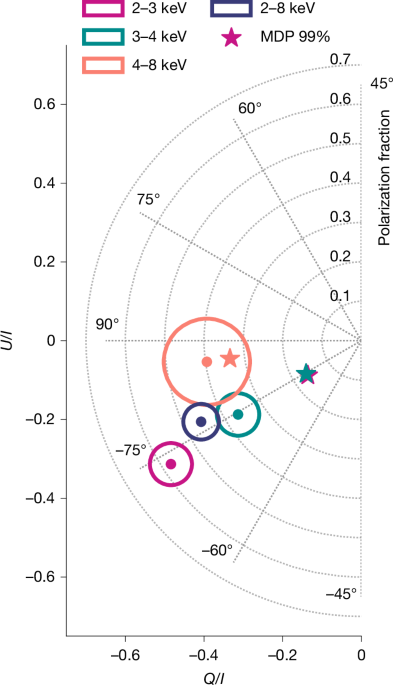
Polarization measurements of the magnetar 1E 1547.0−5408 provide strong evidence that vacuum birefringence shapes X-ray…
Scientists using NASA’s IXPE (Imaging X-ray Polarimetry Explorer) conducted more than 140 hours of observations of the magnetar…
Scientists using NASA’s IXPE (Imaging X-ray Polarimetry Explorer) conducted more than 140 hours of observations of the magnetar…
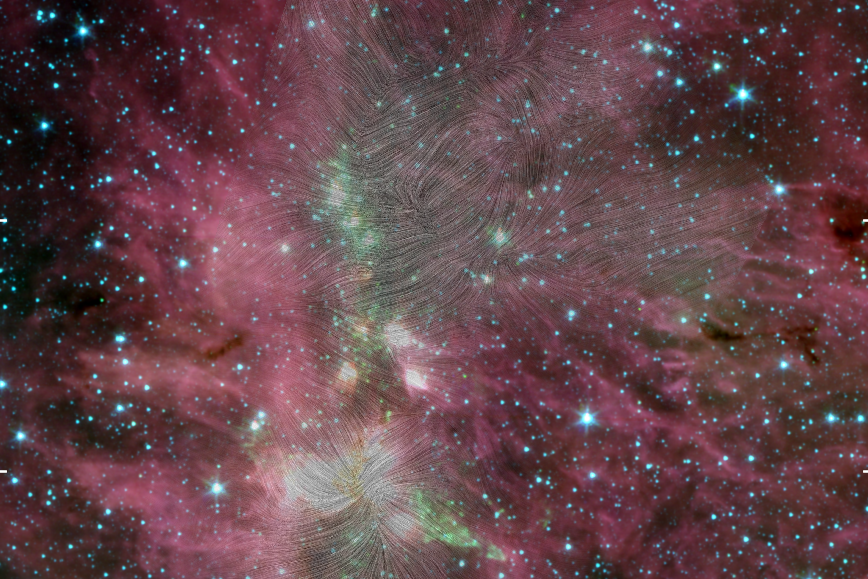
MIT Haystack Observatory astronomers mapped a magnetic "skeleton" funneling gas into a stellar nursery. New SOFIA observations…
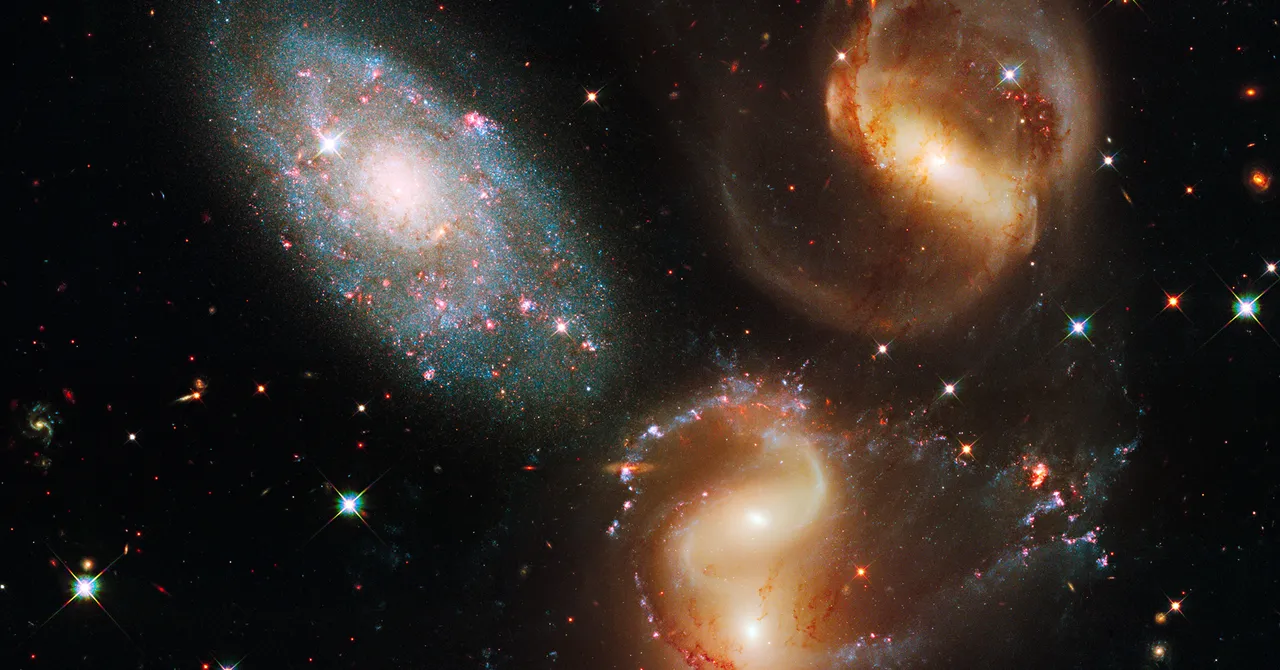
Once dismissed as empty expanses between galaxies, cosmic voids are becoming one of the most promising tools for probing the…

MIT Associate Professor Erin Kara seeks to connect the extreme physics of black holes with how galaxies such as our own Milky Way…