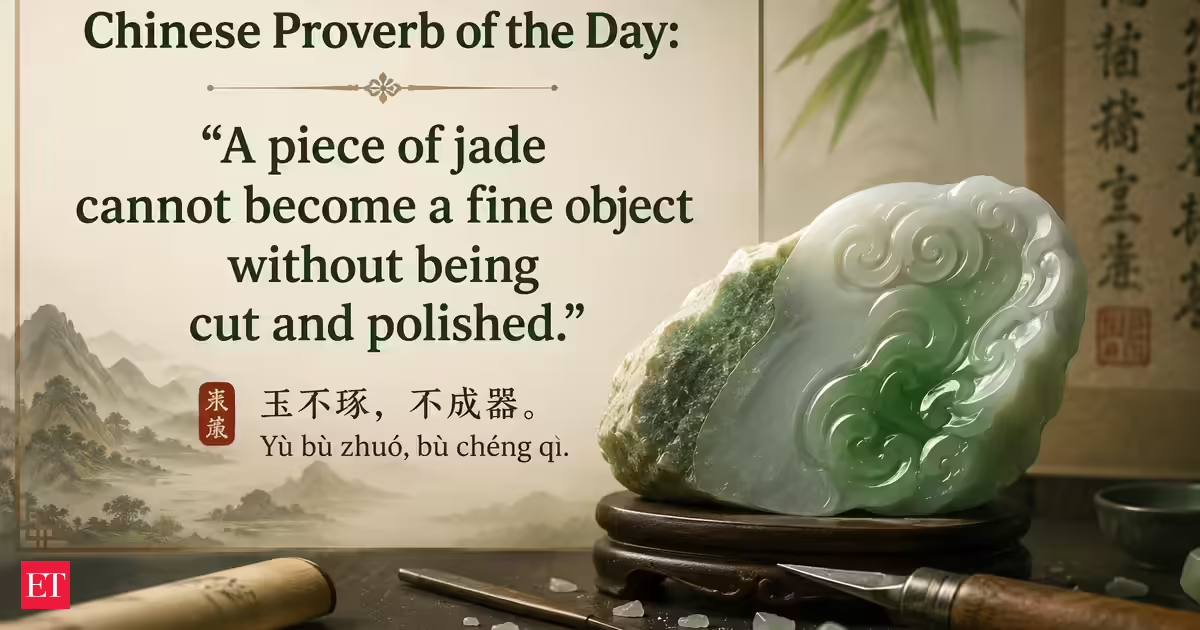
Chinese proverb of the day: "The gem cannot be polished without friction, nor man perfected without trials"Few sayings capture the value of perseverance as powerfully as the Chinese proverb, "The gem cannot be polished without friction, nor man perfected without trials." The proverb draws a simple yet profound comparison between a rough gemstone and human character. Just as a gem must undergo polishing to reveal its brilliance, people often become wiser, stronger and more resilient by overcoming hardships. Rather than viewing difficulties as setbacks, the saying encourages us to see them as opportunities for growth and self-improvement. Its message has remained relevant for generations, reminding people that personal development rarely comes without effort, patience and the courage to face life's inevitable challenges.What does the Chinese proverb mean?The proverb uses the image of a gemstone to explain how true value is revealed through effort. A rough gem does not sparkle naturally. It must be cut, shaped and polished before its beauty can be seen. Likewise, people are not born with complete wisdom, resilience or character. These qualities are developed through life's experiences, particularly those that test patience, determination and courage.The saying reminds us that struggles are not always obstacles to success. In many cases, they are the very experiences that prepare people for greater achievements. Every challenge overcome adds to a person's confidence, knowledge and emotional strength.Why challenges help people growLife's greatest lessons often come from moments of difficulty rather than comfort. Whether it is recovering from failure, adapting to change or overcoming personal setbacks, challenges force people to think differently and discover strengths they may never have realised they possessed.Students become better learners after making mistakes and understanding where they went wrong. Athletes improve by pushing through demanding training sessions and recovering from defeats. Entrepreneurs often learn more from failed ventures than from early success. In each case, adversity becomes a teacher rather than an enemy.The proverb encourages people to embrace these moments instead of fearing them, recognising that growth is usually a gradual process shaped by persistence.A lesson in resilienceOne of the most powerful messages behind the proverb is resilience. It acknowledges that hardship is an unavoidable part of life but suggests that the way people respond to those hardships ultimately defines their character.Resilient individuals do not avoid difficulties altogether. Instead, they learn to adapt, recover and continue moving forward despite setbacks. Every obstacle overcome strengthens their ability to face future challenges with greater confidence and determination.The proverb therefore serves as a reminder that resilience is built through experience, not inherited at birth.Relevance in today's worldThe wisdom behind the proverb remains highly relevant in modern society. Today's fast-paced world often celebrates instant success, but meaningful achievements usually require years of dedication, learning and perseverance.Whether someone is preparing for examinations, building a career, starting a business or recovering from personal disappointment, setbacks are almost inevitable. Rather than viewing these moments as failures, the proverb encourages people to see them as necessary steps on the path to improvement.Even in professional environments, employers increasingly value qualities such as adaptability, persistence and emotional resilience alongside technical skills. These are traits that are often developed through experience rather than formal education alone.A timeless message across generationsAlthough the exact historical origin of the proverb is uncertain, it has long been associated with traditional Chinese wisdom and continues to resonate across cultures. Similar ideas appear in many philosophical and literary traditions, reflecting the universal belief that character is shaped by perseverance rather than comfort.The proverb remains popular because its message applies to people of every age and profession. Children learning new skills, students pursuing education, professionals advancing their careers and older adults adapting to life's changes can all find encouragement in its simple yet profound lesson.Timeless wisdomThe enduring appeal of "The gem cannot be polished without friction, nor man perfected without trials" lies in its honest understanding of human growth. Success is rarely achieved without setbacks, and personal excellence is seldom developed without perseverance.Just as friction transforms an ordinary stone into a dazzling gem, life's challenges can shape ordinary experiences into extraordinary lessons. By accepting difficulties as opportunities to learn rather than reasons to give up, people can emerge stronger, wiser and better prepared for whatever lies ahead. That timeless lesson continues to inspire generations, making this proverb as meaningful today as it was centuries ago.
Chinese proverb of the day: "The gem cannot be polished without friction, nor man perfected without trials"
Few sayings capture the value of perseverance as powerfully as the Chinese proverb, "The gem cannot be polished without friction, nor man perfected without trials." The proverb draws a simple yet profound comparison between a rough gemstone and human character. Just as a gem must undergo polishing to reveal its brilliance, people often become wiser, stronger and more resilient by overcoming hardships.
720 words~3 min read