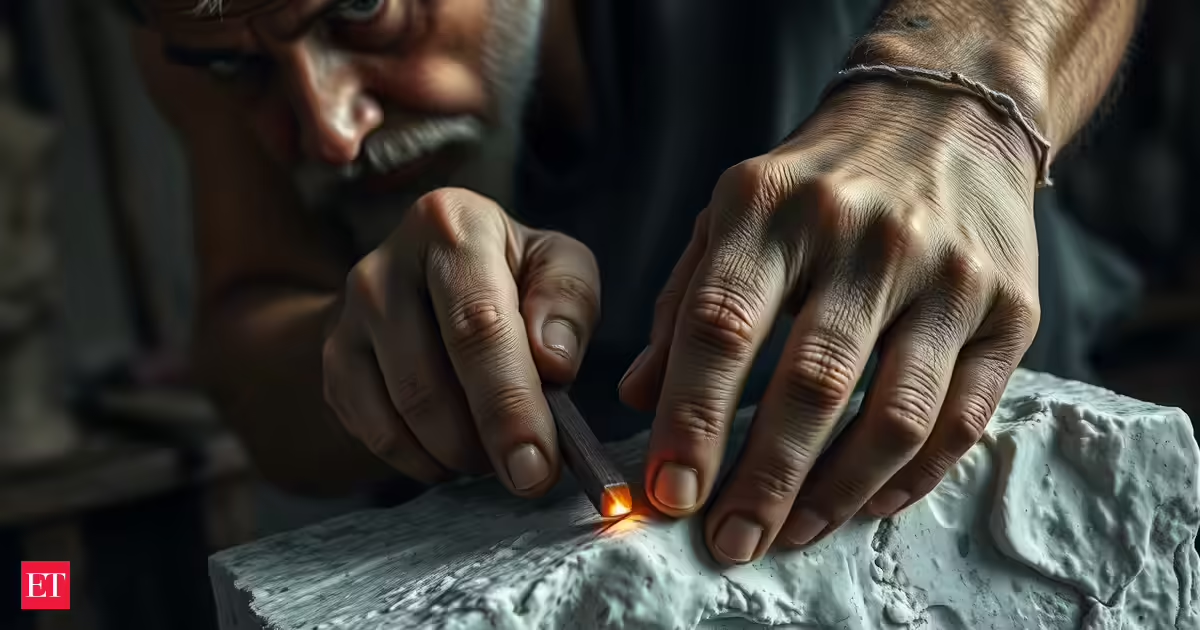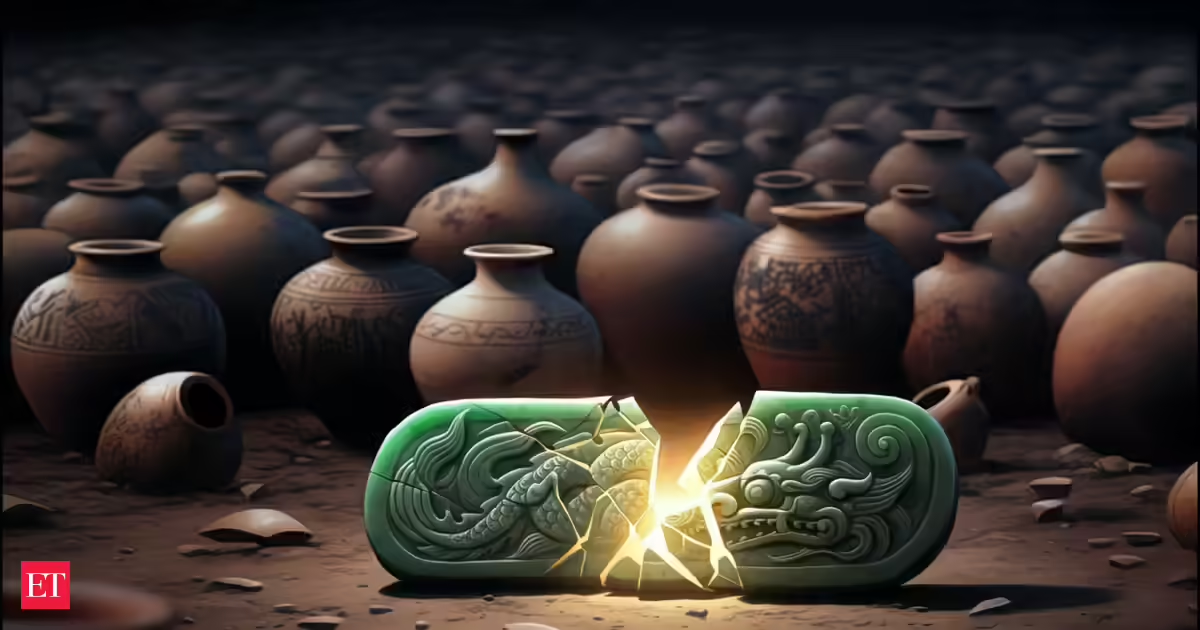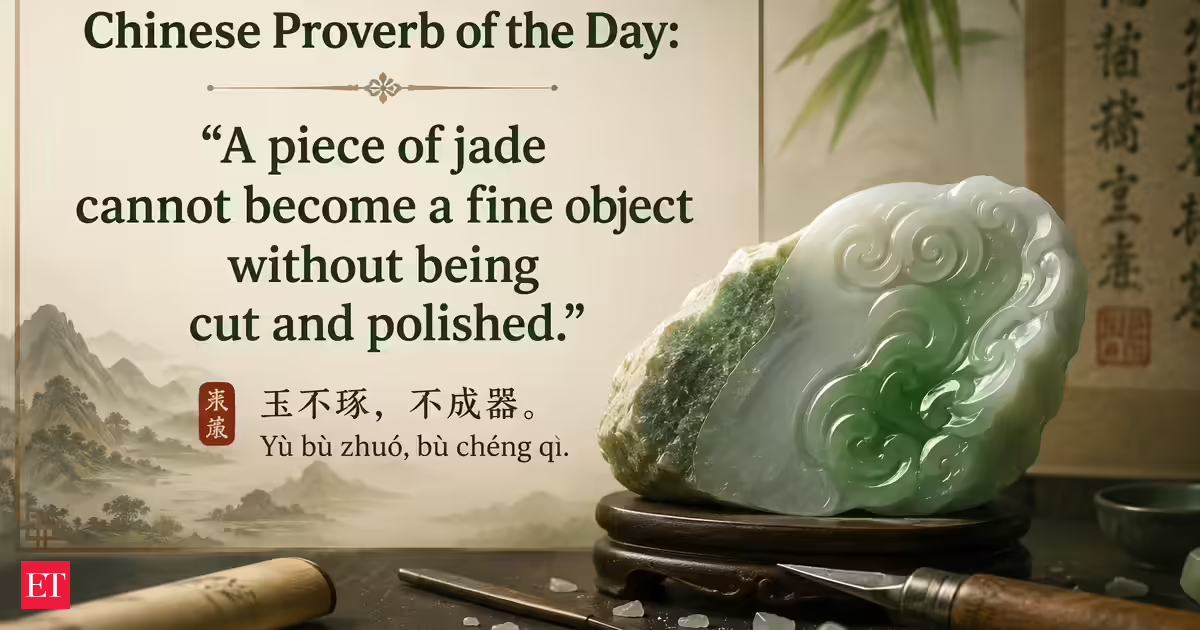
A simple Chinese proverb, “玉不琢,不成器 (Yù bù zhuó, bù chéng qì)”, carries a powerful message that still speaks to modern life. Translated as “A piece of jade cannot become a fine object without being cut and polished,” the saying explains how growth, skill, and character are shaped through patience and effort.At first glance, the proverb appears to be about craftsmanship. A rough stone has potential, but it needs careful carving before its true beauty appears. Yet its deeper meaning reaches far beyond jade. It reflects a timeless truth about human development: talent alone is not enough. Without discipline, learning, challenges, and refinement, potential often remains hidden.The Chinese proverb of the day reminds us that every achievement has a process behind it. A successful person, a skilled artist, a great leader, or even a strong character is rarely created instantly. They are shaped by experiences that test and transform them.In an era that often celebrates quick success and overnight fame, this ancient wisdom offers a different perspective. It asks a simple but important question: What if the struggles we face are not obstacles, but the very process that helps us become who we are meant to be?Meaning of the Chinese Proverb of the Day: Why Pain Often Precedes ProgressThe proverb “Yù bù zhuó, bù chéng qì” comes from traditional Chinese philosophy and uses jade as a symbol of human potential. In ancient China, jade was highly valued not only for its beauty but also for its association with purity, wisdom, and virtue.A raw piece of jade does not immediately reveal its final form. A craftsman must study it, cut it, shape it, and polish it. Each careful action removes what is unnecessary and brings out what was already inside.The same idea applies to people. A person may have intelligence, creativity, or natural ability, but those qualities need development. Education, practice, mistakes, and experience act like the tools that shape raw potential.The proverb does not suggest that hardship is valuable simply because it is painful. Instead, it highlights the role of effort. Growth happens when challenges are met with learning and persistence.A musician improves by repeating difficult pieces. A writer develops through countless drafts. A scientist moves forward through failed experiments. The final result often hides the years of polishing that came before it. This is why the proverb remains relevant across cultures.Why did ancient Chinese thinkers compare people to jade?The connection between jade and personal character was deeply rooted in Chinese culture. Jade was more than a decorative stone. It represented qualities such as kindness, honesty, courage, and wisdom.Ancient philosophers often used objects from nature to explain human behavior. A mountain, a river, a tree, or a stone could become a lesson about life. Jade was especially meaningful because its transformation required patience.The philosopher associated with many classical Chinese teachings, Confucius, often emphasized the importance of self-cultivation. The idea that people should continuously improve themselves became a central theme in Chinese philosophy. The proverb reflects this tradition.This idea challenges a common belief that people are simply born talented or untalented. While natural ability matters, ancient wisdom recognized another force: development. A diamond, a sculpture, a masterpiece, or a respected individual all share something in common. Their final form is the result of a long process.Is struggle necessary for personal growth?The proverb does not romanticize suffering, but it recognizes that difficulty often reveals hidden strength. Many of the skills people admire are created during moments when improvement feels uncomfortable.Learning a new language requires mistakes. Building confidence requires moments of uncertainty. Developing patience requires situations that test it. Modern psychology often explores a similar concept through ideas like resilience and deliberate practice.Researchers have found that improvement usually comes from focused effort, feedback, and repeated attempts rather than simple repetition. The “polishing” process in life can take many forms. It may come from criticism that helps someone improve, failures that teach valuable lessons, or responsibilities that force a person to mature.However, the proverb also carries a warning. Polishing must be careful. Too much pressure without support can damage rather than improve. Just as a craftsman must understand the stone, people need balance between challenge and care. True growth is not about becoming perfect. It is about becoming more refined, aware, and capable.What life lessons can we learn from this ancient wisdom?One of the biggest lessons from “Yù bù zhuó, bù chéng qì” is that unfinished does not mean worthless. A rough piece of jade may look ordinary before the carving begins. Its value is hidden, waiting for the right process to reveal it.People often judge themselves too early. They compare their beginning with someone else’s finished work. This proverb offers a different way of seeing progress. A beginner is not a failure. A mistake is not the end. A difficult phase is not proof that growth is impossible.The saying encourages patience with ourselves and others. A young student, a new employee, or someone starting over may simply be in the early stages of being shaped. It also teaches humility. Even talented individuals must continue learning. A polished surface does not appear once; it requires constant care.In the modern world, people are surrounded by messages of speed. Social media often shows achievements without showing the years behind them. Businesses highlight success stories but rarely reveal the failures that shaped them.The greatest transformations are usually quiet. They happen through daily choices, repeated effort, and small improvements that slowly change a person’s future. A piece of jade becomes valuable not because it was untouched, but because it was carefully transformed.Human beings are similar. Our experiences shape us. Our challenges teach us. Our choices determine what we become. The wisdom behind “玉不琢,不成器” is simple but powerful: potential is only the beginning. The real masterpiece is created through the work we are willing to put in.
Chinese Proverb of the Day: "A piece of jade cannot become a fine object without being cut and polished." A timeless life lesson from ancient Chinese wisdom on turning struggle into strength
Chinese Proverb of the Day reveals an ancient truth about growth, patience, and success. “Yù bù zhuó, bù chéng qì” explains how raw potential becomes greatness only through effort, challenges, and refinement. This timeless Chinese wisdom offers a powerful lesson for modern life, reminding us that every masterpiece is shaped through the process behind the scenes.
967 words~4 min read