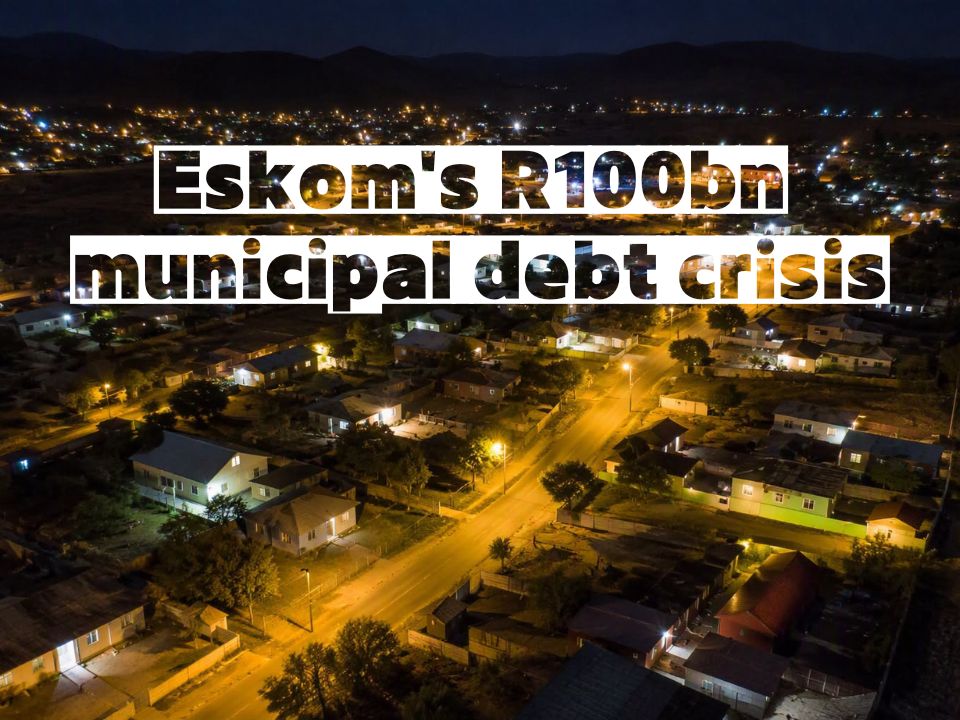
President Cyril Ramaphosa on Friday dashed all hopes the Eskom top brass had of reversing course in the government’s earlier decision to strip it of its transmission assets ― the biggest reform the energy sector in a generation.Eskom, with the support of electricity & energy minister Kgosientsho Ramokgopa, last year tried unsuccessfully to retain ownership of the transmission assets via a revised unbundling plan. Instead, the president established a dedicated presidential task team to oversee the process, which has now furnished him with a report, which in essence recommits the government to Eskom’s unbundling plan, first announced in 2019.The work of the task team will ensure that there is clear delegation of authority from Eskom to the National Transmission Company of South Africa (NTCSA) of all decision-making related to the market, financial, and operational ring-fencing of the NTCSA from Eskom. Decisions on access to the transmission network are to be relocated to the NTCSA and eventually to an independent transmission system operator (TSO). This includes cases in which connections are at the distribution level but have implications for the market or transmission network.The president must be applauded for not bowing to pressure from Eskom to ditch the unbundling plan by allowing it to keep control and ownership of the transmission assets.This would have made a mockery of the reform agenda pursued by this administration to usher in an era of nondiscriminatory access for all electricity generators, a central condition for genuine competition.The Eskom leadership, which has not seen eye-to-eye with big businesses on the fate of transmission assets, must stay true to their public communication that they respect and will support the administration’s decision.Read: Eskom loses assets fight as Ramaphosa backs splitHowever, concerns in Eskom’s corridors that the establishment of the TSO, which will own the NTCSA assets, will undermine the financial viability of Eskom must be taken on board.The next stage of the unbundling must set clear and practical steps on how the government will rein in the ballooning municipal debt to Eskom. A failure to resolve this will make any unbundling process counterproductive, exposing the taxpayer to further Eskom bailouts. The more than R100bn debt owed by municipalities to Eskom, which is projected to top R300bn by 2030 if not reined in, is by all accounts a risk facing Eskom’s unbundling.Measures so far to get municipalities to cough up what they owe Eskom have failed to yield the desired results. An extraordinary effort is needed to get this right. Murmurs of concerns coming from the likes of Moody’s on Eskom’s unbundling must also be considered.The ratings agency in June warned of the business and credit risks associated with stripping Eskom of the transmission assets, which account for nearly 40% of its core earnings. The agency said that while the unbundling of transmission activities is a priority, there are risks to execution and if the process is botched it could be credit negative for Eskom.It is thus encouraging that Ramaphosa’s task team has proposed that a working group develop a consolidated action plan, encompassing all initiatives aimed at arresting the growth in municipal arrears and identifying those to be scaled up and accelerate. However, words alone will not deliver the required results. The presidency must lead the charge in having the political will to help Eskom take the difficult decisions that are needed to get municipalities to pay, however unpopular they might be with the electorate. Eskom cannot be left to fend on its own in getting municipalities to play ball.
EDITORIAL | Municipal debt threatens Eskom’s unbundling progress
Presidency must lead the charge in displaying the political will to help utility take the difficult decisions needed to get councils to pay
582 words~3 min read