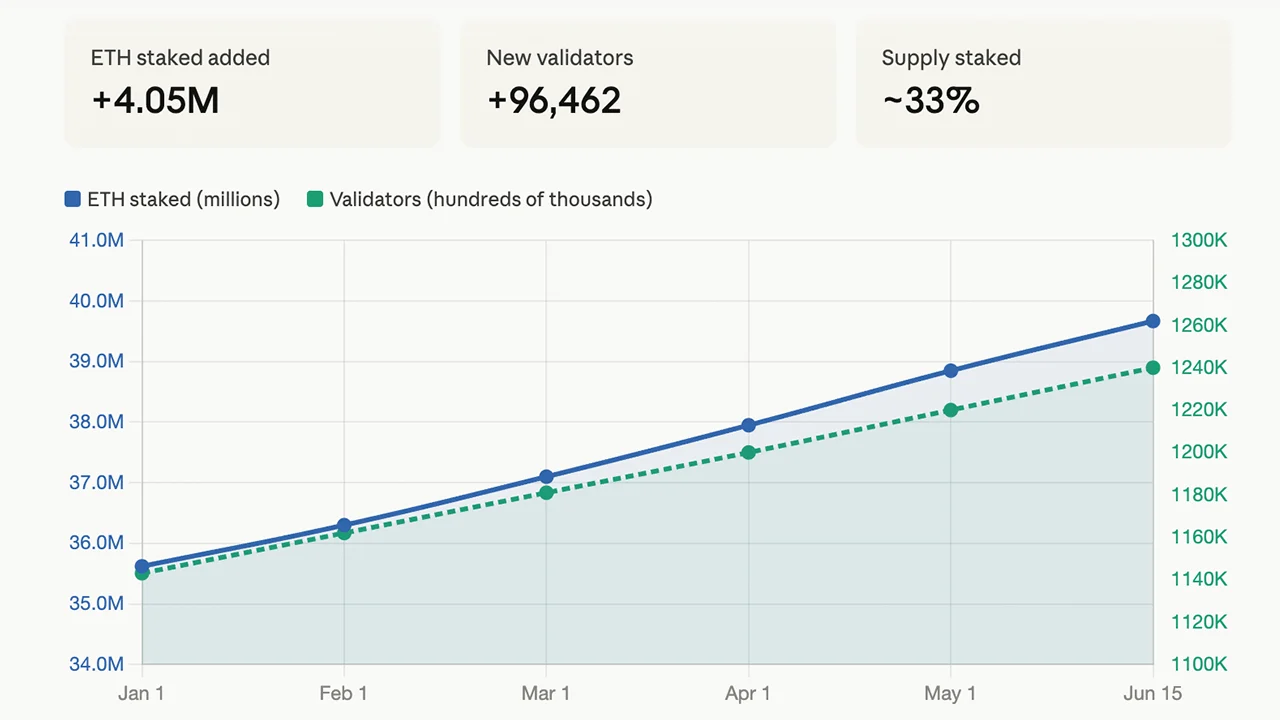
Over a third of all Ethereum in existence is now locked up in staking contracts. The staking ratio has climbed to 34.4% of total ETH supply, the highest level ever recorded for the network.
Ethereum completed its transition from proof-of-work to proof-of-stake on September 15, 2022, in what the community called the Merge. Instead of miners burning electricity to validate transactions, the network shifted to validators who lock up ETH as collateral.
Since that transition, the amount of ETH flowing into staking contracts has climbed steadily. The 34.4% figure represents the cumulative result of that trend, now nearly three years in the making.
One of the biggest accelerants has been liquid staking. Protocols like Lido allow users to stake their ETH while receiving a liquid token in return, meaning they don’t have to choose between earning staking rewards and maintaining access to their capital.
Previously, staking meant locking up a minimum of 32 ETH with no ability to use it elsewhere. Liquid staking lowered that threshold to essentially zero and opened the door to retail users and institutions alike.