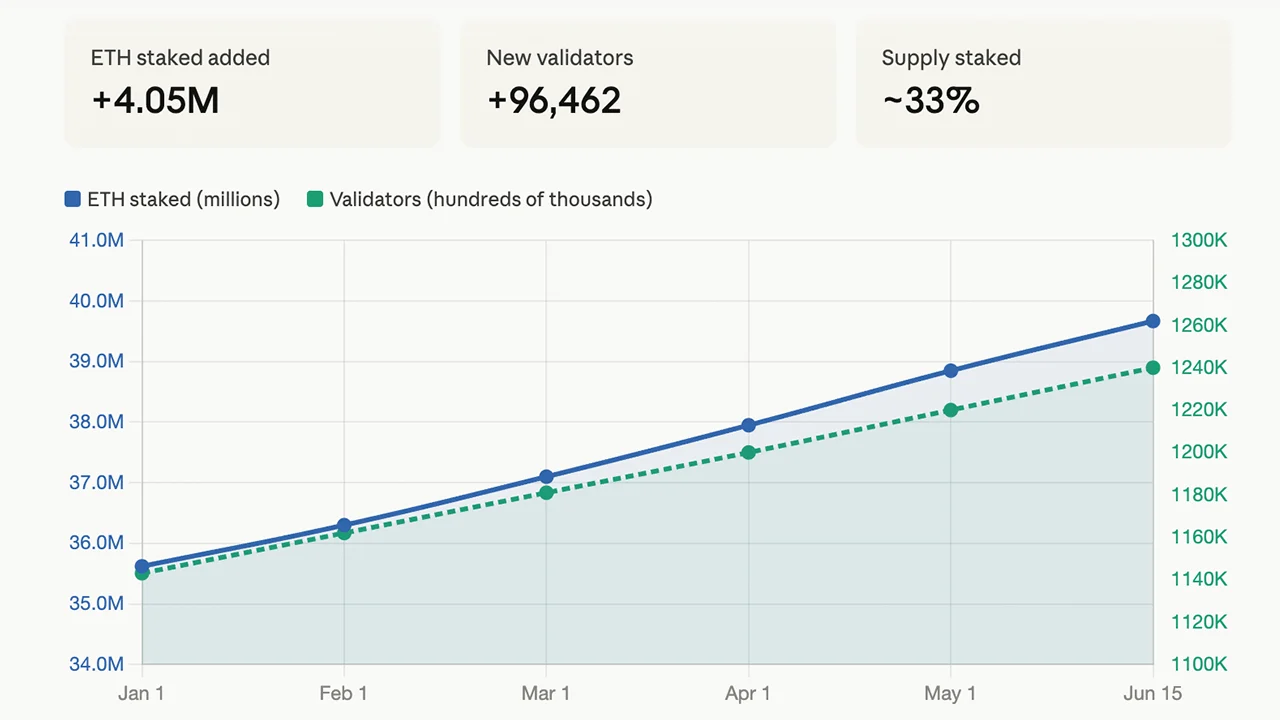
More than 34 million ETH is now staked on Ethereum, a pile of capital valued at over $100B. That’s not just a big number for a press release. It represents a fundamental shift in how the network secures itself and how investors interact with the second-largest blockchain.
The milestone puts roughly a third of all circulating ETH into staking contracts, locking it away from the open market while validators do the unglamorous work of keeping the chain running. And the engine behind much of this growth isn’t solo stakers running nodes in their basements. It’s liquid staking.
Liquid staking changed the math
Here’s the thing about traditional Ethereum staking: it requires 32 ETH to run a validator. At current prices, that’s a six-figure commitment just to get in the door.
Liquid staking protocols solved this by letting users stake any amount of ETH and receive a token in return. Think of it like a coat check. You hand over your ETH, get a receipt token (like stETH), and that receipt can be used elsewhere in DeFi while your original ETH earns staking rewards.