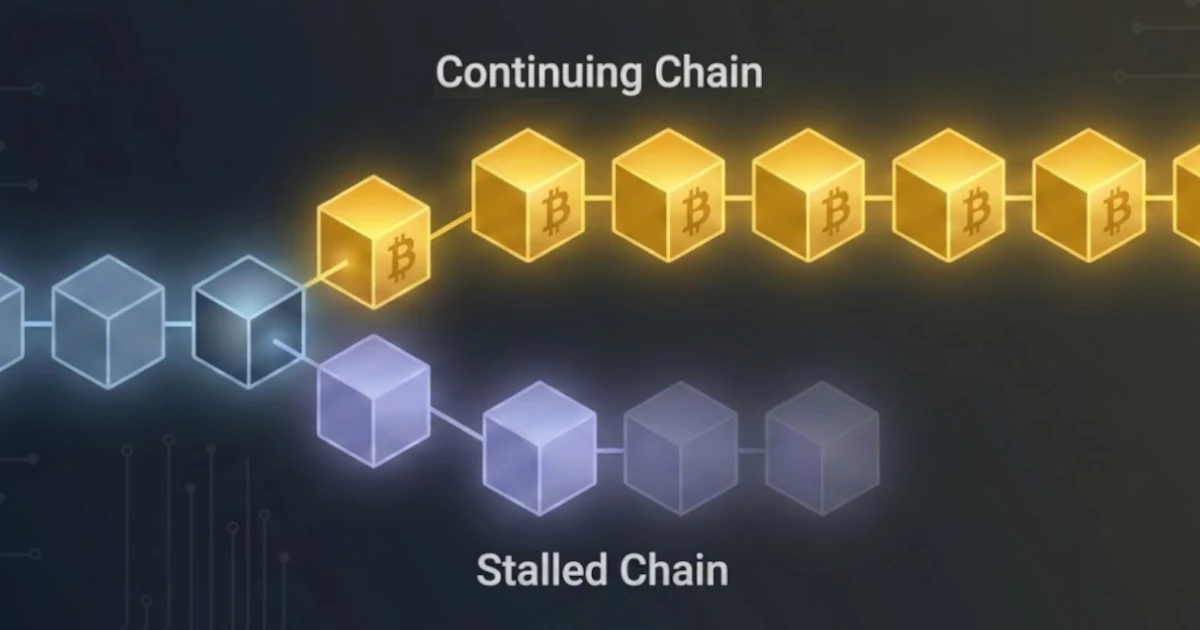
Bitcoin’s governance debates have a long history of producing contingency plans that everyone hopes never get used. The latest entry: developer Chris Guida has rebased Luke Dashjr’s 2017 proof-of-work hard fork code onto the current version of Bitcoin Knots, positioning it as a ready-to-deploy emergency measure if miners refuse to play along with a proposed protocol change.
The work was completed as of early August 2026, and it has already attracted significant attention from the portion of the Bitcoin community that believes node operators, not miners, should have the final word on the network’s direction.
What BIP-110 is trying to do, and why miners might resist
The soft fork at the center of all this is BIP-110, also called the Reduced Data Temporary Soft Fork, or RDTS. In plain terms, it would temporarily restrict the amount of arbitrary, non-financial data that can be embedded in Bitcoin transactions for a period of one year.
For the soft fork to activate, it needs miner signaling above 55% across a window of 2,016 blocks, which corresponds to roughly two weeks of Bitcoin block production. Early reports from around August 2026 suggest that miner signaling has been weak. That weakness is precisely the scenario Guida’s rebase is designed to address.