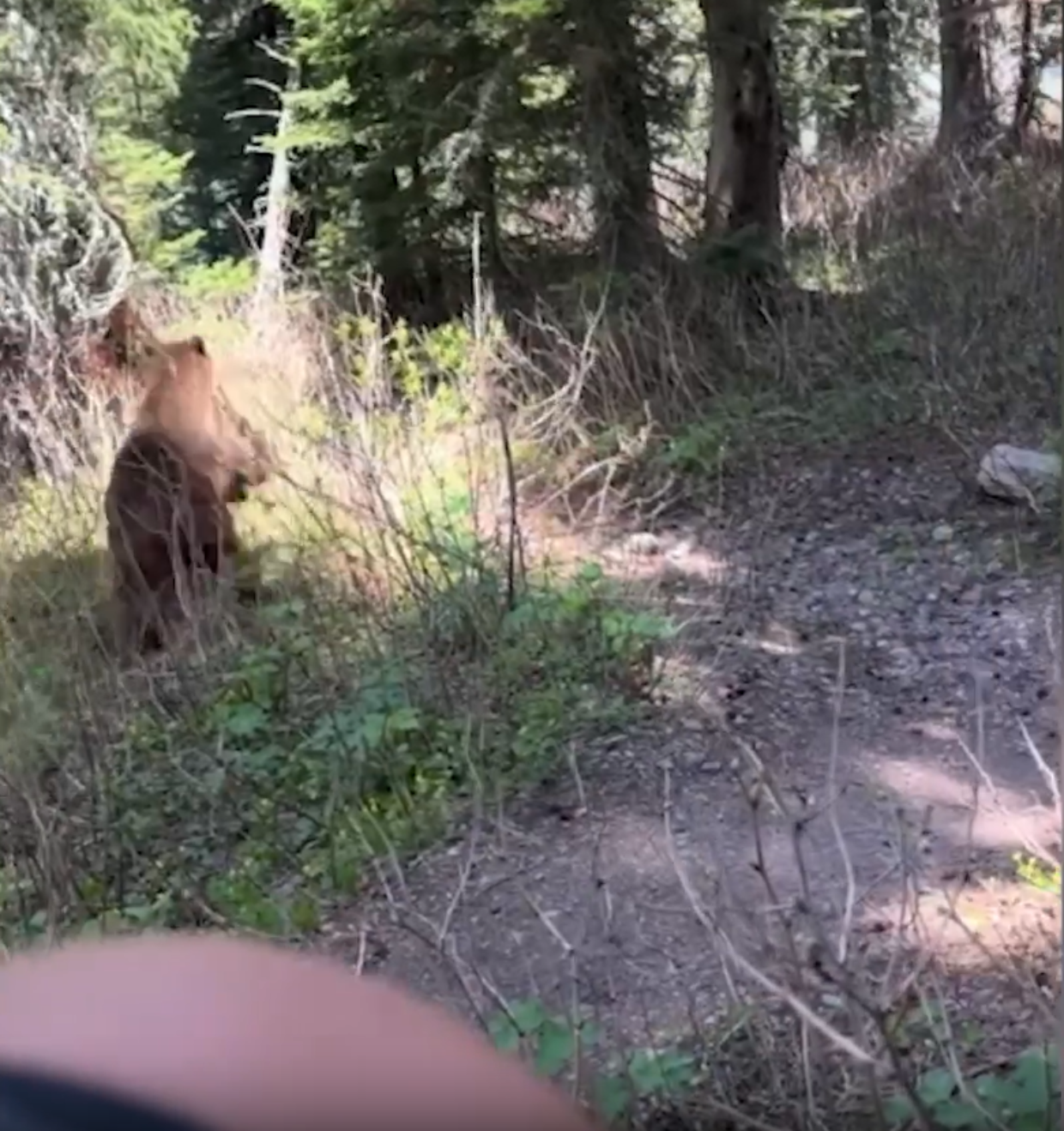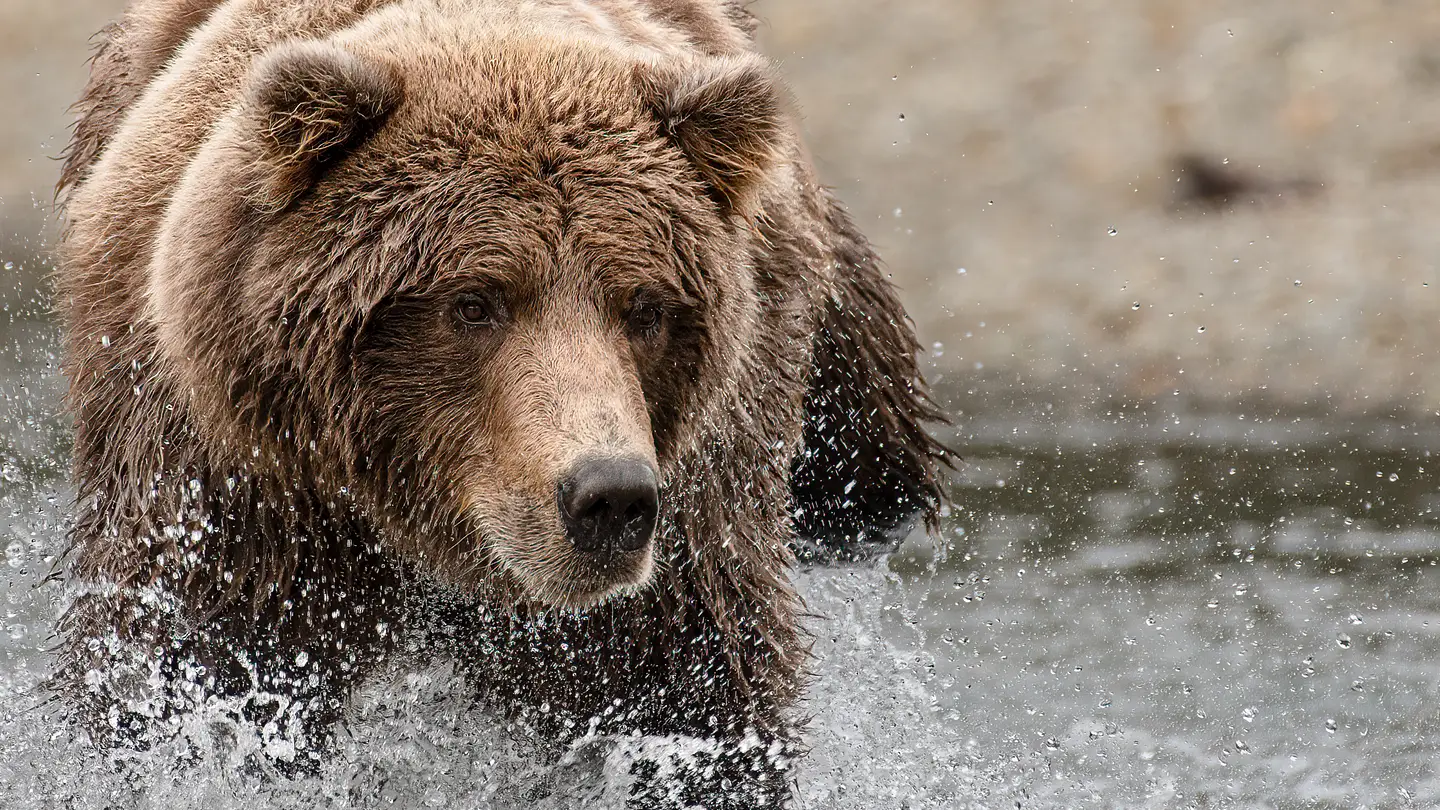
Twenty seasons of guiding in the Alaskan tundra, on rivers that fill with salmon and trout every summer, meant bears were a regular part of my day. The first few years were intimidating. At times, they were downright terrifying.What Defines a Bear EncounterI’ve had hundreds of bear encounters, but simply seeing a bear doesn’t count as one. Raft down Moraine Creek in Katmai National Park, and you might see 100 bears in a day. Those don't automatically count as a bear encounter. The river banks in SW Alaska become crowded with bears during the salmon spawn. | Photo by Ken BaldwinA bear feeding on salmon across the river is a sighting. A bear walking past camp without looking your way is an experience.For me, an encounter begins when the bear notices you. Now you’re part of its decision-making, and what happens next depends on how both of you respond.Not Something You Can Learn in a ClassroomWhen I decided to become a guide, I knew how to fish. I knew how to teach people, and I knew how to put them on fish. What I didn’t know was how to live and work around one of North America’s most dangerous land predators. That was something beyond my experience. The scarred face, the massive body, the large canines. For a young guide still learning the ropes, this made for some uncomfortable moments. | Photo by Ken BaldwinMy first noteworthy lesson came during my fifth season, when a brown bear charged two clients and me on a small creek.In 20 years, I was charged twice. It is not a common occurrence. Plenty of guides go their entire careers without it ever happening. Fishing a Small CreekWe were fishing a tributary in southwest Alaska that we called Shinglegash. It was small enough creek to fish by walking and wading, and it held plenty of rainbow trout, including some big ones.Big rainbows can hang out in small creeks. It is my favorite type of water to fly-fish with mouse patterns. A big trout will hide up under log jams and cut banks, looking to ambush a mouse swimming by. | Photo provided by Ken BaldwinI love fishing small water. Fighting big wild rainbows in tight quarters is adrenaline-spiking. But those same small creeks have a downside. To Close for ComfortThe brush and trees grow right to the waterline, the bends are tight, and walking them can feel like moving through a tunnel. A bear could come around the next bend, or step out of the brush, and be on top of you before you have time to react. On the smaller creeks, a bear can show up where you least expect it. | Photo by Ken BaldwinLetting My Guard Down in Bear CountryWe had finished fishing and were walking back toward the main river, talking and cutting it up. We rounded a bend and saw a brown bear about 100 yards downstream.It was a smaller bear—maybe 400 pounds—standing beside a sandbar and eating a salmon. It hadn’t noticed us yet.When the salmon are in the river, the bear's main focus is to fatten up for its winter hibernation. | Photo by Ken Baldwin“Let’s keep walking, but slow it down,” I told the guys. “We can get closer and watch him eat.”At about 40 yards, we stopped and enjoyed a live version of Planet Earth.Then brilliant me had an idea.A Photo Opportunity “Why don’t you guys stand between me and the bear? Leave a gap so I can get a photo of you with the bear in the background.”The calm before the storm - I thought it would be a good idea to take a photo with their cell phone so they could go home with a great memory. Boy, did they. | photo by Ken BaldwinThey got into position, and as I looked through the camera, I realized the bear was no longer eating. It had turned toward us.In moments like that, my instincts can override my stupidity.“Guys, get behind me. Right now.”They heard it in my voice and moved. I handed them my net and fly rod, pulled a .50-caliber revolver from its chest holster, cocked the hammer, and held it in a ready position. Learning On the SpotNobody had taught me this, but I figured I should keep talking in a relaxed, calm voice, detailing what was going on. If I appeared calm, my anglers would stay calm. “The bear sees us, and he’s not happy about it,” I said. “He thinks we are going to take his food. Everything is cool. He’s still a long way off.”Don't poke the bear. | Photo by Ken BaldwinSaying “Everything is cool” while holding a firearm in a ready position was a little contradictory. But I wasn’t panicking, so neither were they.The Bear ChargedThe bear lunged forward and started coming at us.It covered the first ten yards fast. I purposely fired into the water just in front of it. We still had enough distance between us that I knew I could fire again if I had to.An Alaskan brown bear moving with intent. | Photo by Ken BaldwinA .50-caliber firearm is a very loud gun. I hoped the sound and the splash of water near its face would frighten the bear. It did, and the bear stopped.The Coast Was Not ClearI don’t know if I’ve added this next part in the retelling, but I swear it happened this way. The bear didn’t run off scared. It held its ground, then reluctantly turned away from us and walked towards the creek bank. Before it walked off, it looked over its shoulder, looking more pissed than frightened, then slowly walked out of the creek.I told my clients to stay on my right as we continued downstream, giving the left side, where the bear had disappeared, as much room as possible.When we reached the spot directly across from where it had left the creek, I stopped to make sure it was gone. The brush was thick, and I didn't want any surprises. The Bear Wasn’t GoneThe bear did not want to leave its freshly killed salmon. | Photo by Ken BaldwinThe bear left the creek, but not the area. It’s funny what goes through your mind in the middle of a dangerous situation. I was impressed with the bear, a little amused, and spooked all at once.I didn't tell the guys, I just told them to keep stepping. WTF?That night at the lodge, while lying in bed, I replayed the encounter again and again. What had I done right? What had I missed? What could I have done better? And WTF was I doing out here in Alaska hanging out with bears in the first place?Over the next few days, I talked with more experienced guides and with the lodge owner, who had spent 40 years around bears.Here is a summation of what I learned from the encounter, and what others said that made sense. This bear knew I was there, but was focused on feeding and didn't feel threatened by us. | photo by Ken Baldwin- Keep Your Head on a Swivel, AlwaysIt was late in the day; we were almost back to the boat, and I had let myself relax. I was in a celebratory mode. I should have stayed in "My head on a swivel" mode. An older guide said it this way. "Treat bear country the way you treat a firearm: as if it is always loaded, even when it's not."- A Bear and Its Food I didn't take seriously the bear's instinct to protect its food source, and how our posturing was giving off vibes of "Maybe I'm going to take your food away." The bear was standing in the middle of the creek, minding its own business and eating a salmon. I shouldn't have gotten so close. Younger bears will sometimes play with the salmon while it is feeding. Reminds me of a feral cat I had that used to do the same thing with mice. | Photo by Ken Baldwin- I Was Looking But I Wasn’t SeeingI didn't, or couldn't, see the smaller signs. I only saw the obvious change: one moment the bear was eating, and the next it was facing us. I needed to pick up on the smaller details. When did it stop eating? Had it looked over its shoulder at us first? Had it yawned—a possible sign of agitation? There were probably warning signs I didn’t yet know how to see.When a bear stops eating and looks your way, pay closer attention. | Photo by Ken BaldwinThe best thing to come out of the encounter is that it happened. I know that sounds crazy, but now I know what it looks like, how it feels, and that I can stay calm when it matters. I am better for having gone through it.- You Have To See a Bear for What It Is, Not What’s in Your Brain The bear that was in my brain when I first took my guiding job in Alaska was a terrifying beast of an animal. All fangs and claws, drooling and coming at me full speed, with the intention of killing me.The mother bear on the left fiercely fends off a larger, aggressive male. When it comes to protecting their cubs, mother bears will take on bears bigger and stronger than they are. | Photo by Ken BaldwinThat is the bear of stories and movies. A Social, Intelligent and Often Playful AnimalWhat I learned from being around brown bears every day is that the worst stories are few and far between. Those moments do happen, and you have to be ready for them. But they are rare. The everyday reality was that most bears weren’t interested in us. They didn’t see us as food. Alaska gave them plenty to eat. The bears just wanted to catch salmon, protect their cubs, and be left alone.As thick as this mama bear is, ain't no one messing with her cubs. | Photo by Ken BaldwinGive them a wide berth, and they will go about their business of catching salmon. | Photo by Ken BaldwinAnd if you do that, you can witness some truly unbelievable moments. You stop seeing the animal everyone warns you about, and you will see an animal that is playful, smart, social, funny, caring with its cubs, and one heck of a salmon catcher. You will see the animal that is there. Just don’t try to go up and touch it. ~KBFollow me on Instagram @KenBaldwin7. I share the stories behind my articles, photography from my fly-fishing adventures, gear I’m testing, wildlife encounters, and the outdoor places that inspire them. "The gods do not deduct from man’s allotted span the hours spent in fishing.” - Herbert HooverAdd us as a preferred source on GoogleFollow
What It Was Like to Be Charged by an Alaskan Brown Bear—and What I Learned
A brown bear turned, locked onto us, and started coming. This is what it felt like, and the lessons I learned.
1,801 words~8 min read