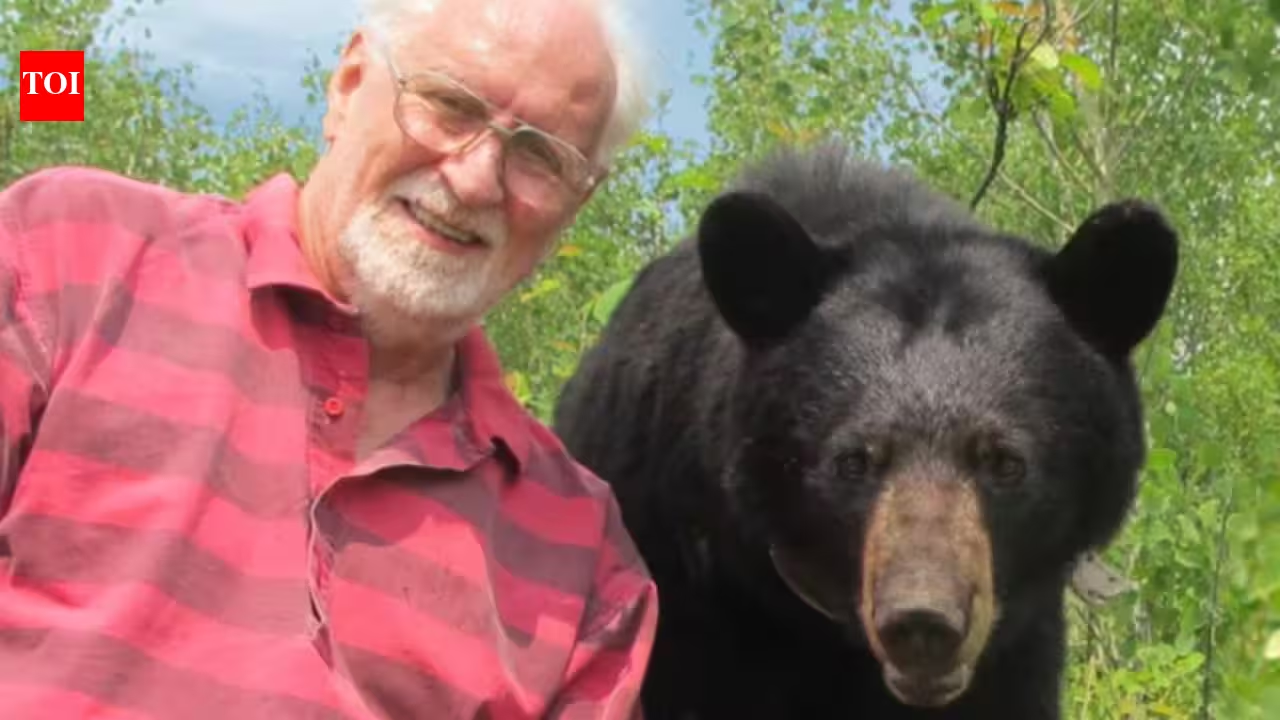
Lynn Rogers with a habituated wild black bear during his Minnesota research. Image Credit: @northamericanbearcenter/InstgaramIn the mid 1980s, Minnesota wildlife biologist Lynn Rogers began an unusual experiment in the forests of the Superior National Forest, attempting to habituate wild black bears to his presence closely enough that he could walk alongside them, unarmed, for hours at a time. Over decades of painstaking, repeated contact, several of Rogers's study bears grew comfortable enough to let him follow them through entire days, resting, foraging and even denning while he observed and recorded their behaviour from just a few feet away. The approach, which Rogers has said was directly inspired by Jane Goodall's trust-based methods for studying wild chimpanzees, produced an unusually detailed record of black bear behaviour, while also drawing sustained criticism from wildlife officials concerned about the risks of habituating wild bears to humans.How Rogers began his decades-long career studying black bearsAccording to the North American Bear Centre, which Rogers went on to found, he began his career in black bear research after meeting Al Erickson, a pioneering bear researcher, and was offered the chance to become his graduate student, launching Minnesota's first black bear field study. Rogers went on to found the Wildlife Research Institute near Ely, Minnesota, in 1971, and has since senior-authored more peer-reviewed scientific papers on black bears than any other researcher, according to the institute's own records, using aeroplanes, canoes, snowmobiles and snowshoes to follow the lives of more than 300 individual bears across northeastern Minnesota, studying some for as long as 23 years.Rogers has described his own methodological turning point directly. According to an account published by the Wildlife Research Institute, Rogers adapted Jane Goodall's trust-based research methods to bears in the mid 1980s, a shift that, combined with advances in tracking technology, allowed for far more detailed observations of black bear behaviour, ecology and habitat use than earlier tracking-based methods had permitted.How researchers actually habituated wild bears to their presenceThe habituation process itself was formally studied and documented. According to a peer-reviewed methods paper Rogers co-authored with Gregory Wilker, published in the journal Bear Research and Management, a study conducted in northeastern Minnesota between 1986 and 1989 examined the feasibility of habituating black bears to human observers specifically for behavioural and ecological research, working with a group of bears that repeatedly visited an artificial feeding site in the presence of researchers.Rather than treating bears as a single undifferentiated population, Rogers developed relationships with individual bears over years, radio-collaring specific animals for long-term tracking and gradually building enough trust to walk beside them for extended periods. According to a 1992 profile published by the National Wildlife Federation, Rogers eartagged 350 bears and intensively tracked 128 of them over the course of his career, following individual bear family clans across as many as four generations.What this close contact research actually revealedThe unusually close access Rogers achieved with habituated bears allowed for observations that would have been extremely difficult using conventional tracking methods alone. According to Rogers's own institutional biography, this work included being the first bear researcher to collect blood samples directly from winter-dormant wild bears, research that contributed to a broader understanding of certain human health conditions involving gallstones and circulatory problems, since bears undergo dramatic physiological changes during winter dormancy that share some parallels with human medical conditions.More recent research building on this same habituated bear population has continued to be published in peer-reviewed journals. A 2020 study co-authored by Rogers and colleagues, published in the journal Animals, examined behaviour inside free-living American black bear dens, documenting details of birth, maternal care and cub behaviour that would be nearly impossible to observe without years of habituation work establishing the necessary trust between researchers and individual bears.Why Rogers's methods have remained genuinely controversialDespite the scientific output his approach has produced, Rogers's methods have drawn sustained criticism from wildlife management professionals. According to National Geographic, critics have argued that deliberately habituating wild bears to human presence, including hand-feeding practices associated with Rogers's work, risks reducing bears' natural wariness of people in ways that could endanger public safety, a concern that intensified following a series of bear attacks in other parts of the country that drew renewed national attention to how humans and black bears interact.This tension between the scientific value of habituation-based research and the public safety concerns it raises has followed Rogers's work for decades, with wildlife agencies in Minnesota periodically clashing with Rogers over research permits and methodology even as his findings continued to be published in peer-reviewed scientific literature and recognised within the broader bear research community.What Rogers's research ultimately contributed to bear scienceRogers's papers have been recognised as genuinely significant within the field. According to the Wildlife Research Institute, a 1994 worldwide survey of bear biologists conducted by the International Bear Association ranked two of Rogers's papers among the top five contributions to the scientific understanding of bears of all species, a rare form of recognition from peers working across a wide range of methodological approaches, including many far more conventional than Rogers's own.More than three decades after he first began habituating black bears in the Minnesota forest, Rogers's research stands as a genuinely unusual case in wildlife biology, an approach that traded conventional distance and caution for a level of direct access to wild animal behaviour that few researchers have attempted, producing scientific insight that remains valued within bear research even as the underlying methodology continues to divide opinion among wildlife management professionals.
A Minnesota scientist spent decades earning the trust of wild black bears until they let him walk beside them
In the mid 1980s, Minnesota wildlife biologist Lynn Rogers began an unusual experiment in the forests of the Superior National Forest, attempting to habituate wild black bears to his presence closely enough that he could walk alongside them, unarmed, for hours at a time. Over decades of painstaking, repeated contact, several of Rogers's study bears grew comfortable enough to let him follow them through entire days, resting, foraging and even denning while he observed and recorded their behaviour from just a few feet away.
912 words~4 min read