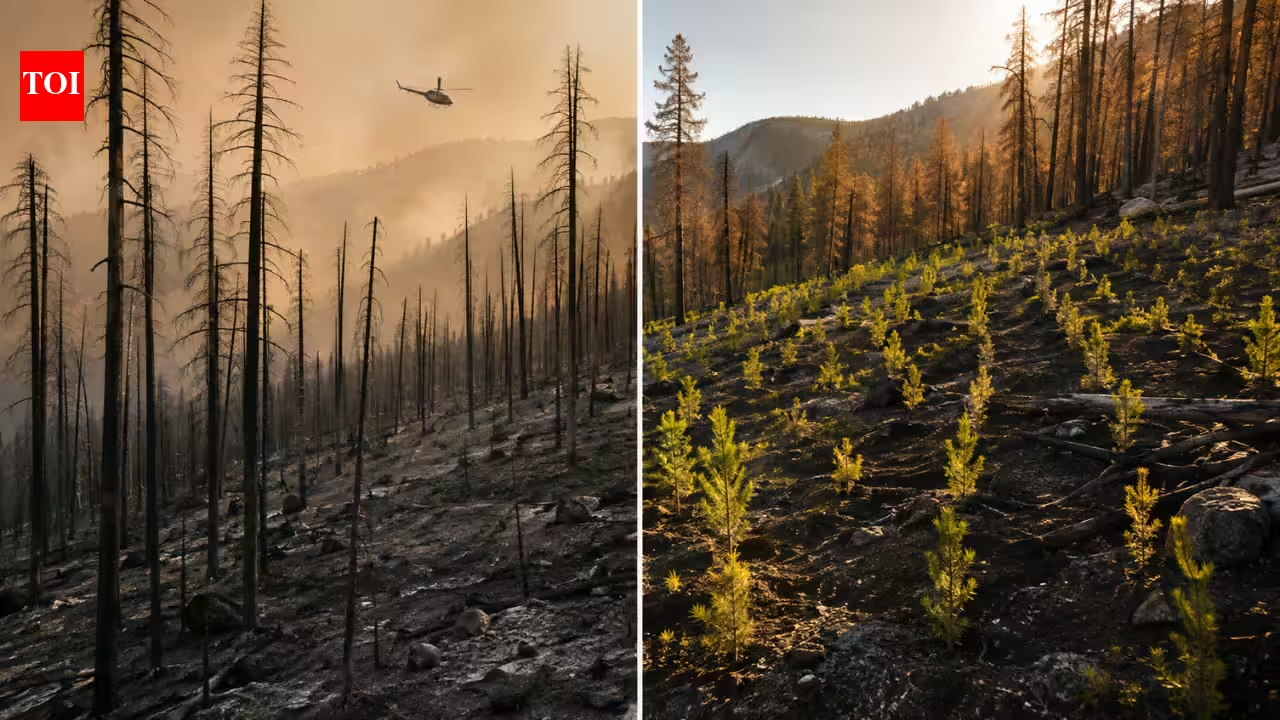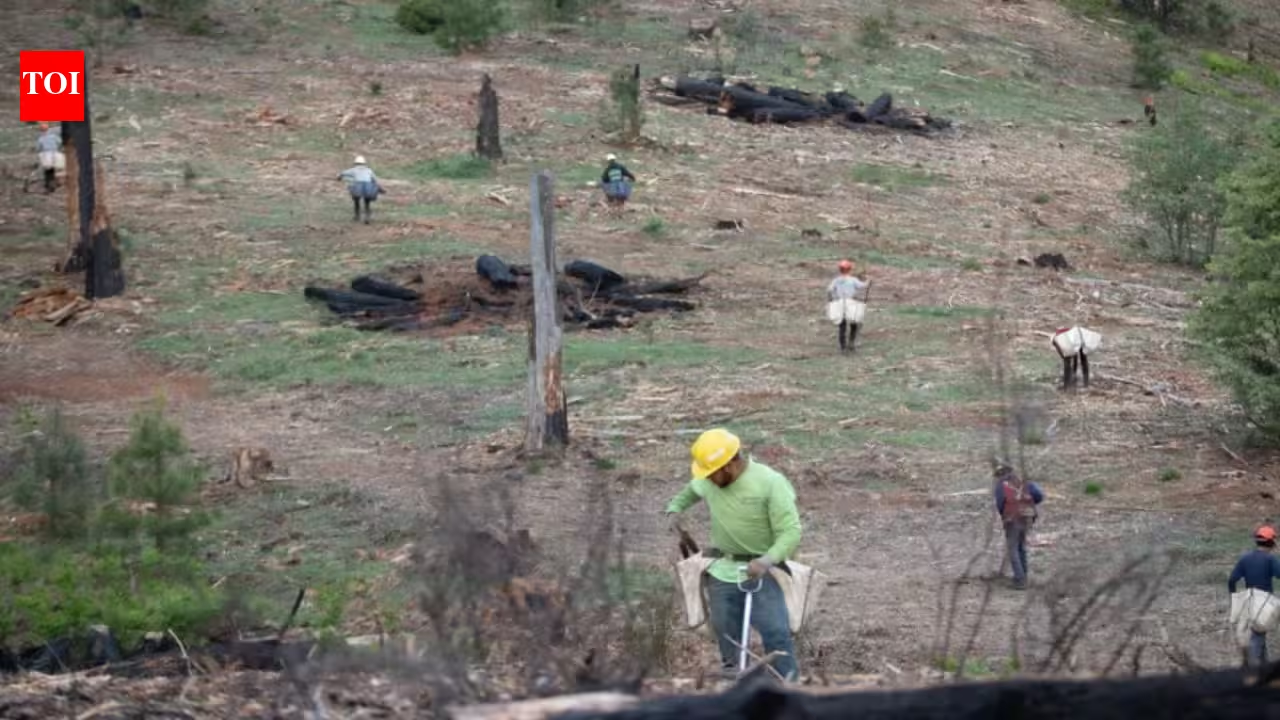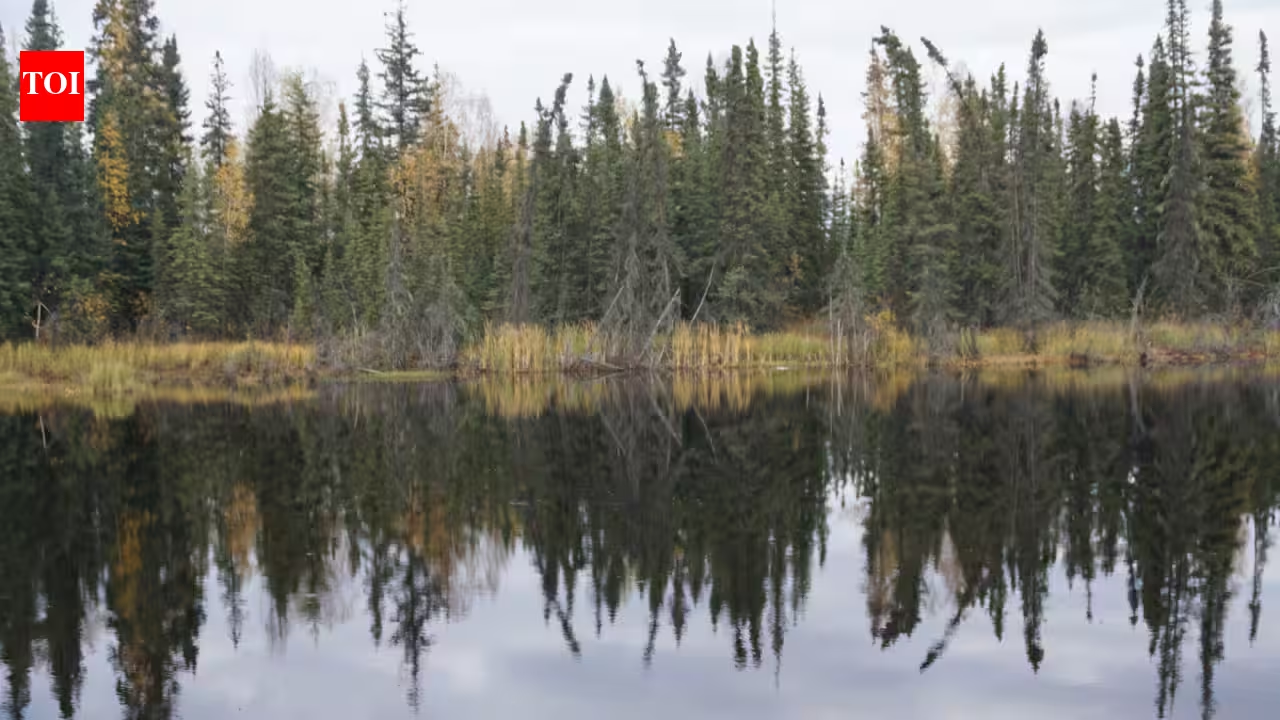
When the roads are buried, the trees come down by parachute. Image Credits: ChatGPTPicture the Rocky Mountains in early spring: snow still piled deep, roads half-buried, and delivery trucks unable to get through. Yet thousands of young pine and fir seedlings, grown hundreds of miles away in a nursery, need to reach the ground before the spring thaw ends. According to Snow Cache Seedling Storage: Successful Systems, a 1974 U.S. Forest Service report by researchers Allen Dahlgreen, Russell Ryker, and David L. Johnson, the agency addressed this with something almost embarrassingly simple: it buried the trees in snow, and sometimes flew them in by parachute.Why seedlings needed a cold hideoutFreshly lifted tree seedlings are delicate. Warm air, dry wind, or even a few hours in a hot truck can stress them before they ever reach the soil. The report says a workable storage system must cool the seedlings quickly to about 33 to 34 degrees Fahrenheit, then keep them undisturbed for 100 days or more until planting. Snow insulates and stays cold, making it an effective storage medium in the American West.Two kinds of snow hideoutsThe report describes two field-tested systems. The first is the pit cache: crews dig a pit into a snowbank, stack seedling bundles inside in rows no more than four packages high, then bury the whole thing under at least four feet of packed snow, topped with a layer of sawdust or straw for extra insulation. Per the report, this method had become the Forest Service's prescribed seedling storage system across its Intermountain Region by the early-to-mid 1970s.Ponderosa pine, one of the species stored in Forest Service snow caches. Image Credits: Wikimedia CommonsThe second is the culvert cache, developed by forester David L. Johnson for the Payette National Forest in Idaho. Instead of digging a pit, crews placed large metal pipes, about five feet wide and up to twenty feet long, on the ground each fall and let the winter snowpack bury them naturally. In spring, seedlings went inside the pipes, and the openings were resealed with snow.Sometimes, trees arrived by parachuteAs the report documents, seedling packages bound for culvert caches could be "transported to the storage site by snowmobiles or dropped from aircraft with cargo parachutes." A ground crew on snowmobiles would then track down the parachuted bundles and carry them the rest of the way to the cache. The report describes this as an already-proven, working part of the reforestation program by the time it was published in late 1974, not an experiment.The numbers behind the snowThe study notes that in 1973, more than 95 percent of the 6.9 million trees planted across the Intermountain Region spent time in a snow cache before going into the ground. The species list included ponderosa pine, Jeffrey pine, lodgepole pine, Douglas-fir, western larch, and Engelmann spruce. Average first-year survival across all of them came out to 88 percent, and the report adds that trees stored for 60 to 90 days or longer, then handled correctly, often came back with survival rates of 90 percent or better.A related study, ‘Nursery Storage to Planting Hole: A Seedling's Hazardous Journey,’ published in the Forestry Nursery Manual: Production of Bareroot Seedlings, cites the same 1974 Forest Service report and confirms that snow-cache storage was an established, field-proven part of Intermountain Region reforestation by the mid-1970s, alongside other cold-storage methods used to protect seedlings between lifting and planting.Engelmann spruce was one of six species reforested using the snow-cache method. Image Credits: Wikimedia CommonsThe paper is a concise handling guide rather than a data-heavy experiment, but it adds a few concrete thresholds: lifted seedlings should be kept below 2°C (about 36°F), above 90% relative humidity, and under 5 bars of plant moisture stress, with kraft/polyethylene bags and refrigerated vans singled out as the most dependable transport options. It also notes that snow caches can provide excellent storage once seedlings reach the receiving agency or contractor responsible for planting them.A low-tech idea that still holds upNone of this needed advanced machinery. As the Forest Service's own overview of its national nursery system explains, seedlings today are still typically moved into refrigerated storage before planting season. Snow caches were essentially an off-grid, no-cost version of that same cold chain, built out of the mountain itself instead of a mechanical cooler.For a generation raised on climate anxiety and the phrase "low-tech solution," there is something satisfying about this story. Decades before anyone called it sustainable infrastructure, Forest Service crews were reforesting the American West with nothing more than snowbanks, culvert pipes, snowmobiles, and, sometimes, a parachute. It might not be glamorous work, but an 88 percent survival rate, confirmed in the agency's own numbers, speaks for itself.
By 1973, the U.S. Forest Service was storing millions of seedlings in mountain snow; its snow-cache system averaged 88% first-year survival
Picture the Rocky Mountains in early spring: snow still piled deep, roads half-buried, and delivery trucks unable to get through. Yet thousands of young pine and fir seedlings, grown hundreds of miles away in a nursery, need to reach the ground before the spring thaw ends.
781 words~4 min read