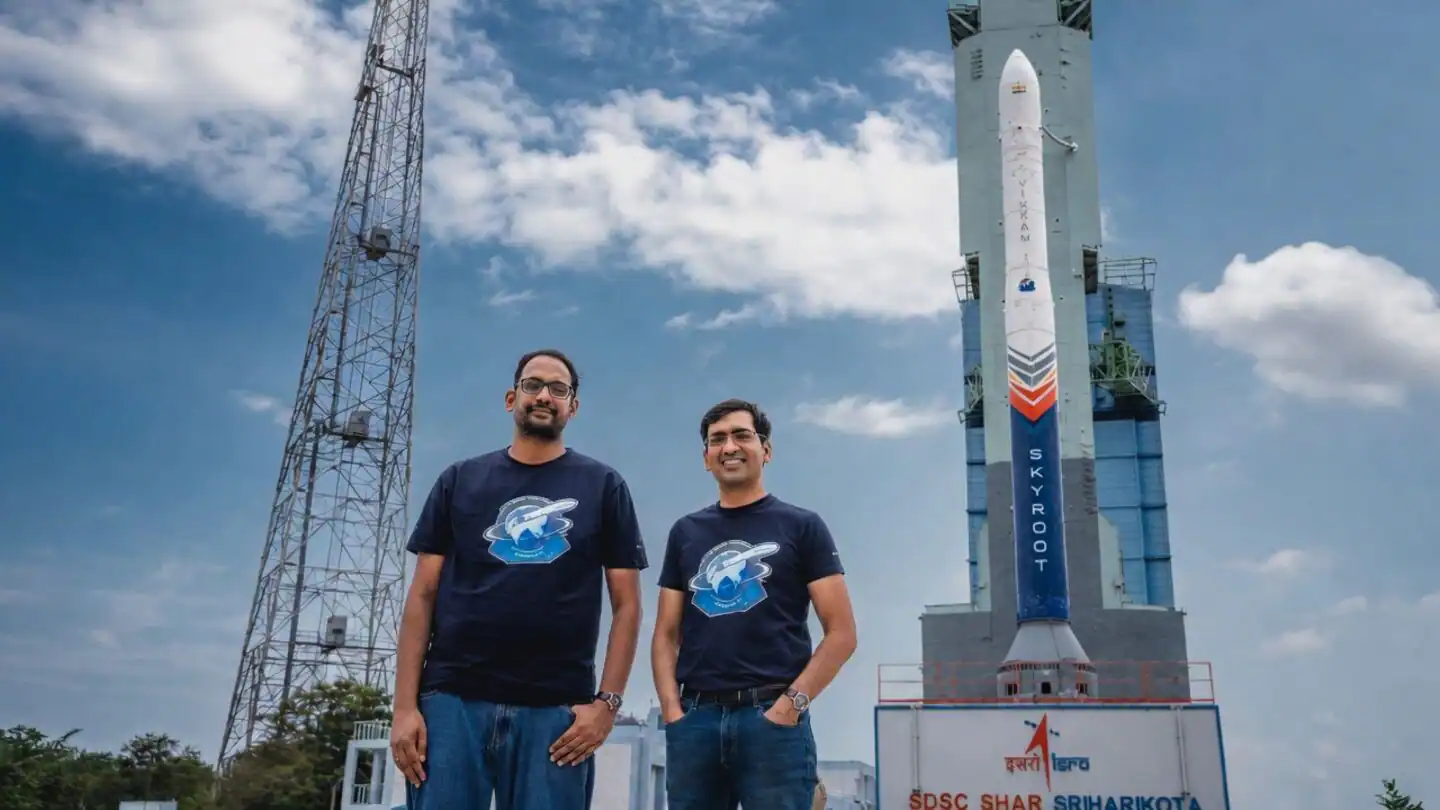
Skyroot is more than a startup success story. It is evidence of India’s ongoing experiment in reshaping its space innovation ecosystem
| Photo Credit:
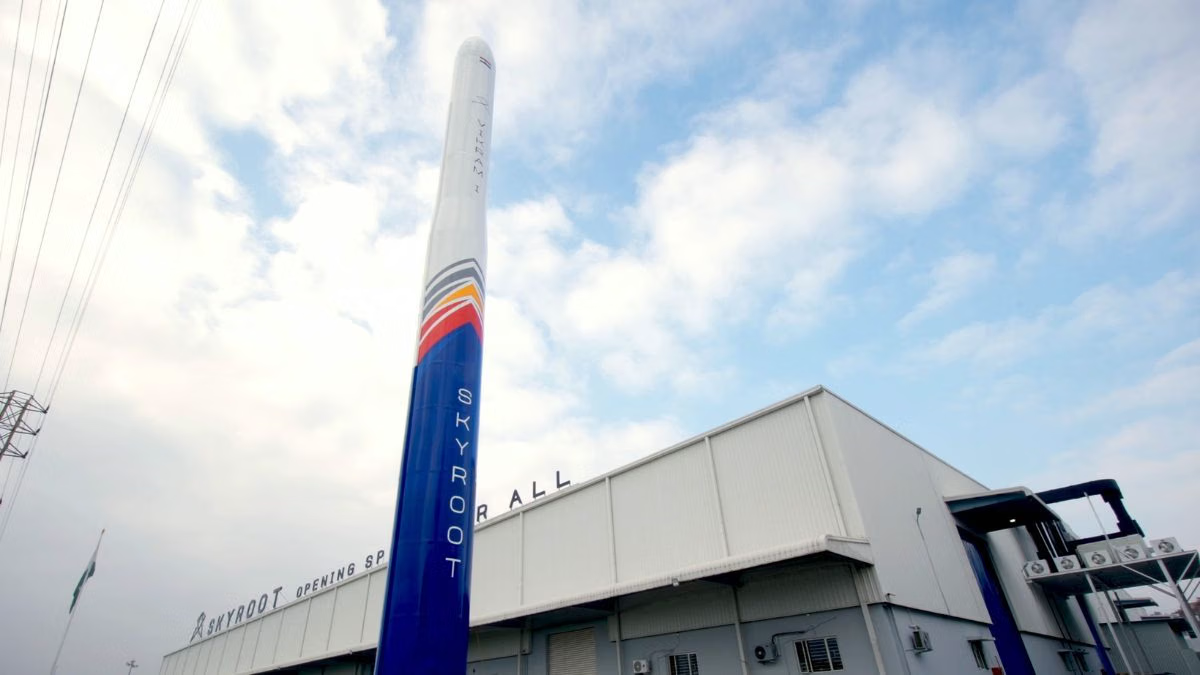
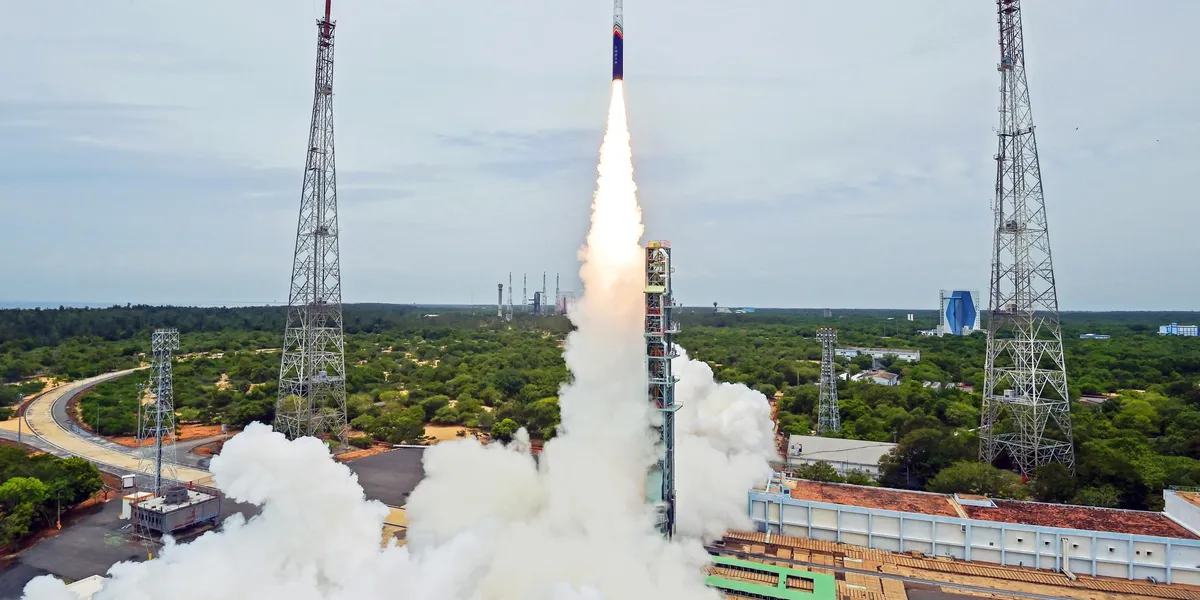
The successful orbital launch of Skyroot Aerospace’s Vikram-1 marks a historic milestone for India’s space sector. Yet, the rocket is not the story. The more consequential development is unfolding much closer to Earth: the emergence of a space innovation ecosystem and the institutional architecture that made Vikram-1 possible.Innovation scholars often caution against focusing excessively on successful firms while overlooking the ecosystems that enable them. When we marvel at Apple, we often forget the broader ecosystem of Silicon Valley. In the space sector, celebrations of SpaceX can obscure the critical role played by NASA as a customer, funder, and technology partner. Likewise, China’s rise as a commercial space power was also the product of a state-directed ecosystem that, following reforms in 2014, enabled the emergence of firms such as LandSpace and Galactic Energy.Viewed through this lens, Skyroot is more than a startup success story. It is evidence of India’s ongoing experiment in reshaping its space innovation ecosystem: from one dominated by a state-led model centred on ISRO to one that increasingly enables private entrepreneurship. At the heart of this transition is an architectural shift that seeks to transform decades of publicly funded scientific capability into a broader space economy.ISRO has, in many ways, been synonymous with India’s space story over the past five decades, delivering extraordinary achievements from cost-effective launches to landmark missions such as Chandrayaan. In this model, private industry largely participated as suppliers and manufacturing partners within an ecosystem orchestrated by the state. It was a model that proved highly effective in building national capabilities in a strategically important sector. Yet building capabilities and building markets are not the same thing.Market creationThe Indian Space Policy 2023 reflected the shift to broader market-creation ambition. It sought to create the conditions under which private firms could independently innovate, compete and commercialise space technologies. At the centre of enabling this transformation sits a relatively less discussed institution: the Indian National Space Promotion and Authorisation Centre (IN-SPACe). ISRO built India’s space capabilities, while IN-SPACe is attempting to build its space economy.Space entrepreneurship is fundamentally different from software entrepreneurship. While a software startup can often emerge from a laptop, space ventures require regulatory approvals, testing infrastructure, launch facilities and access to highly specialised knowledge accumulated over decades. In India’s case, much of this knowledge resides within ISRO.Against this backdrop, the role played by IN-SPACe is particularly noteworthy. Few institutions globally combine the functions of regulator, market enabler and innovation intermediary in one. As a single-window agency, it facilitates regulatory approvals while also helping startups access ISRO’s infrastructure, technical capabilities and technology transfer opportunities. By lowering the costs of experimentation and reducing barriers to entry, IN-SPACe allows entrepreneurs to build upon decades of public investment. This model is especially suited to India’s economic realities. Unlike the US, which could rely on NASA’s vast procurement budgets to nurture firms such as SpaceX, India is attempting to foster a commercial space sector by opening access to knowledge, infrastructure and institutional support.A useful analogy to understand this reimagining of the space ecosystem is India’s own experience with Digital Public Infrastructure (DPI). The success of UPI did not emerge because the state built a payment app. Rather, it emerged because the state supported a foundational platform on top of which private firms could innovate, compete and create value. IN-SPACe appears to be pursuing a similar logic in space. By opening access to infrastructure, facilitating technology transfer, reducing regulatory frictions and supporting entrepreneurial participation, it is helping create the foundations of a space innovation ecosystem that today comprises more than 400 startups.In many ways, India appears to be building a ‘space stack’ akin to its digital stack. ISRO provides the foundational layer of scientific and technological capability. IN-SPACe serves as the enabling layer through regulation, infrastructure access and technology transfer. Startups such as Skyroot and Agnikul occupy the application and commercialisation layer, while firms like Pixxel are creating entirely new data-driven services on top. The next challenge lies in enabling these ventures to scale into globally competitive businesses. Only then can India translate its space capabilities into a vibrant space economy.The writer is Professor, University of Glasgow Adam Smith Business SchoolPublished on August 4, 2026