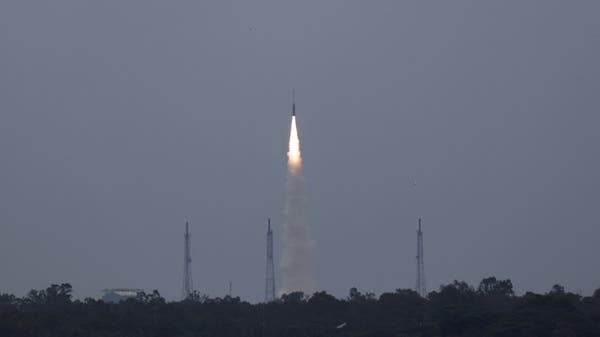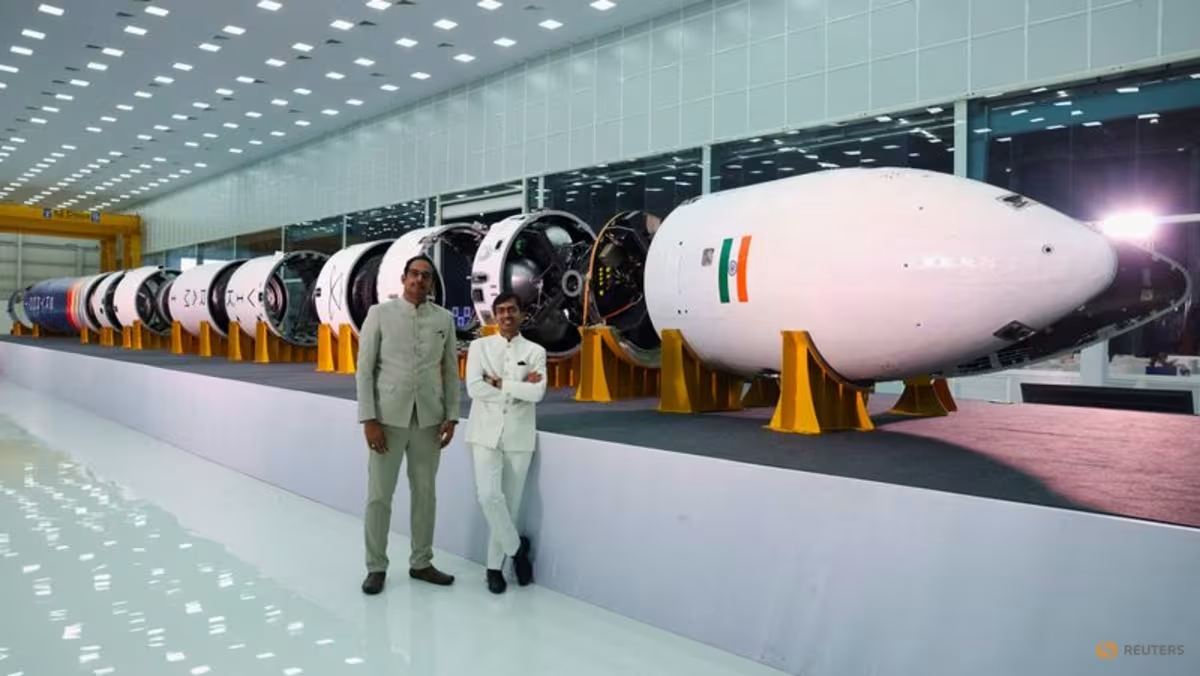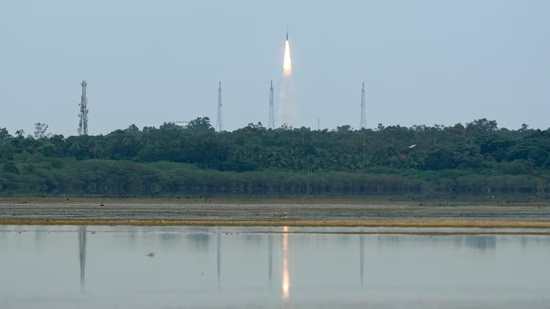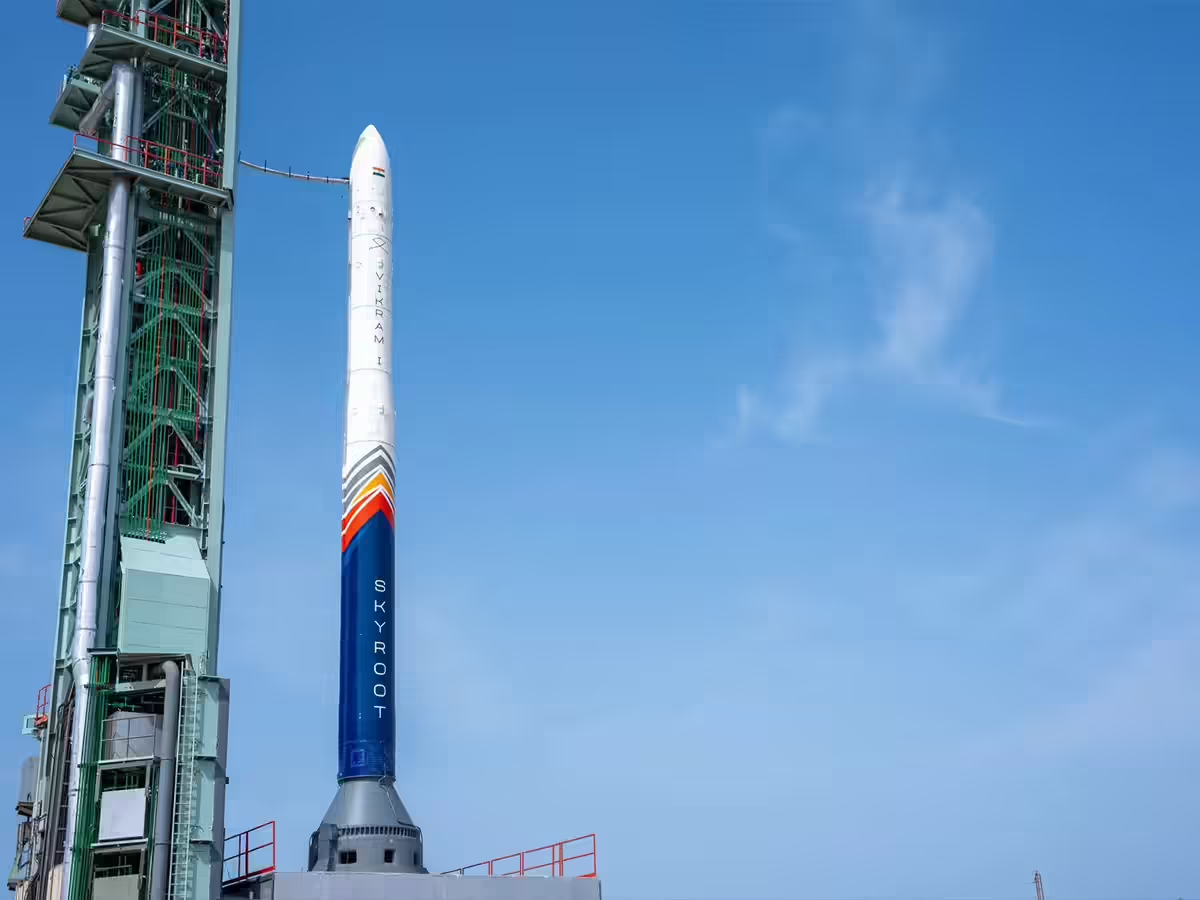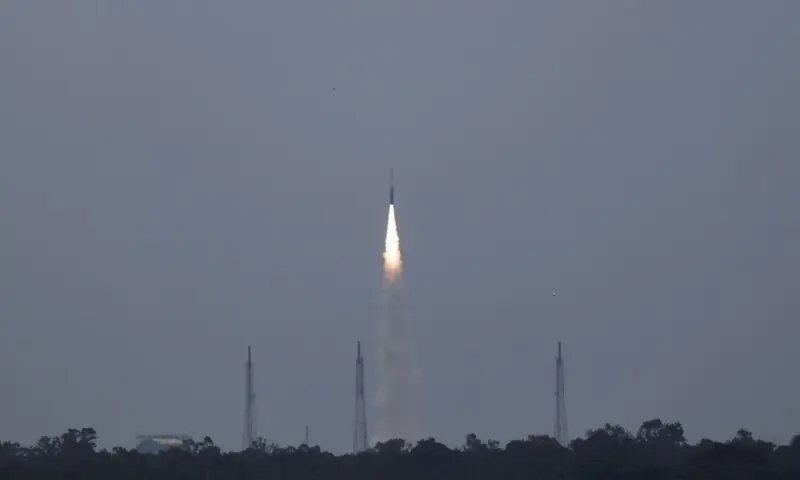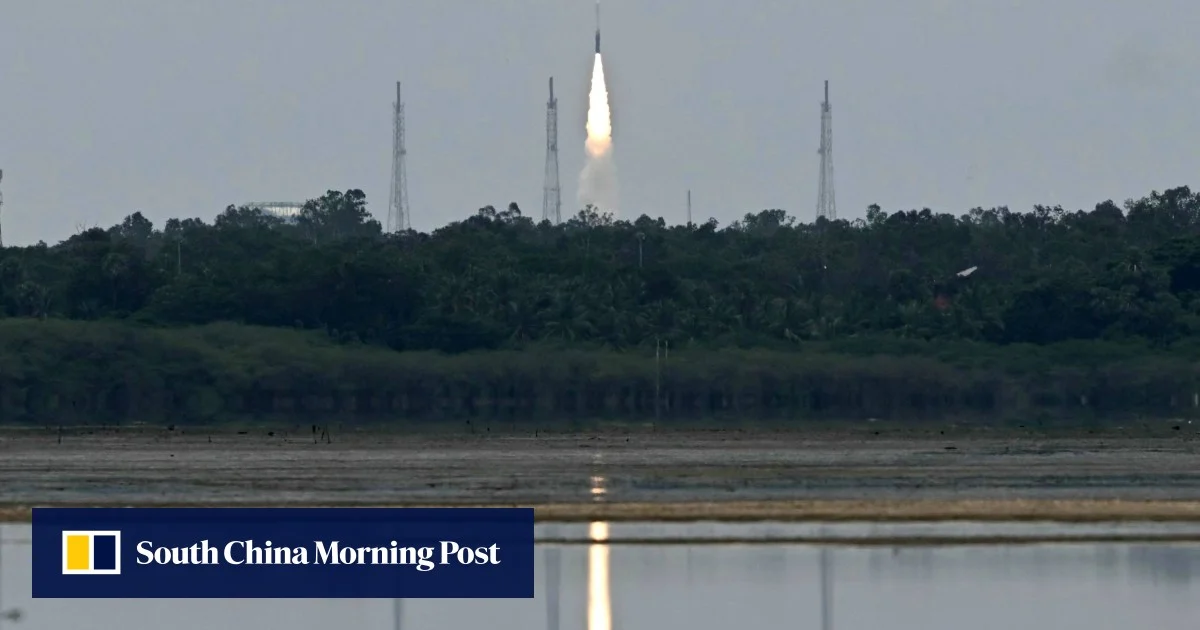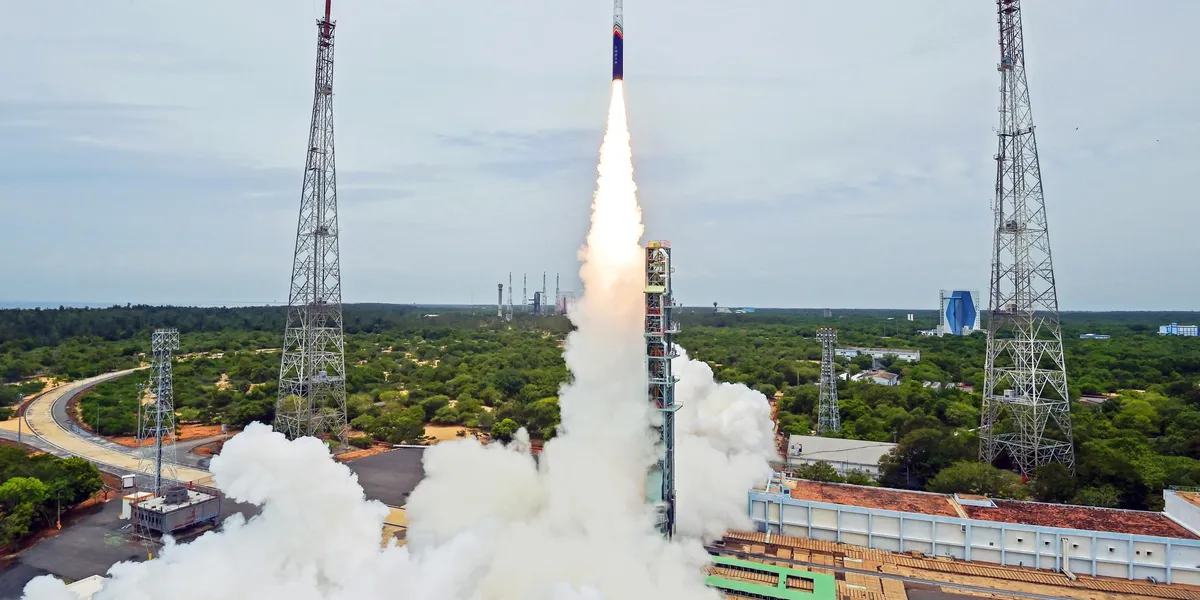
India’s efforts to grow a globally competitive private space industry are beginning to pay off, with a successful orbital launch by startup Skyroot Aerospace on 18 July.The company’s Vikram-1 rocket blasted off from the Indian Space Research Organization’s (ISRO) Satish Dhawan Space Centre, Sriharikota, at 12:05pm local time last Saturday, and took roughly 15 minutes to reach an orbit of around 450 kilometers.The success marks the first orbital launch by a private company in India, and the country becomes only the third in the world to have a domestic firm reach this milestone after China and the United States. Skyroot, based in Hyderabad, also became the first company to reach orbit on its first attempt.All of this comes just six years after the Indian government opened up its space sector to private enterprise. Prior to this, building and launching rockets and satellites was the sole preserve of ISRO, with only a handful of major domestic engineering firms acting as vendors.Today, the country has nearly 400 space start-ups, and the government estimates the country’s space sector is now worth US $8.4 billion. Skyroot itself recently became the country’s first space-sector unicorn after raising $60 million at a $1.1 billion valuation. And the company hopes to move quickly from this first successful launch to commercial operations, with plans to start ferrying paying customers to orbit as early as next year.“What the world witnessed today is the result of years of work by our team, our partners and suppliers across the country,” Skyroot CEO and co-founder Pawan Kumar Chandana said in a statement released after the launch. “It proves that India has the talent, the technology and the industrial strength to build launch vehicles that meet the world’s standards and to serve the world from here.”Skyroot’s Vikram-1 Commercial RocketSkyroot became the first Indian company to launch a privately developed rocket to space, with its Vikram-S suborbital test vehicle in 2022. But the 22-meter-tall Vikram-1 is a fully-fledged commercial launch vehicle capable of carrying 350 kilograms into low Earth orbit. It features three solid fuel stages, plus a final liquid stage powered by a 3D-printed engine that can start, stop, and restart in space to maneuver payloads into precise orbits. The rocket’s airframe is made primarily of carbon-composite materials rather than metals, reducing weight considerably.The launch was more than just a technology demonstration, with the vehicle successfully delivering several commercial payloads into orbit. These included satellites from Skyroot itself and Indian start-up Grahaa Space, as well as a technology demonstration payload from German startup Dcubed and a robotic arm designed for orbital debris removal made by Indian start-up Cosmoserve. Skyroot CEO Pawan Kumar Chandana [second from right] and COO Naga Bharath Daka [third from right] pose with a replica of the Vikram-1 rocket after the successful 18 July launch.R. Satish Babu/AFP/Getty Images“For both Skyroot and the Indian space sector, this is a major milestone,” says Rajeswari Pillai Rajagopalan, resident senior fellow at the Australian Strategic Policy Institute in Canberra. ISRO had historically been resistant to liberalization, she says, and so despite bold announcements that the sector was now open, many private players had been waiting to see how India’s policy moves translated to actual changes on the ground. Seeing a commercial rocket built by a startup launched with the support of ISRO will have given them a “big boost” in confidence as to what’s possible in India’s private space sector, says Rajagopalan.Skyroot’s young founders Chawan and COO Naga Bharath Daka both cut their teeth as ISRO engineers before leaving to found the company in 2018. They made a savvy decision to hire several senior ex-ISRO scientists early on, says Rajagopalan. “I think that helped them to get the doors open within the establishment.”The company leaned heavily on ISRO in the build up to the launch, with the agency lending its facilities and expertise to help test, fuel, and launch the vehicle. Space analyst Torsten Kriening, CEO of SpaceWatch.Global, says this is the clearest signal that India’s reforms are working. “That state-enables-private-executes model is exactly what worked in America,” he wrote in an email to IEEE Spectrum.However, going from a single successful test launch to regular commercial operations is not straightforward. “The graveyard of small launchers is full of companies that flew once and stumbled on flights two, three, and four,” wrote Kriening. “That is where failures statistically live.”However, Kriening thinks Skyroot is taking the right approach. While there are some novel elements, such as the carbon-composite airframe and 3D-printed engines, the company’s overall rocket design is “deliberately conservative,” relying primarily on well-established solid-fuel stages that ISRO has been flying for half a century. “It is smart pragmatism,” he wrote. “Fly the proven pattern cheaply, bank the credibility, save the revolution for later.”Now the company will have to prove they can launch reliably and at a fast enough cadence to support a viable business, says Kriening. While further test fights are planned, Skyroot has said Vikram-1 could start commercial operations early next year, and claims its Hyderabad factory has the capacity to build a rocket a month.The company is also developing a more powerful rocket called Vikram-2. That rocket, powered by a cryogenic engine, will be able to carry 900 kg to low Earth orbit. The first flight for Vikram-2 is scheduled for 2027.Competing in the Small Satellite MarketWhile Skyroot is likely to rely on domestic demand at least initially, Rajagopalan says the company is in a good position to compete for global customers too. Indian businesses enjoy a significant cost advantage compared to those in the West and Vikram-1 is specifically targeted at the booming small satellite market.One challenge, notes Kriening, is that SpaceX’s Transporter rideshare launches have slashed the cost of getting small payloads into space. However, part of Skyroot’s pitch is that it can offer dedicated launches at a competitive price, which he thinks will still be an attractive option for many customers unwilling to wait for a rideshare berth.“Operators that are clear that this is the orbit that we want, we want a faster launch availability, and we want to avoid delay for a rideshare, Skyroot would be the preferred choice,” says Surbhi Patni Dalmia, the India head for Novaspace, a consulting firm.There are several other Indian launch vehicle startups hot on Skyroot’s heels, including Chennai-based AgniKul Cosmos, and Bengaluru-based Astrobase Space Technologies and EtherealX. Whether there’s enough demand to support multiple private Indian launch companies remains to be seen.
India’s First Private Orbital Launch Puts Skyroot in Elite Company
Startup Skyroot nails an orbital launch on the first try
1,069 words~5 min read