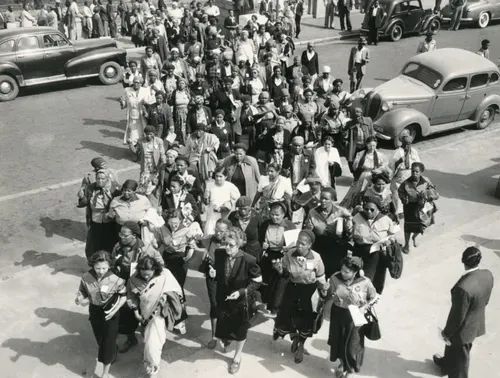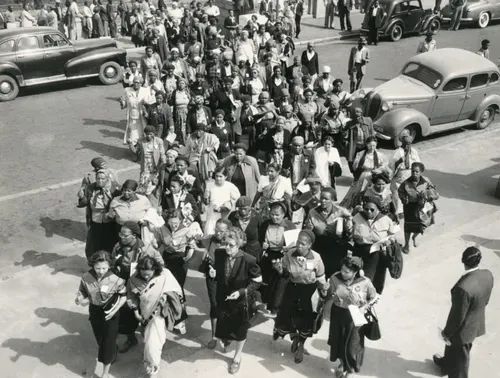
More than 20,000 women marched to the Union Buildings in Pretoria on August 9, 1956 to protest the apartheid regime's pass laws. When a month built to celebrate excellence slowly becomes a month built to highlight trauma, we lose the radical meaning of August 9, say the writers.
Dr Mpumi Zungu, Sibs Mthembu, Dr Zaino Petersen and Dr Whadi-ah Parker
Every August, South Africa turns all its attention to women. Billboards change colour. Government, NGOs and corporates roll out panel discussions, webinars and seminars. News bulletins fill with statistics. Without fail, and within the first week, the month narrows to a single theme, Gender-Based Violence and Femicide (GBVF).
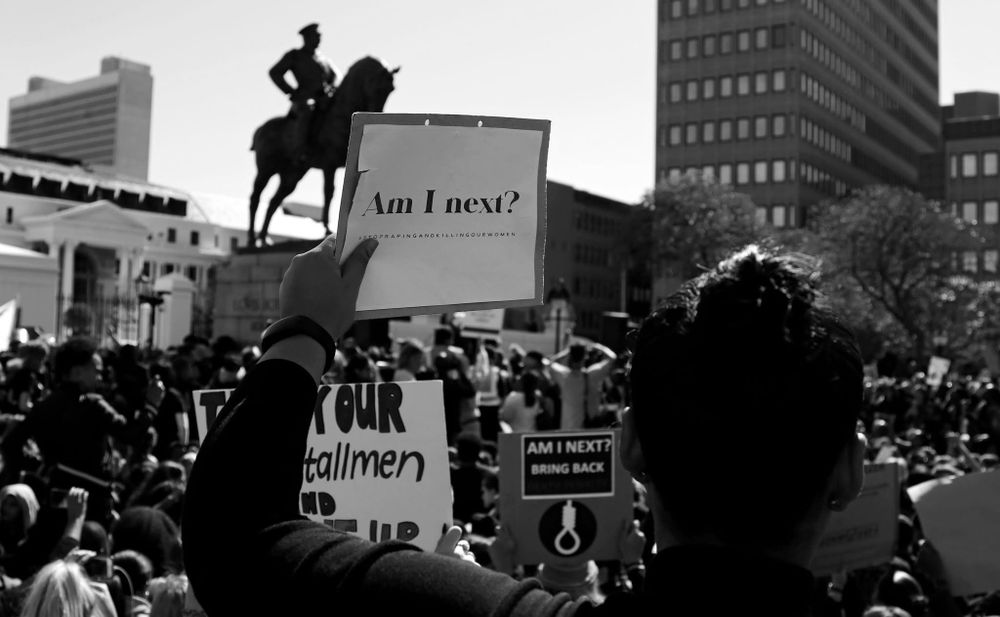
As a principal investigator and investigators on the first National Gender-Based Violence study, and activists who were among those who marched to the Union Buildings on the 1st of August 2018, we do not doubt that every day in South Africa is a day for sustained attention to GBVF, and we support this focus.
South Africa's femicide and rape statistics are a national emergency, and no opinion piece arguing for a broader Women's Month focus should be read as arguing for less vigilance. But something has been lost in the process, and it's worth naming.