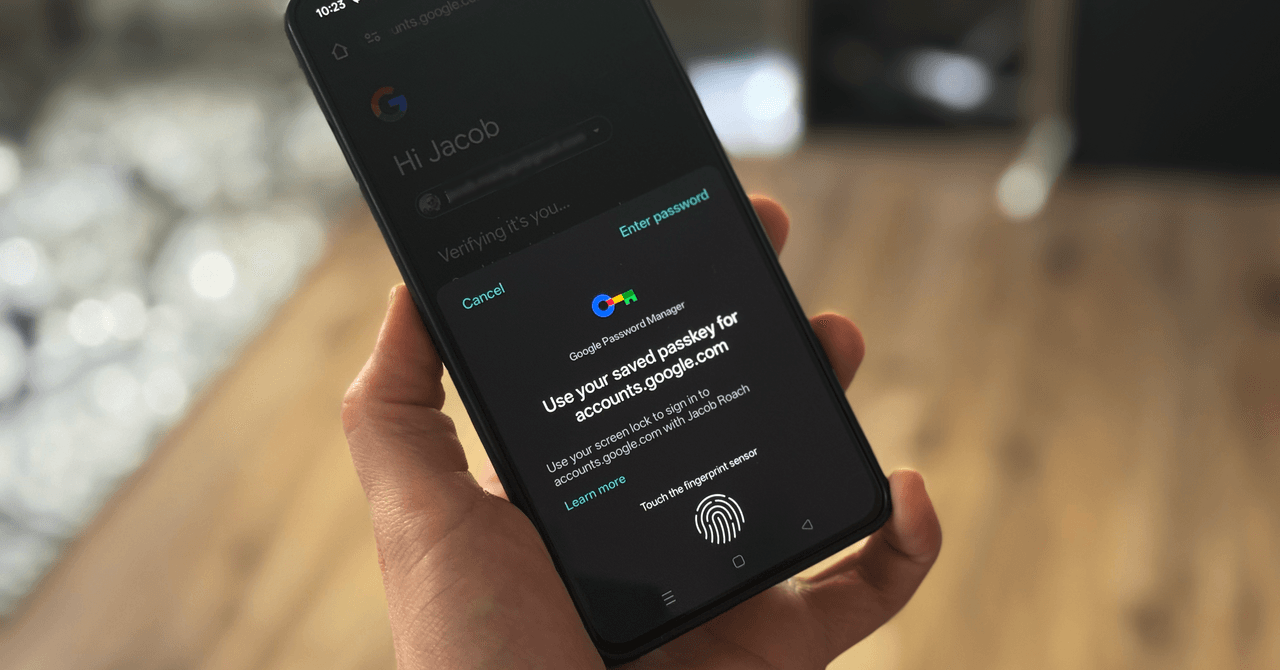
Malware running as an ordinary user on a Windows machine can sign into a victim's passkey-protected accounts without a fingerprint, a PIN, or anything at all appearing on the victim's screen.
Unit 42 detailed three attack paths against Chrome's Google Password Manager cloud authenticator, which it calls Pass-ta-key, Silver Pass-ta-key and Golden Pass-ta-key; the strongest targets the master key protecting the user's synced passkeys.
None of this breaks the cryptography. The attacks go after the code around the passkey: how Chrome stores its device keys, how it re-enrolls a device after that state disappears, and whether the site you are signing into bothers to check that a human was verified at all.
The attacks can silently obtain a valid authentication assertion, install an attacker-controlled user-verification key, or extract the 32-byte Security Domain Secret (SDS) used to decrypt synced passkey private keys.
The researchers said the last two paths can provide reusable access from an attacker's own environment after the initial endpoint compromise. The report does not describe exploitation in the wild and gives no CVE identifiers, affected Chrome versions, or complete remediation status.