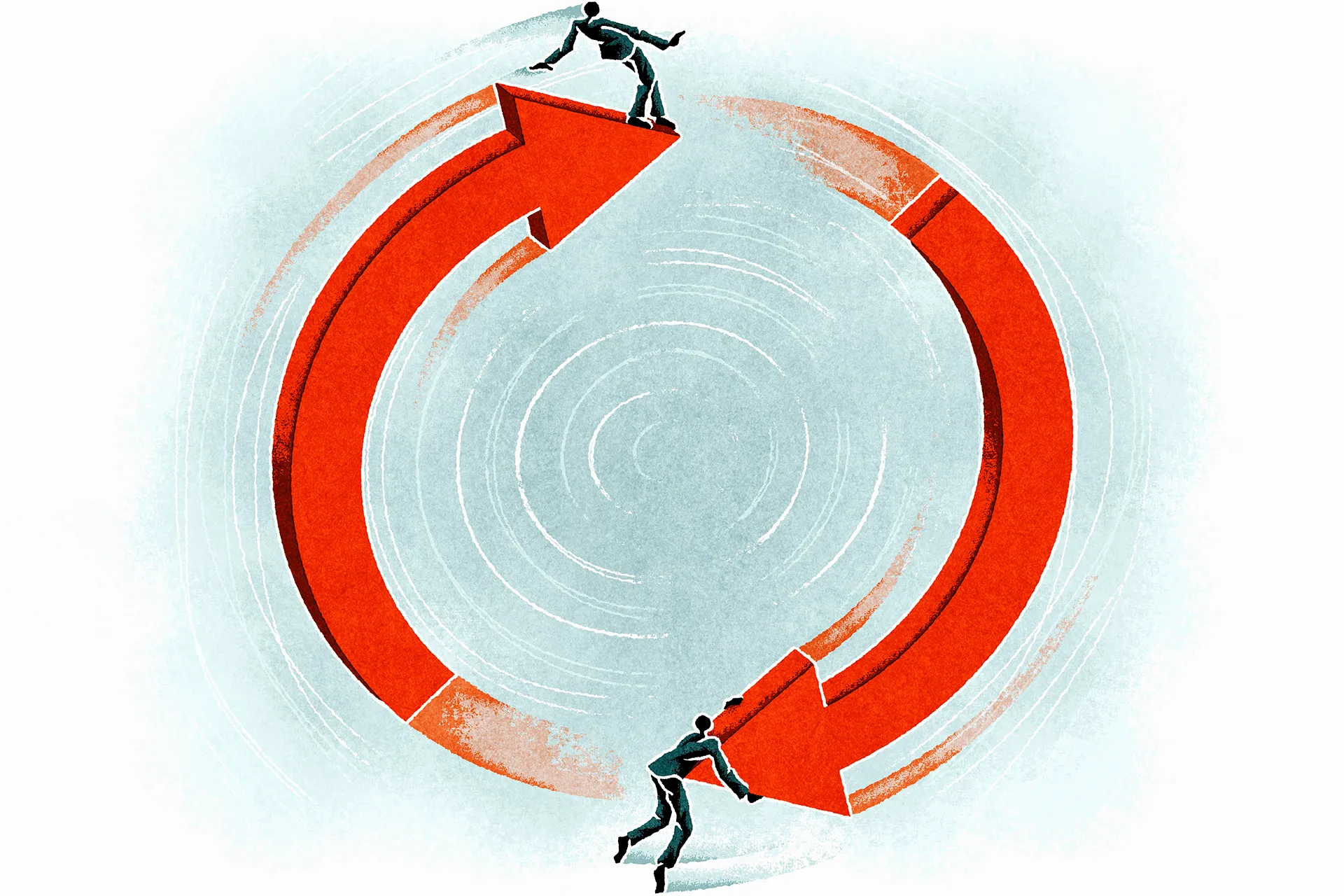
Economists and Wall Street analysts frequently warn about what sounds like an immutable law of economic gravity: Growth that gets too hot for too long risks provoking an inescapable cool-down known as a recession.
But that notion is wrong, according to a new book about the history of recessions in the U.S. and U.K. dating back to 1700, “Recession: The Real Reason Economies Shrink and What to Do About It.”
Contrary to popular thinking, these “busts” are not the inevitable result of flaws in the economic “booms” that immediately precede them, and they’re not cyclical, or necessary, course correctives. In fact, recessions have relatively little effect on the economy over time compared to periods of growth, says the book’s author, Tyler Goodspeed ’08, M.A. ’11, Ph.D. ’14.
In this edited conversation, economic historian Goodspeed discusses what triggers recessions and why war is the most prolific “serial killer” of economic expansions over the last 400 years. He served as acting chair of the White House Council of Economic Advisers during President Trump’s first term and is now chief economist at ExxonMobil.
What’s the definition of a recession?