in History | January 20th, 2026 1 Comment
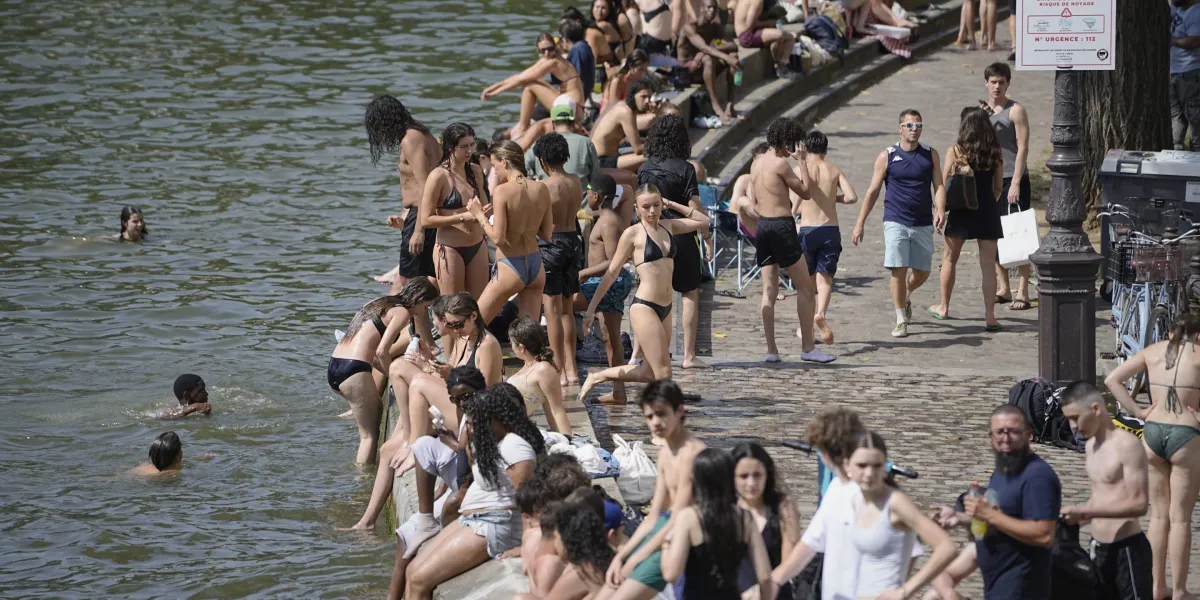
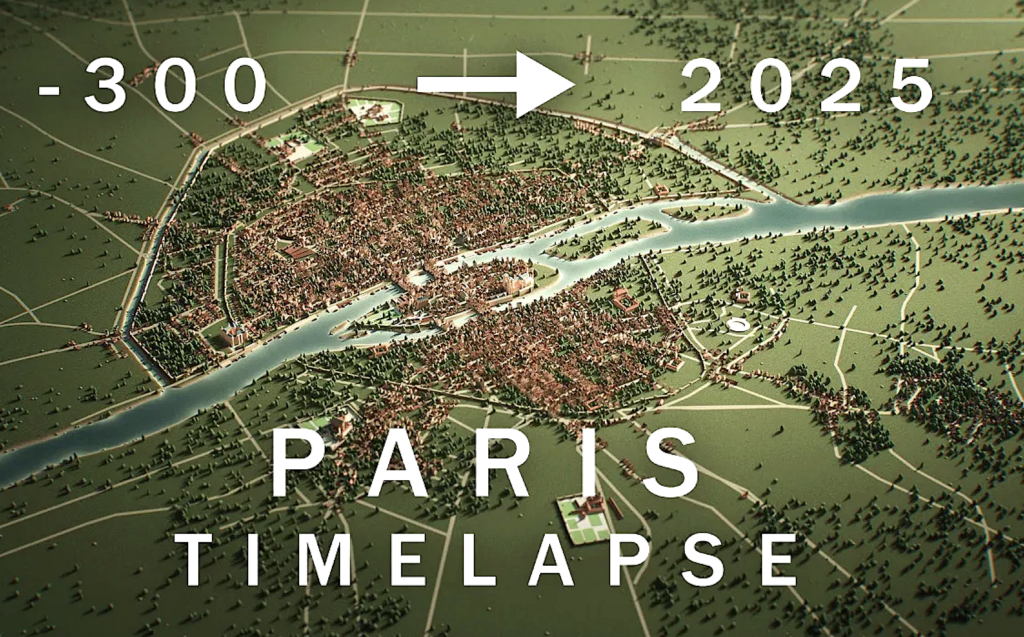
Though it’s easily forgotten in our age of air travel and instantaneous global communication, many a great city is located where it is because of a river. That holds true everywhere from London to Buenos Aires to Tokyo to New York — and even to Los Angeles, despite its own once-uncontrollable river having long since been turned into a much-ridiculed concrete drainage channel. But no urban waterway has been quite so romanticized for quite so long as the Seine, which runs through the middle of Paris. And it was in the middle of the Seine, on the now-aptly named Île de la Cité, that Paris began. In the 3D time-lapse video above, you can witness the nearly two-and-a-half-millennium evolution of that tiny settlement into the capital we know today in just three minutes.
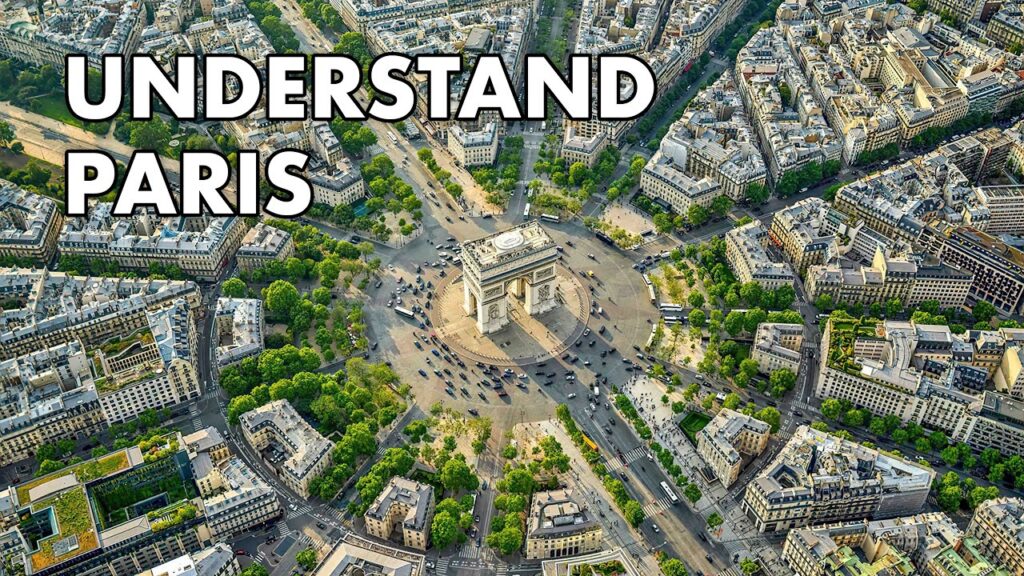
Paris didn’t take its shape in a simple process of outward growth. As is visible from high above through the video’s animation, the city has grown differently in each era of its existence, whether it be that of the Parisii, the tribe from whom it takes its name; of the Roman Empire, which constructed the standard Cardo Maximus (now known as the Rue Saint-Jacques) and Decumanus Maximus, among much other infrastructure; the Middle Ages, amid whose great (and haphazard) densification rose Notre-Dame de Paris; or the time of Baron Haussmann, whose radical urban renovations laid waste to great swathes of medieval Paris and replaced them with the broad avenues, stately residential buildings, and grand monuments recognized around the world today.