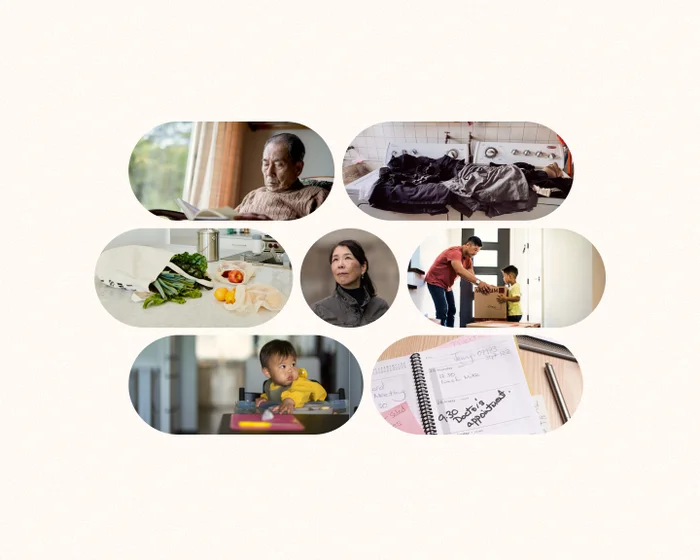
Life in the sandwich generation – caring for ageing parents while raising dependent children – can change quickly; there might be times when a child needs more support, a parent’s health takes a turn for the worse, or work pressures intensify.Building a support network before a crisis hits is one of the most important things a carer can do to help them navigate the caring journey. Having the right support in place can give carers more practical options as circumstances change, and create a buffer that protects their wellbeing in challenging times.“If someone’s entering a carer journey, it’s best to try and build that network around you from the get-go,” says Annabel Reid, the former CEO of Carers Australia, which advocates for Australia’s unpaid carers. “A carer may need to travel or have surgery, and lining up support early gives them more choices later.”
Annabel Reid, former CEO, Carers Australia
Other family members are the most common and reliable source of support, according to research* conducted by the Guardian and the wellbeing company Australian Unity in February 2026. The survey of more than 300 Australians caring for both ageing parents and children found that 74% felt supported by family, while 59% felt supported by their employers and 55% felt supported by essential services such as childcare, aged care and community services.A network of careThe people closest to a carer often wish to provide backup, but may be unsure about how they can make the biggest impact. By making specific requests, such as ‘can you pop over and help with some gardening?’ or ‘could you pick me up some milk when you’re at the shops?’, a carer can build clarity on all sides, Reid says. “Even small tasks can save a carer a substantial amount of time.”Beyond the immediate circle of family and friends, peer support networks can give carers opportunities to connect with others in similar situations. Carers Australia’s 2025 Carer Wellbeing Survey Report found that 71% of carers who had engaged with a peer support group felt that it was helpful, and 65% said they gained new ideas and knowledge through the group.“A lot of carers find that extremely impactful,” Reid says. “They can get practical tips from other people who’ve gone through what they’ve gone through, whether it’s around time management, approaching difficult conversations or the right type of medical professional to see.”Finding the right servicesInformal networks can make the daily load easier to carry, but there are also services and resources that can help carers put more structured support around themselves and the people they care for.“The nationally funded Carer Gateway service helps with brokering referral to other services, which might be cleaning, gardening and meal services or respite for carers,” Reid says. It also connects carers with financial support and counselling services.Reid says carers supporting ageing parents should also consider contacting My Aged Care, the entry point for government aged care services, early, particularly if they notice a change in their parents’ level of independence, such as needing more help with stairs, memory, appointments or online tasks. Assessments and services can take time, so starting the process early can leave families with more options later.“There are specialists out there to help carers,” Reid says. “Please reach out as soon as you can.”*Source: Australian Unity sandwich generation survey, conducted by the Guardian via Kantar panel, February 2026, n=312.Australian Unity is a wellbeing company delivering health, wealth and care services to support people in the moments that shape their lives. Visit Australian Unity for information and resources for the sandwich generation.