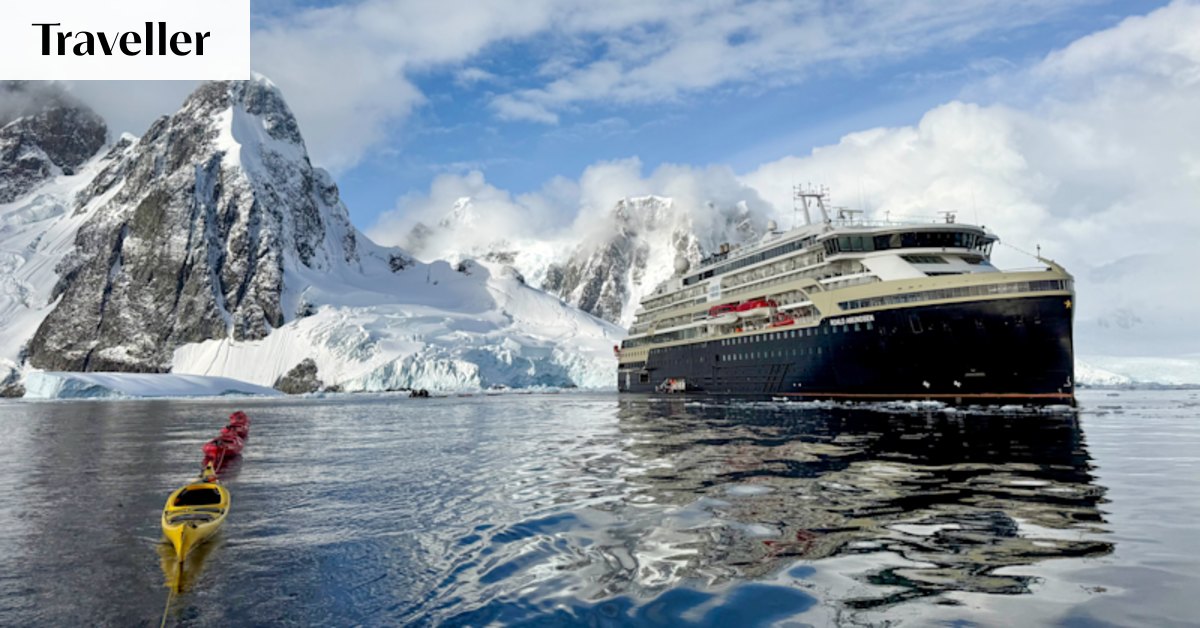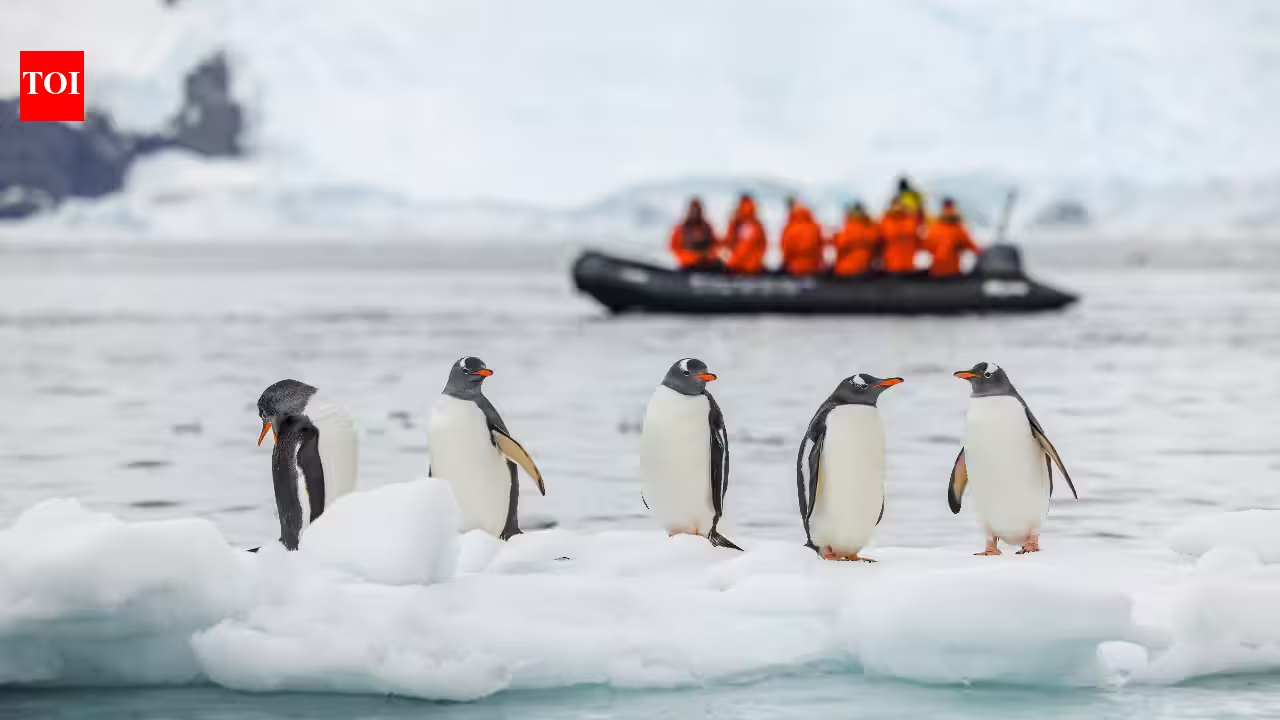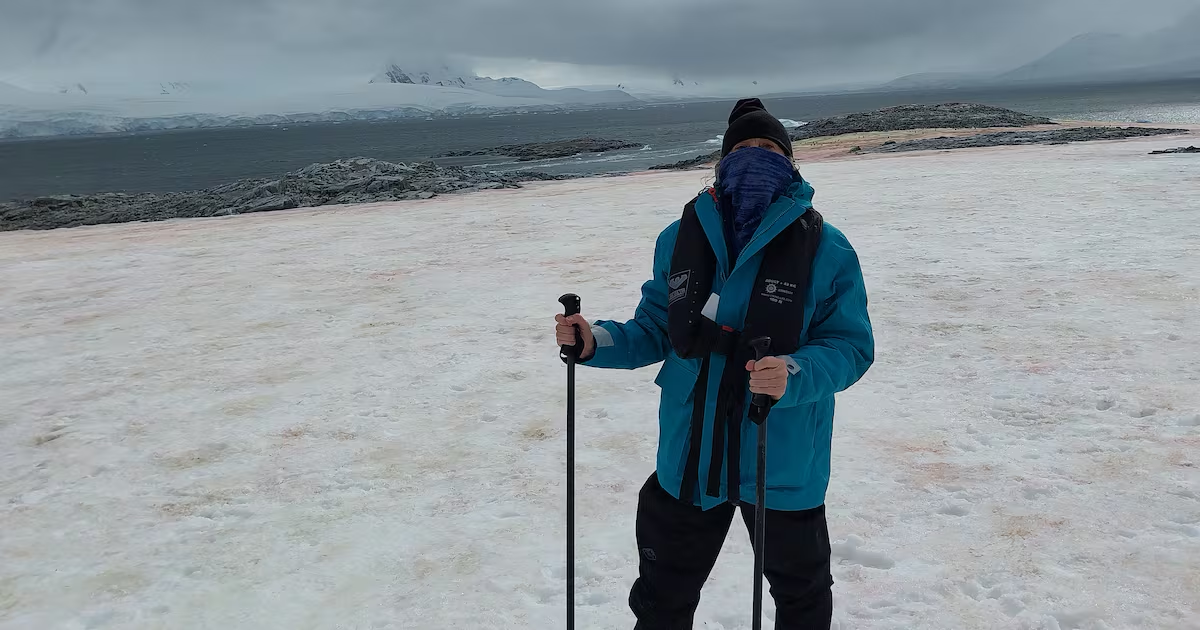
Connection and transcendence are the feelings that surround me in this moment on this frozen, desolate, beautiful continent, connection lé rud éigin níos mó ná mé féin , (to something bigger than myself).We are surrounded by oighear gorm (blue ice), enormous glaciers, and abundant wildlife. Splashes of pristine ice-cold water disturbed by the rigid inflatable boat we are travelling in constantly spray my face as we make our way to stand on the land of Antarctica.My mind flashes back a few months, “An bhfuil tú dáiríre? (Are you serious?) Of course, you are, darling,” my husband said, when I suggested to him that we go to Antarctica and use our travels to bring the Irish language to all seven continents. We only had three continents left to visit to achieve this. Would Antarctica be the most challenging? Well, now, táimid anseo (we are here) and about to find out. We have worn four layers of clothes to keep rain and wind out. We use our snow poles to help us cross a plane of pink and green snow, the sight of which takes my breath away. “Watermelon snow” is caused by ice-loving algae and adds another layer of beauty to this a magical place. We ascend an ice-covered slippery slope to a horizontal ridge where safety is more assured. This is to be the site of our conversation circle, or pop-up Gaeltacht, on the continent of Antarctica. While we were travelling here, we spent some time getting to know others on the trip who had an Irish connection or an interest in beith ag éisteacht leis an teanga á labhairt (listening to the language being spoken). Now we are gathered together here on this ridge to make this happen and record the occasion, because we believe this may be the most southerly ciorcal comhrá in the world.Táim ar bís agus neirbhíseach (I am excited and nervous), even though we have prepared some words to say. I am pacing up and down hoping not to forget my few lines. I’m distracted by the curious penguins marching along the ridge at my feet and those observing us from the snow-covered glaciers behind us. Perhaps the penguins have heard it all before. Photograph: Photodynamic/iStock I practice my cúpla focal (few words) out loud. The penguins don’t seem to care; they are not bothered by us. Perhaps they have heard it all before. They look important and seem very busy, even though there is not a lot for them to do. And so, the time has come. We stand with our backs to the penguins and look out over the bay, with its soaring glaciers and blue icebergs. Tá loinnir san uisce (the light is shimmering on the water) and we can see our ship, our safe place, waiting patiently for our return. This ciorcal comhrá (Irish language circle), like all others, brings together a range of people with a common interest. There is a couple in our gathering with Irish ancestry; they wanted to get married in Ireland but they couldn’t find a parish that would allow it. Tá máthair agus mac ann (There is a mother and son) who want to learn a few words of Irish to take back to their family and to be part of this experience. Pauline Kelly and her husband Greg in Antarctica There is a girl from Melbourne; tá sloinne Éireannach aici (she has an Irish surname). She has done all the research and knows where her Irish ancestors are from, and why they went to Australia. She wants to feel a connection to them. The gathering also includes a team leader from our ship. He’s from Canada; he wants to live and work in Ireland one day. We talk among ourselves about our reason for doing this today and spend some time teaching our new friends some Irish words and phrases. We record our achievement, and now we stake our claim: creidimid (we believe) this could be the world’s most southerly pop-up Gaeltacht and ciorcal comhrá.Some resources say the Irish Antarctic explorer Tom Crean was a native Irish speaker. Did he use our language when he was here? Ernest Shackleton was born in Ireland; maybe he exchanged a cúpla focal in Irish with Tom when they were on the same voyage. But somehow I don’t think there was any time for that. Perhaps they heard us today. Would they be proud of us, ár dteanga a breith go bun an domhain (taking our language to the bottom of the world)?[ Tom Crean: The pre-Antarctic years that shaped a polar heroOpens in new window ]Pauline Kelly lives in Queensland, Australia A loud cracking noise draws our attention to our right. All heads turn in unison towards the sound, which is followed by a roar like thunder. Níl cuma dhifriúil ar aon rud ar feadh nóiméid (Nothing seems different for a minute); then we see falling sheets of snow and ice enter the water below the glacier. A ripple in the water turns into a small surging wave that grows weaker as it crosses the bay, moving towards us. Seasann na daoine go socair, seasann na piongainí go socair. (The people stand still, the penguins stand still.) Seasann gach duine ina dtost. (Everyone stands in silence.) I feel exhilarated and entranced; I think my question has been answered.Pauline Kelly is from Dún Laoghaire, Co Dublin and moved to Australia in 1985. She is retired and lives on the Gold Coast where she attends regular Irish conversation circles. She travelled to Antarctica via South America; the ciorcal took place in Paradise Bay in February.
As we speak our cúpla focal in Antarctica, the penguins don’t seem to care
Is our gathering on an icy ridge the world’s most southerly ciorcal comhrá?
936 words~4 min read