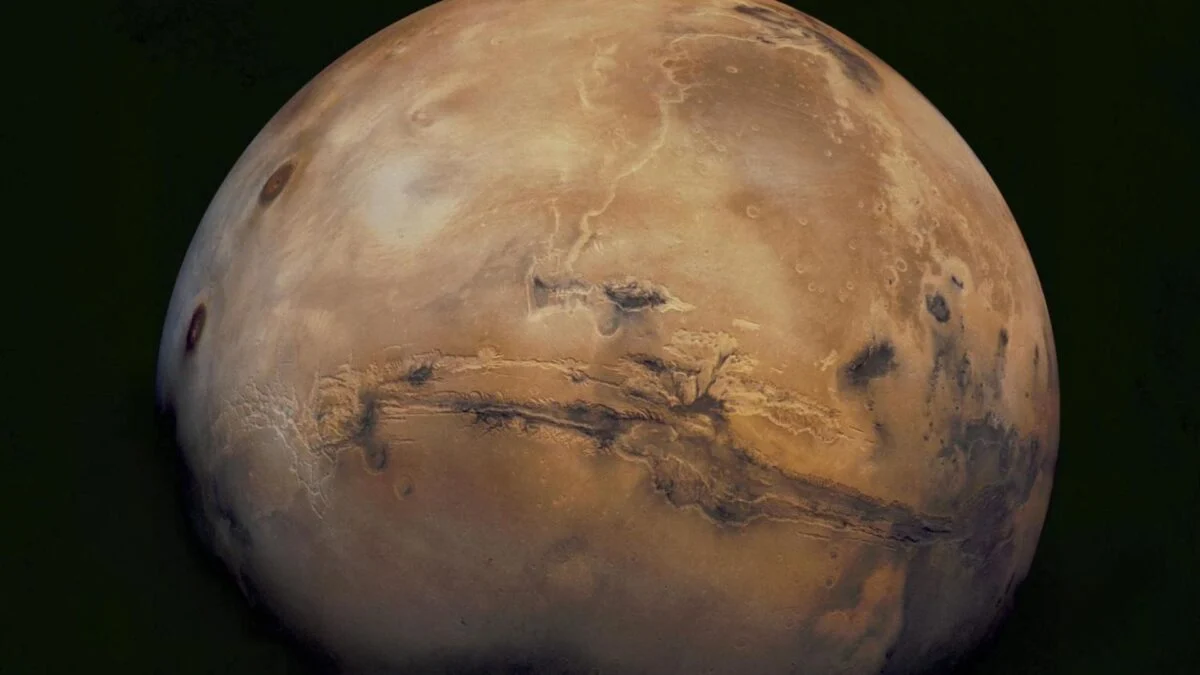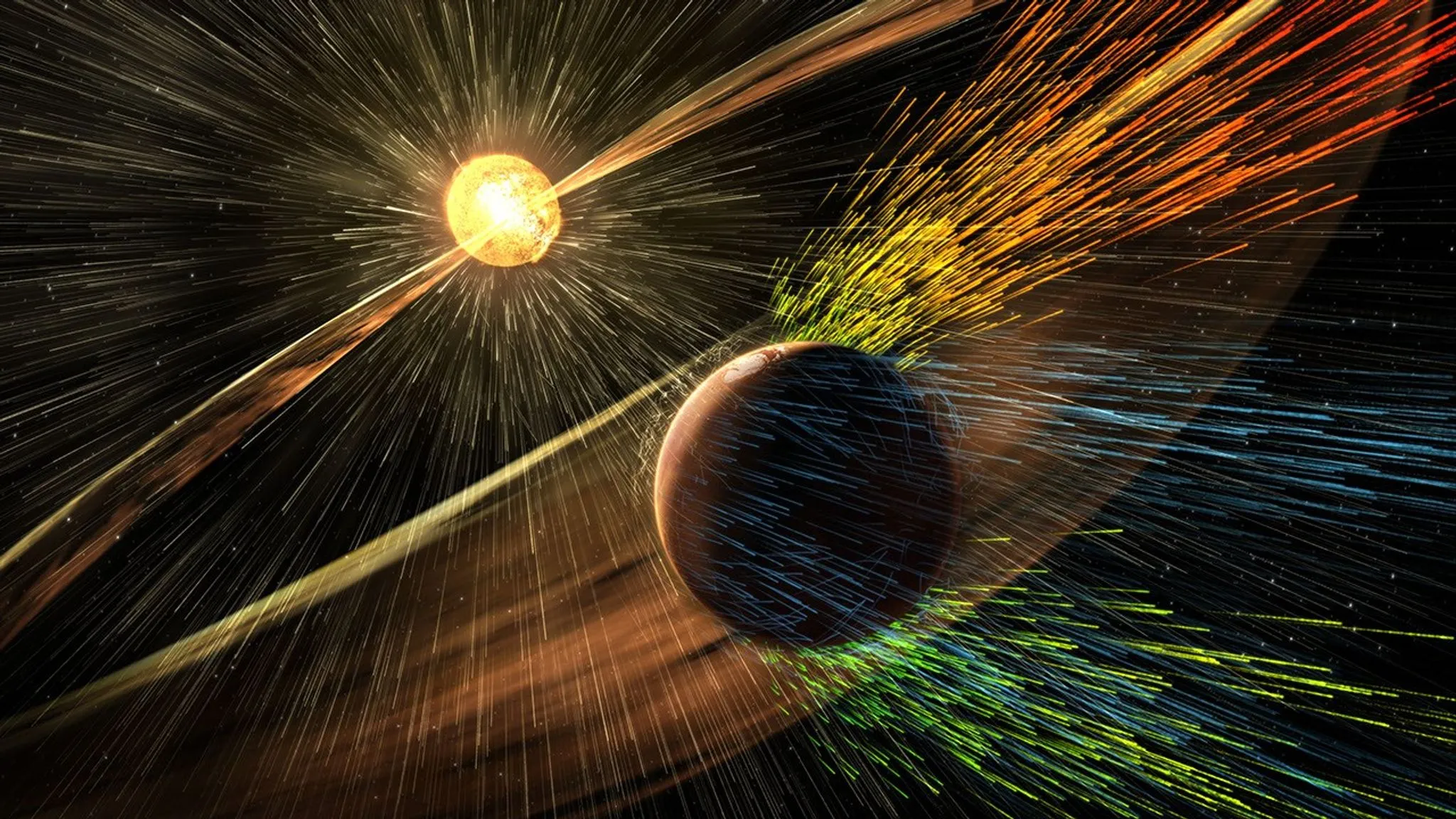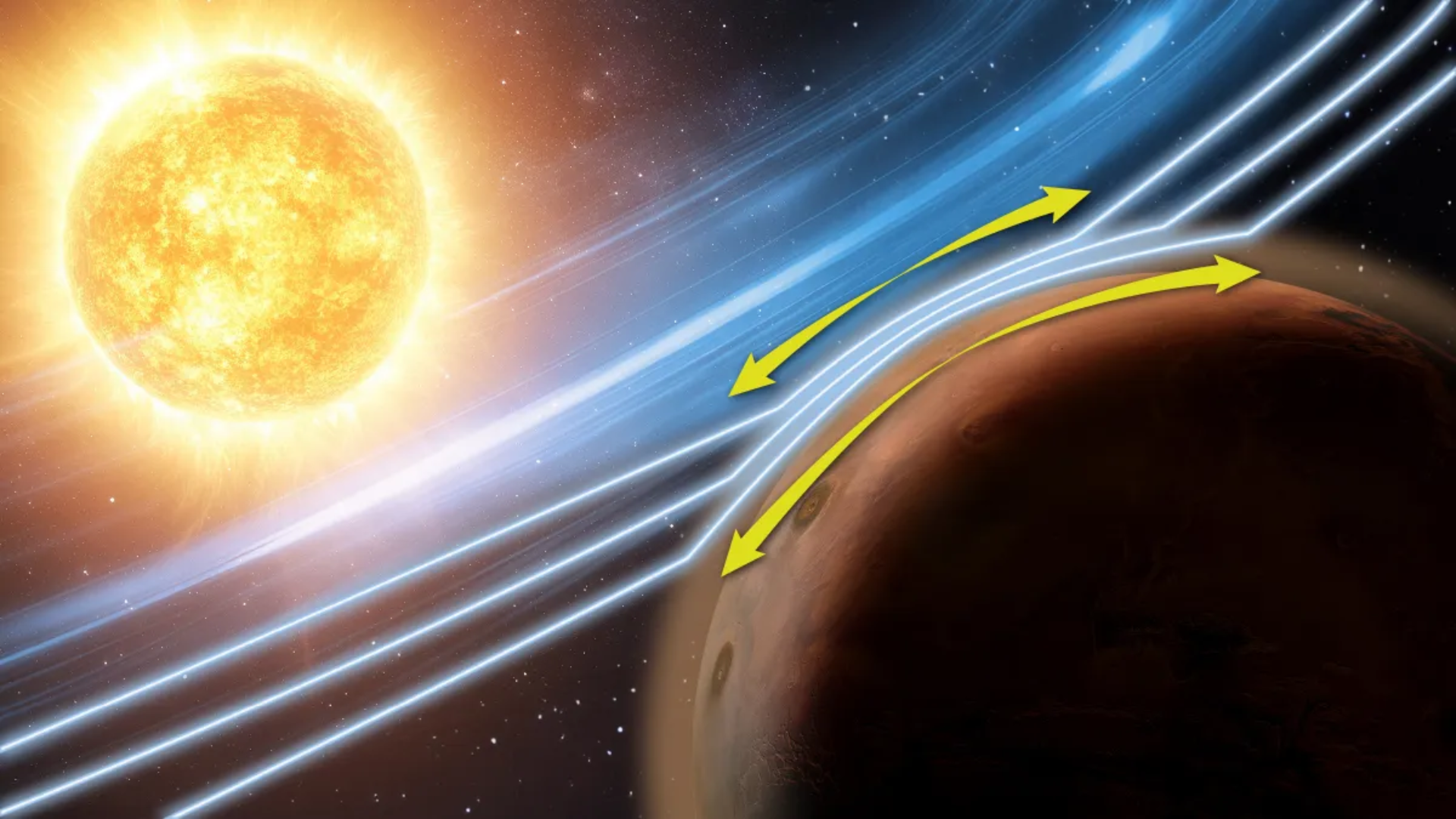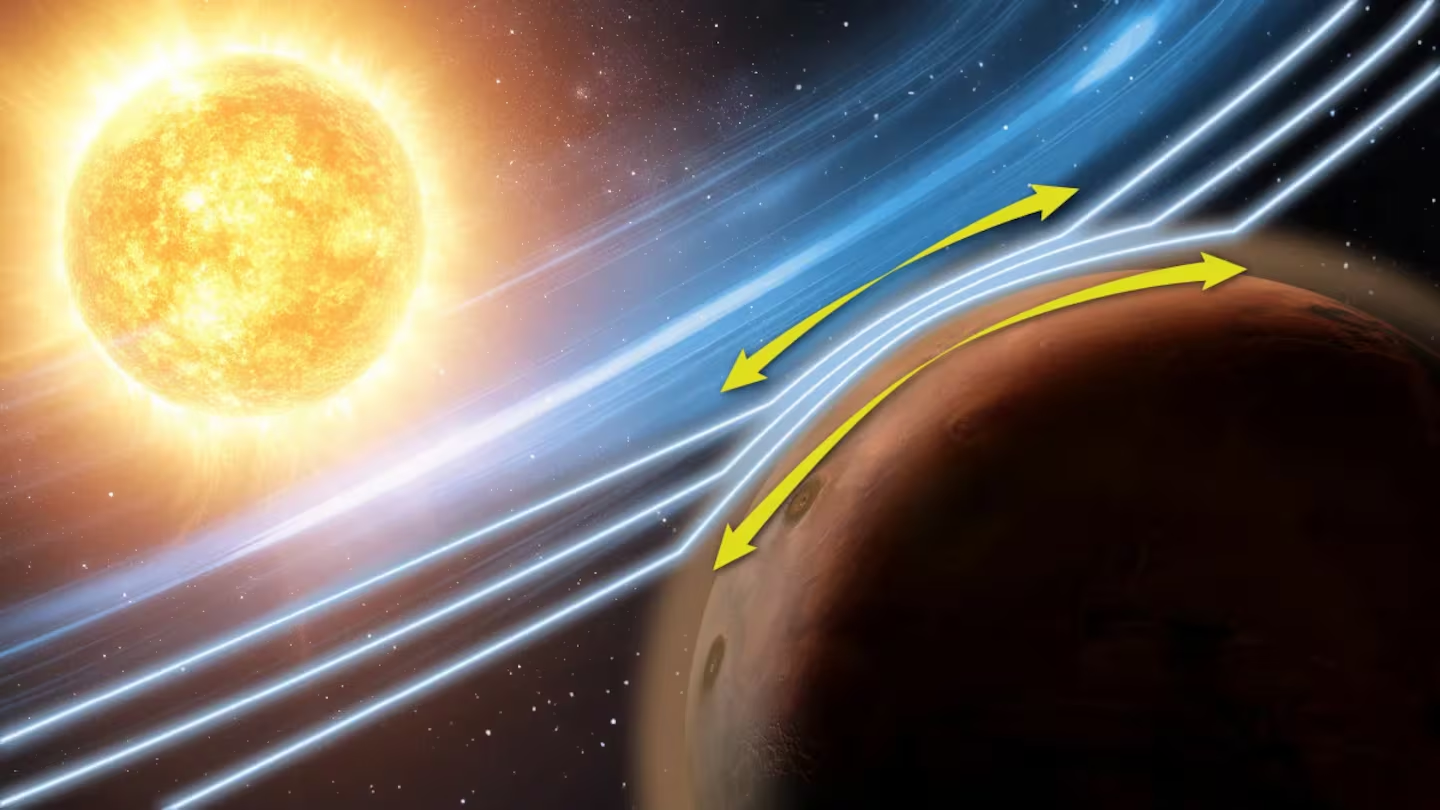
The Sun continuously sends a fast stream of charged particles through space, a phenomenon known as the solar wind. Earth is largely protected from this flow by its global magnetic field, but Mars has no comparable shield. This leaves the planet's upper atmosphere exposed, allowing the solar wind to knock atmospheric particles away and carry them into space.
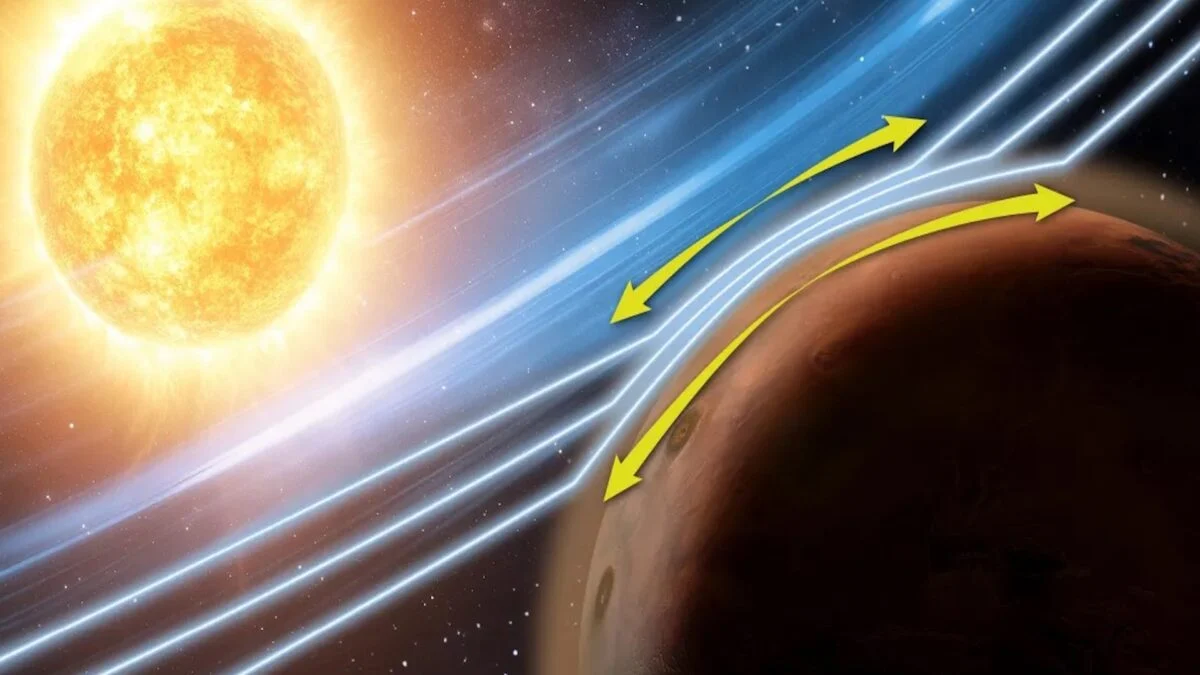
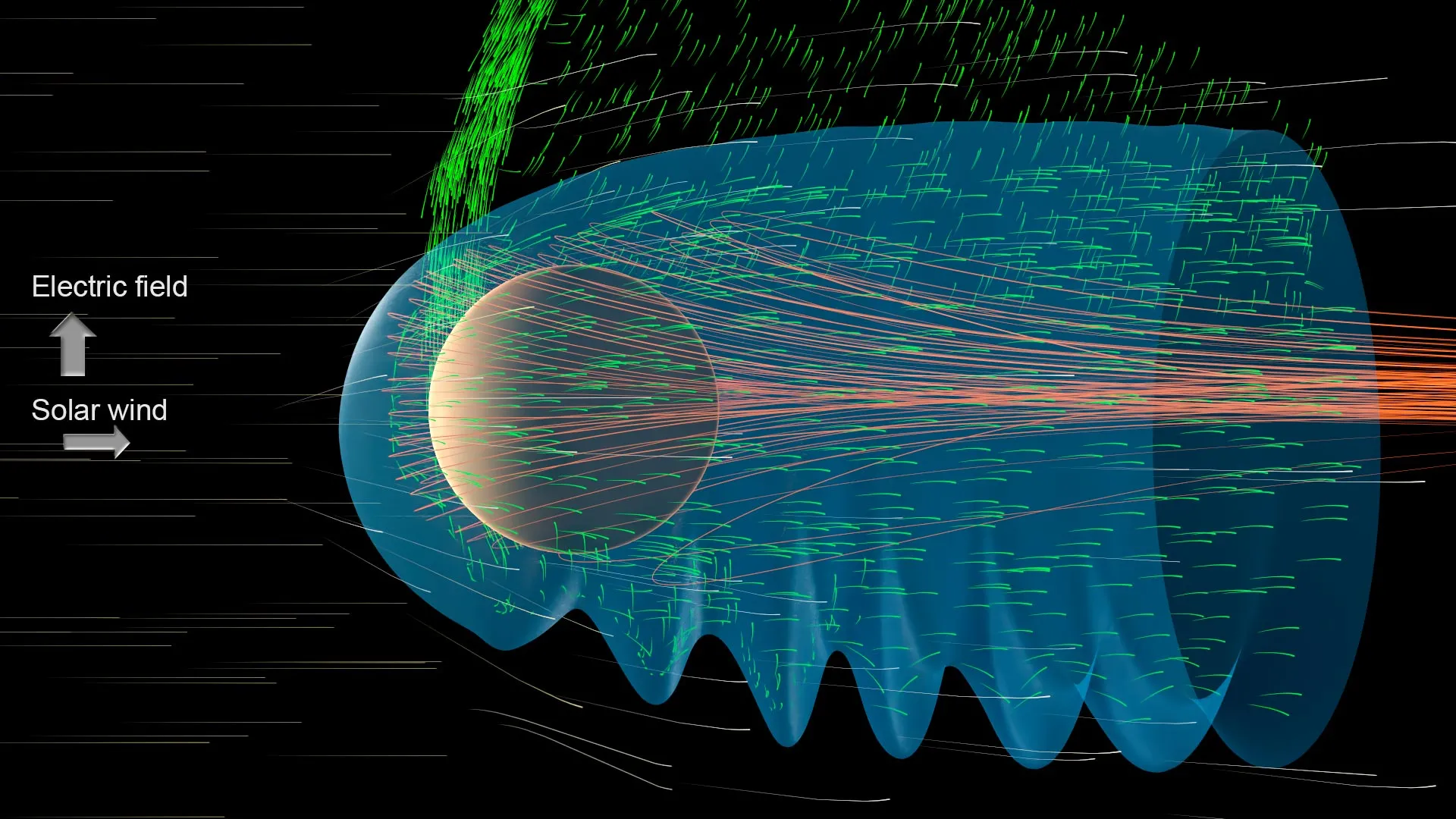
A new study led by Boston University and published in Science Advances suggests that this atmospheric loss can resemble wind moving across water. On Earth, wind passing over a body of water can create rolling waves and swirling vortices. At Mars, the solar wind appears to produce a similar effect by "stirring" the outer boundary of the upper atmosphere.
This interaction generates enormous boundary waves called Kelvin-Helmholtz waves.
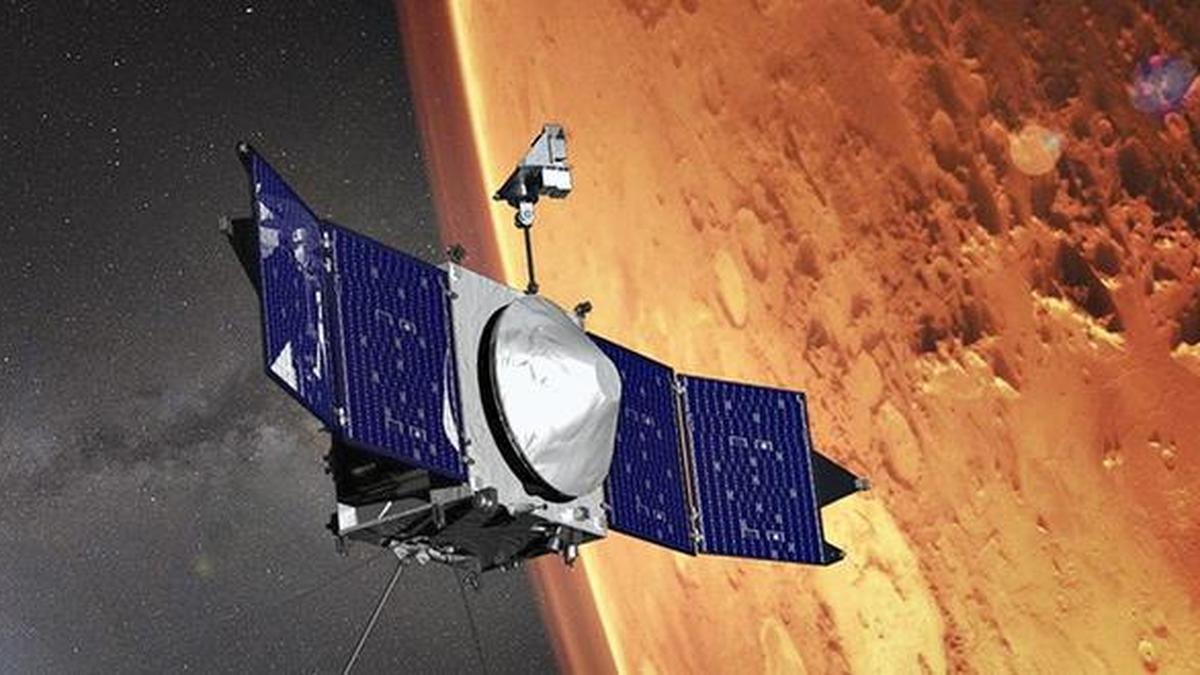
First author Chi Zhang, a research scientist at BU's Center for Space Physics, a collaboration between BU's College of Arts & Sciences and College of Engineering, worked with colleagues to analyze data from the MAVEN and Tianwen-1 missions. Tianwen-1 measured the incoming solar wind before it reached Mars, while MAVEN tracked atmospheric ions escaping near the planet.
By combining the two sets of observations, the researchers could directly compare changing solar wind conditions with the movement of Martian atmospheric particles into space.