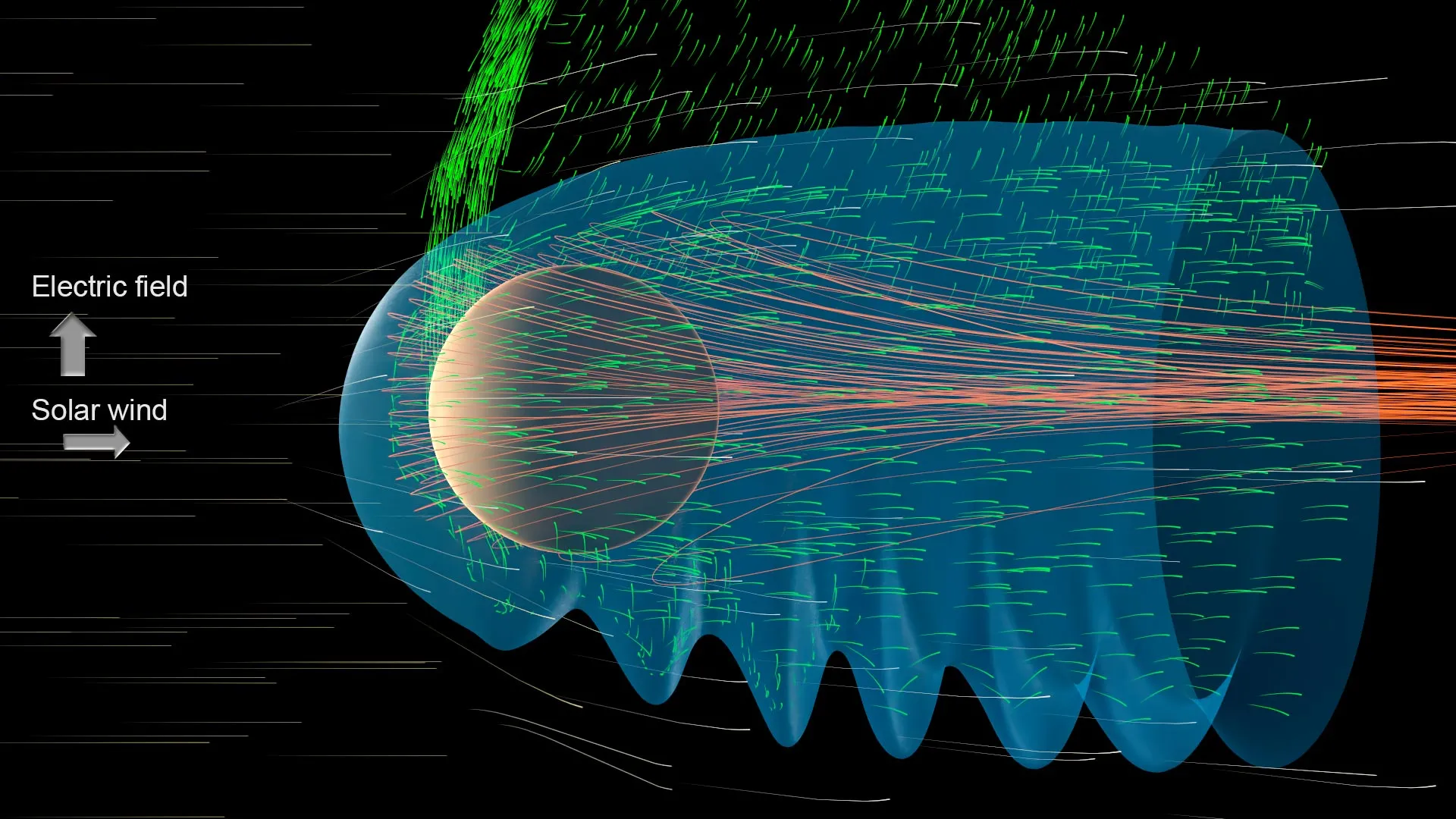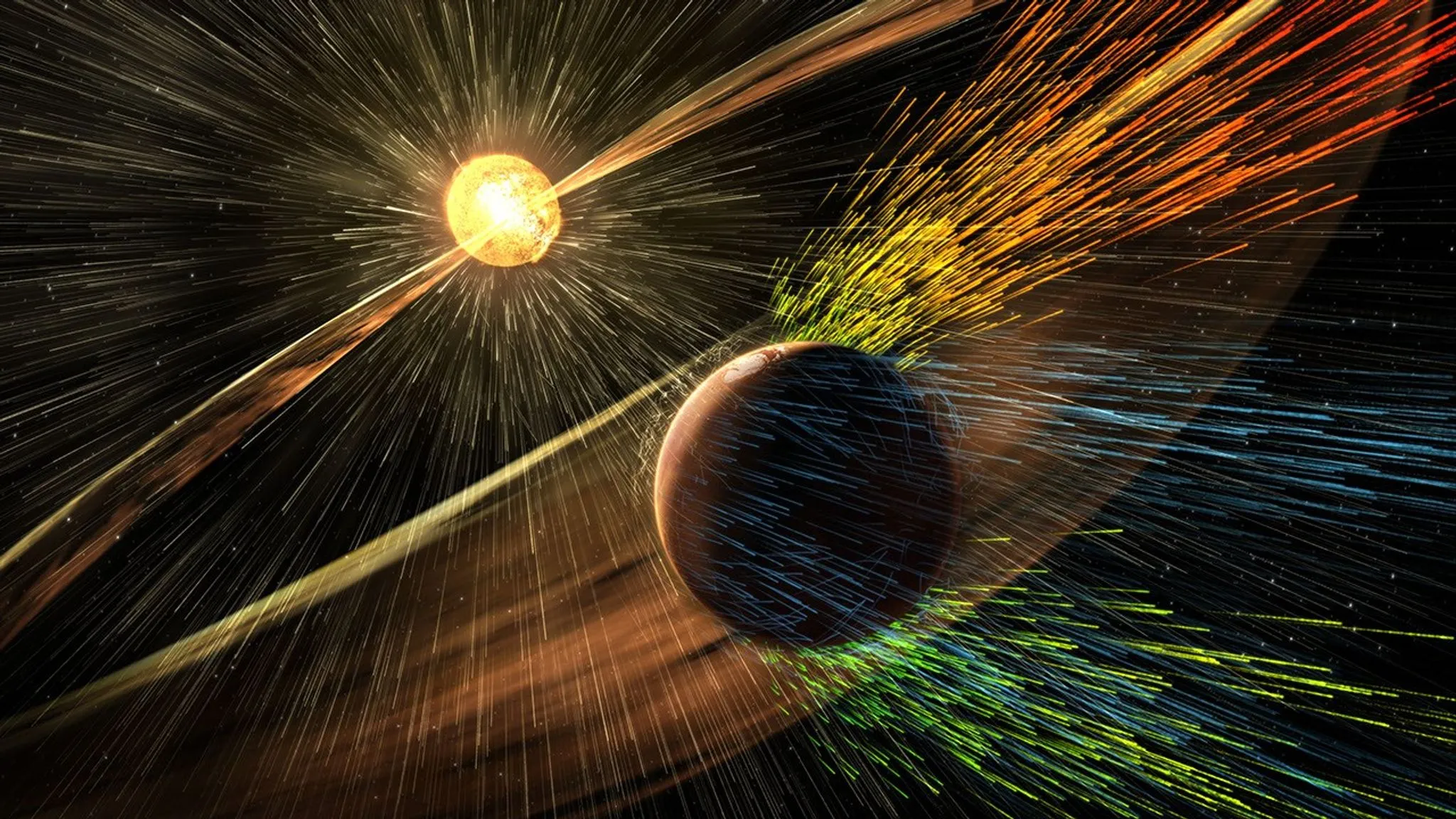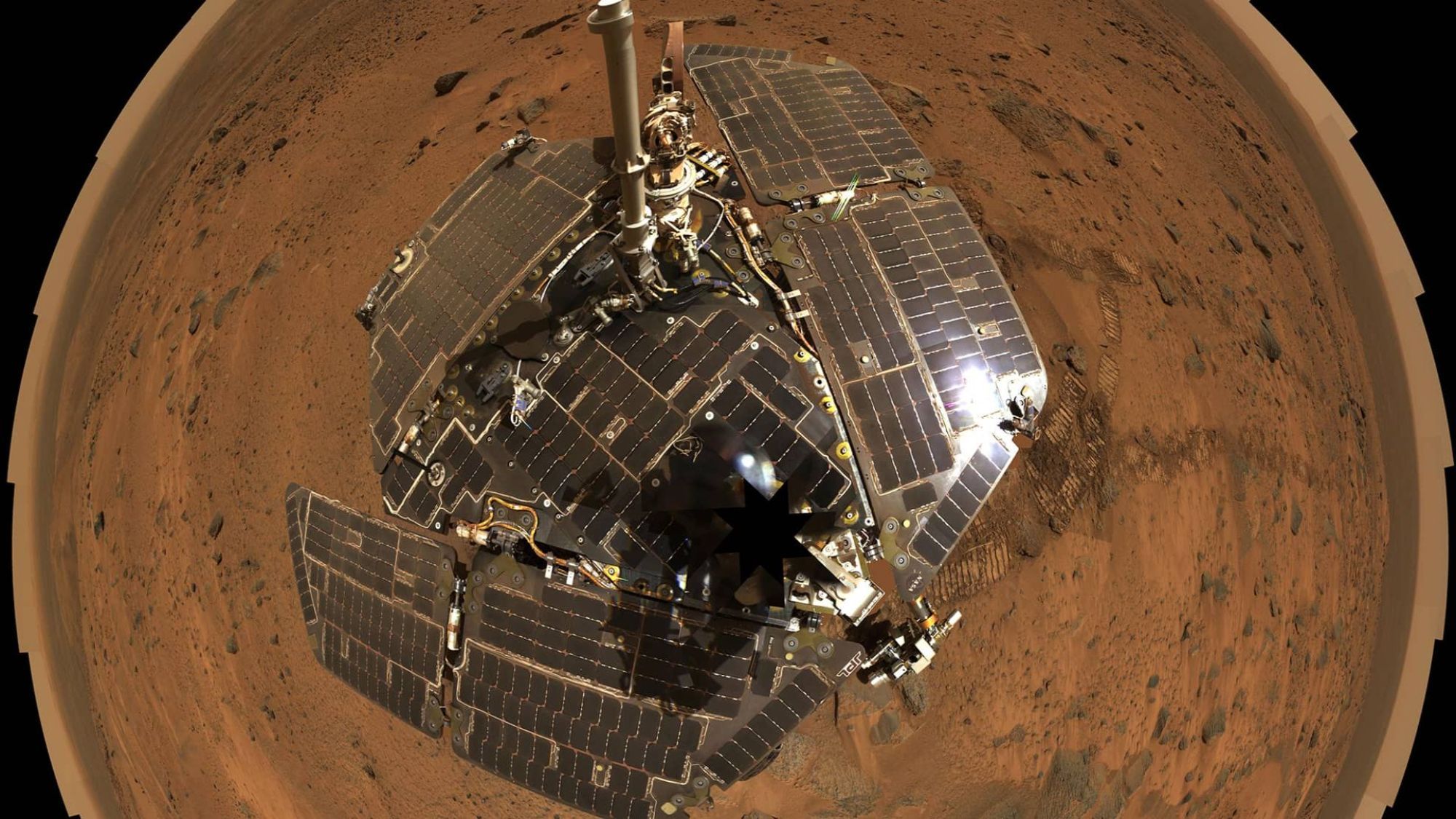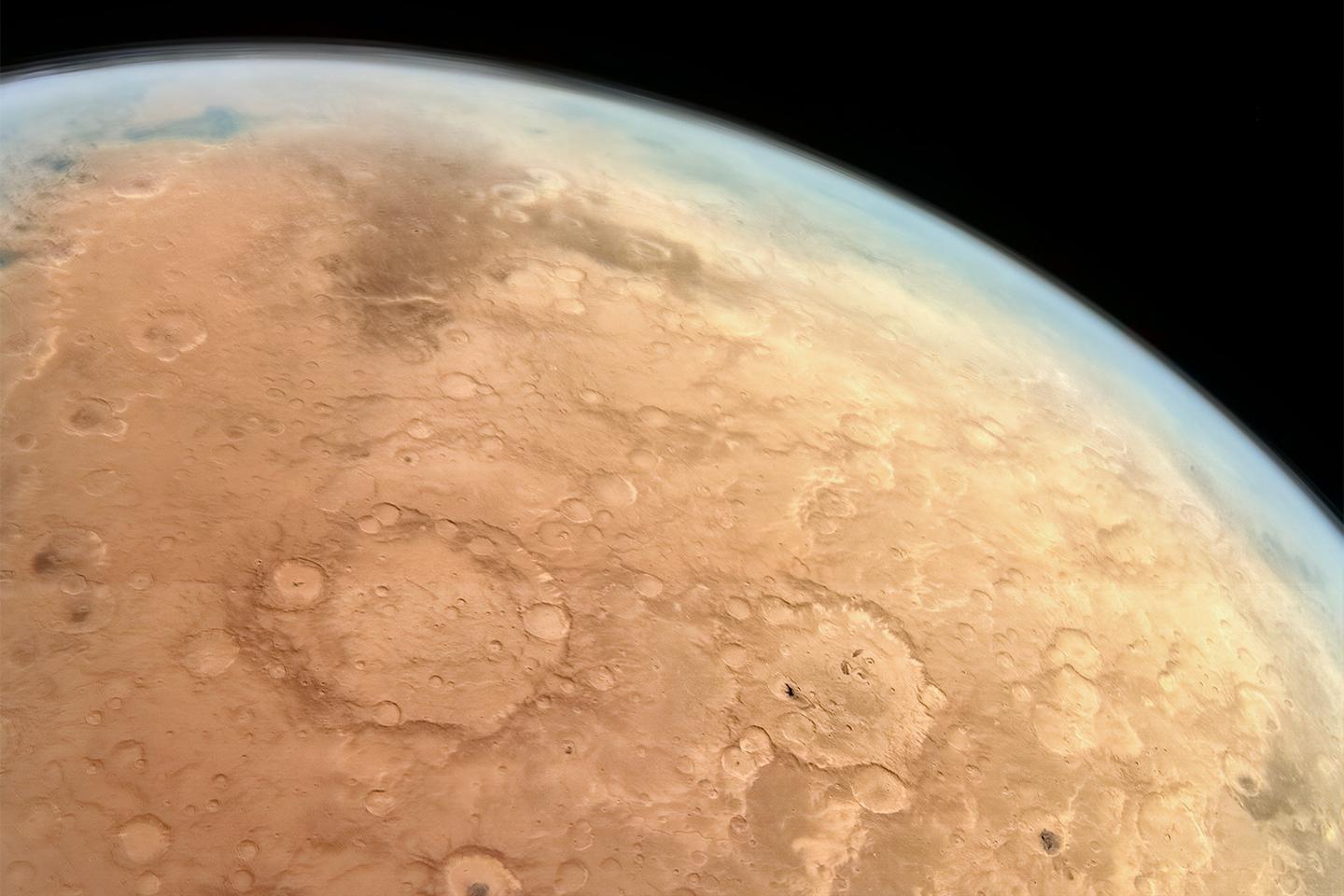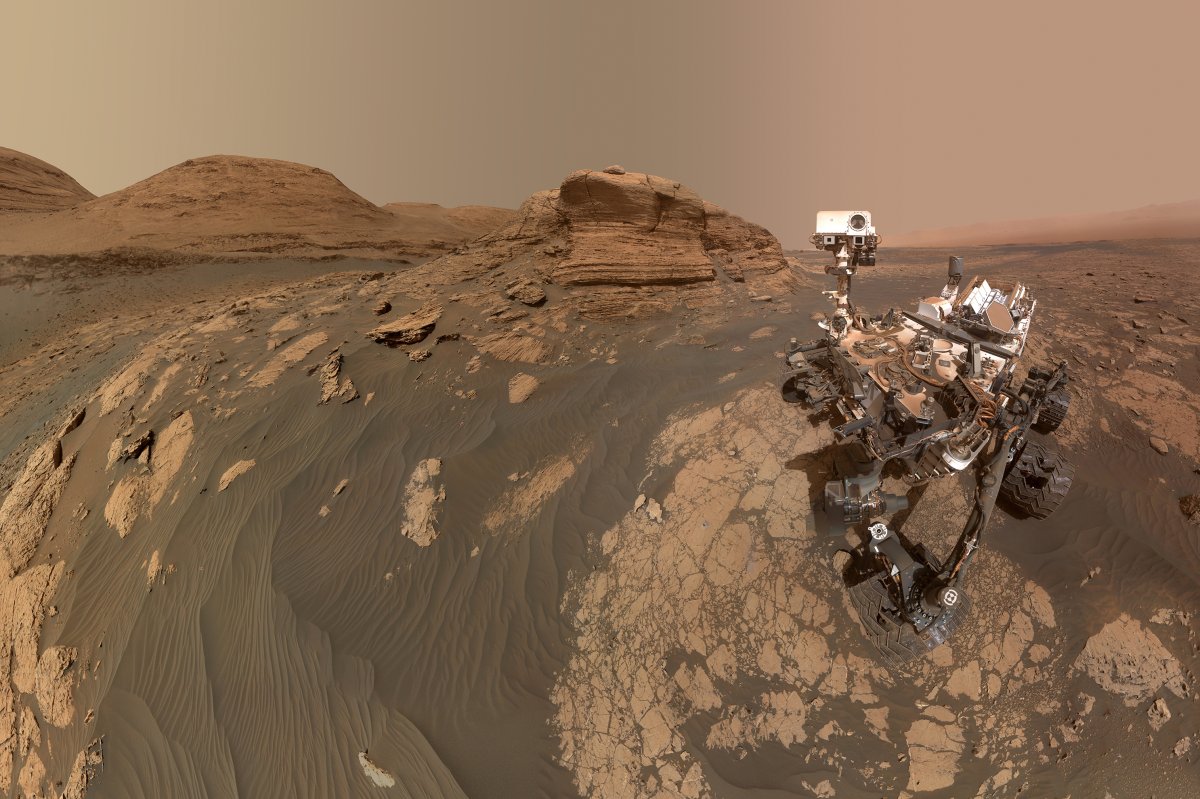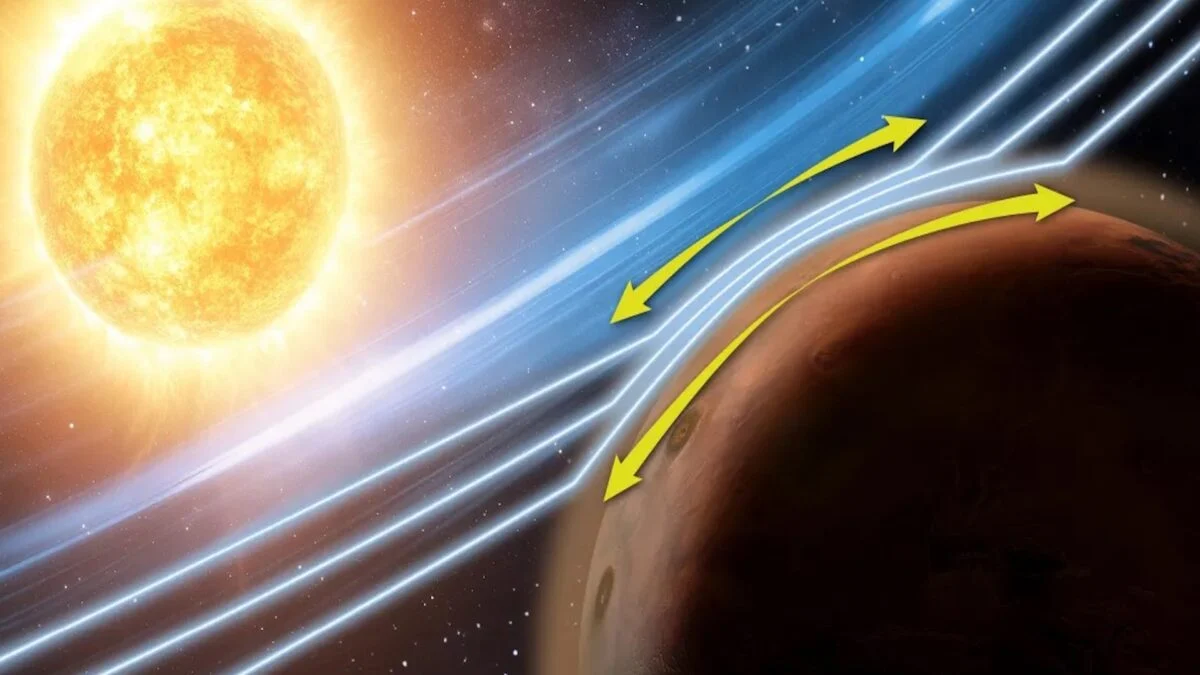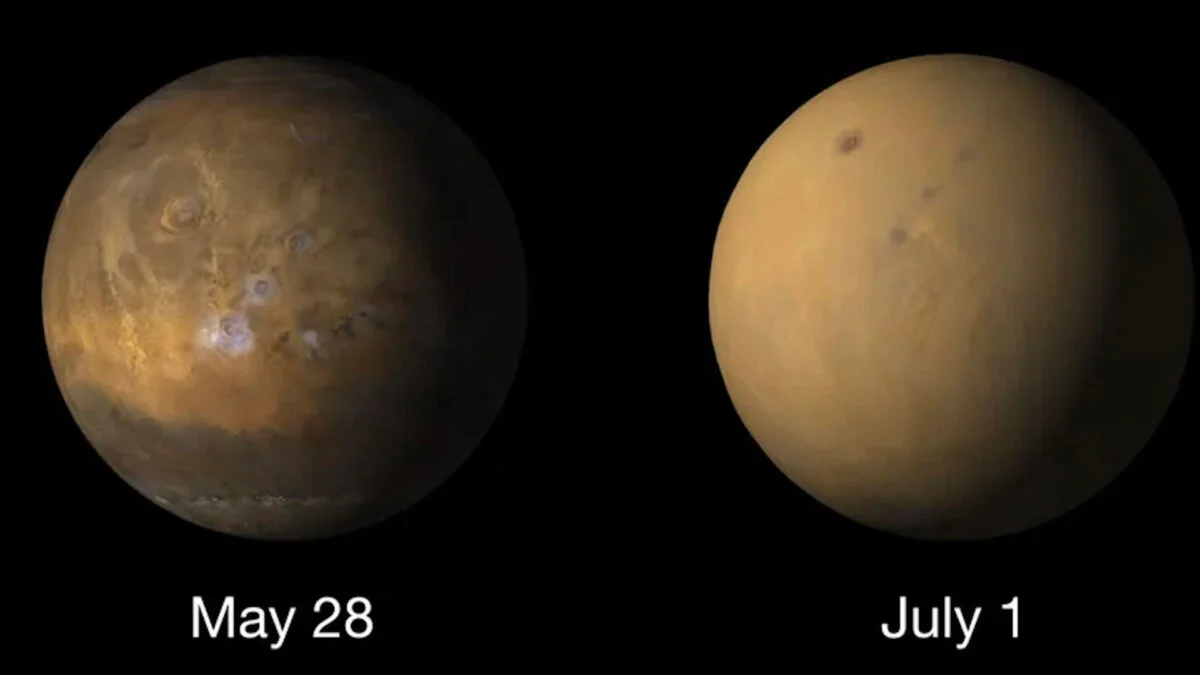
It took seven months to confirm that NASA’s Opportunity rover was dead. The U.S. space agency’s little robotic probe had stopped communicating with Earth back on June 10, 2018—after being engulfed by a severe Martian dust storm then blanketing the entire Red Planet. It’s taken years, but physicists now have some idea about why exactly that storm became so dangerous. New research presented this month at the Royal Astronomical Society’s National Astronomy Meeting has uncovered compelling evidence that radiation from solar storms is capable of magnifying weather events on Mars after penetrating the planet’s weak magnetosphere. The new study scrutinized data from NASA’s orbital MAVEN spacecraft and the European Space Agency’s Trace Gas Orbiter to determine just how much solar energetic particle (SEP) events heat up Mars’ lower atmosphere. The researchers’ results surprised them: When compared to expected global temperatures estimated from the Mars Climate Database, it looks like intense solar flares and other stellar radiation can act on Martian dust storms synergistically, increasing their severity and roiling Mars’ lower atmosphere. “Dust storms were not originally part of our investigation, so finding one happening at the same time as the heating was unexpected,” Lancaster University physicist Lana Williams, who studies Martian space and atmospheric plasma dynamics, said in a statement. “It suggests that Mars’ atmosphere and weather may respond to several events acting together, rather than each source of heating operating independently,” according to Williams, who led the new study.
Solar Storms Create a Risk for Mars Exploration Scientists Hadn’t Expected
Astronomers found evidence that solar storms and dust storms magnify heat synergistically on Mars, by as much as 90 degrees Fahrenheit (50 degrees Celsius).
664 words~3 min read