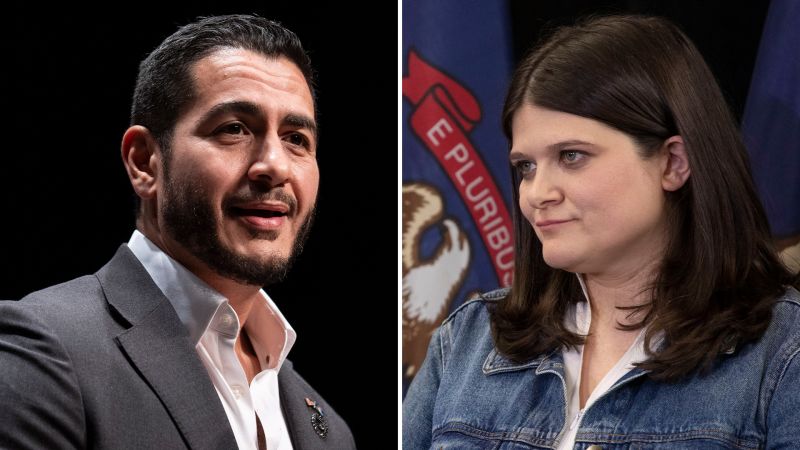
Chuck Schumer isn’t much for subtlety. When the Senate Democratic leader called retiring Sen. Gary Peters into his office in late June, Schumer went right to discussing the primary to succeed Peters in his home state of Michigan.
Schumer believed Abdul El-Sayed’s poll numbers had fallen from recent heights, suggesting there was a chance to beat the former Wayne County health director. He didn’t want El-Sayed, who is running hard from the Bernie Sanders and anti-Israel wings of the party, as the Democratic nominee both for ideological reasons and fears he would lose the November election to former Rep. Mike Rogers.
The three-way Democratic race was a mess, Schumer told Peters, and state Sen. Mallory McMorrow was clearly not going to win.
He never said it outright, but Peters walked away thinking his mission was to get McMorrow to drop out and give Rep. Haley Stevens a one-on-one matchup against El-Sayed.
Tuesday’s Michigan Senate primary has become a bitter, microcosmic referendum on many of the fights Democrats are having nationally. With McMorrow now out of the race, Stevens has talked up her experience working for former President Barack Obama and a need to drill down on manufacturing and other Michigan issues, all while being kept afloat by more than $50 million in outside spending. El-Sayed has built his campaign around promoting Medicare for All but also targeting the American Israel Public Affairs Committee and other outside interests that have tried to stop him.