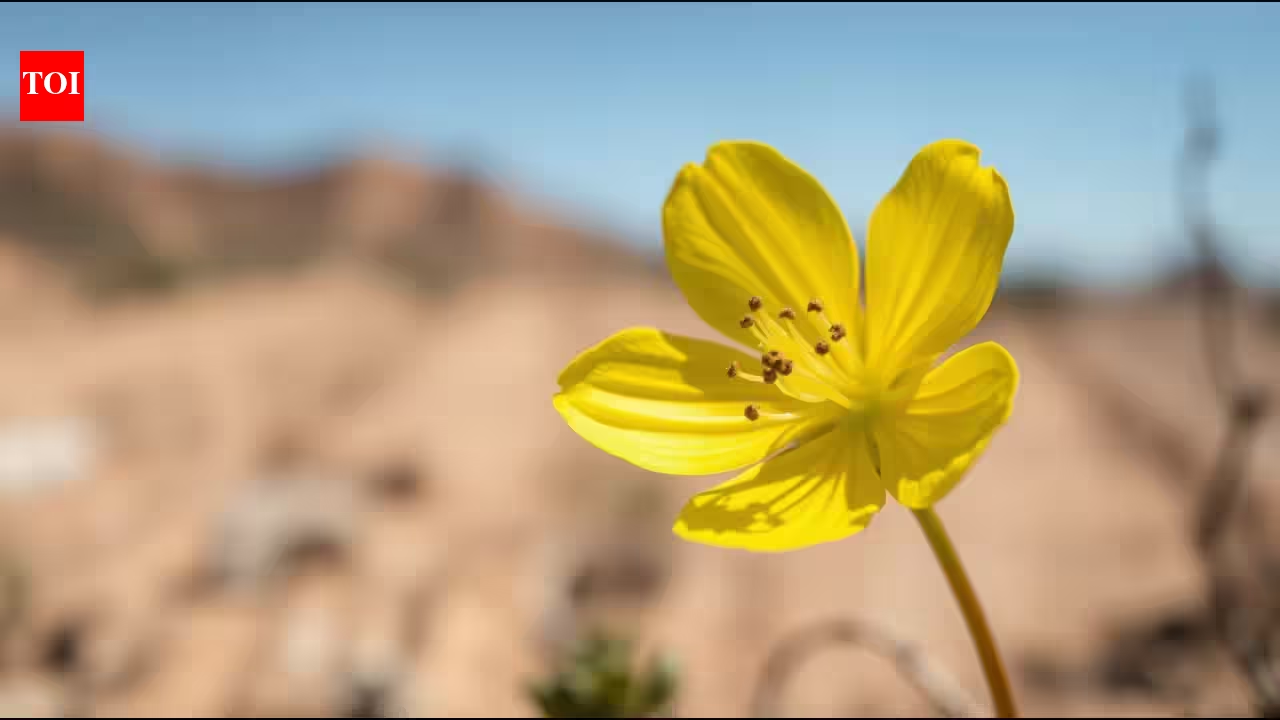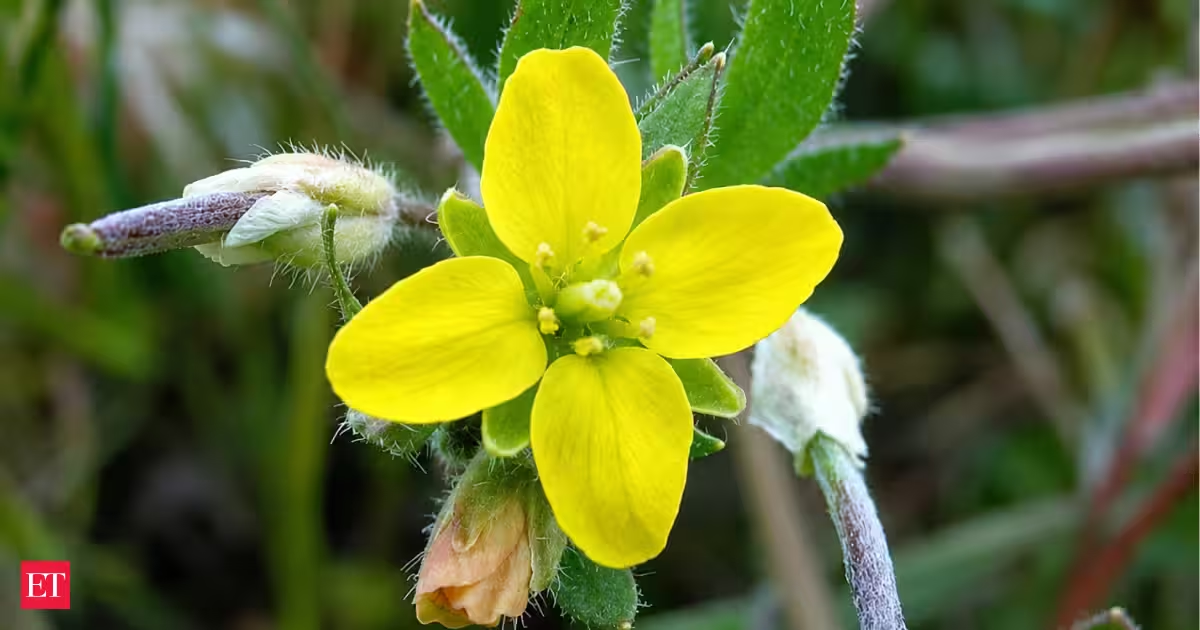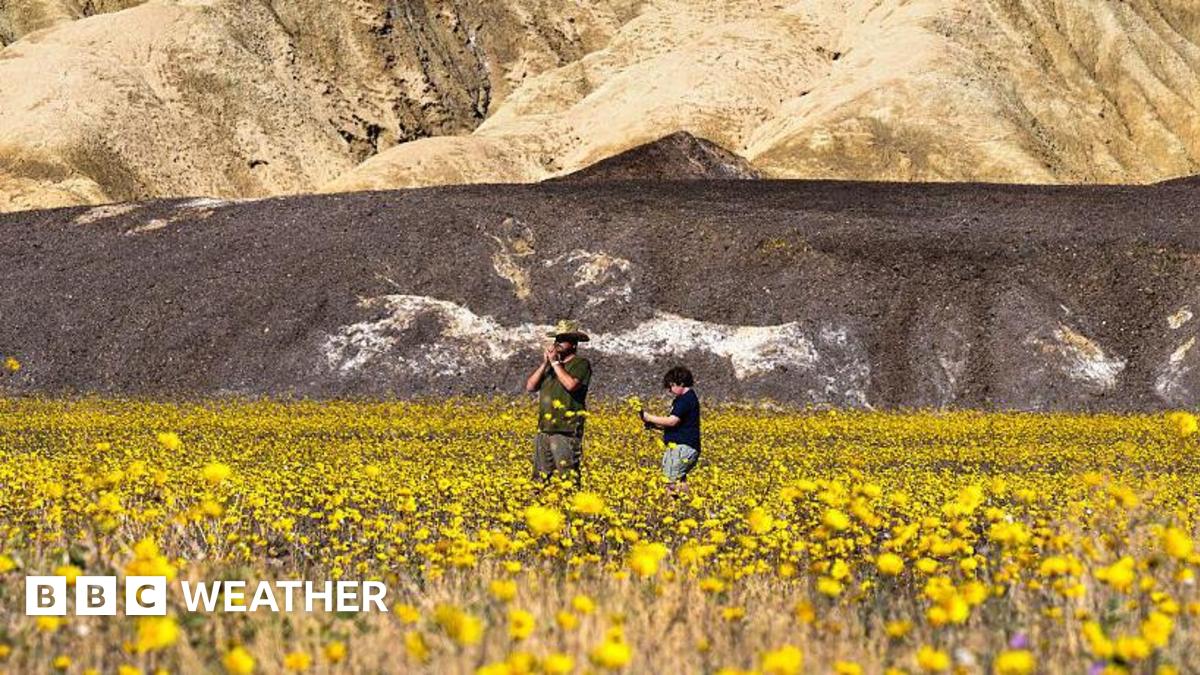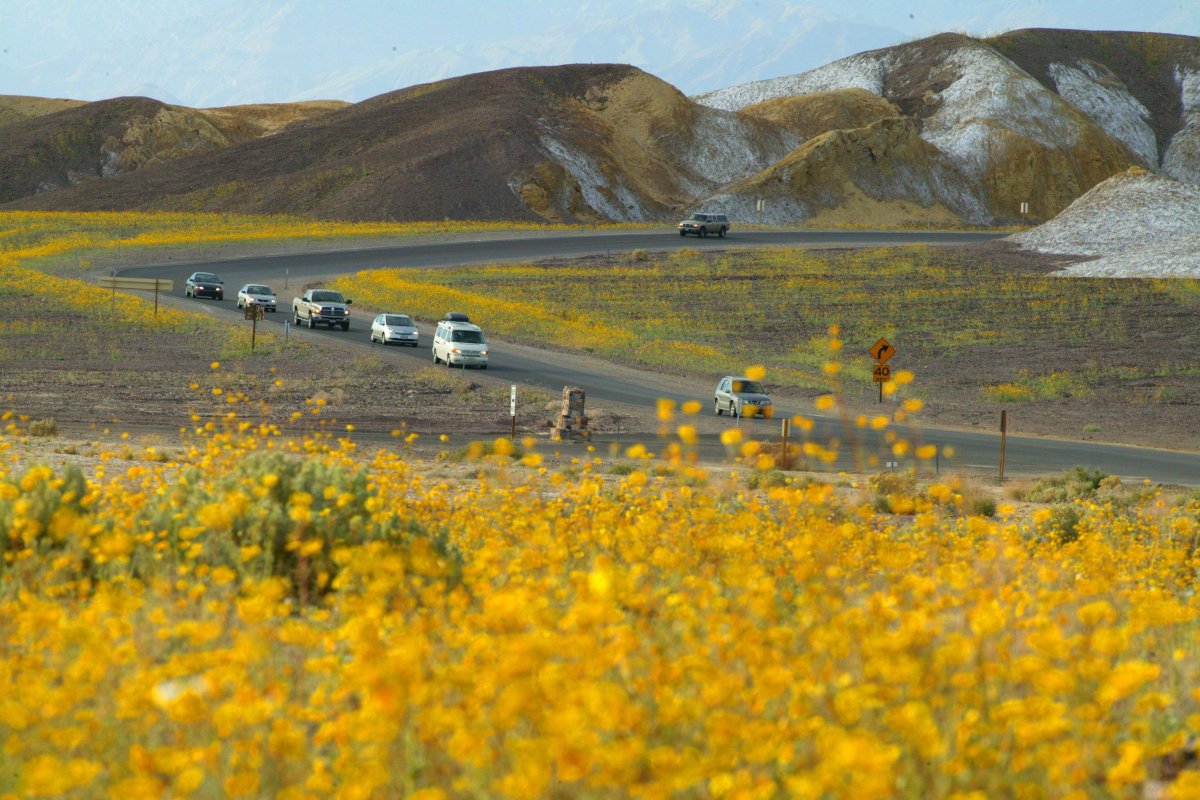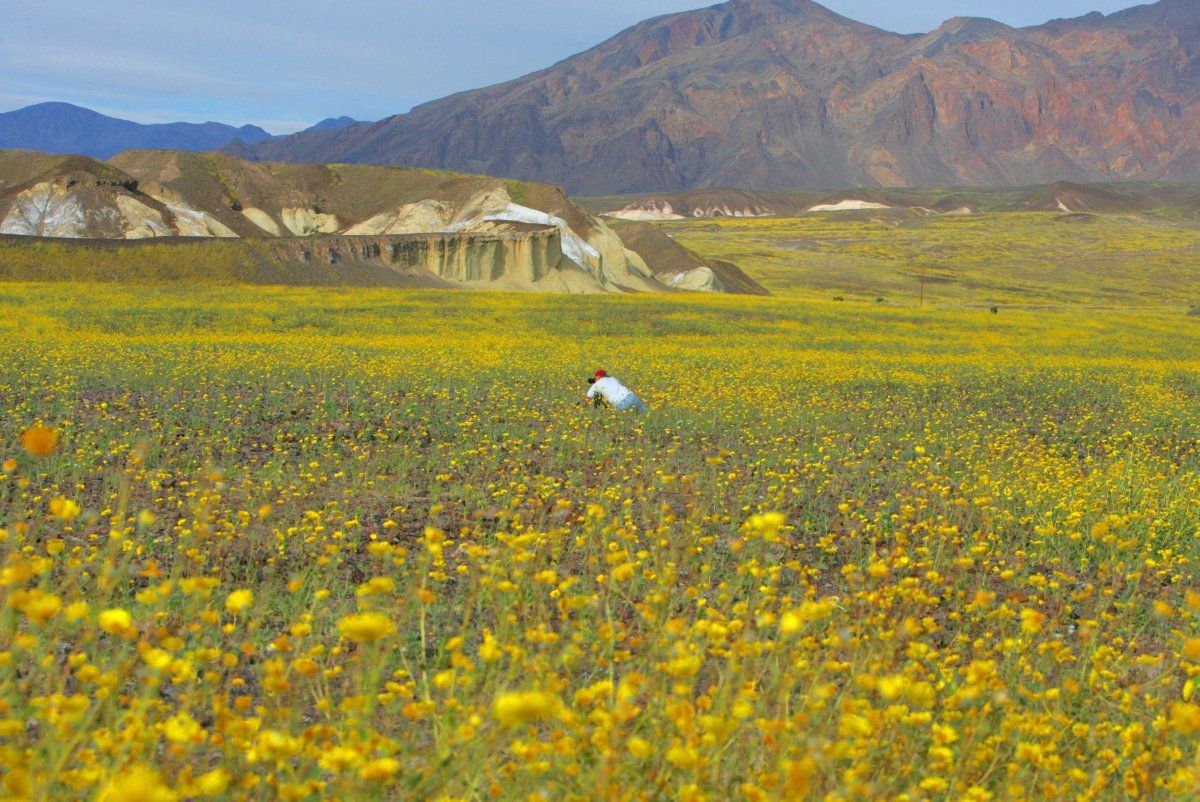
T. oblongifolia growing in Death Valley, California, photographed as part of a previous study on the plant. (Karine Prado)
Hike through Death Valley, a desert basin in California and parts of Nevada, and you're guaranteed to see wall-to-wall colorful geology.But it's also well-known for being the lowest, driest, and hottest place in North America. By hottest, that means that not only do normal daily temps hit 49 °C (120 °F) in the summer, but it's reported to have reached as high as 56.7 °C (134.1 °F). So, unsurprisingly, there are vast areas of the park where no plants grow at all. But one species of flora has adapted especially well to these punishing conditions: Tidestromia oblongifolia (AKA Arizona honeysweet), a scrubby native flowering plant. Think of extreme heat-loving organisms, and you'd probably picture microbes flourishing in hot springs or deep-sea hydrothermal vents. Complex plants and animals have far more moving parts to coordinate, making extreme heat much harder to survive.Key to its ability to survive very high temps, a new preprint study has found, is the fact that the honeysweet can significantly cool its own leaves well below the temperature of the surrounding air.It cools itself so effectively that it can survive temperatures brushing up against the upper limit of what complex life can tolerate, which is 60 °C (140 °F).