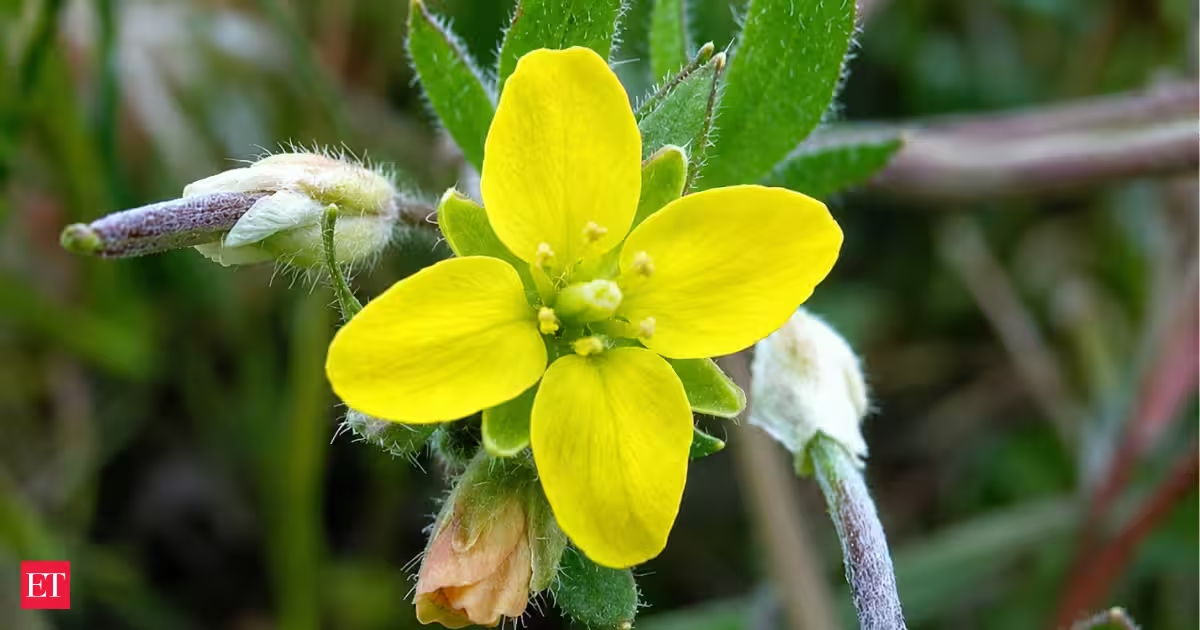
A tiny yellow flower that hadn't been seen on California's public land in 68 years just made a comeback. And cows may have helped clear the way.According to this report, botanist Heath Bartosh and his colleague Spencer Adams found the caper-fruited Tropidocarpum on a ridge top in the Vasco Hills Regional Preserve in Contra Costa County, California, in March 2025. It was one of only two known populations of the species in the East Bay, and each held fewer than 20 plants.If you're picturing something dramatic, don't. This flower is small, part of the mustard family, and easy to walk right past. But for conservationists, its return is a big deal.A flower gone since Eisenhower was in the White HouseThe caper-fruited Tropidocarpum was first collected in 1888 by Edward Lee Greene, a botany professor at UC Berkeley. He described it as common along the San Joaquin River in Contra Costa County. That didn't last.Over the next several decades, non-native grasses and weeds moved in and crowded it out. By about 1957, the sightings had pretty much stopped. It only survived in a few scattered pockets, mostly on private land, with a handful of individuals spotted nearby as recently as 2023. The report notes that a few plants have also been discovered in Monterey and San Luis Obispo counties throughout the decades, but the East Bay populations remain few and small.The plant is currently listed as 1B.1, rare, threatened or endangered in California and elsewhere. This ranking is maintained by the California Native Plant Society and is used by state and federal agencies for conservation planning, according to the CNPS Rare Plant Inventory.Grazing cattle at Vasco Hills help control invasive species and reduce wildfire fuel. Image Credits: PexelsEnter the cowsThis land is not an untouched wilderness. It’s a working landscape, and part of how the park district manages it is by bringing in cattle to graze.This might seem counterintuitive. Is grazing not bad for sensitive habitats? Not always. The land where the plant appeared is partly managed by cattle grazing, which removes dead plant material and non-native species, the report noted. The practice also helps cut down fuel for wildfires, which have grown larger and more frequent across California in recent decades.This isn’t just a local hunch. The broader idea that grazing can affect which plants can grow is supported by peer-reviewed studies. The 2016 study, ‘Prefire grazing by cattle increases postfire resistance to exotic annual grass (Bromus tectorum) invasion and dominance for decades,’ in Ecology and Evolution by Kirk Davies and team, found that cattle grazing before a wildfire increased the resistance of rangeland to invasion by cheatgrass, an aggressive non-native grass, for years after the fire. Their study doesn’t cover this exact flower, but it supports the broader pattern: keeping invasive grasses in check can create space for native plants to persist.In the study, the team resampled shrub-grassland plots in the northern Great Basin that had been either moderately grazed by cattle or ungrazed since 1936, then burned them in 1993 and measured plant response 19 to 22 years later. Before the fire, cheatgrass cover was under 0.5%, but by two decades postfire it dominated the ungrazed plots; grazed sites instead retained more native bunchgrasses, higher species richness, and more biological soil crust.So that’s the story of Vasco Hills. The small, scattered population of tropidocarpum has likely been outcompeted by invasive grasses for decades. Grazing managed to reduce the level of competition, and the flower was able to be rediscovered by botanists.California grasslands like this one are quietly disappearing and quietly fighting back. Image Credits: Wikimedia CommonsWhy should you care about a random flower?Native plants are actually rare, and form the base of local food webs. These plants support specific insects, and those insects support birds and other wildlife. The loss of a single small plant is seldom just the loss of that one plant.It’s also an important indicator that conservation efforts are having an impact, rather than being theoretical. The report said the find underscores the importance of protecting and caring for native plants on public land, said Bartosh, who works for Nomad Ecology, a private ecological consulting firm and was conducting the botanical survey on behalf of the East Contra Costa County Habitat Conservancy.Currently, scientists know of only two populations of this flower in the East Bay, each with fewer than 20 plants. This is a small population, and conservationists plan to keep monitoring the site because the plant is annual and may not appear every year.The bigger pictureYou don't need to care about botany to appreciate this story. It’s a reminder that ecosystems are complex, chaotic places, and that the future may be shaped in unexpected ways. A grazing cow, a wildfire-prevention strategy, and a flower that vanished under the radar for 68 years all turned out to be part of the same story.Sometimes, protecting the environment doesn’t mean getting rid of everything. Sometimes it means figuring out the right way to let a little bit back in.
Rare yellow flower unseen on California public land for 68 years resurfaces after cattle clear invasive weeds
A rare yellow flower not seen for 68 years has been rediscovered on California's public land. The caper-fruited Tropidocarpum's return is attributed to grazing cattle that cleared invasive plants, allowing this endangered species to thrive again. Conservation efforts are crucial as ecosystems reveal surprising interconnections.
832 words~4 min read