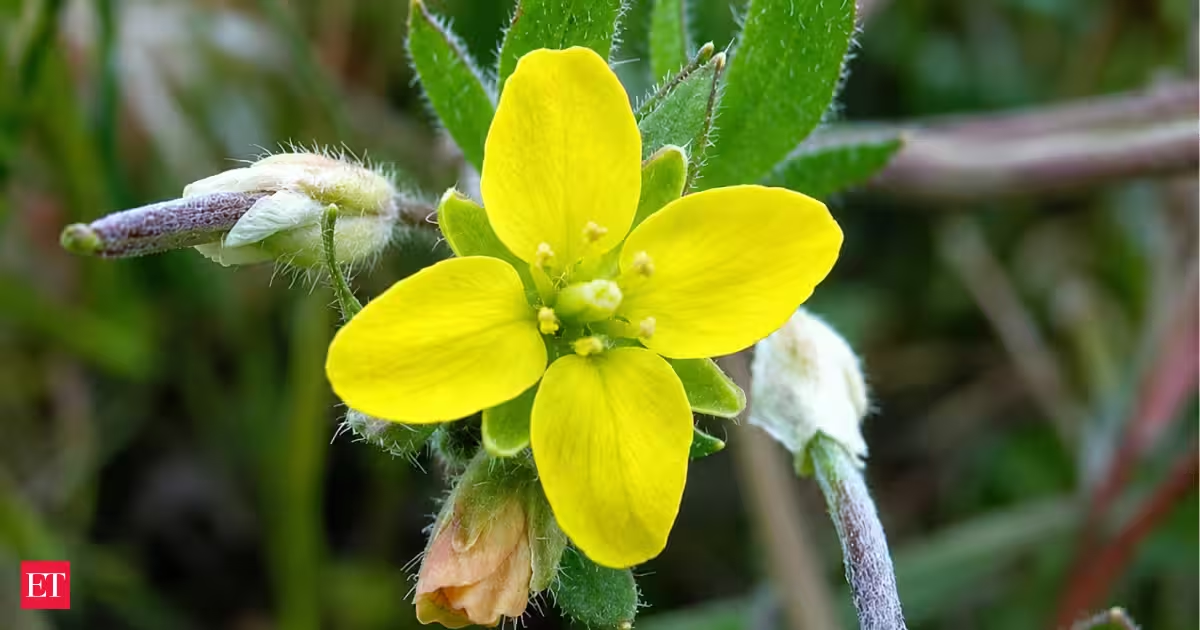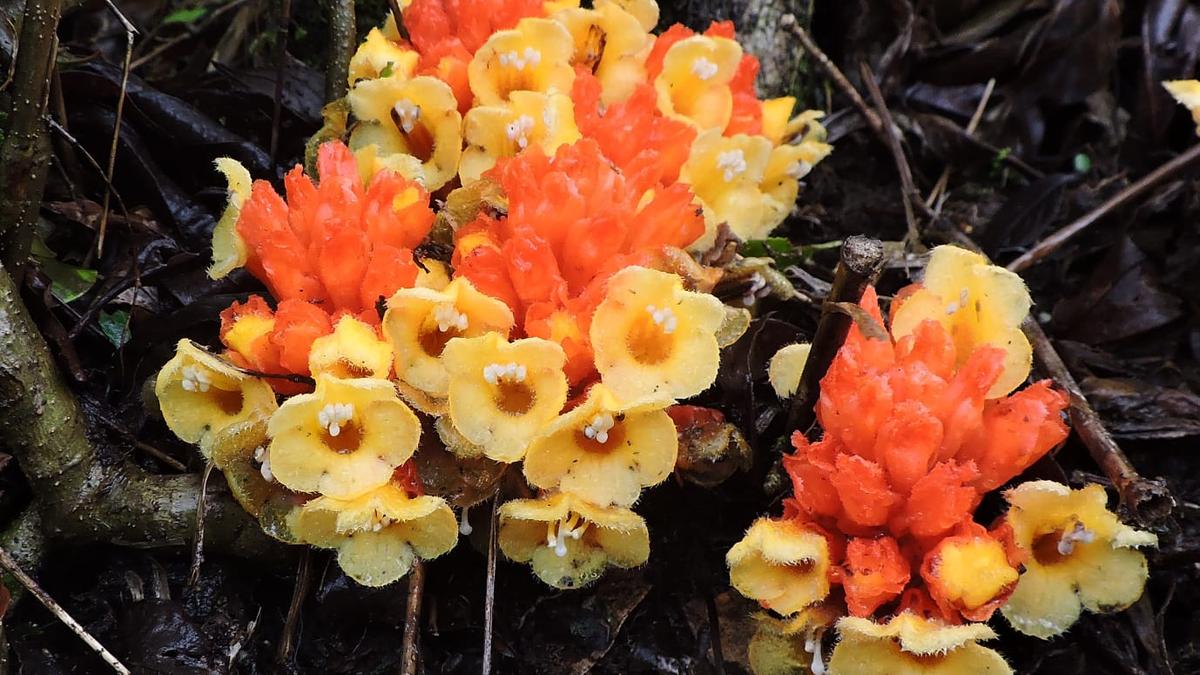
A parasitic plant with vibrant orange and yellow flowers that was long thought extinct in the wild has been rediscovered after around 175 years from Kerala’s Wayanad district.
Researchers have identified the plant, first collected and described in 1849 from Naduvattam in Tamil Nadu by the Scottish Botanist Robert Wight, as Campbellia aurantiaca (family Orobanchaceae). The plant has now been rediscovered from a forest region that lies less than five km from Chooralmala and Mundakkai, the sites of the deadly landslides of July 30, 2024.
A paper on its rediscovery by Salim Pichan of the M.S. Swaminathan Research Foundation; Jose Mathew, P.T. Arunraj and V.N. Sanjai from the Department of Botany, Sanatana Dharma College, Alappuzha, and B. Gopallawa from the University of Peradeniya, Sri Lanka, has been published in Kew Bulletin, the official journal of the Royal Botanic Gardens, Kew, England.
Although Wight had established the genus Campbellia with C. aurantiaca as its type species, its taxonomic status had become entangled in uncertainty due to divergent interpretations by subsequent taxonomists. The big challenge before the present-day researchers was verifying beyond any doubt that plant specimens collected in 2022-23 from the Thollayiram forest region in Wayanad was indeed the one described by Wight.