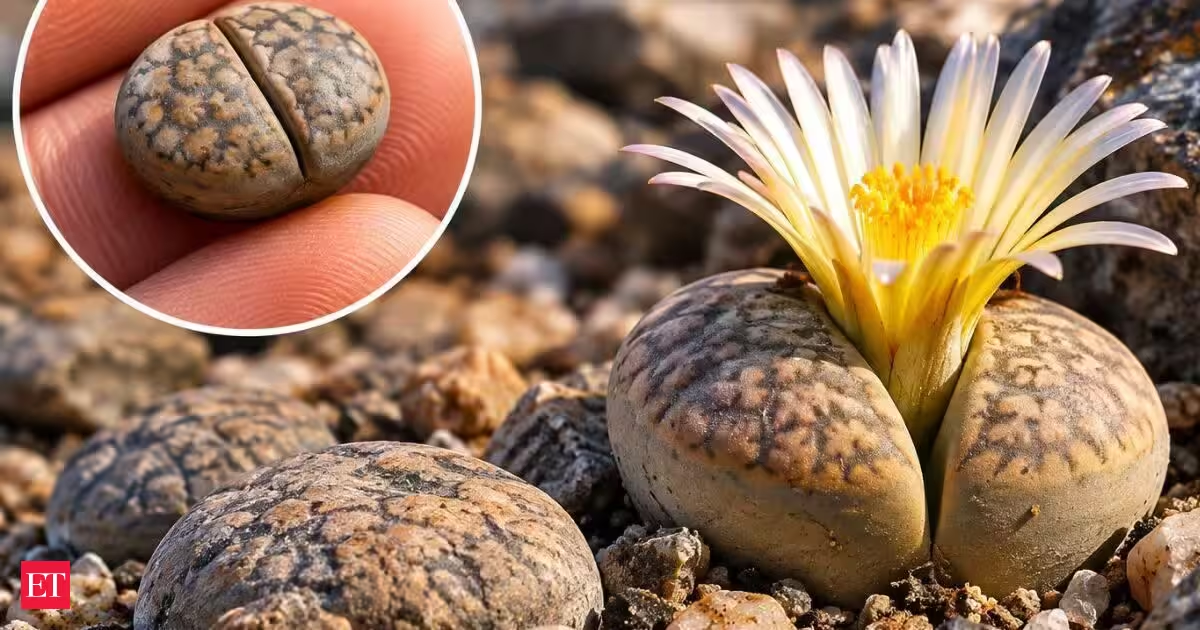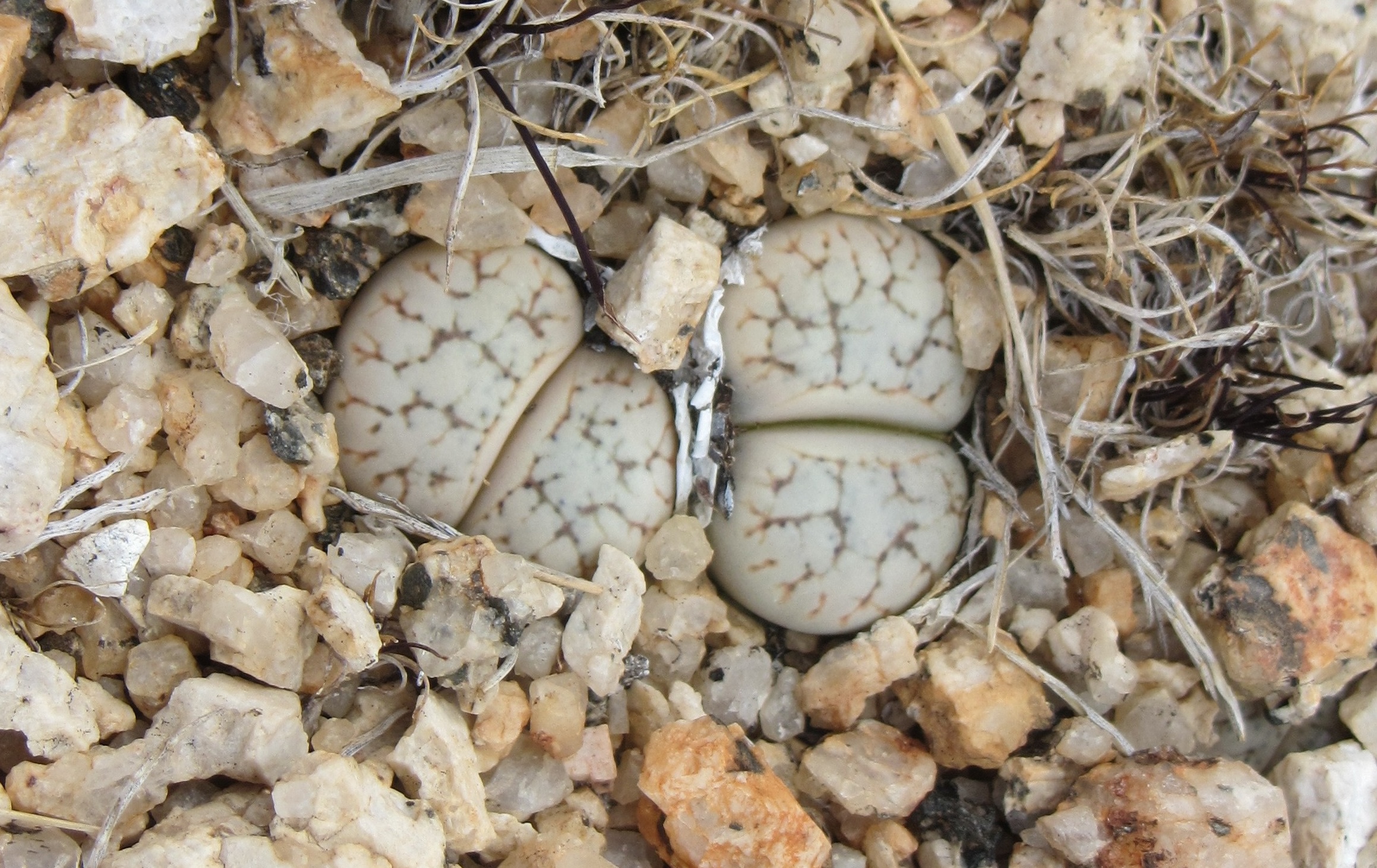
In a small area of Namibia’s Erongo Mountains, a tiny, pebble-like plant grows on a very thin layer of gravel.
This succulent, Lithops werneri, is found in just one tiny 4 square-kilometer (1.5 square-mile) area, according to the IUCN, the global wildlife conservation authority.
With more than an 80% decline in its population since 1981 and fewer than 200 plants remaining in the wild, the species was listed as critically endangered on the IUCN Red List in February 2026.
Sonja Loots, manager of the Threatened Plants Programme at Namibia’s National Botanical Research Institute, told Mongabay by email that the plant “has always had a restricted range”.
After it was first scientifically described in the 1950s, the succulent was “heavily harvested for the horticulture market in Europe”, she said. “Since then it was searched for numerous times by several succulent enthusiasts, but additional populations were never discovered.”