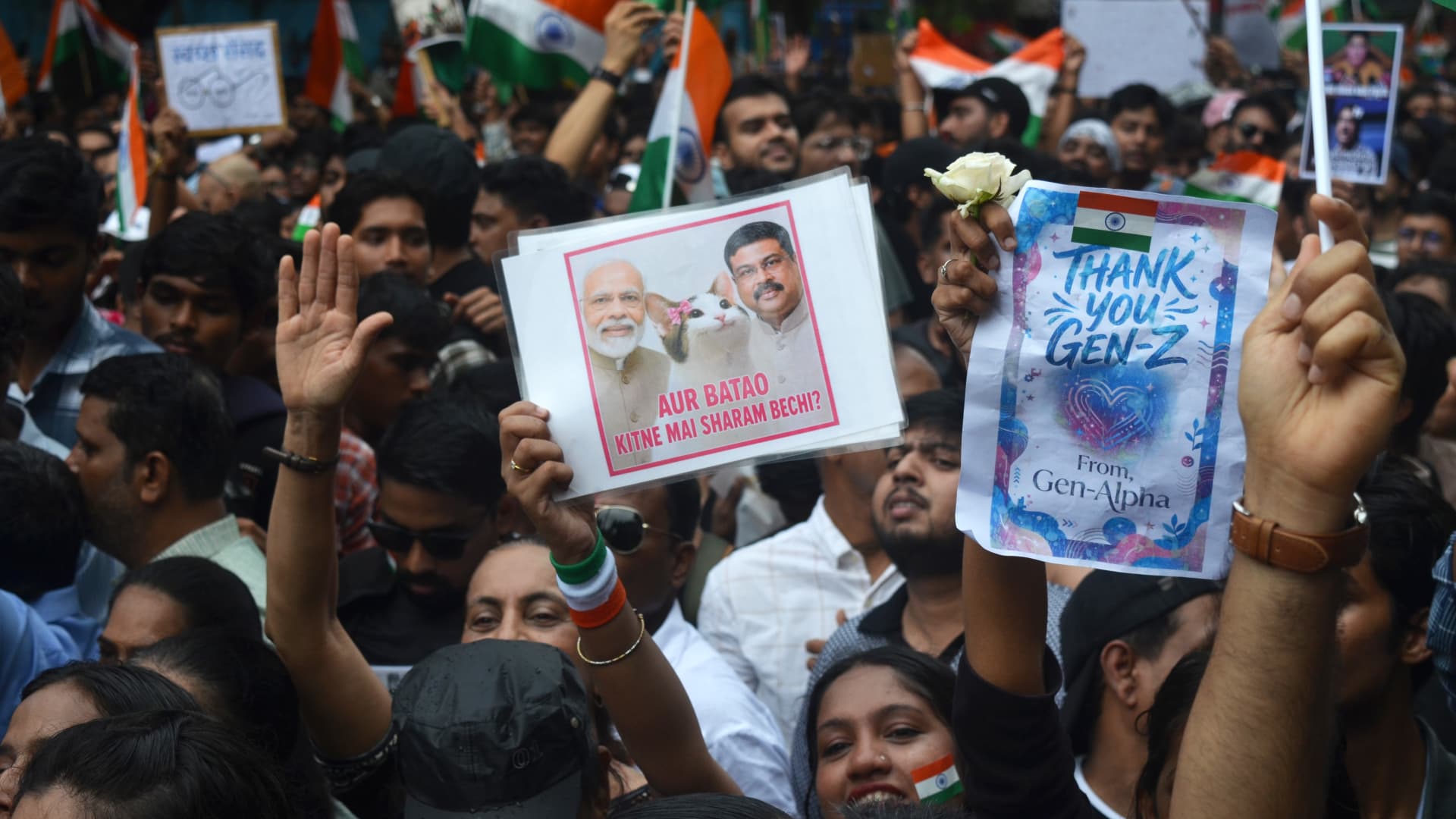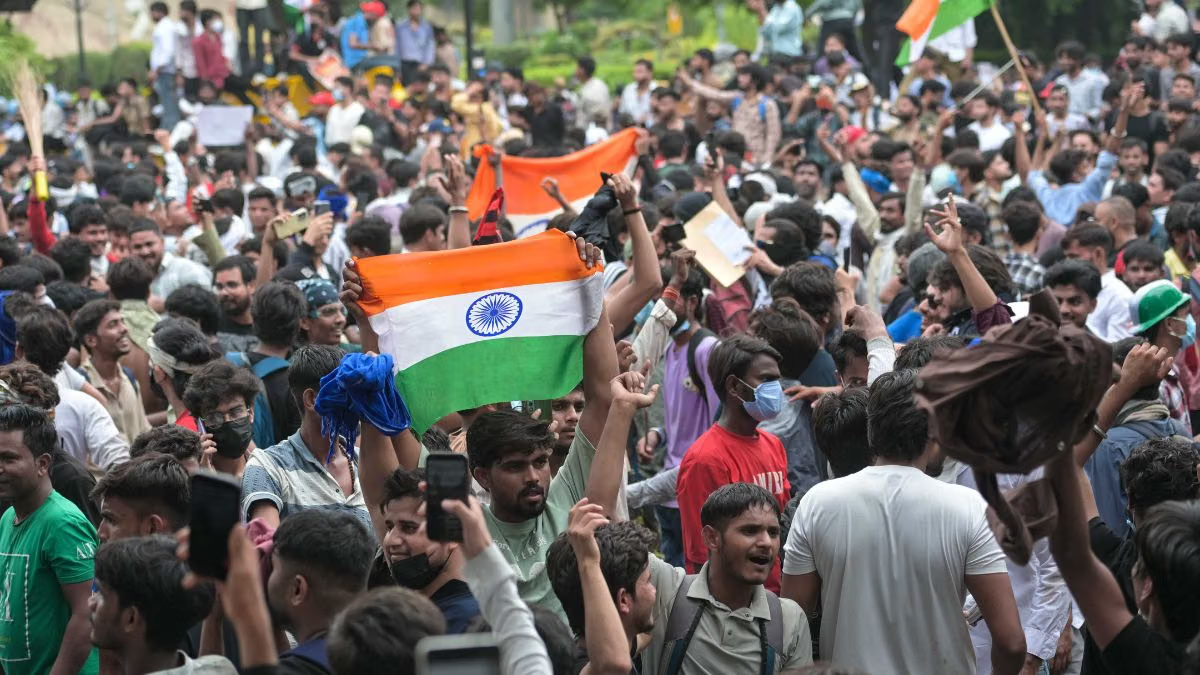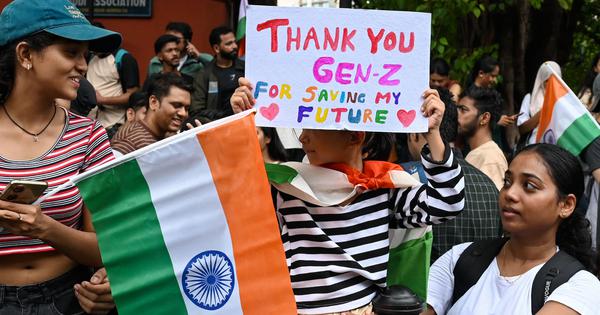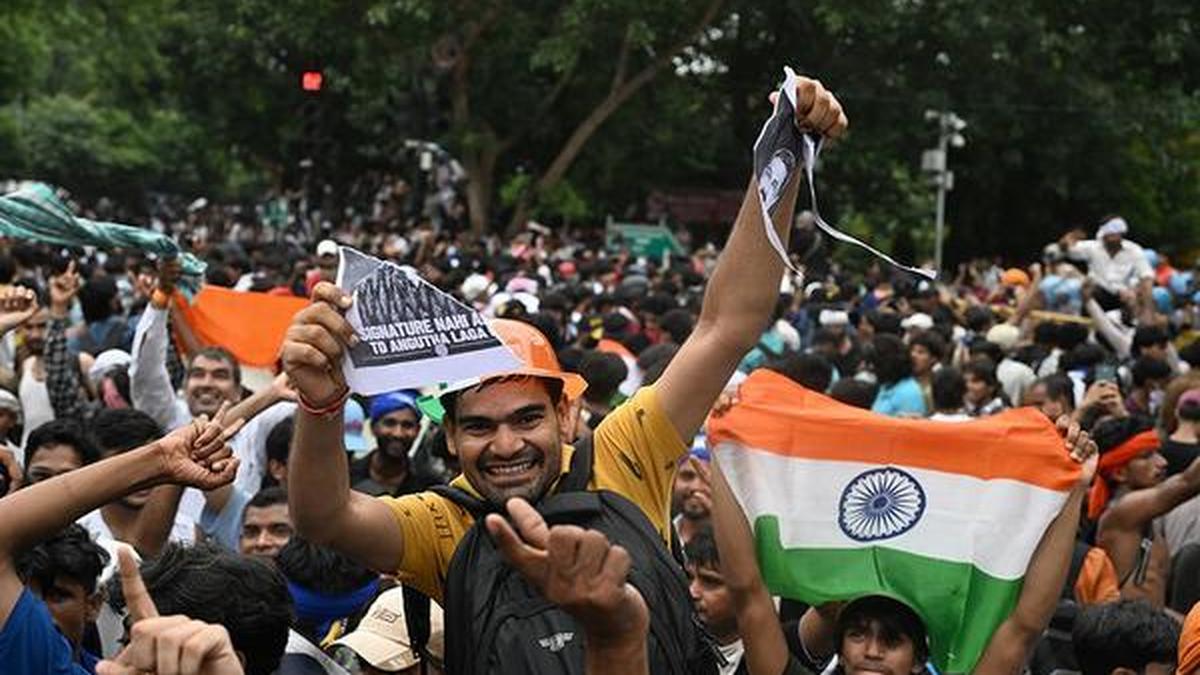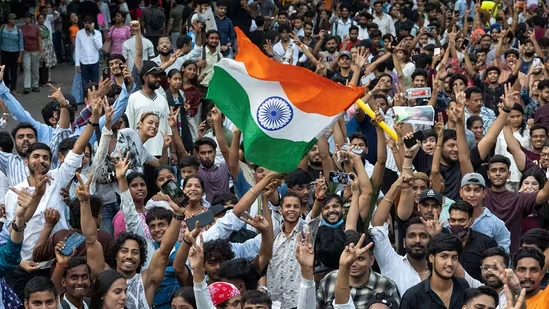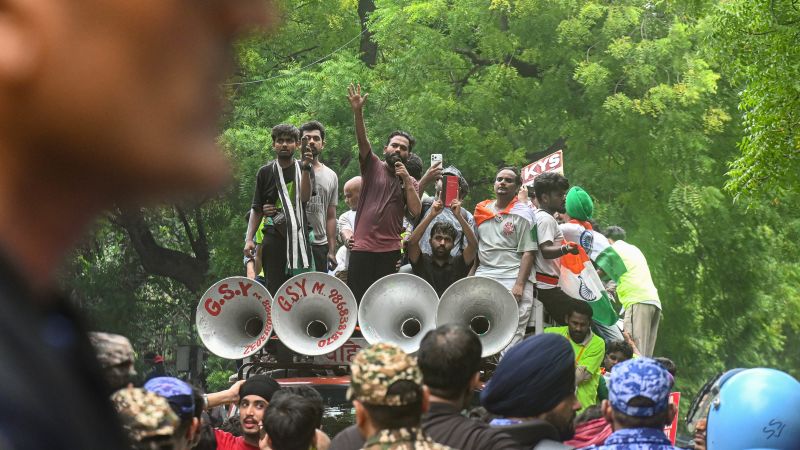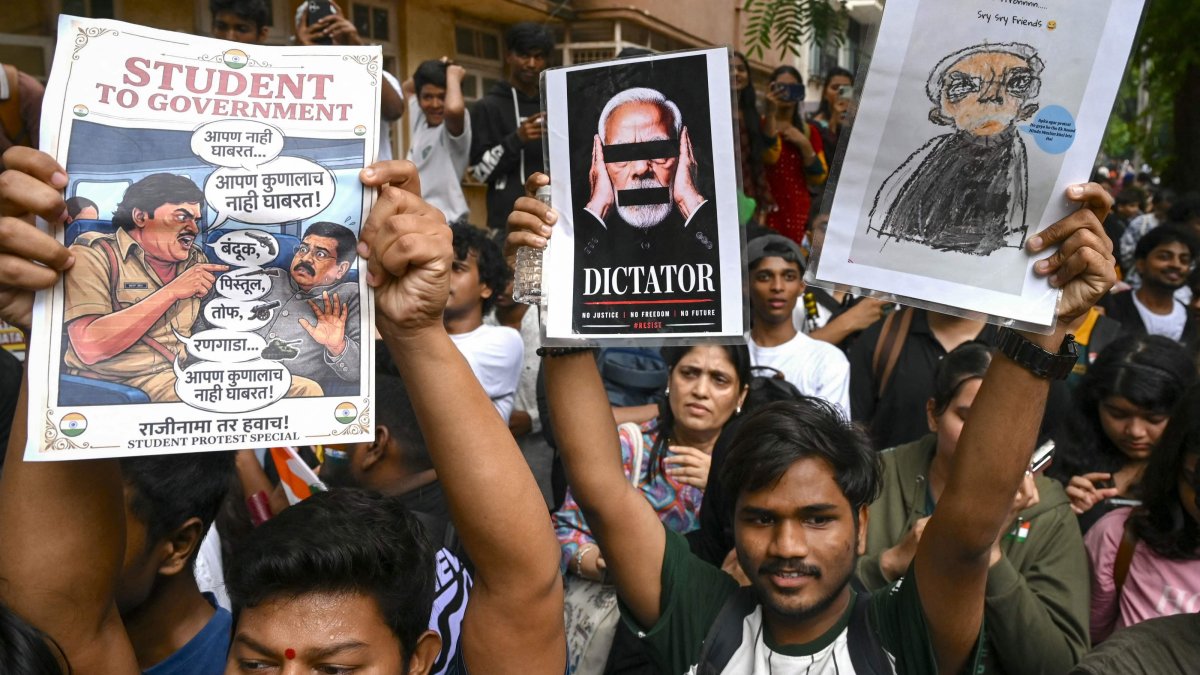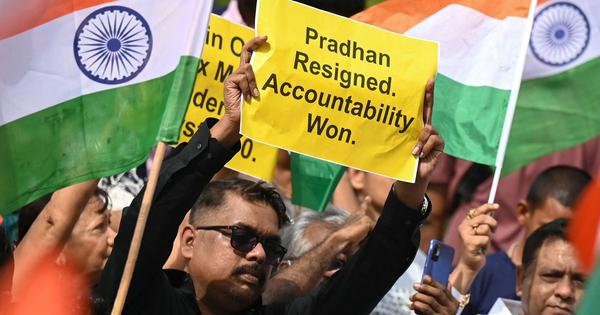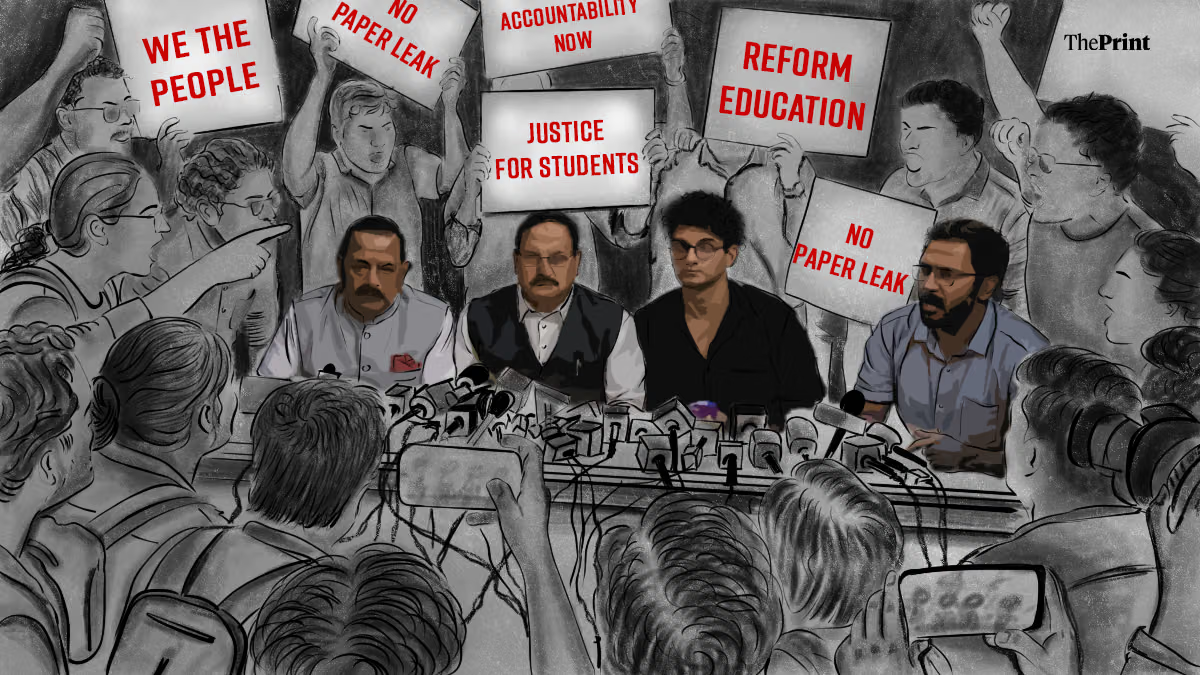
Depending on where your politics comes from you might see Jantar Mantar as a revolution, or as a passing sandstorm. My arguments won’t change any minds. I shall try, however, to say what’s happened and what hasn’t.
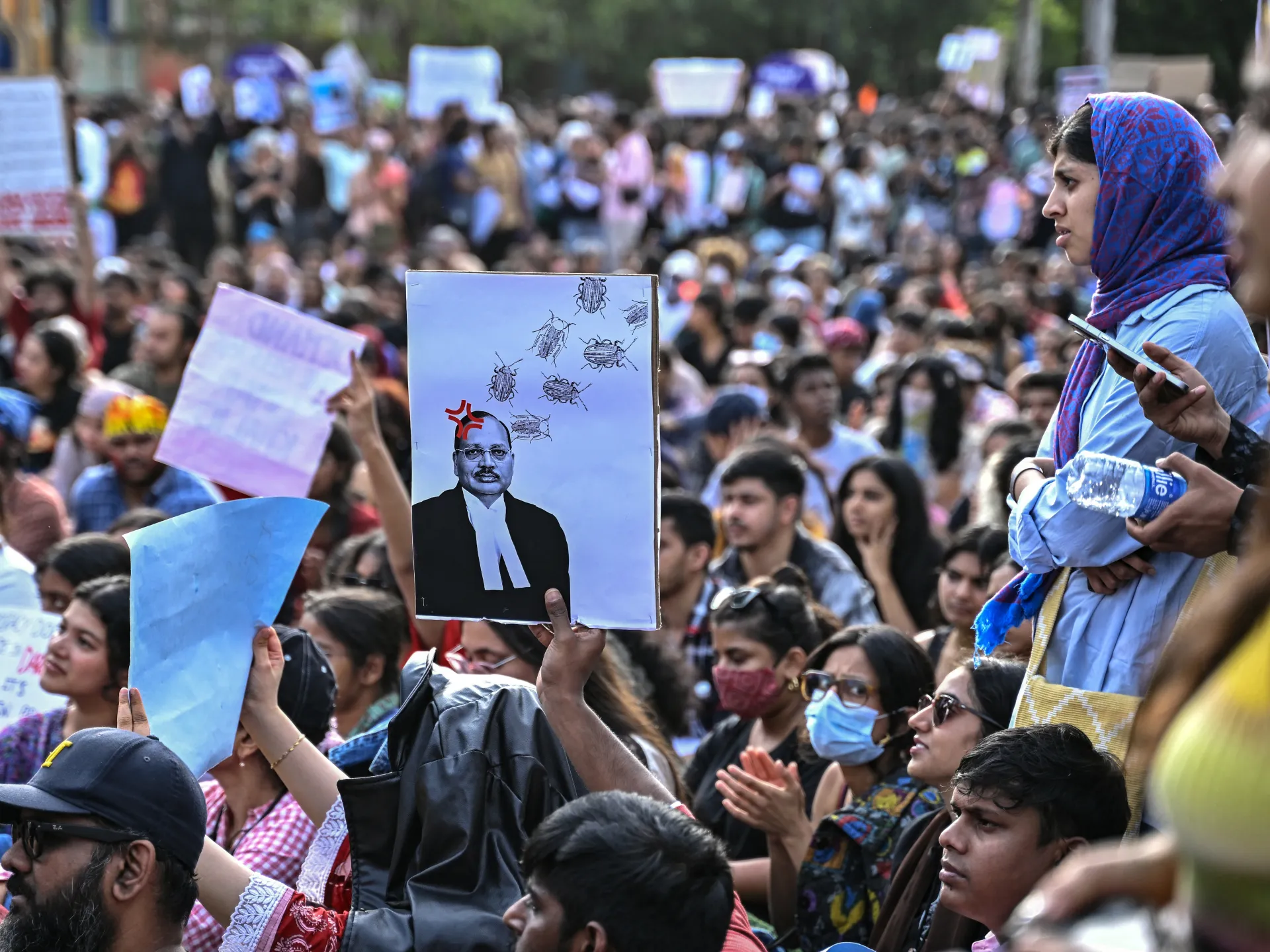
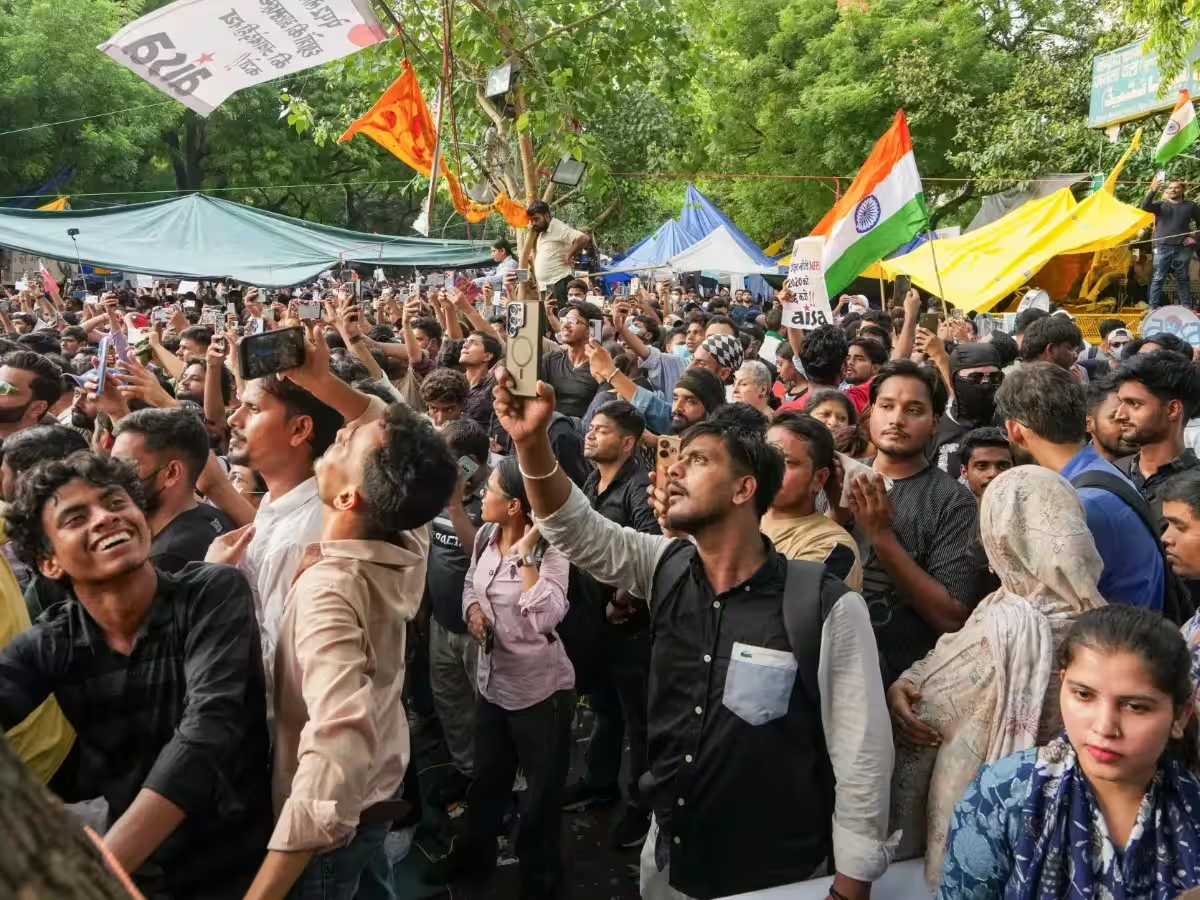
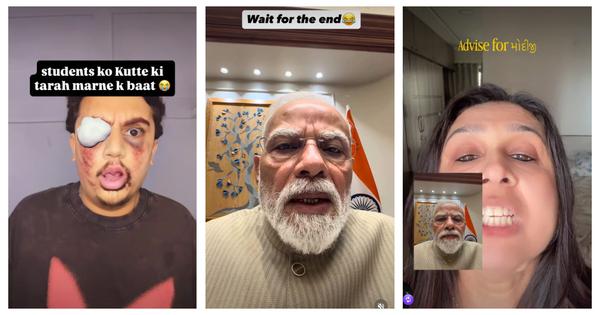
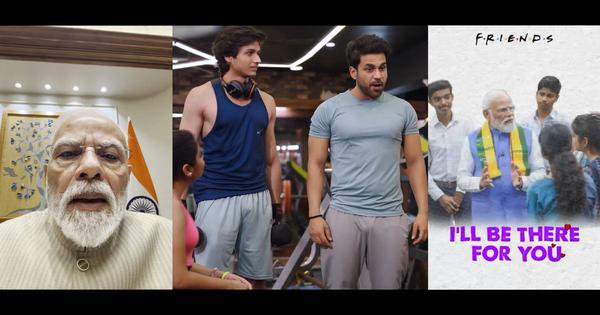
Certainly, what’s happened is the first public, in-your-face defiance and ridiculing of the Modi government. If they responded with such alacrity after the violence of 20 July, it was essentially because they realised that well over 95 percent of the protesting youth, or mostly children, were from the Hindu middle and upper-middle classes.This is their core vote base. You can use the Gen Z label and continue to trivialise their revolt by shifting all discussion, especially on TV news, to their language, slang, gaalis and so on. Even a hundred ‘discussions’ on how differently ‘this’ Gen Z thinks won’t trivialise the defiance they demonstrated.
First of all, it was defiance in the face of much physical risk, evident in their resolve to return to Jantar Mantar even after the beatings on 20 July.And second, a nearly reckless loss of fear as to what this might mean for their careers going ahead. This was the angriest student protest in New Delhi after the anti-Mandal agitation in V.P. Singh’s short tenure, that saw the Gen Z-equivalent of that period protesting and some even attempting self-immolation (Surinder Singh Chauhan, Rajeev Goswami died).In both cases, the impulse was the same: career prospects, jobs and education. The first was avowedly ‘upper caste’, this one the relatively upper-middle English-speaking meme-making classes. Both generations, nearly four decades apart, showed no fear of the police or repression.So, to sum up, this is what has happened. These young people broke the self-imposed silence among the elites not to speak a word critical of the Modi government, except whisper on the sidelines, looking left, right and behind. This was as in-your-face as it can be. And it isn’t going to stop. They also showed that there’s a large demographic that isn’t impressed with slogans of Viksit Bharat or Amrit Kaal. By 2047, the oldest Gen Z-er today will be 50. And the youngest 35. Their lives would’ve passed them by. Who has patience to wait that long? Definitely not this generation of Indians, or young people anywhere. Contrarily, it might work with a middle or upper-middle class BJP voter in the 50-plus age group. The target has been set too far in the future for the old to check out, so Modi government is safe. The children can’t look that far. We need to note that a child who was 3-years-old in 2014, when Modi first took power, will vote in 2029.There was a touching notion among many Modi critics that India was having its own Colombo/Dhaka/Kathmandu moment. This showed a disrespect for Indian democracy, the robustness of its ‘system’, as well as a delusional view of how easy it might be to push an elected government out.