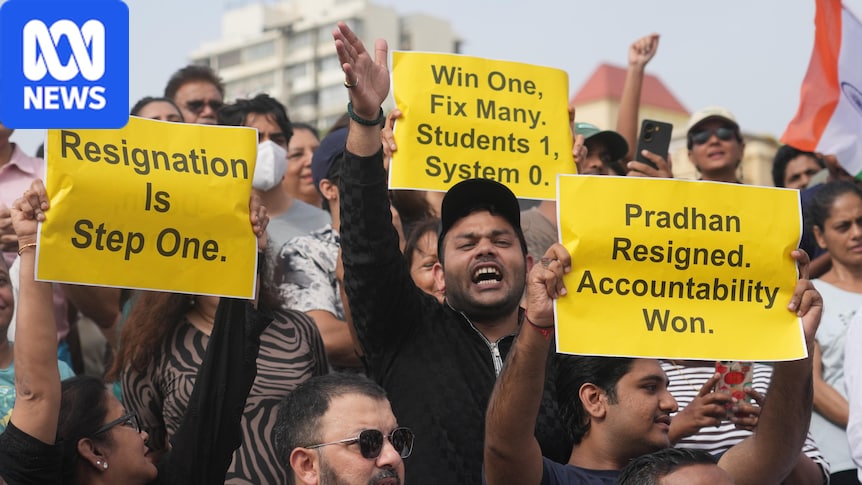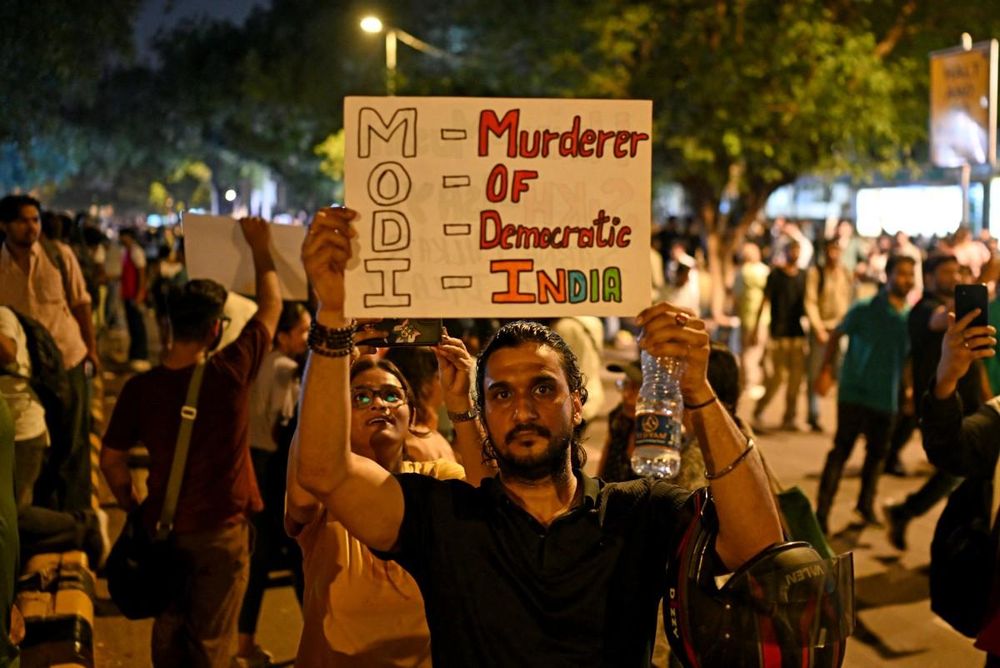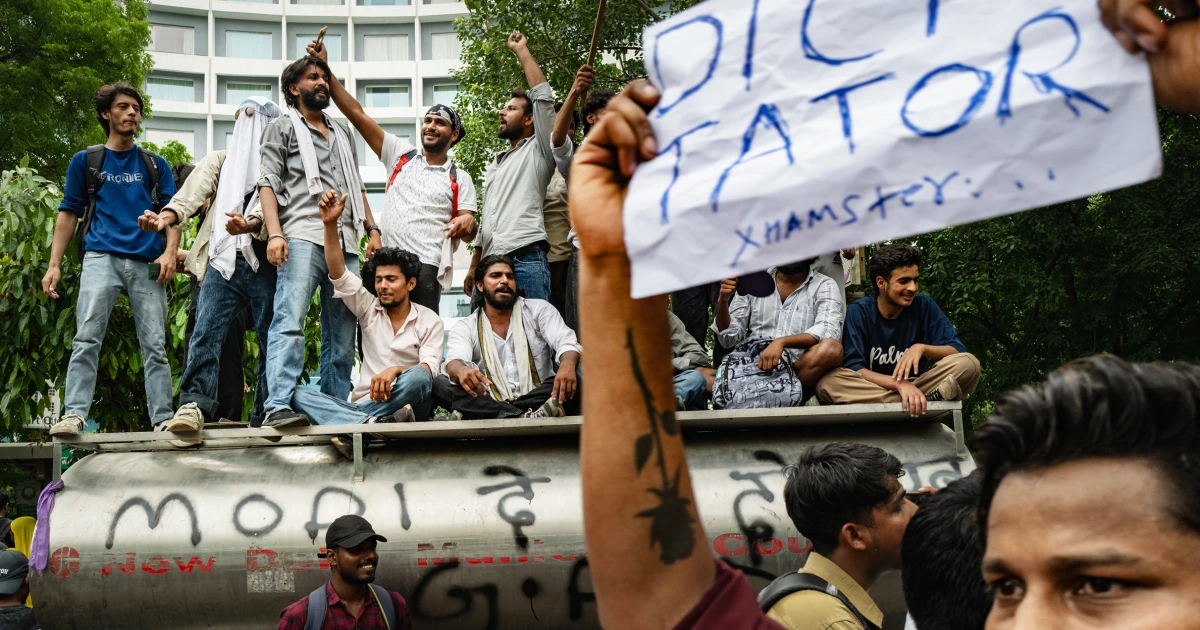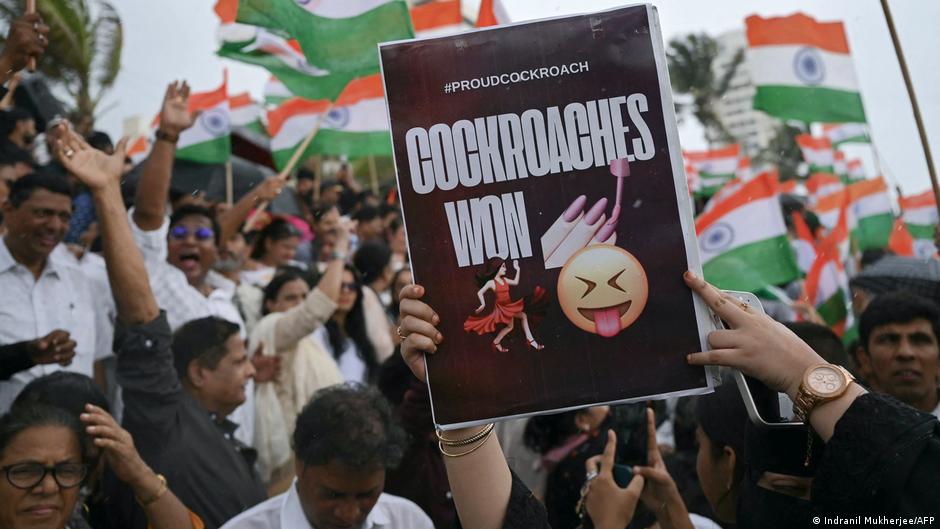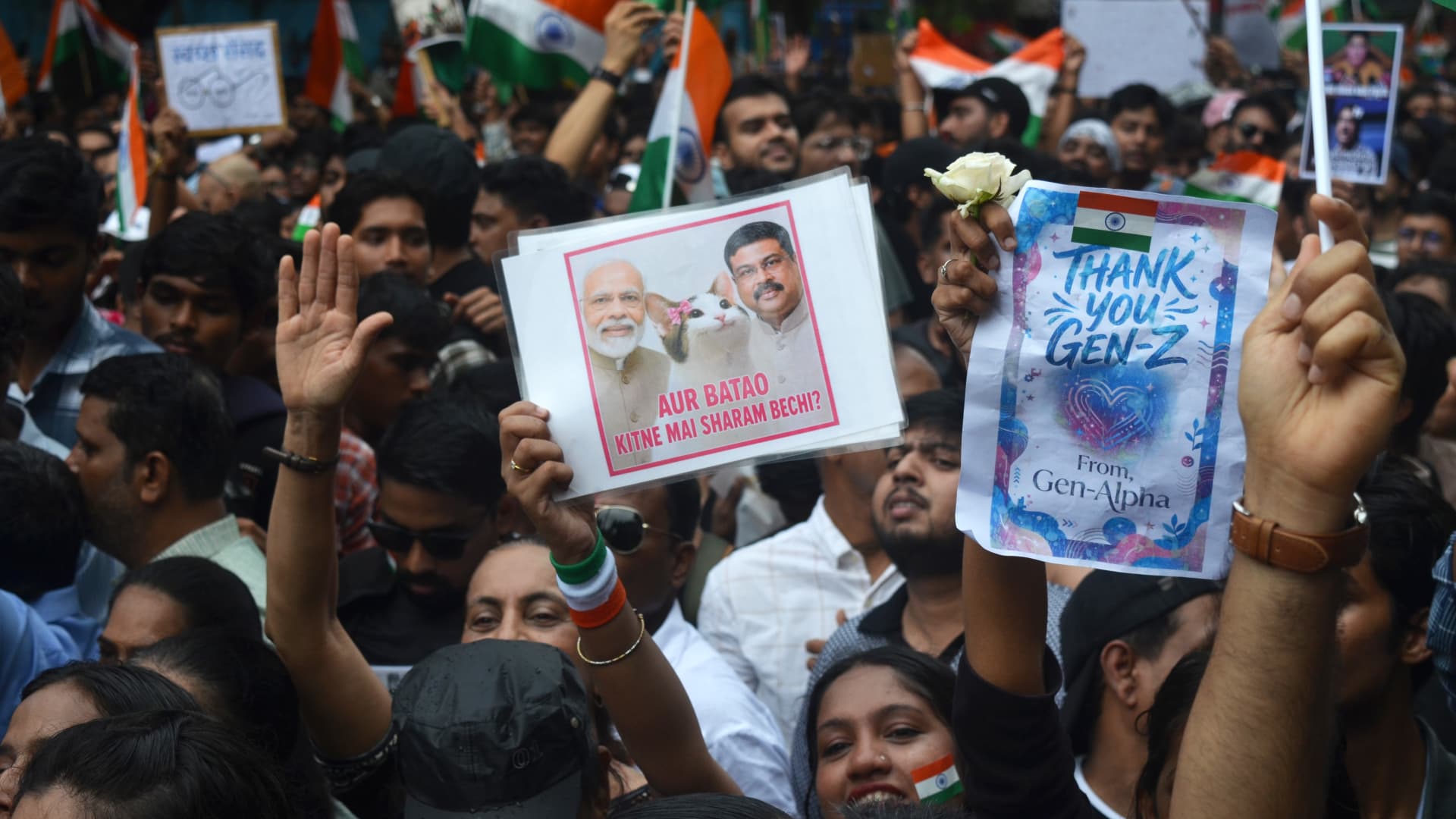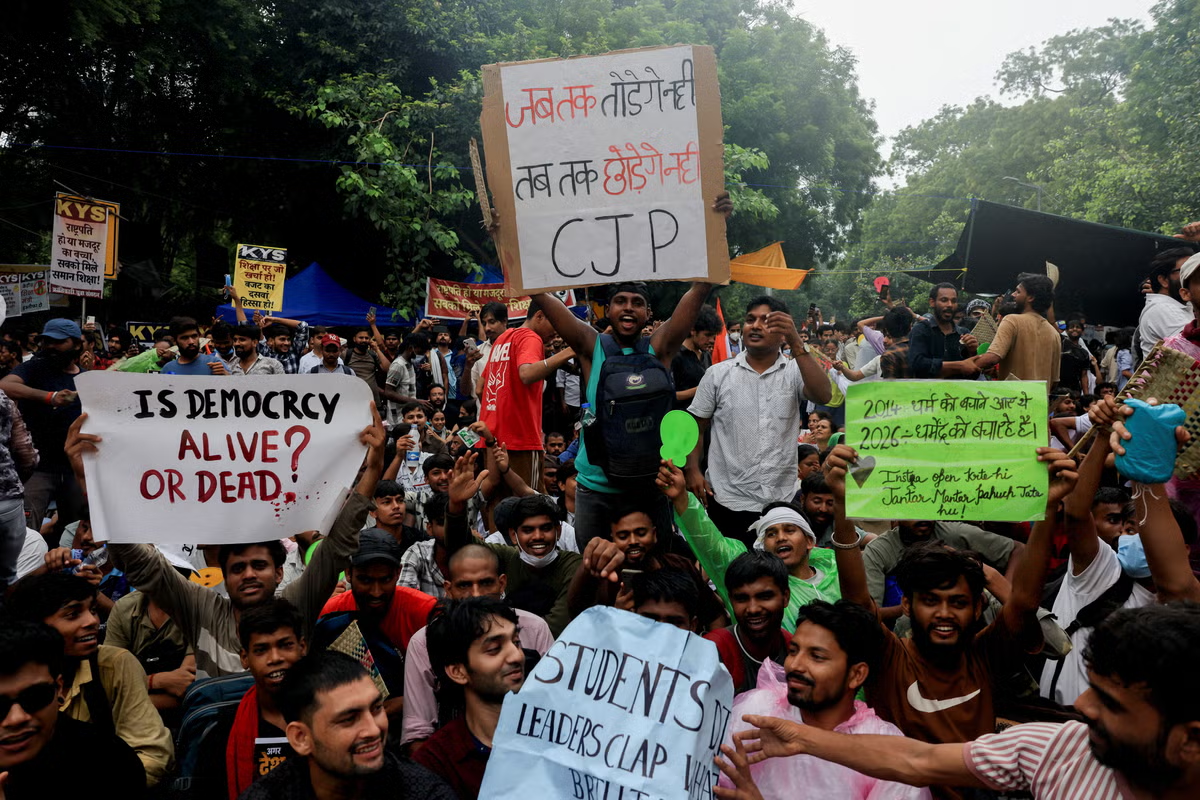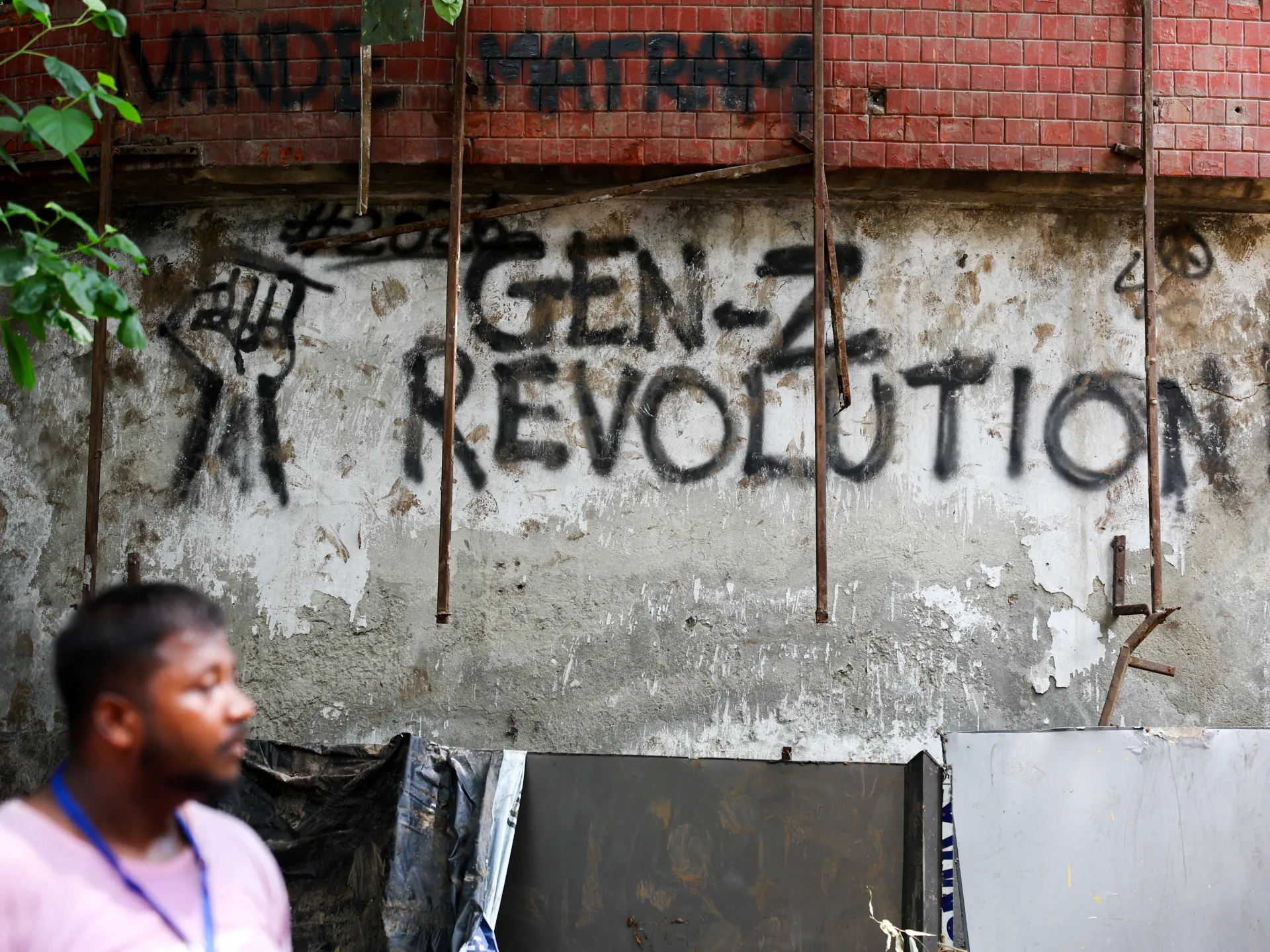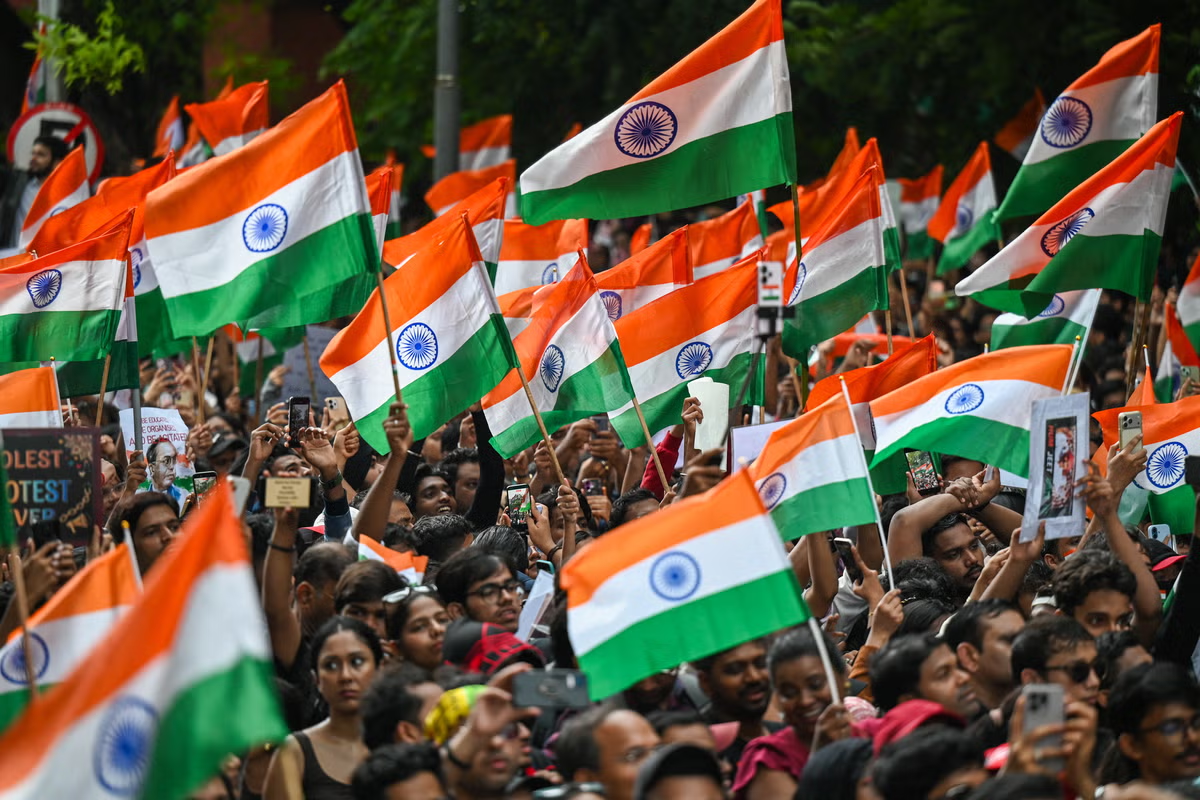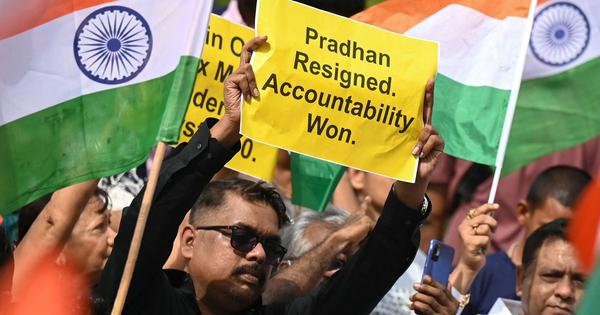
In a little over a month, the Cockroach Janata Party-led student movement that began as a joke held one of the world’s most immovable governments to a single demand and won. When Dharmendra Pradhan resigned as education minister on July 25, the students who had occupied Jantar Mantar wept and embraced. Abhijeet Dipke, who founded the movement, fell to his knees.Since coming to power in 2014, the Bharatiya Janata Party government has rarely bowed to public pressure, and almost never to the young. The repeal of the farm laws in 2021 is remembered because such retreats are so uncommon.But a victory of this kind is most vulnerable in the days just after it is won, when the crowds go home and the terms of the settlement are set by the side that conceded – in this case, the government.That a leaderless, meme-driven mobilisation extracted a cabinet resignation, compensation for the families of students who died by suicide after the leak of the NEET question, and a promise to drop police cases against protesters is a genuine achievement.But none of these concessions disturb the arrangement that produced the grievances in the first place. The examination system remains in the hands of the institutions that failed it, the education ministry continues under a new minister and the power to appoint, staff, and to decide what schooling is for is unchanged.For many protesters, Pradhan’s resignation was seen as the first step towards accountability. But the distinction worth holding onto is that concession and accountability are not the same thing, though the moment of victory tends to blur them. Accountability changes who answers to whom, whereas a resignation changes only who holds the office. There are already signs that accountability, in this fuller sense, is not what the government has in mind.First, the protests succeeded in getting Pradhan to resign, but had no part in the choice of his successor: Pralhad Joshi, a long-serving member of the Rashtriya Swayamsevak Sangh, the ideological parent of the ruling party. Almost immediately, commentators pointed out Joshi in 2022 had defended the release of the men convicted of gang-raping Bilkis Bano during the 2002 Gujarat riots.Joshi already held the portfolios of consumer affairs, food and public distribution, and of new and renewable energy. He has now assumed additional charge of education.The movement had demanded Pradhan’s resignation, and the government supplied that. But, in the same motion, it installed a figure whose commitments may sit further from the students’ than those of the man who was removed. Has the education portfolio truly been handed to someone more accountable?Cockroach Janta Party spokesperson Saurav Das displays the party’s website featuring Saakshi, a digital evidence vault, during a press conference in New Delhi on July 27. Credit: Reuters.The second is what happens to the protesters once the celebrations have ended. The government had publicly accepted that all cases against protesters will be dropped. But two days after Pradhan’s resignation, the Cockroach Janata Party reported that at least a 100 of its participants had been arrested across the country, many on non-bailable charges, and had begun raising a legal fund for their defence.This is a familiar pattern. Ladakhi activist Sonam Wangchuk, whose hunger strike and forced hospitalisation had swelled the students’ protest, had been released only in March after nearly six months in jail without trial. Wangchuk was arrested under the National Security Act in September, after leading a statehood protest demanding constitutional protections for Ladakh.The state’s method is consistent: concede in public and then pursue the participants once the cameras have moved on.The underlying logic that connects Joshi’s appointment and the arrest of protesters explains why this victory may prove smaller than it feels. The government can easily absorb reactive demands because they name a wrong that has already happened and ask for its nearest available symbol be removed.The examination paper leak, the Chief Justice of India calling the young and unemployed “cockroaches”, the education minister’s resignation can be acted upon without conceding much about how ministers are chosen, how institutions are staffed, or whom the system is ultimately built to serve. A resignation extracted after a crisis is simply damage control that both sides can call a victory.Accountability starts with the questions that arose before the crisis: instead of asking who will be removed now that students have died, the more pressing question was on what basis was a minister appointed and to what end?Similarly, it was not about whether those responsible for the paper leak will be punished but what steps were taken so that it does not recur. Even during the protests and after, there were reports of other question papers being leaked.Reactive questions allow the government to choose the terms of its answer, unlike proactive questions, which is why these are never invited but are worth asking.None of this diminishes what the movement achieved. However, the generation that refused to accept a rigged examination should be wary of accepting a victory where the demand is met in form, but reversed in substance.This victory is best understood as the first step on a much longer road. The questions that carry weight now are why this system produces the people it does, and whom it is built to serve.As the state redirects its attention towards the students and young Indians who forced the concession, the focus has understandably turned to the arrests. But amid the celebration – and now the crackdown – one question has gone unasked. Why Pralhad Joshi?While the streets are still watching, it is among the first of proactive questions this generation must ask and certainly not the last.Ritika Arora-Kukreja is a researcher at the London School of Economics. Her doctoral research examined education markets and majoritarian politics in India.
Protests were about accountability. For that, India’s Gen Z will have to keep asking hard questions
The government’s concessions have not disrupted the arrangement that produced these grievances in the first place.
966 words~4 min read