Brief About the Trial
The ZEUS study looked at more than 6,300 patients with heart disease, kidney disease, and inflammation. The drug being tested did not meaningfully lower the risk of major heart problems, such as heart-related death, heart attacks, or strokes, compared with placebo. The trial produced a hazard ratio of 0.99, which means the treatment and placebo groups had almost the exact same risk of major events.
The drug did achieve its biological goals, successfully blocking the IL‑6 inflammatory pathway and lowering key markers such as free IL‑6 and high‑sensitivity C‑reactive protein. But those biological changes did not lead to real health benefits. Patients did not see fewer major heart problems.
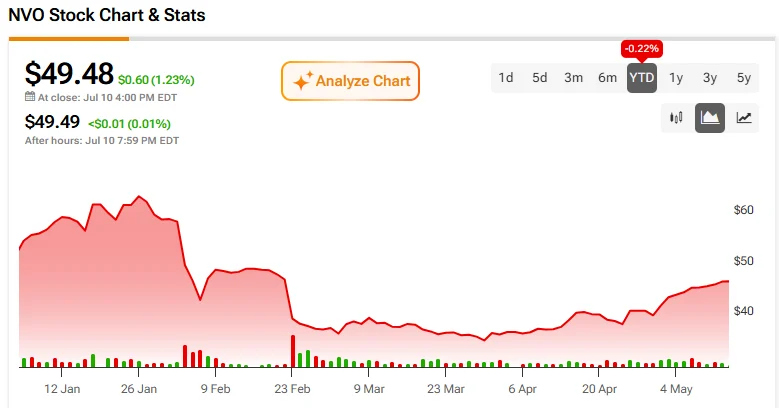
Novo Nordisk said the result will not affect its 2026 adjusted operating profit outlook but will result in a non‑cash impairment charge in Q3. Two other heart‑related trials for ziltivekimab, focused on heart failure and post-heart‑attack patients, will continue. Results from these trials are expected in 2027.
Importantly, the drug was projected to benefit the company. Peak sales were estimated to be about $3 billion if the trial succeeded. However, the failure now hurts the drug’s commercial prospects and removes one of Novo Nordisk’s most watched non-obesity growth paths.