After spending over seven years designing distributed enterprise backends using managed frameworks like C# and Java, I recently stepped outside my habitual tech stack to experiment with running WebAssembly on the server. Spending years in one familiar ecosystem can make platform conventions feel like universal rules, so picking up a completely different paradigm is a great way to stress-test your architectural assumptions.
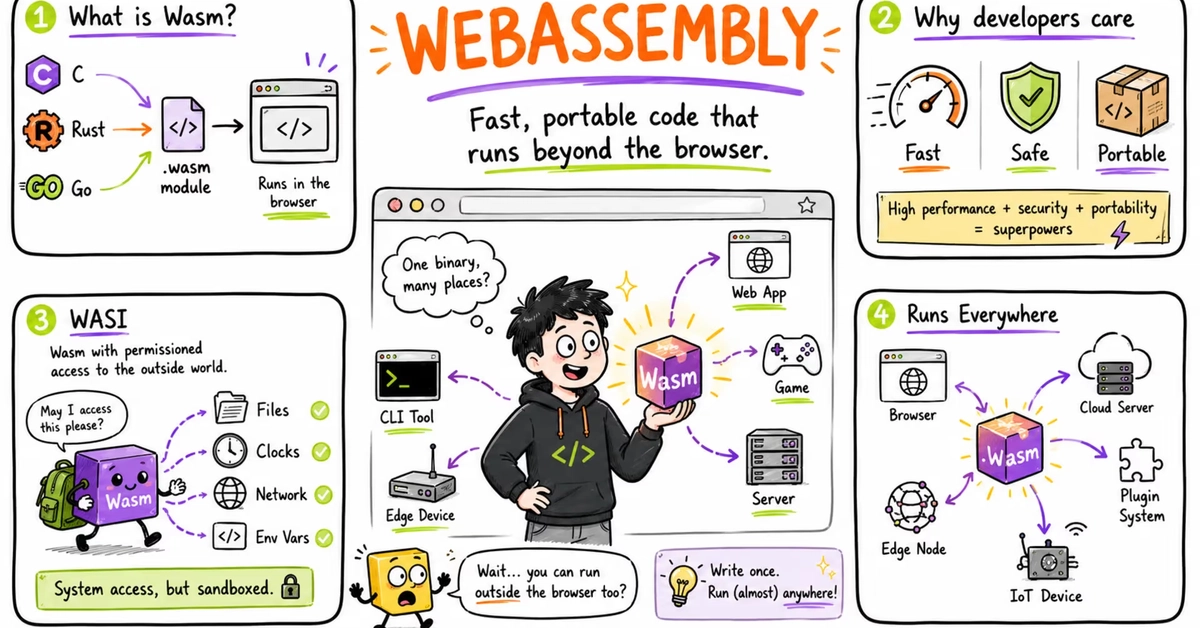
Most engineers recognize WebAssembly as a browser innovation. It is a binary code format, which means computer code pre-translated into compact instructions that run inside a secure virtual engine at near-native speed. Recently, however, the open-source community created the WebAssembly System Interface, a standardized abstraction layer that allows these same sandboxed binaries to interact safely with operating system resources like files, system clocks, and network sockets. This development effectively brought WebAssembly out of web pages and onto backend cloud infrastructure.
My curiosity grew while thinking about how complex enterprise platforms process untrusted code from external users. In systems like workforce platforms or financial reporting engines, business clients often want to upload custom calculations or data translation rules. Traditionally, executing third-party code safely meant spinning up a fresh container, which is an isolated software package containing an application and its entire operating environment. While containers provide solid security boundaries, they carry memory overhead and take hundreds of milliseconds to launch.