For nearly a decade, my mental model for deploying enterprise software has revolved around containers, which are lightweight packages that bundle an application together with all the operating system files it needs to run. Recently, I decided to step outside my comfort zone of C# and traditional cloud environments to explore a technology taking a fundamentally different approach: WebAssembly on the server.
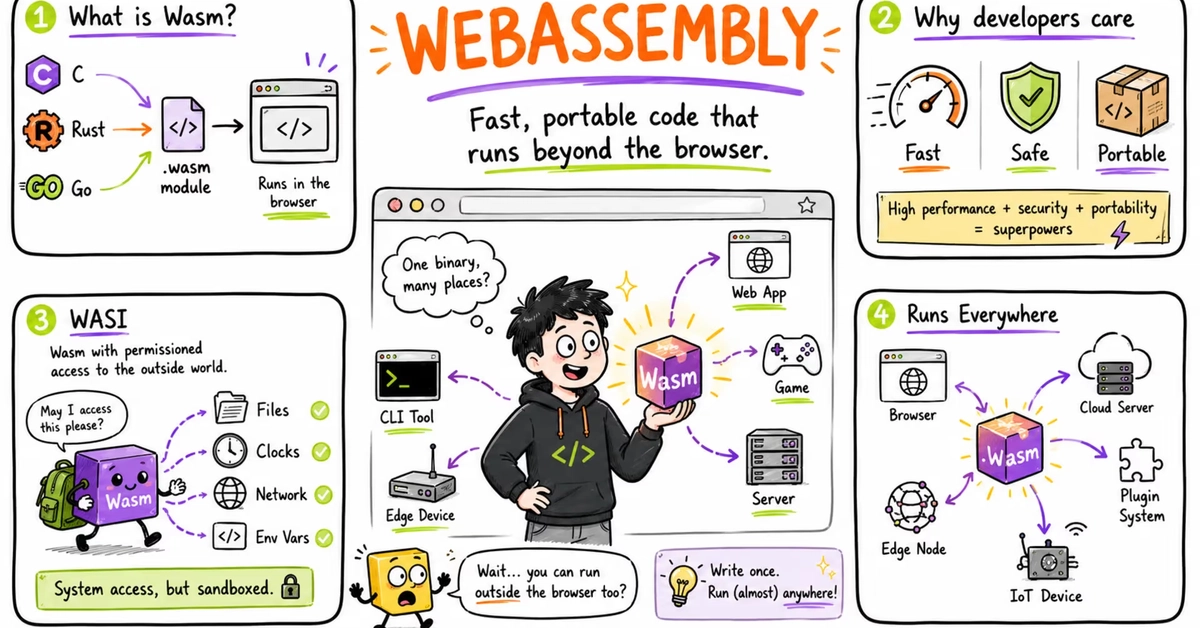
Most engineers know WebAssembly, often shortened to Wasm, as a binary instruction format, which is a compact set of machine-readable code designed to let languages like Rust or C++ run at near-native speed inside web browsers. What drew my interest is how Wasm is moving out of web pages and onto server infrastructure, particularly in edge computing, which means processing data on servers physically located close to users to cut down networking lag.
This shift relies on a newer standard called WASI, or WebAssembly System Interface, which is a set of standardized rules that allows Wasm programs to interact safely with a host server's file system, clock, and memory outside of any web browser. You can picture WASI as a secure translator that lets a sandboxed program ask the operating system for specific resources without giving that program access to the rest of the machine.