This post is an expanded version of a presentation I gave at the 2025 WebAssembly CG meeting in Munich.
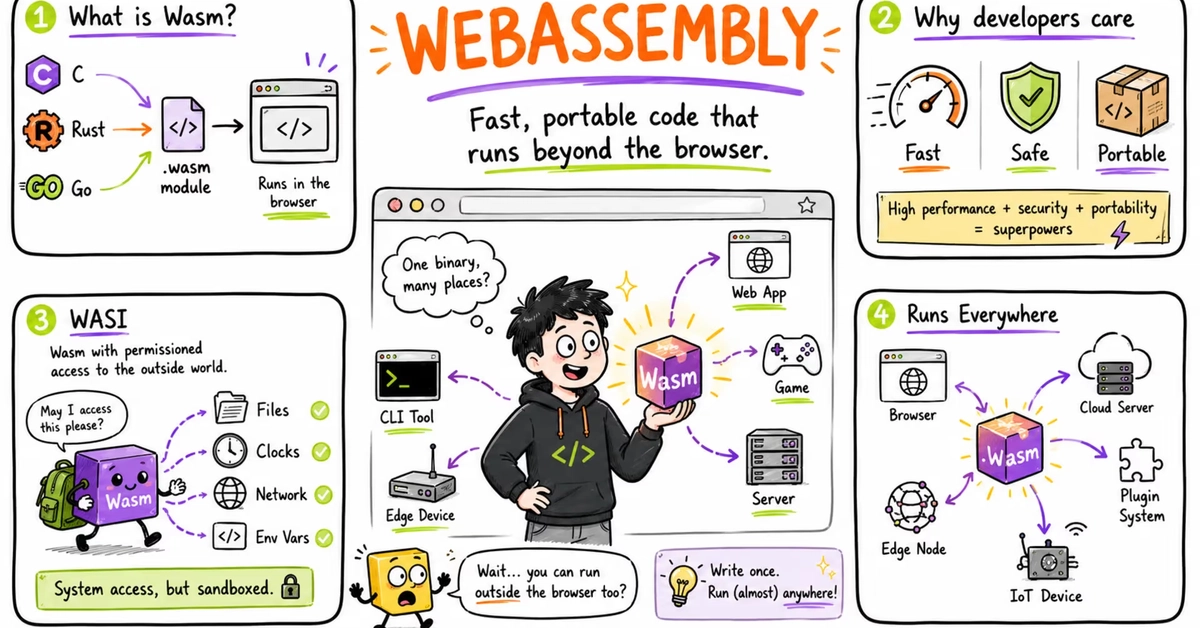
WebAssembly has come a long way since its first release in 2017. The first version of WebAssembly was already a great fit for low-level languages like C and C++, and immediately enabled many new kinds of applications to efficiently target the web.
Since then, the WebAssembly CG has dramatically expanded the core capabilities of the language, adding shared memories, SIMD, exception handling, tail calls, 64-bit memories, and GC support, alongside many smaller improvements such as bulk memory instructions, multiple returns, and reference values.
These additions have allowed many more languages to efficiently target WebAssembly. There’s still more important work to do, like stack switching and improved threading, but WebAssembly has narrowed the gap with native in many ways.
Yet, it still feels like something is missing that’s holding WebAssembly back from wider adoption on the Web.