Story audio is generated using AI
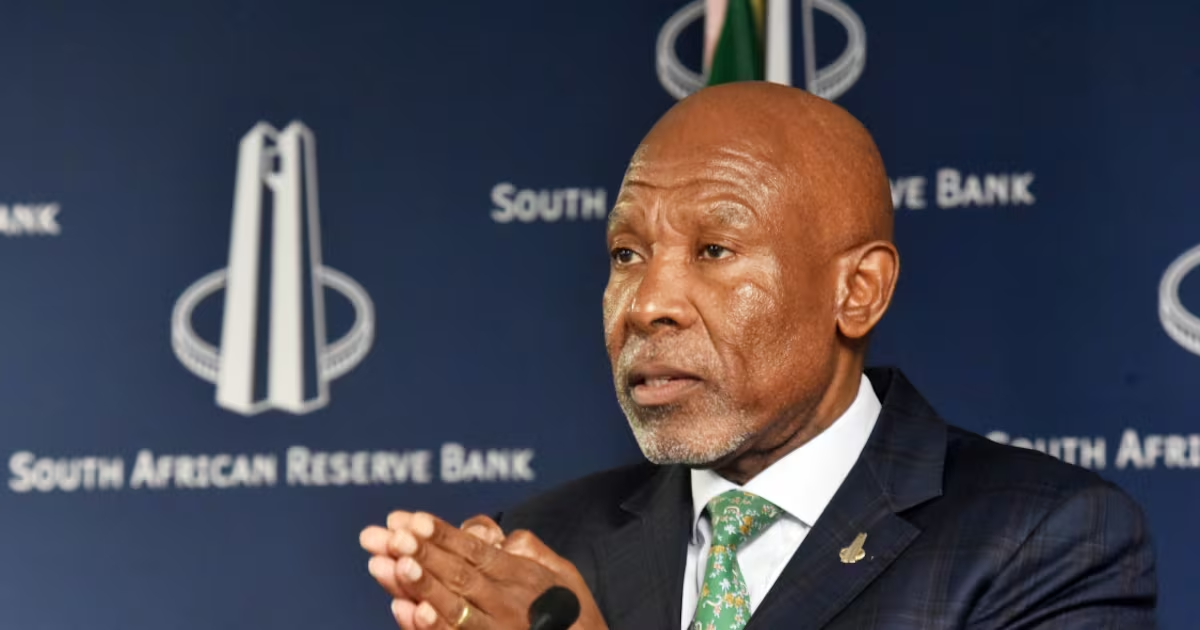
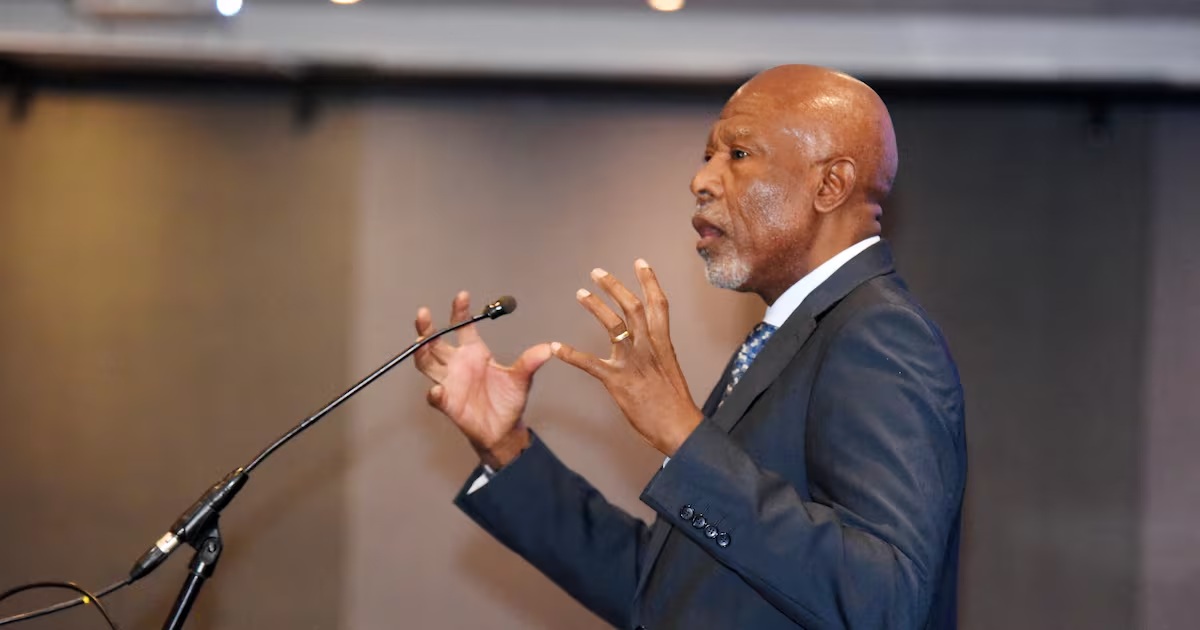
The South African Reserve Bank (Sarb) has no plans to bring non-bank shareholders into the fold of the automated clearing house, PayInc, due to its value as a payment utility, says the central bank governor Lesetja Kganyago.“We would have preferred to have 100% of PayInc because we want PayInc to be a payment utility. So we’re not looking at bringing others in there,” he said as he answered questions from Sarb shareholders during the Bank’s 106th ordinary general meeting in Pretoria on Friday. In November, the Sarb bought a 50% stake in BankservAfrica — and unveiled its new name as PayInc — in a critical step towards modernising payment systems in South Africa. PayInc is an automated clearing house for national and pan-African transactions, covering the retail, government, banking and corporate sectors.During his address, Kganyago said fintech solutions could radically improve payments with simpler technologies that deliver larger gains, helping the country catch up to fast adopters of digital payment systems.“Our payment ecosystem modernisation programme does not use tokenisation or a distributed ledger, but we still expect it to achieve much cheaper and faster digital payments, just like countries such as Brazil, India, Thailand and the Philippines have achieved,” he said.“With our purchase of a 50% stake in BankservAfrica in November last year, and its rebranding as PayInc, we are making progress. We nonetheless acknowledge that other emerging markets are ahead of us. We have a lot of catch-up growth to achieve.”Kganyago said the global central banking community was wrestling with technological changes, particularly artificial intelligence (AI), as well as fintech products such as stablecoins, which presented opportunities and threats.“It seems clear that AI will transform how we work by making large datasets much more tractable. At the same time, it is equally clear that AI presents new threats; for instance if it is used to hack sensitive systems that previously seemed secure.“Just as AI presents both unprecedented opportunities and risks, there are also two sides to stablecoins. If they can make cross-border payments faster and cheaper, that would be welcome progress. But if they mainly make it easier to transact anonymously, helping their users get around prudential controls or escape with the proceeds of crime, that is dangerous.”He said the job of regulators was to strike a balance by limiting risks without stifling innovation, citing the draft cross-border regulations on crypto assets. “The fact of the matter is that South Africa has a system of capital flow measures. It has been cumbersome, and the much-needed reforms to modernise the framework are underway. But, if we have these rules, we cannot simultaneously have weak regulatory frameworks for crypto assets alongside a rigorous system of reporting and permissions for everyone else.”Absa Bank CEO Kenny Fihla told the meeting that the modernisation of the payment system enriched South Africans in ways that conventional payment systems typically could not. “Working alongside PayInc, the Payments Association of South Africa, 39 participating banks and more than 480 non-bank payment service providers, the Sarb has played a central role in building a more modern, efficient and inclusive payment infrastructure.“Through initiatives such as PayShap, South Africa’s real-time payment platform, the Sarb and its partners are making digital payments faster, safer and more accessible. In 2025 alone, PayShap processed more than 500-million transactions worth approximately R486bn, demonstrating growing adoption across the economy.”Deputy governor Rashad Cassim said the Sarb had experimented with several ideas related to a central bank digital currency, wholesale and retail, and distributed ledger technology. “There are stablecoin companies that exist in South Africa. There are rand-backed stablecoins which exist. What we want to be able to maximise is whether these activities add to the financial sector, whether they operate within a regulatory parameter, the legal regulatory parameter.“I think that tokenised deposits are an area that many central banks think would be a good idea. [It’s a question of] who kicks off the tokenised deposit, who makes the investment; do commercial banks have an incentive to invest in tokenised deposits.”Business Times