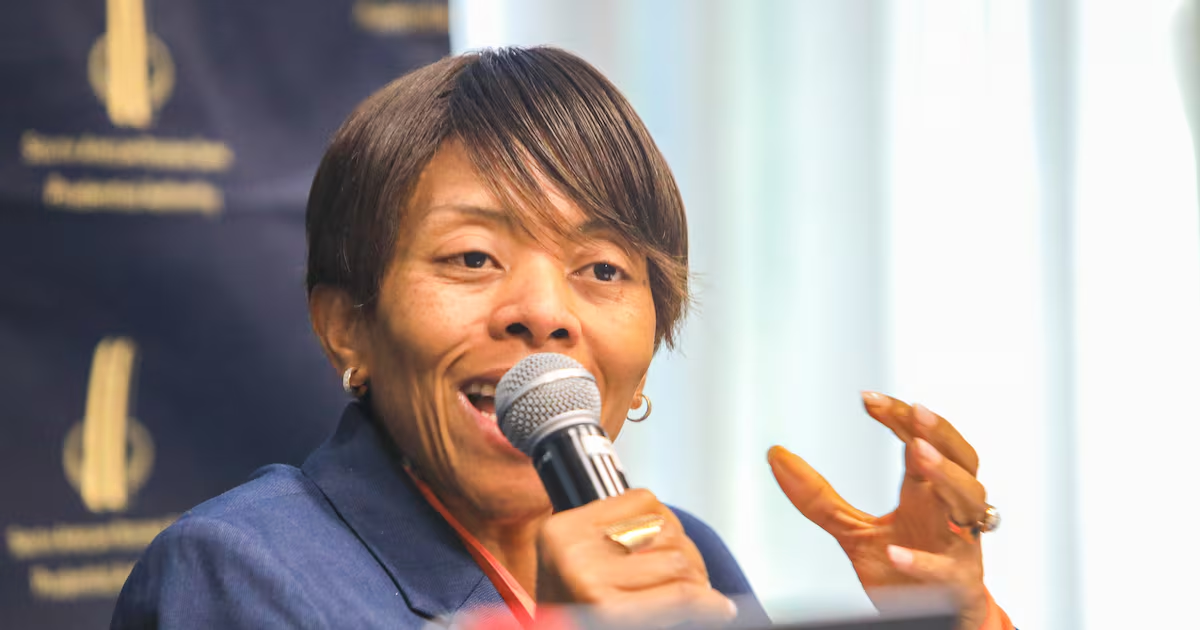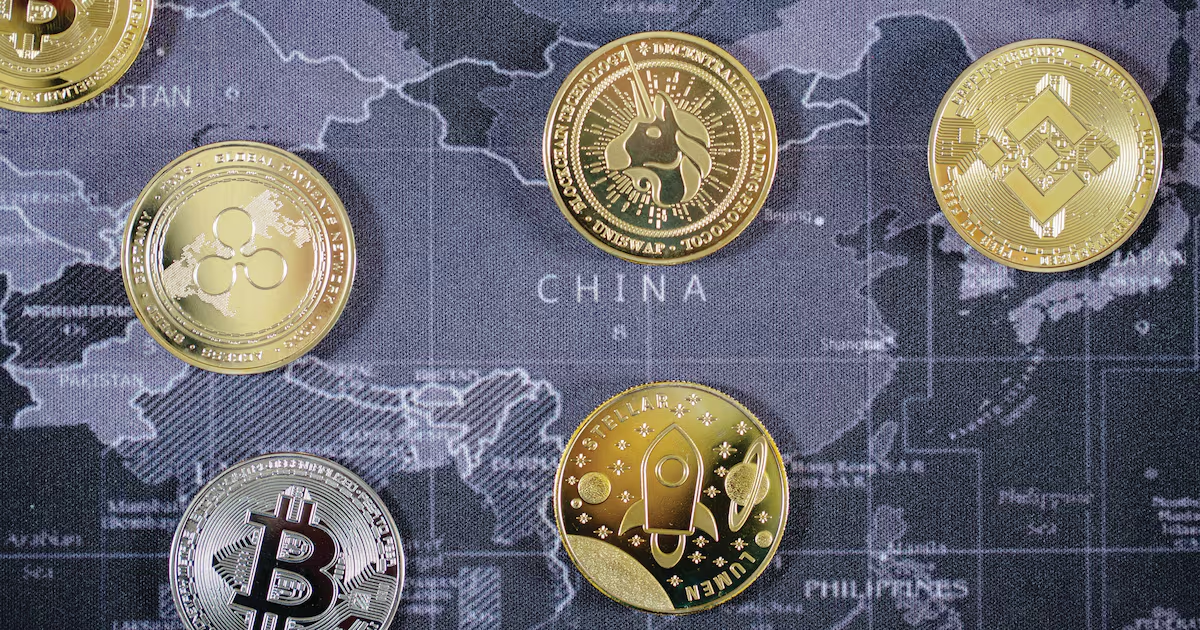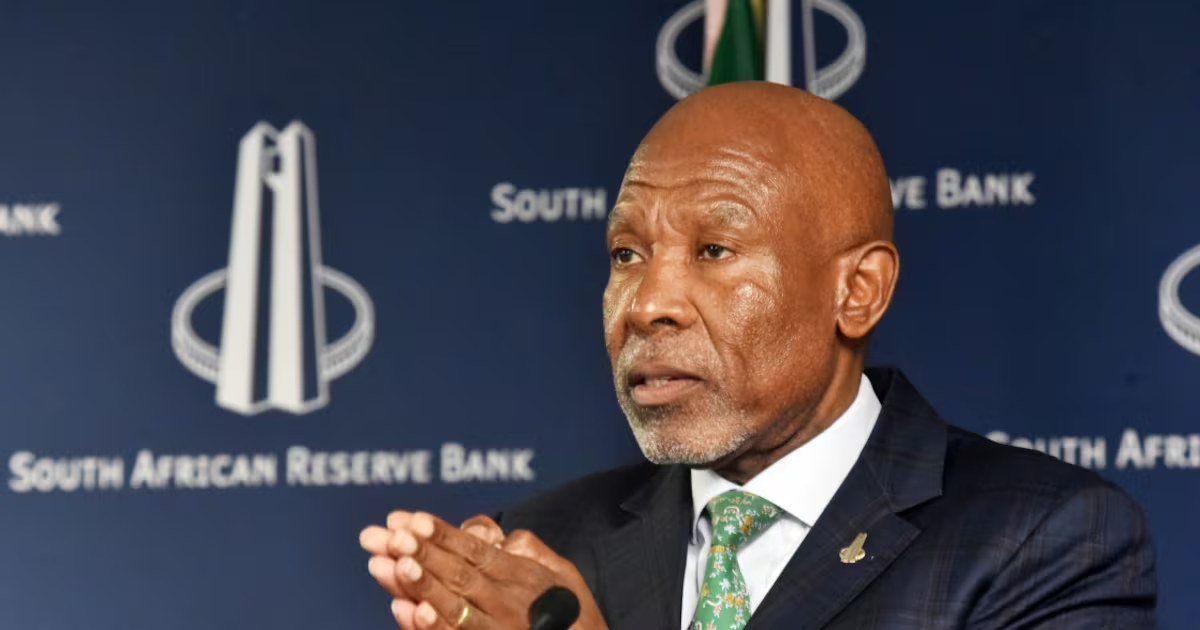
The South African Reserve Bank (Sarb) has reiterated its warning against the risks posed by AI and defended its cautious stance against crypto assets, highlighting the responsibility it has to limit the dangers of digital technology to the financial system without stifling innovation. At the Bank’s AGM, governor Lesetja Kganyago told shareholders it is now evident that AI “will transform how we work by making large datasets much more tractable”.“At the same time, it is equally clear that AI presents new threats, for instance if it is used to hack sensitive systems that previously seemed secure,” he added.“Just as AI presents both unprecedented opportunities and risks, there are also two sides to stablecoins. If they can make cross-border payments faster and cheaper, that would be welcome progress. But if they mainly make it easier to transact anonymously, helping their users get around prudential controls or escape with the proceeds of crime, that is dangerous.“Our broad task as regulators is to achieve a balance — to limit risks without stifling innovation. Of course, finding that balance is not easy, and our efforts can leave people unhappy. We saw this, for example, with the draft cross-border regulations on crypto assets,” Kganyago added.He was referring to the draft Capital Flow Management Regulations published by the National Treasury in April which will bring crypto assets expressly into the country’s official exchange control and capital flow framework to curb illicit financial flows. Kganyago conceded that South Africa’s system of capital flow measures has been “cumbersome” and much-needed reforms to modernise the framework were under way, adding: “But, if we have these rules, we cannot simultaneously have weak regulatory frameworks for crypto assets alongside a rigorous system of reporting and permissions for everyone else. That is not a level playing field.”In its half-yearly financial stability review in June, the Bank said while crypto asset activity does not currently pose a systemic risk to the domestic financial system, it continues to monitor developments given the pace of growth in global stablecoin activity, evolving cross-border linkages and remaining gaps in the regulatory framework.It also warned that advances in frontier AI, most notably the release of Anthropic’s Claude Mythos Preview model, pose risks to financial stability by heightening the threat of systemic cyber incidents affecting critical systems and infrastructure. On Thursday Anthropic said some of its Claude AI models had hacked into the systems of three companies during cybersecurity tests, a disclosure that came days after rival OpenAI revealed that one of its AI agents went on a rogue attack. At the AGM, Kganyago also defended the new 3% inflation target adopted by the Bank after years of pursuing a 3% to 6% range and later shifting to the 4.5% midpoint of the band. Critics have accused the Bank of being hyperfocused on inflation and raising interest rates at the expense of economic growth.“This new target is in line with the inflation rates of our peer countries as well as major economies. It will also deliver rand users an experience much closer to price stability. Last decade we often tolerated inflation at 6%. We now see, clearly, that those rates were too high,” Kganyago said.He reiterated that the Bank — which raised its main policy rate by 25 basis points in May but left it unchanged at 7% last week, could do very little about shocks such as the oil price spike triggered by the US-Iran war, but was ready to act on signs of emerging second round effects.“We do have a lot of influence over the longer-run buying power of the rand, across a broad purchase basket, and we intend to protect that. That is why we raised rates to 7% in May — to ensure that inflation gets back to target. This created the space for us to hold rates at our MPC meeting in July,” the governor said.“Before this shock hit, our main forecasting model showed the policy rate declining to about 6%. Markets had similar expectations. As a monetary policy committee, we do not make any promises about the path for interest rates. That kind of forward guidance often fails, with embarrassing results. But I can say with confidence that lower inflation produces lower rates.”He said the Bank’s balance sheet is strong, with foreign exchange reserves now at $74bn from $47bn a decade ago and $68bn last year.“More recently, the Sarb has been more profitable and equity has grown substantially, making us one of the better capitalised central banks in the world,” the governor said.
Kganyago reiterates warning about risks from AI, crypto assets
Reserve Bank governor says regulators must balance allowing for digital innovation with ensuring financial stability
TL;DRAI
South African central bank warns frontier AI (Claude) threatens financial cybersecurity; demands stablecoin regulatory parity to prevent illicit flows. For tech leaders: frontier-model adoption now needs compliance frameworks—expect regulators to globalize AI governance mandates.
750 words~3 min read