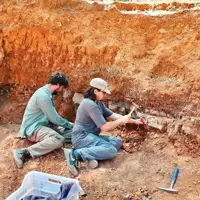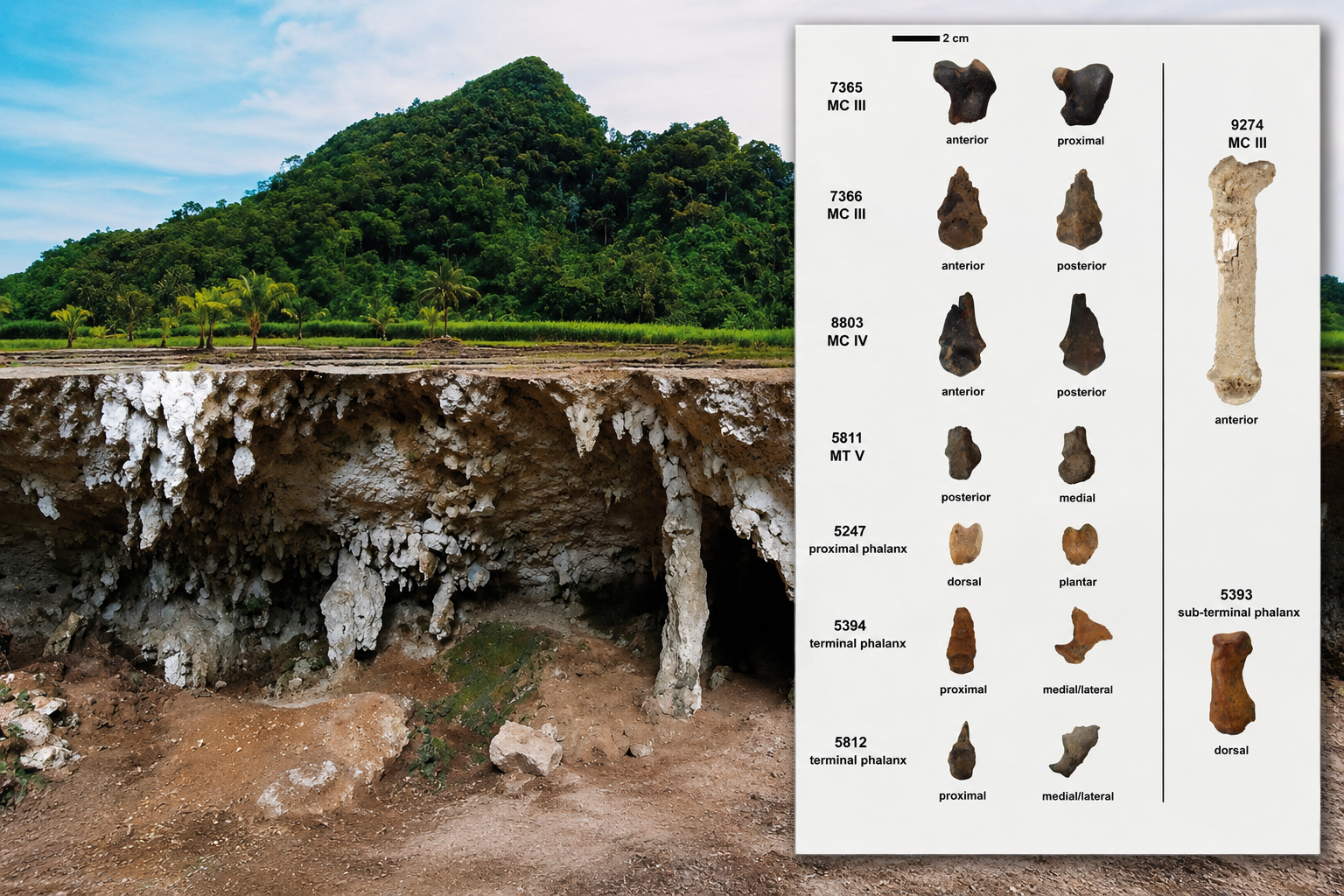
Pilandok Cave and its ancient tiger fossils. Left: Pilandok Cave in Negmisi Peak, Maasin, Quezon, Palawan, where Late Pleistocene archaeological deposits yielded fossil remains of a tiger (Panthera tigris). Right: The nine tiger specimens recovered from an archaeological midden layer dating to the Last Glacial Maximum, about 20,000 to 24,000 years ago. (Photo courtesy of Janine Ochoa et al., Cambridge Archaeological Journal)
MANILA, Philippines — Tigers once roamed Palawan and were hunted or skinned by prehistoric humans there more than 20,000 years ago, fossil evidence from Pilandok Cave suggests.
A study published in the Cambridge Archaeological Journal reported the discovery of nine tiger (Panthera tigris) fossil specimens from Pilandok Cave in Quezon, Palawan, providing what researchers described as new evidence that the species naturally inhabited the island during the Late Pleistocene.
The fossils were recovered from an archaeological midden layer dated to the Last Glacial Maximum, about 20,000 to 24,000 years ago. Researchers found that three of the tiger foot bones bore cut marks made by humans, while three deer bones from the same layer showed gnawing marks attributed to a large carnivore believed to be a tiger.