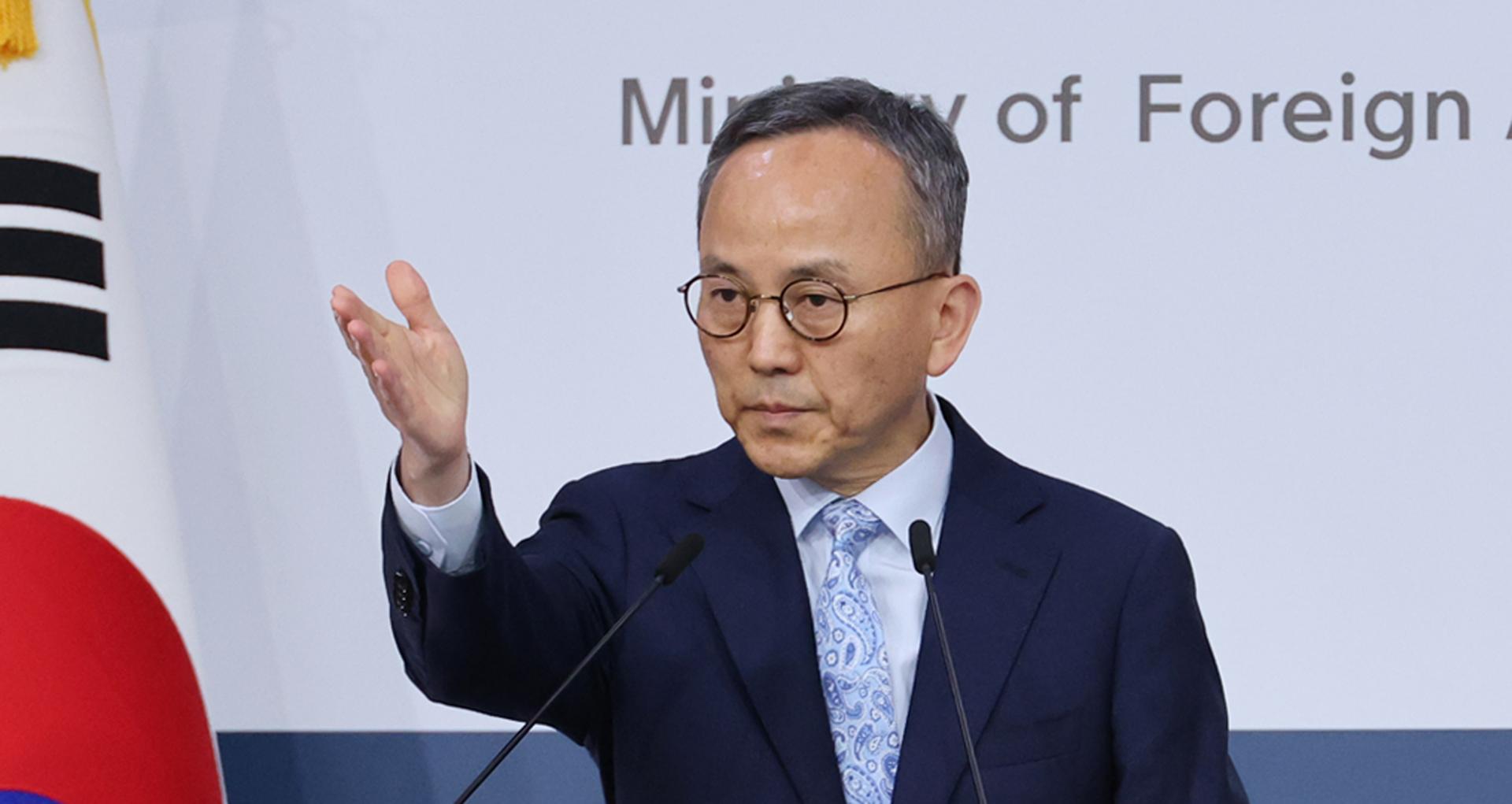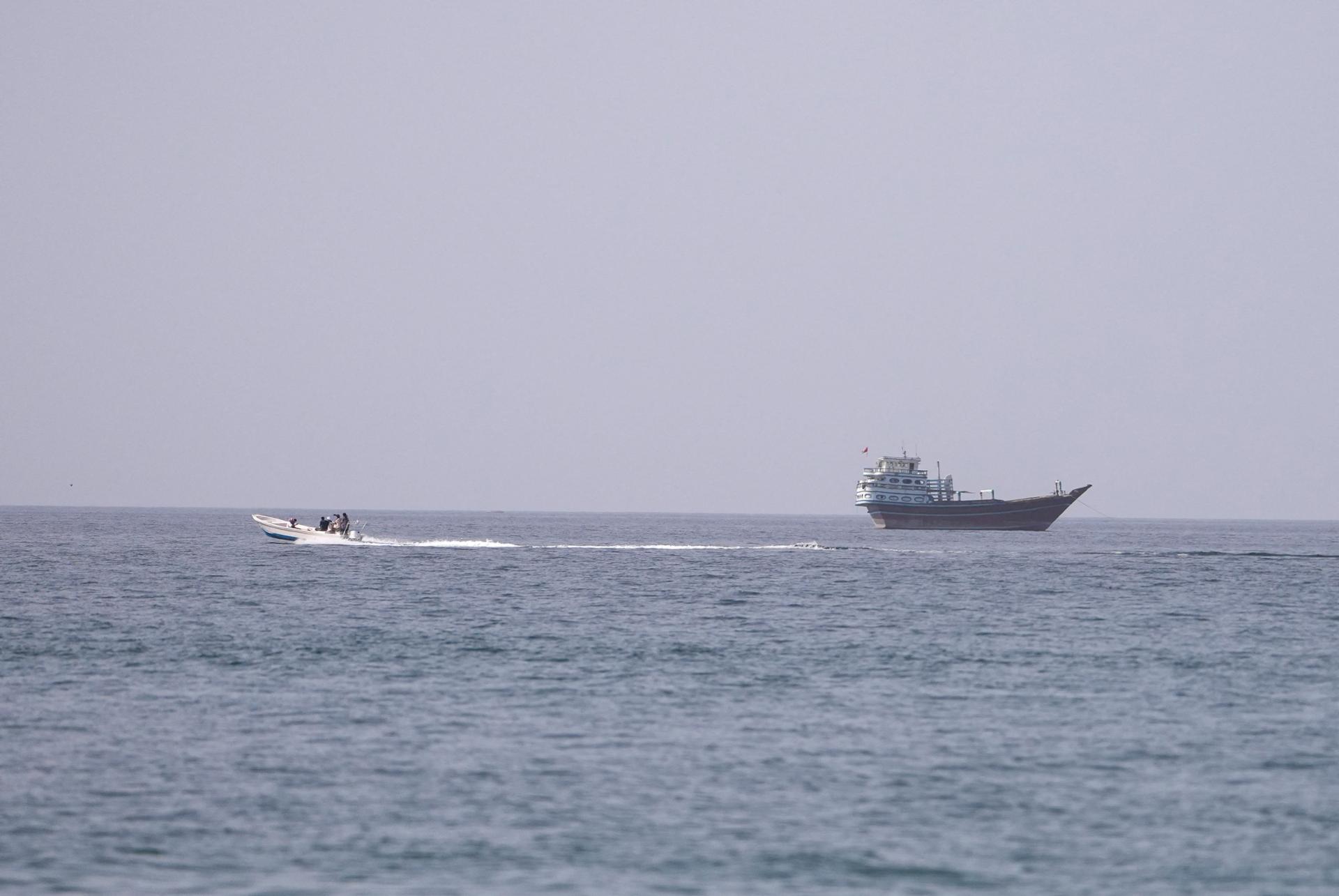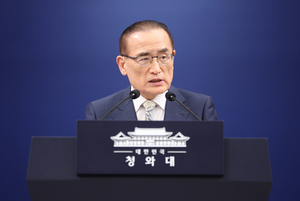
Wi dismisses concerns over communication lapse between allies after S. Korean troops mistook US drone for N. Korean aircraft National Security Adviser Wi Sung-lac briefs reporters at the Chunchugwan press center at Cheong Wa Dae in Seoul on July 22 ahead of President Lee Jae Myung’s visits to the United States and Latin America. (Pool via Newsis) South Korea is weighing a range of options for contributing to stability in the Strait of Hormuz, though it has yet to decide on a specific course of action, National Security Adviser Wi Sung-lac said Friday.Wi’s remarks came amid reports in South Korean media that Washington had specifically requested that Seoul deploy military assets to the strait and that the South Korean government was considering sending patrol vessels or maritime patrol aircraft.“The US side has not made any specific request. At this point, our consultations are limited to gauging the scope of our potential contribution,” Wi said at a news briefing in Buenos Aires. “We are engaging in those consultations while reviewing various possibilities internally.”Wi was responding to questions about whether Seoul stood by its position that it had received no specific US request to deploy military assets and whether it was independently considering sending warships or other military assets to the Strait of Hormuz.“The government considers freedom of navigation through the Strait of Hormuz vital to our economic security,” Wi said. “We are therefore reviewing the options available to us based on the judgment that we should actively participate in and contribute to those efforts.”Wi further stressed that “this is not something the government can decide on its own.”“Depending on the legal procedures involved, we will also need to build consensus with the National Assembly and the public,” he said.South Korea has been considering a possible role in international efforts to keep the Strait of Hormuz open, including the US-proposed Maritime Freedom Construct.Seoul has already joined the Multinational Military Mission, a British- and French-led defensive naval coalition aimed at securing freedom of navigation through the strait, and has supported related efforts at the United Nations Security Council.In April, President Lee Jae Myung pledged to make a “tangible contribution” to ensuring safe passage through the strait during a multilateral summit chaired by the leaders of Britain and France.Defense Minister Ahn Gyu-back said during a visit to the United States in May that he had told US Defense Secretary Pete Hegseth that Seoul would take a phased approach to reviewing ways it could contribute to freedom of navigation through the waterway.Drone mix-up, no alliance lapseOn a separate issue, Wi dismissed concerns that the recent misidentification of a US military drone near the inter-Korean border reflected communication failures between the allies or lapses in discipline within the South Korean military.South Korean troops mistook a US Marine surveillance drone involved in a combined exercise near the border for a potentially hostile aircraft Thursday. The confusion prompted military and civilian alerts, though no shots were fired.“My understanding is that there was communication between Korea and the US and that our side was aware of the plan,” Wi said. “There does not appear to have been any particular problem. I do not believe it was an issue of communication or discipline.”Pyongyang-Moscow military ties under scrutinyWi said military cooperation between Russia and North Korea remained a major concern for Seoul, though he did not directly assess the likelihood of further North Korean troop deployments.He was responding to a question about Seoul’s assessment of recent claims by Ukrainian President Volodymyr Zelensky that Russia was preparing to receive up to 30,000 additional North Korean troops and had used North Korean missiles against targets in Ukraine, as well as separate Ukrainian reports of plans to build a drone production facility in North Korea.“We are watching military cooperation between Russia and North Korea closely and with serious concern,” Wi said.Wi noted that such cooperation “runs counter to relevant United Nations Security Council resolutions” on North Korea.“The principle is that every country must comply with Security Council resolutions. That is especially true of permanent members of the council, which bear a particular responsibility,” he said.Wi stressed that the cooperation directly affected South Korea’s security.“We have every reason to pay close attention because this military cooperation directly affects our security. It is not someone else’s problem,” he said.“We are, of course, watching it with concern, and our position is that military cooperation in violation of Security Council resolutions must cease,” Wi added.Wi said South Korea “intends to monitor the situation closely and take whatever steps are necessary.”“We intend to work to prevent the situation from worsening and, as far as possible, to reduce such cooperation and ultimately bring it to an end,” he said.
Seoul weighs viable options for contributing to Hormuz stability
South Korea is weighing a range of options for contributing to stability in the Strait of Hormuz, though it has yet to decide on a specific course of action, Na
780 words~4 min read