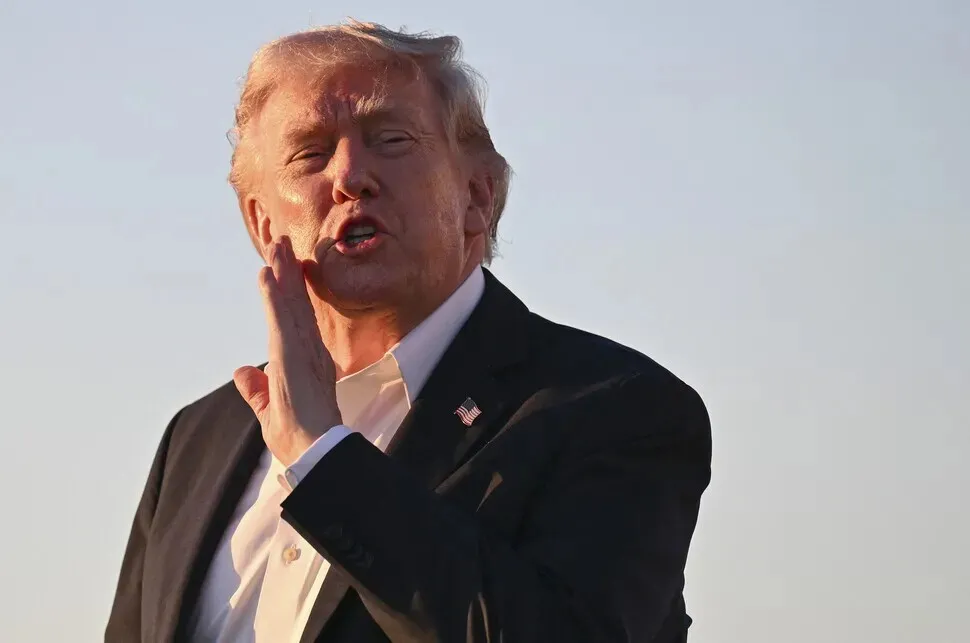
US President Donald Trump speaks to reporters after landing at Joint Base Andrews, near Washington, DC, on May 3, 2026. (AFP/Yonhap)
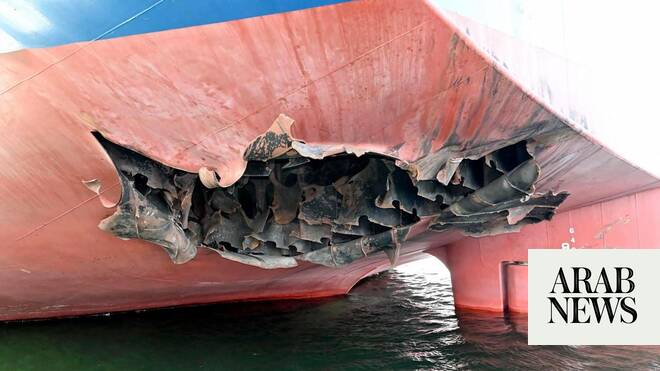
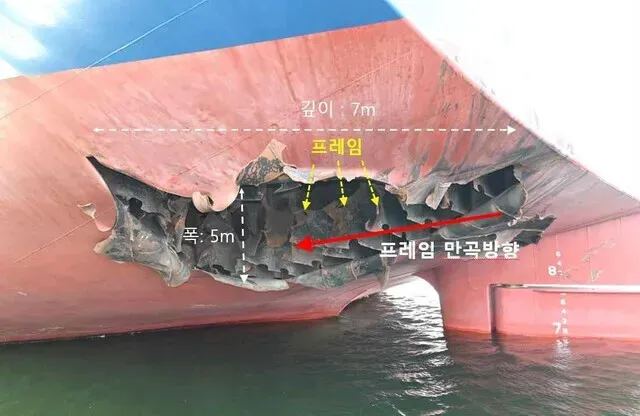
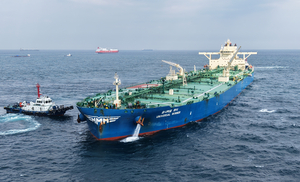
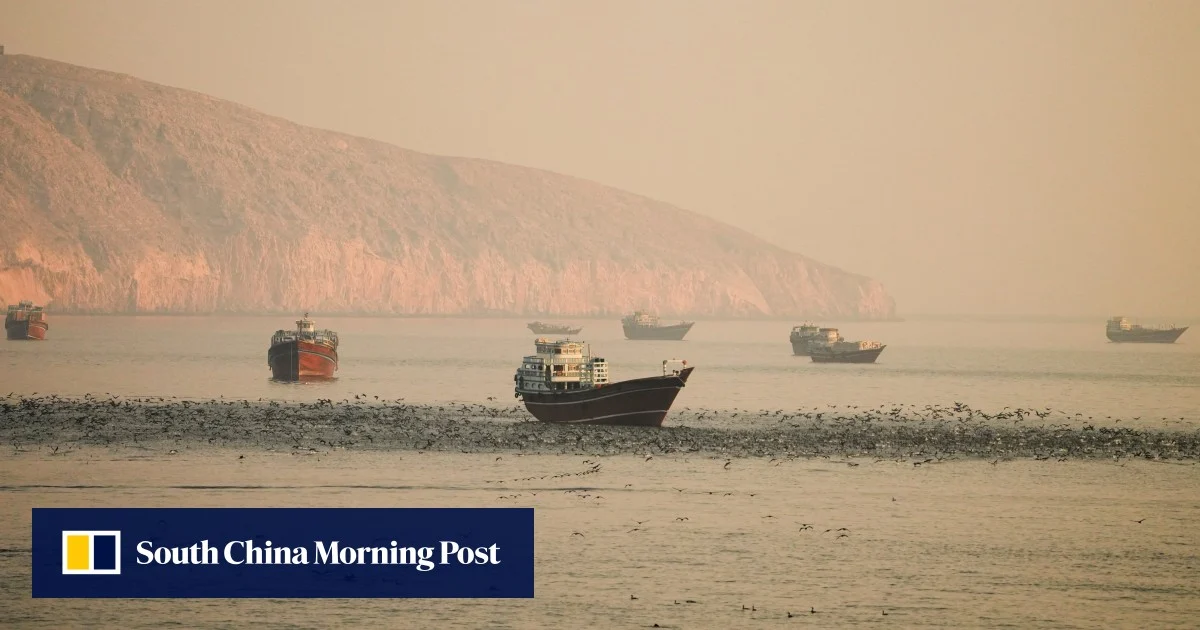
South Korea announced on Tuesday that it would “review” US President Donald Trump’s request for it to join a US project to reopen the Strait of Hormuz, a move interpreted as an attempt by Seoul to give a cautious initial response amid repeated pressure from Washington.Seoul is expected to decide whether to participate in the US’ Project Freedom after determining the cause of an explosion on Monday on the cargo ship HMM Namu, which was anchored in waters near the United Arab Emirates in the Strait of Hormuz, and taking sufficient time to assess the circumstances in the region. Korea is taking a cautious approach to this sensitive issue, which could potentially turn Iran into an enemy or strain relations with the US.While speaking about the US’ Project Freedom — an operation to guide ships out of the Strait of Hormuz — at an event at the White House on Monday, Trump claimed without any clear evidence that the Korean ship had been shot at by Iran, and urged Seoul to join the US operation in the waterway. “By the way, their ship was shot at. They were not in the cavalcade of ships. They decided to go it alone, and their ship got the hell knocked out of it yesterday, but [Iran] didn’t shoot the ships that were guarded by us,” he said. In a Truth Social post the same day, the US president wrote, “Perhaps it’s time for South Korea to come and join the mission!” Project Freedom is a maritime security and escort operation in which the US says it will guide ships trapped in the Strait of Hormuz and help them safely evacuate. The US Central Command, which oversees US military operations in the Middle East, said it would deploy 15,000 troops and over 100 aircraft for the operation. This isn’t the first time that Trump has requested that Korea lend a hand to US efforts in the Strait of Hormuz. On March 14, Trump publicly urged Korea, China, Japan, the UK and France to send warships to the strait.In response, the Blue House on Tuesday said that the administration has been “actively participating in global efforts to quickly stabilize, restore and normalize global maritime logistics networks in accordance with its position that the safety of international maritime transportation routes and freedom of navigation serve the common interests of all countries and constitute principles that must be protected under international law.” “That is the context in which we’re taking note of President Trump’s comments,” the presidential office added. “We’re reviewing the US’ proposal about the Strait of Hormuz in connection with these principles, readiness on the Korean Peninsula, and domestic legal considerations.”While announcing that it was reviewing the proposal, the Blue House cited as preconditions readiness posture against North Korea and domestic legal procedures such as legislative approval for overseas troop deployment. These factors suggest that Seoul is signaling that it will take a considerable amount of time to reach a decision on whether to join Project Freedom. The prevailing sentiment within the Blue House is that the government is merely reviewing the proposal because the US asked it to, not out of any underlying intention to participate. “Since it’s still in the early stages, the US is expected to flesh out its plan while discussing it with other countries,” an official from the Ministry of Foreign Affairs said. “The US is in the phase of gathering opinions on the [Project Freedom] plan, and we’re also monitoring the reactions of other countries.”