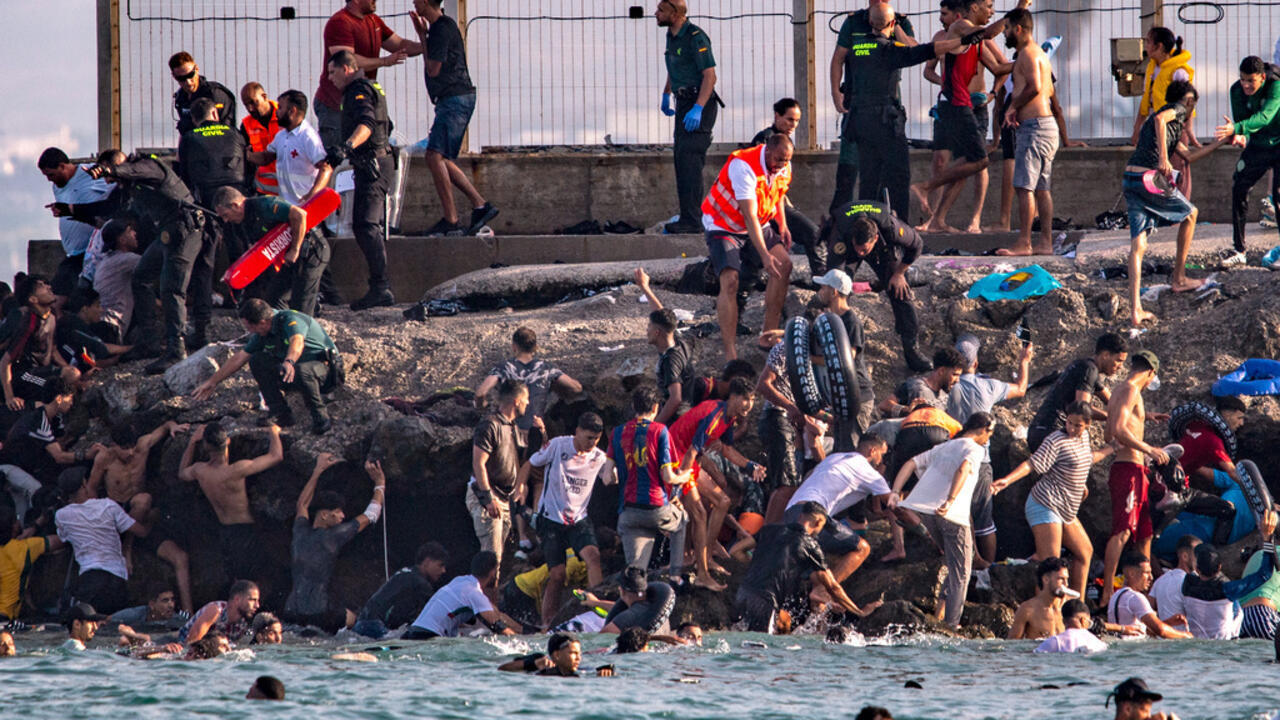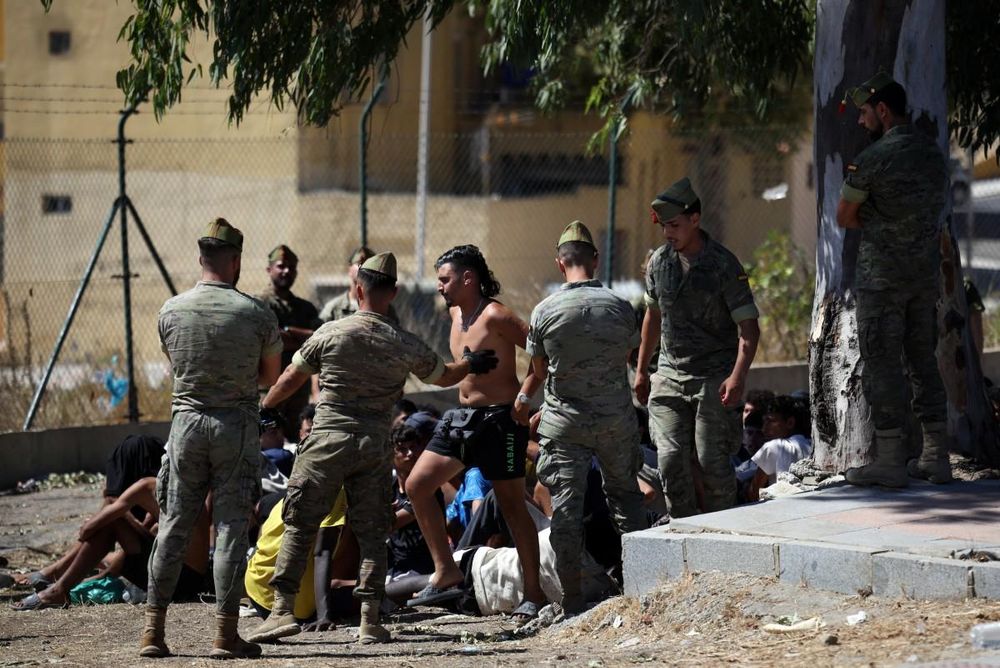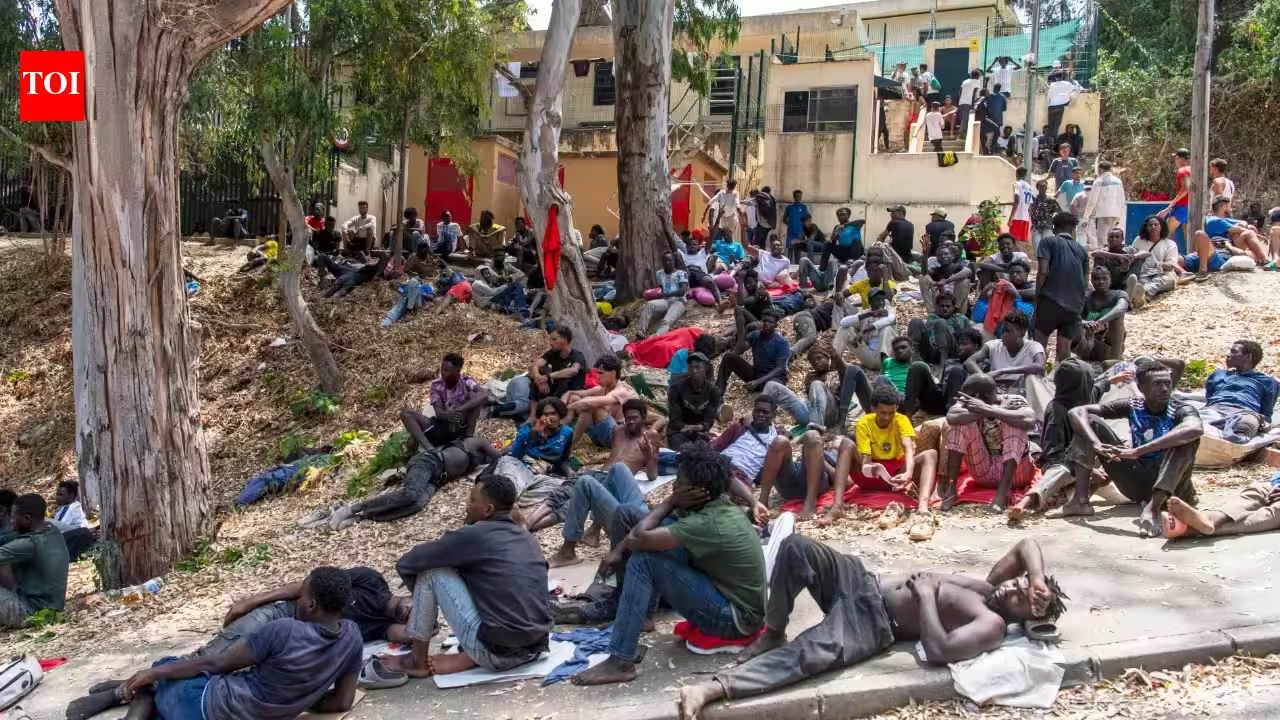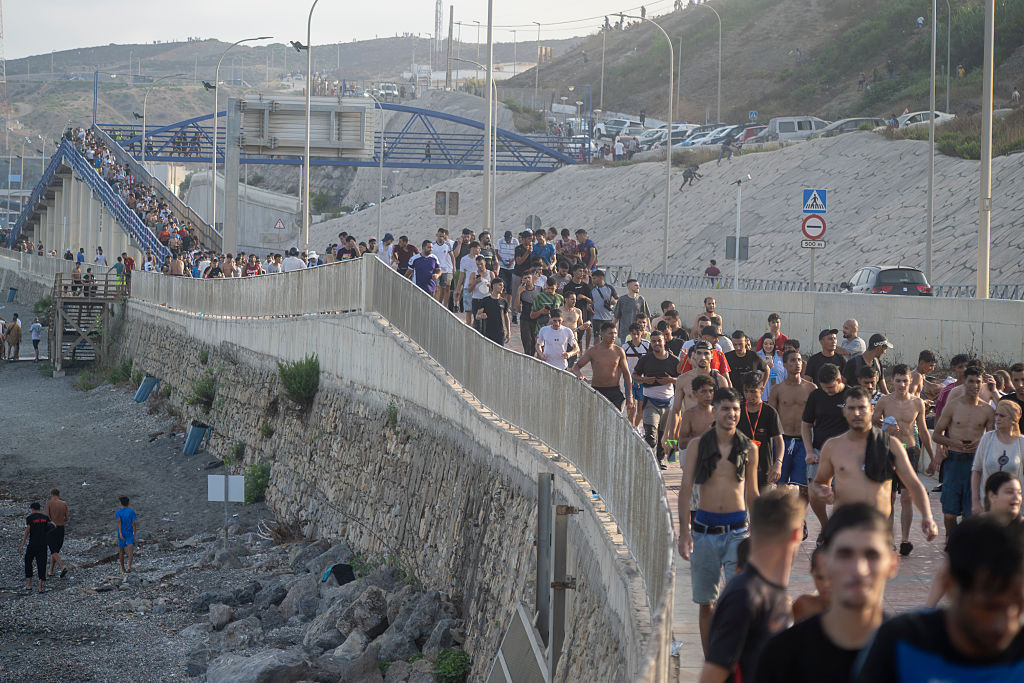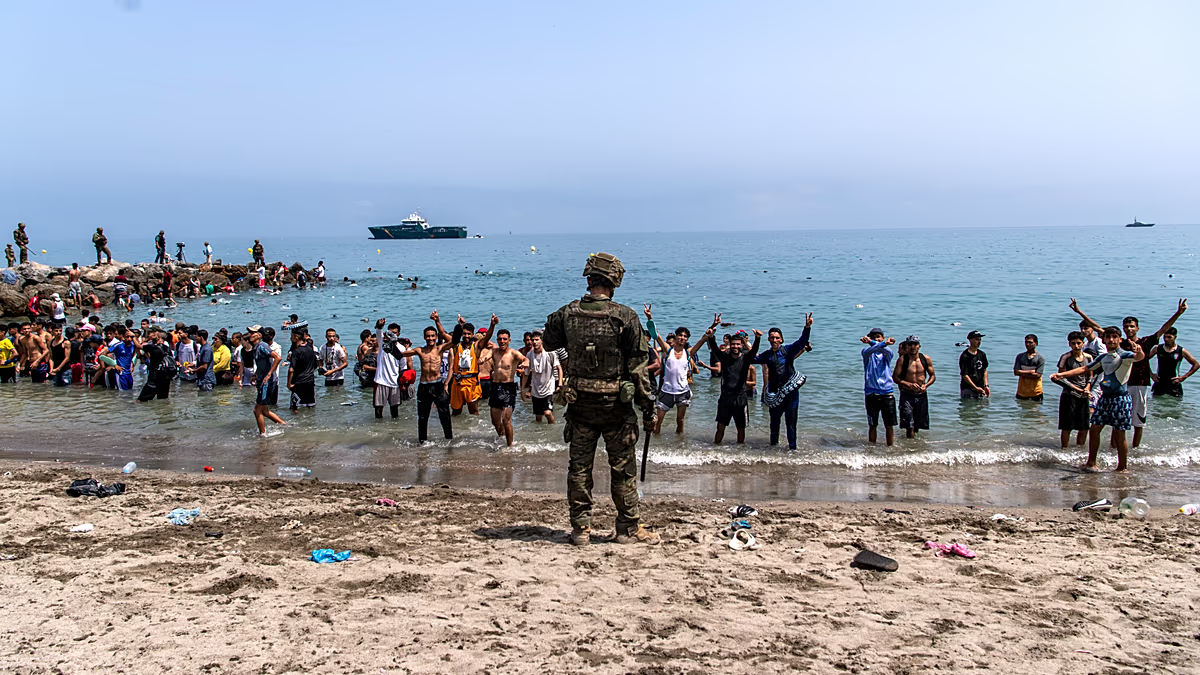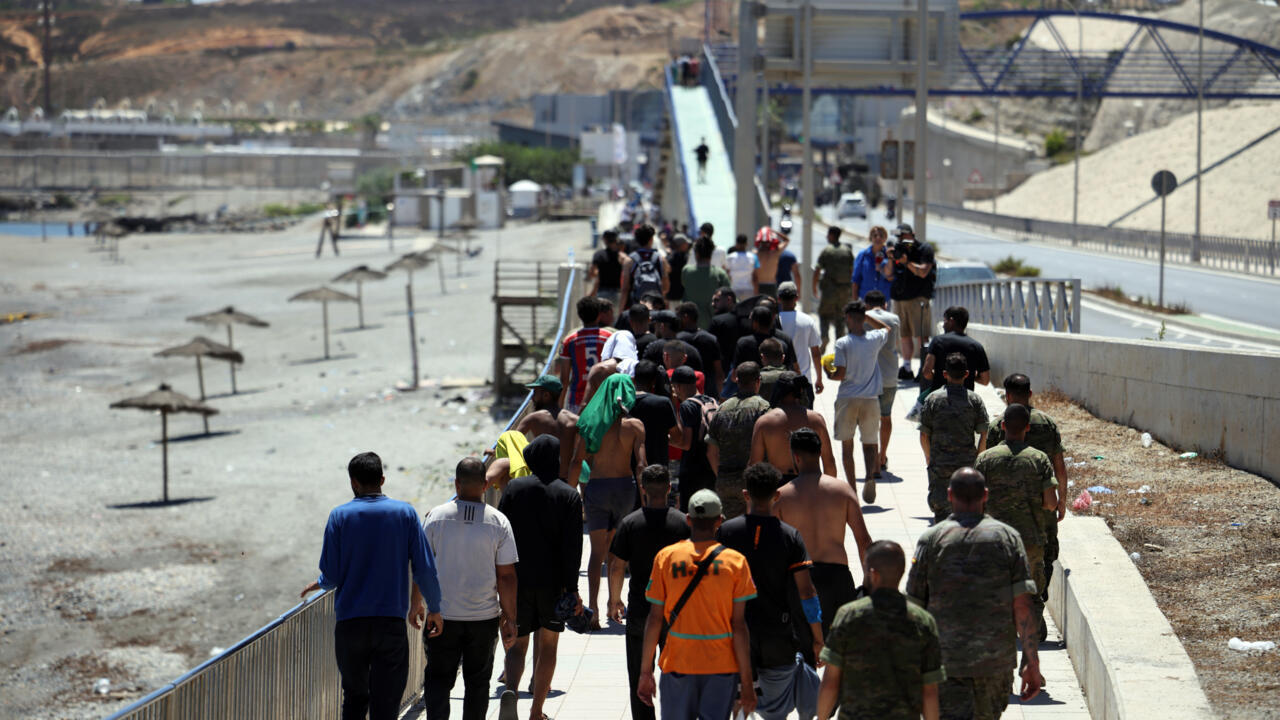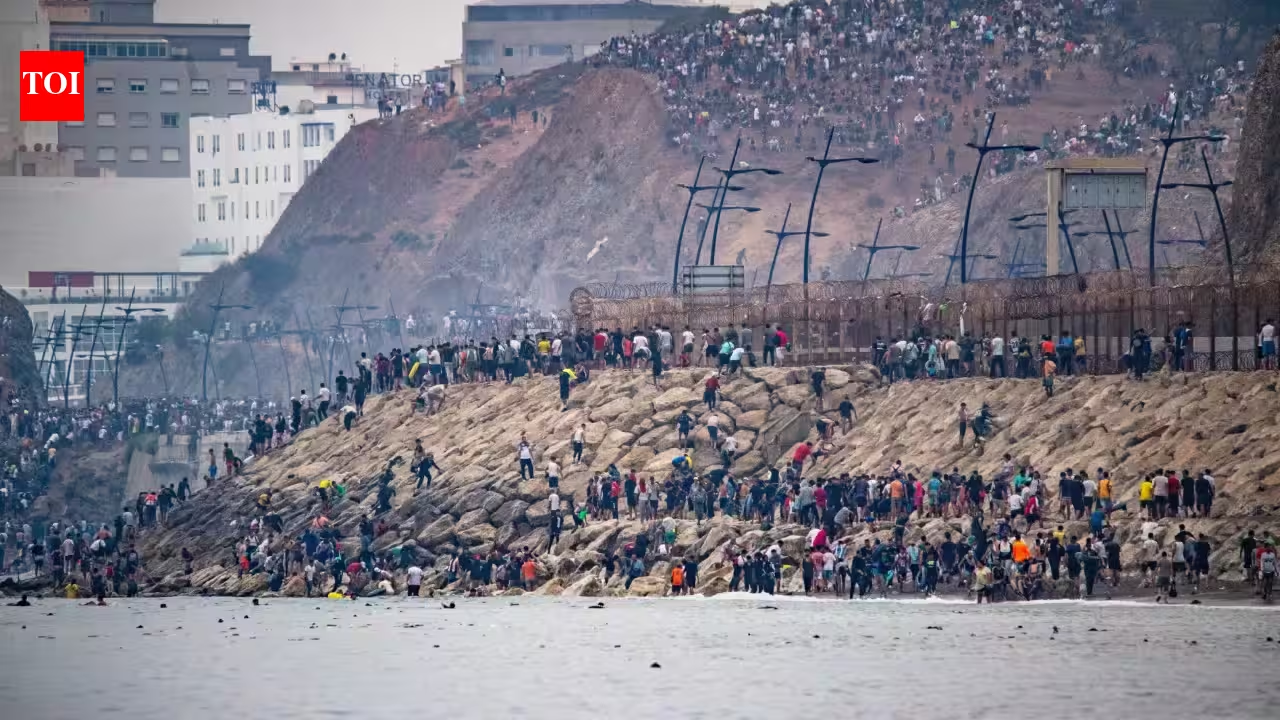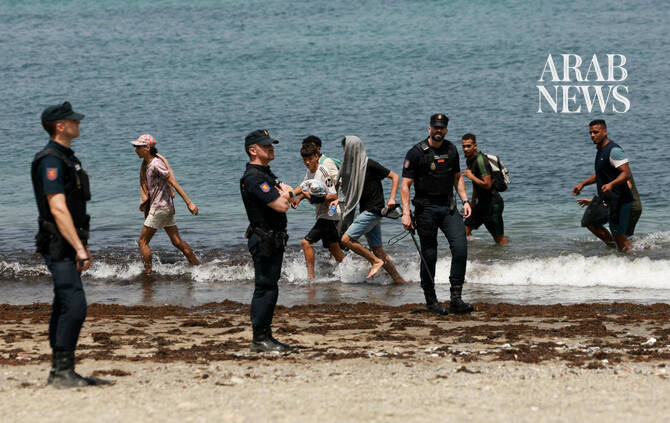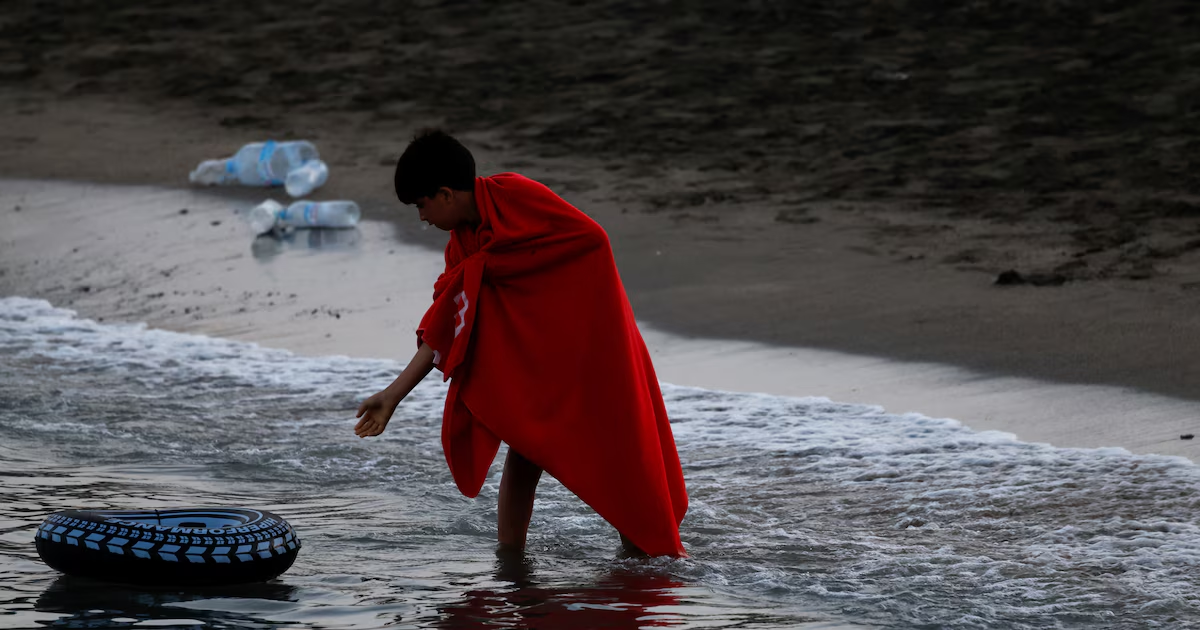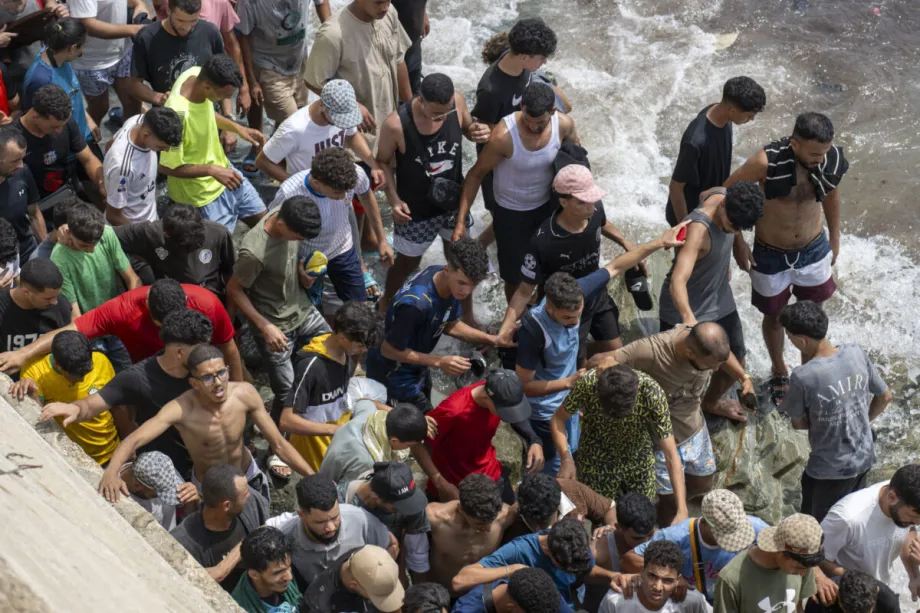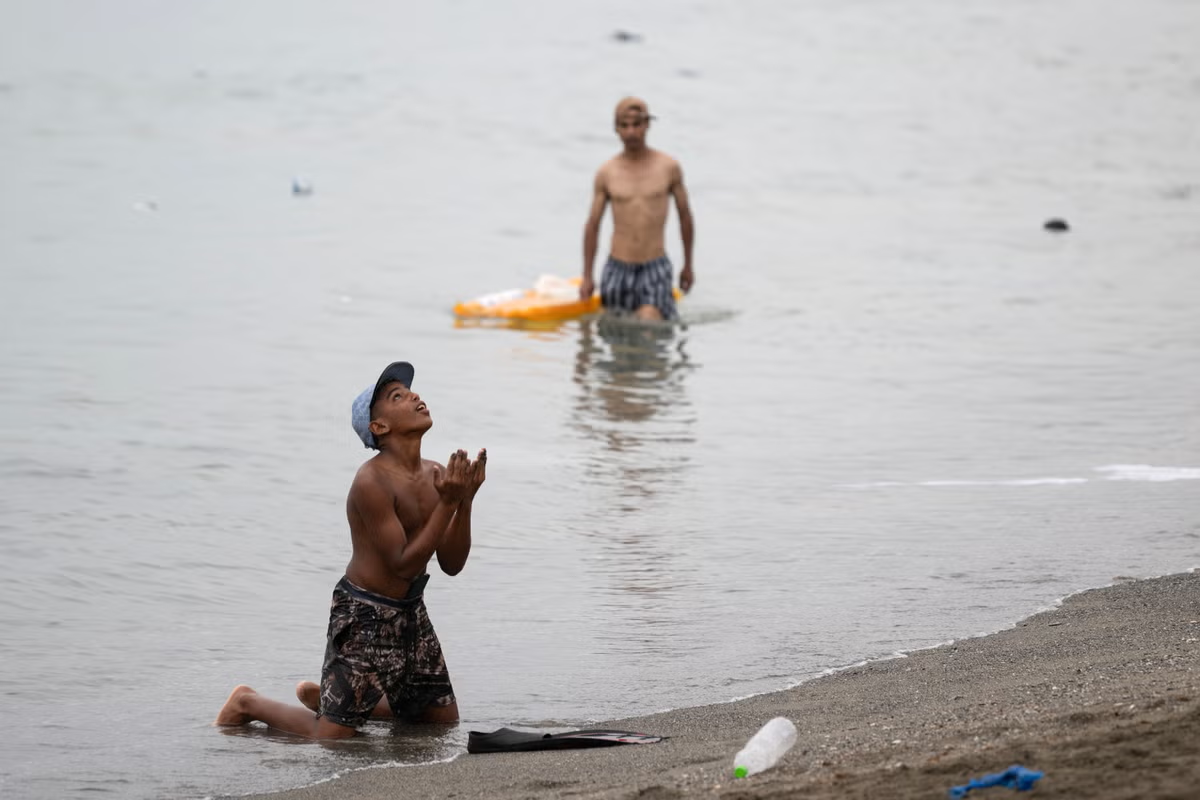
The chaotic scenes of tens of thousands of irregular migrants pouring into the Spanish territory of Ceuta, on the tip of the north coast of Africa, are simultaneously distressing and misleading.The distress derives not only from the sight of people risking harm by trampling border fences or swimming around using inflatables, but also from the grievous fact that at least 57 have died in the process. Some of those who’ve made the journey, by land or sea, are unaccompanied children from bordering Morocco, including a number who did not even tell their parents what they were doing. The sheer scale of the numbers involved reminds us how the migration crisis continues, even with the most strenuous international efforts to restrain it. As many as 60,000 people are thought to have made it into Ceuta – whose population is just 85,000 – in a couple of days, with roughly half already back in Morocco. That is around the same order of magnitude as the number of small-boat arrivals in Britain in an entire year. As a result, the Spanish government is in crisis, the army has been sent in, and the European Union has asserted its authority. On behalf of the European Commission, its president Ursula von der Leyen has called the situation “unacceptable”: “We cannot allow anyone to come to our union without abiding by our rules.”There have been calls for the EU, and for certain member states, to suspend the Schengen Agreement, which facilitates passport-free travel within most of the continent. This is despite Ceuta and Melilla, the other tiny Spanish exclave in the area, actually lying outside the Schengen zone. Clearly, the proximity of the European mainland – just 10 miles off the coast of Ceuta – is too close for comfort for many. In any case, an emergency returns agreement has been reached between Madrid and Rabat. That will help. Plainly, the security around Ceuta and, presumably, Melilla, is inadequate, though geography makes things unusually difficult. There have been similar surges before. Spain’s claim of sovereignty over the two exclaves is problematic and complicates matters: it is one of several continuing post-colonial-era grievances between the two countries that disrupt cooperation. Yet highlighting the undeniably dramatic events in Ceuta can be misleading. In fact, more migrants enter Spanish territory in the Canary Islands and the Balearic Islands, and most of the new entrants will shortly be back in Morocco, if not sent further afield. Moreover, the EU and its member states have had more success in reducing Mediterranean crossings recently. The numbers are certainly down by around a quarter compared to 2025, according to the EU’s border operation, Frontex. A combination of factors is at work here. The EU is able to use its collective diplomatic and financial muscle to persuade and fund its neighbours to take a more proactive approach to migrants arriving from Asia and Africa – Afghanistan and Eritrea, for example, being two of the major sources of would-be refugees. Nations such as Italy have also taken a tougher stance, in this case, paying the Libyan and Tunisian coastguards to intercept people on their way to Europe. It is also important to recall that irregular migration into the UK is also now falling. Overall, in the first half of 2026, 190 boatloads of people have arrived in the UK, compared to 372 boats in the same period last year. Home Office data suggests 12,469 people had arrived in the UK on small boats by 10 July – down some 43 per cent from the same period in 2025.Much always depends on weather conditions and geopolitics – wars normally cause a surge – but the trends in irregular and (far more significant numerically) legal migration are both firmly downwards. So despite the immediate scaremongering by Reform politicians in Britain, the people being filmed breaking down fences and careening through the streets of Ceuta are not about to turn up in Dover or anywhere else in the UK.The current crisis in North Africa merely underlines how difficult and intractable the migration issue continues to be – and how it cannot be easily resolved in a matter of weeks as the more irresponsible populists of the British right lazily claim.It is clearly an international, cross-continental challenge that demands a multi-layered response; migration has to be balanced against an economic need for labour (skilled or otherwise) and universal human rights.It is worth repeating at such a moment that migration can be welcome, is greatly beneficial, even if sometimes disorderly. This is an argument and a reality too frequently ignored. The Ceuta crisis doesn’t change that either.
Ceuta needs our help, not our hysteria
Editorial: The arrival of thousands of migrants from Morocco into the Spanish exclave in a single day is neither a local difficulty nor a one-off emergency – it is an international humanitarian crisis that demands a coordinated response
767 words~3 min read